Many German Shepherd owners experience a confusing moment during walks: everything seems normal, and suddenly their dog stops moving. The leash goes tight, the body becomes still, and no encouragement seems to work. Some dogs freeze for a few seconds, while others refuse to walk at all.
If you’ve ever asked yourself “Why does my German Shepherd freeze during walks?”, you are not alone. This behavior is surprisingly common in intelligent, sensitive working breeds. In this article, we’ll explore the real reasons behind freezing behavior, how to tell normal hesitation from stress, and what actually helps your dog regain confidence outdoors. For a broader overview of how anxiety, focus, and overstimulation connect, see the complete German Shepherd behavior guide.
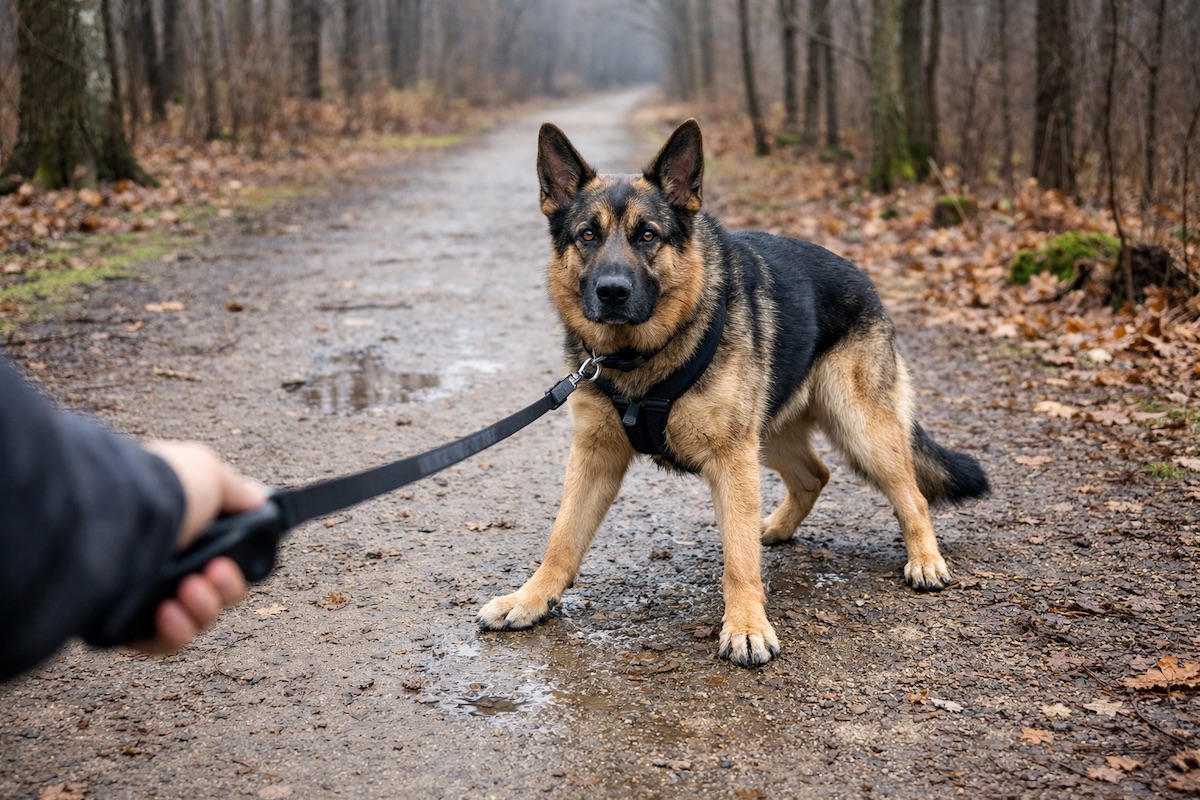
Freezing during walks is rarely stubbornness. In most German Shepherds, it is a sign that the nervous system feels overwhelmed, uncertain, or unable to process the environment.
What Does “Freezing” Actually Look Like?
Freezing does not always mean complete refusal to move. It can appear in several forms:
Some dogs that freeze also struggle with attention and connection outdoors. If your German Shepherd seems mentally “absent” during walks, explore why focus breaks down in stimulating environments.
- Stopping suddenly and refusing to step forward
- Standing still with tense posture
- Sitting or lying down during the walk
- Looking around intensely without responding to cues
- Ignoring commands that normally work at home
Some German Shepherds freeze quietly, while others show additional signs like whining, scanning the environment, or stiff body language.
Freezing is often a pause — not a protest. The dog may be trying to process too much information at once.
Why German Shepherds Freeze During Walks
1. Environmental Overload
German Shepherds are highly observant dogs. Busy streets, unfamiliar dogs, loud noises, or unpredictable movement can overwhelm their ability to stay focused.
When the brain receives too much input, freezing becomes a natural coping response.
Many owners mistake this for disobedience, but it often connects to patterns explained in signs of mental overload in German Shepherds.
2. Anxiety and Hypervigilance
Dogs that struggle with chronic alertness may freeze because they feel responsible for monitoring everything around them.
Instead of moving forward confidently, they pause to evaluate potential threats.
If your dog also seems tense at home, you may want to explore why anxiety becomes persistent in German Shepherds, where routine imbalance often plays a major role.
3. Lack of Predictable Structure
German Shepherds thrive on clarity. When walk routines change frequently — different routes, inconsistent pace, unpredictable expectations — the dog may hesitate because they are unsure what comes next.
This is especially common in dogs without a clear structured daily routine.
4. Overstimulation Mistaken for High Energy
Some German Shepherds freeze after intense activity because their nervous system is overloaded.
A dog that freezes after long or fast-paced walks is often not under-exercised — they may be overstimulated and struggling to regulate themselves.
This difference is explored more deeply in how to distinguish overstimulation from lack of exercise.
5. Previous Negative Experiences
If a dog had a frightening encounter during a walk — loud noise, aggressive dog, or sudden correction — they may freeze when approaching a similar environment.
This does not mean your dog is “dramatic.” It means their brain remembers the context.
6. Physical Discomfort or Fatigue
Although behavioral causes are common, physical discomfort should not be ignored.
Possible medical factors include:
- Joint pain or soreness
- Overexertion
- Paw sensitivity
- Digestive discomfort
If freezing appears suddenly or is paired with limping, reduced appetite, or lethargy, consult a veterinarian.
Normal Hesitation vs Stress-Driven Freezing
| Behavior | Normal Pause | Stress-Driven Freeze |
|---|---|---|
| Duration | Brief hesitation | Persistent refusal |
| Body Language | Relaxed | Tense or rigid |
| Response to Owner | Responds to cues | Ignores familiar commands |
| After Moving Again | Walk continues normally | Remains hyper-alert |
Understanding this difference helps you respond appropriately instead of increasing pressure.
Why Pulling or Forcing Movement Often Makes It Worse
Many owners instinctively pull the leash or repeat commands when their German Shepherd freezes. Unfortunately, this often increases tension.
Pressure during a freeze teaches the dog that the environment is unsafe and that communication with you is stressful.
Instead of building confidence, forcing movement may create more resistance over time.
How to Help a German Shepherd That Freezes During Walks
1. Reduce Environmental Pressure
Start by lowering the intensity of walks:
- Choose quieter routes
- Walk during calmer hours
- Increase distance from triggers
Lower pressure allows the nervous system to reset.
2. Pause With Your Dog Instead of Pulling
When your dog freezes, stop moving and soften your posture. Avoid tension on the leash.
Give your dog a moment to process the environment.
Many dogs resume walking naturally once they feel no pressure to perform immediately.
3. Reinforce Small Forward Choices
Instead of demanding long movement, reward small steps forward. Even one calm step can rebuild confidence.
4. Slow Down the Pace of Walks
Fast, linear walking can increase pressure. Allow more sniffing and exploration.
Sniffing helps regulate stress and reduces hypervigilance.
5. Balance Mental and Physical Activity
Some freezing behavior improves when walks include calm thinking tasks rather than constant motion.
Short focus exercises discussed in mental stimulation guidelines for German Shepherds can help redirect nervous energy.
6. End Walks on a Calm Note
If freezing happens near the end of walks, your dog may struggle with transitions between activity and rest.
Building decompression routines similar to those used for evening restlessness in German Shepherds can help create smoother endings.
Common Mistakes Owners Make
Assuming the Dog Is Being Stubborn
Freezing is rarely a dominance or disobedience issue.
Increasing Exercise Too Quickly
More intensity may increase nervous overload instead of building confidence.
Repeating Commands Constantly
Multiple repeated cues often add pressure without improving clarity.
Ignoring Early Stress Signals
Freezing is often preceded by subtle signs like scanning, slowing down, or stiff posture.
When to Seek Professional Help
Consider consulting a trainer or veterinary behaviorist if:
- Freezing becomes frequent or worsens over time
- Your dog shows signs of fear or aggression
- Walks become consistently stressful
- You feel unsure how to proceed safely
Final Thoughts
A German Shepherd that freezes during walks is not trying to be difficult — they are trying to cope with a situation that feels overwhelming or unclear.
Instead of focusing on movement alone, look at the bigger picture: routine, stimulation level, emotional balance, and environmental pressure. When walks become calmer, more predictable, and less intense, many German Shepherds regain confidence naturally.
Progress does not come from pushing harder — it comes from helping your dog feel safe enough to move forward again.
Author: XPETSI Editorial Team