Walking a German Shepherd should feel structured and connected — but many owners notice the opposite. The dog pulls toward every movement, scans constantly, ignores commands, or seems mentally “elsewhere.” When a German Shepherd can’t focus on walks, it’s rarely about stubbornness. In most cases, it reflects the dog’s emotional state rather than a training failure.
Lack of focus during walks is often a sign of nervous system overload — not lack of intelligence or obedience.
This article explains why German Shepherds lose focus outside, how to tell the difference between normal curiosity and mental overload, what mistakes accidentally make focus worse, and how to help your dog stay calmer and more connected during walks. If you want a broader understanding of how focus issues connect with anxiety, overstimulation, and daily structure, explore the complete German Shepherd behavior guide.
Why German Shepherds Struggle With Focus Outside
German Shepherds are naturally observant dogs. They were bred to notice movement, assess situations, and react quickly. While this awareness is a strength, it can also make walks mentally overwhelming — especially in busy environments.
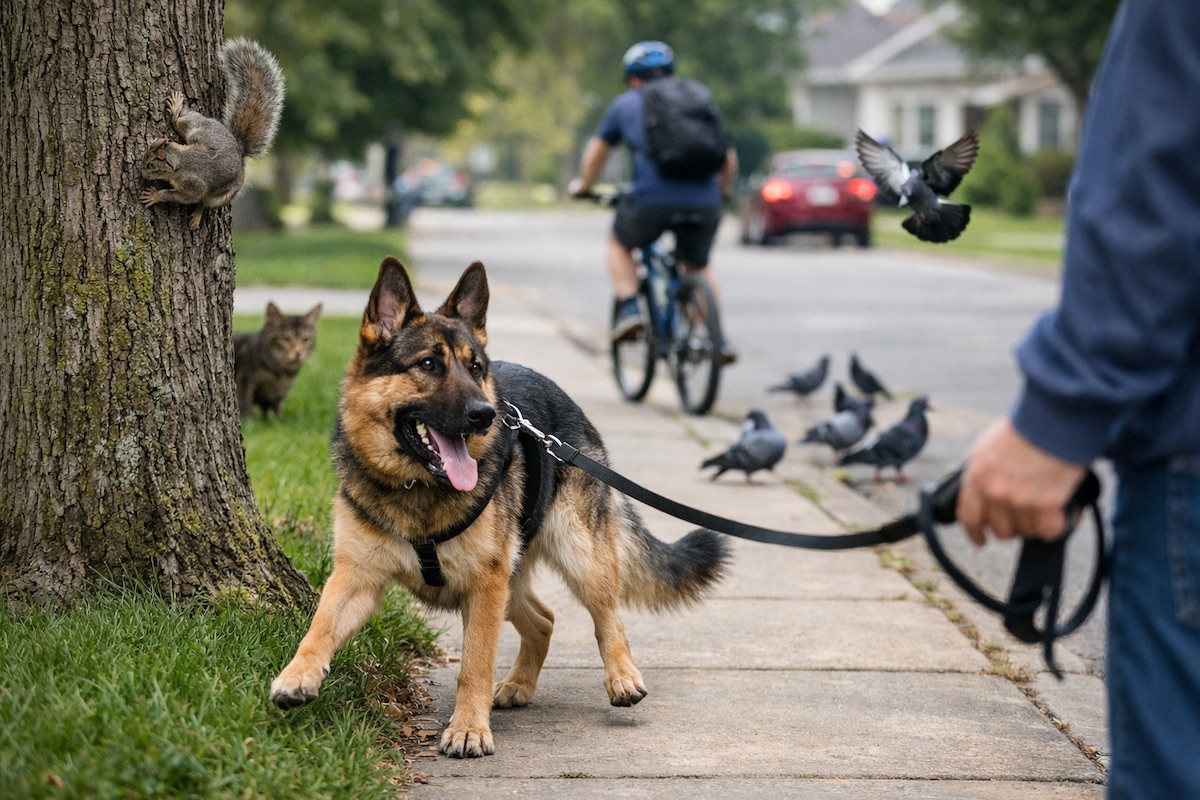
Unlike calm companion breeds, German Shepherds process large amounts of sensory input during walks:
- Sounds from traffic or distant people
- Movement of dogs or wildlife
- Changes in scent and environment
- The emotional energy of the owner
When too many inputs arrive at once, focus disappears. This doesn’t mean the dog forgot training — it means the brain is overloaded.
Many owners notice the same pattern described in why German Shepherds ignore commands in distracting environments, where emotional state overrides learned behavior.
Normal Curiosity vs Loss of Focus
| Behavior | Normal Engagement | Focus Breakdown |
|---|---|---|
| Looking around | Brief checking, then reconnecting | Constant scanning |
| Response to cues | Delayed but responsive | Ignores familiar commands |
| Body language | Loose and curious | Rigid, tense, or frantic |
| Recovery after distraction | Returns to handler quickly | Stays mentally “stuck” |
If your German Shepherd seems physically present but mentally absent, the issue is often overstimulation rather than disobedience.
Common Reasons German Shepherds Lose Focus on Walks
1. Overstimulation From the Environment
Busy sidewalks, unfamiliar dogs, and constant movement can push a sensitive working breed into hyper-alert mode.
Dogs that appear energetic may actually feel overwhelmed. This is closely connected to mental overload patterns in German Shepherds, where too much input reduces the ability to think clearly.
2. Too Much Physical Intensity Before Mental Stability
Fast-paced walks, jogging, or intense play before focus training can increase arousal levels. A highly aroused dog struggles to process commands.
A German Shepherd that moves fast is not always a focused dog. Calm engagement builds attention far better than speed.
3. Lack of Predictable Structure
Random routes, inconsistent expectations, or sudden changes in routine can create anticipation and anxiety.
Many dogs improve dramatically once owners build a structured daily rhythm that balances activity and rest.
4. Emotional Feedback From the Owner
Tension travels down the leash. Tight handling, frustration, or constant correction can increase mental pressure, making focus even harder.
5. Mental Fatigue or Overload
Some German Shepherds lose focus because they are mentally exhausted — not because they lack stimulation.
If your dog struggles after long training sessions or intense enrichment, review how much mental work is actually healthy per day.
Signs Your Dog Is Overwhelmed, Not Disobedient
- Ignoring commands they know well at home
- Pulling toward or away from stimuli constantly
- Scanning the environment instead of checking in
- Whining or pacing during pauses
- Difficulty slowing down after the walk ends
When focus drops suddenly outdoors, think “stress level” before thinking “training problem.”
How to Help Your German Shepherd Focus Better on Walks
Start With Calm Walking, Not Control
Begin walks slowly. Allow sniffing and quiet observation before expecting strong engagement.
Shorten the Walk Environmentally
Choose quieter routes temporarily to rebuild confidence and focus.
Use Micro-Engagement Moments
Instead of long obedience drills, reward small check-ins — eye contact, slowing down, or choosing to walk beside you.
Reduce High-Arousal Play Before Walks
High-speed fetch or chaotic interaction can make focus harder once outside.
Build Clear Transitions
Signal when the walk starts and ends. Dogs relax faster when routines feel predictable.
Consistency lowers pressure. A dog that knows what to expect spends less energy scanning for uncertainty.
When Lack of Focus Is Linked to Anxiety
If your German Shepherd appears tense even in quiet areas, deeper anxiety may be involved.
Signs include:
- Constant vigilance
- Difficulty settling after walks
- Overreaction to small noises
- Whining or pacing indoors
Understanding how anxiety develops in German Shepherds often helps owners shift their approach from correction to emotional support.
Common Mistakes That Make Focus Worse
- Repeating commands constantly
- Increasing leash tension when the dog is stressed
- Expecting perfect obedience in overwhelming environments
- Adding more exercise when the dog is already overstimulated
More pressure rarely creates more focus. Clear structure and calmer pacing usually work better.
How Long Does It Take to Improve Focus?
Some German Shepherds show improvement within a few calmer walks. Others need several weeks of consistent routine before their nervous system settles enough to concentrate.
The goal is not to eliminate awareness — it is to help your dog learn that they don’t need to monitor everything all the time.
Final Thoughts
Focus is a reflection of emotional balance. When your German Shepherd feels safe and calm, attention improves naturally.
A German Shepherd that can’t focus on walks is rarely being difficult. Most of the time, the dog is simply processing too much at once.
By slowing down the environment, building predictable patterns, and reducing pressure, many owners discover that focus returns — not through force, but through clarity and balance.
Author: XPETSI Editorial Team