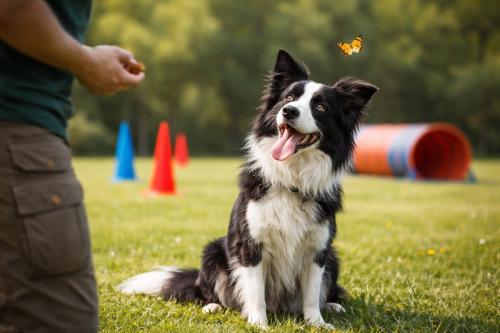
Highly intelligent dogs are often described as needing constant activity, nonstop enrichment, and endless mental challenges. Owners hear phrases like “a tired dog is a good dog” or “smart breeds always need more stimulation.” While engagement and learning are important, the idea that intelligent dogs require continuous stimulation is one of the most misunderstood concepts in modern dog training.
Many behavior problems in intelligent breeds do not come from boredom — they come from nervous systems that never receive permission to slow down.
This article explores why the myth of endless stimulation persists, how excessive mental activity affects highly engaged dogs, and what balanced routines actually look like for breeds known for intelligence and responsiveness — especially those prone to high nervous system load when engagement never pauses.

Where the Idea of Constant Stimulation Comes From
The modern dog world often celebrates productivity. Social media highlights advanced tricks, complex training routines, and dogs that appear constantly active. Intelligent breeds — especially working and herding dogs — are frequently portrayed as needing something to do at every moment.
While these dogs do benefit from mental engagement, the message can become distorted. Instead of building structured interaction, many owners begin to believe that rest equals neglect.
Over time, this belief creates routines filled with:
- Back-to-back training sessions
- Frequent puzzle toys without recovery time
- High-intensity walks every day
- Continuous expectations for focus and responsiveness
What starts as enrichment can slowly become cognitive overload — a pattern often seen in dogs that experience constant awareness without recovery.
Intelligence increases the need for clarity — not endless stimulation.
Why Intelligent Breeds Seem to Need More Activity
Smart dogs learn quickly, notice patterns faster, and often anticipate human behavior. This responsiveness can make them appear endlessly ready for interaction. However, readiness does not always equal need.
Highly intelligent dogs are often:
- More aware of environmental changes
- More sensitive to emotional cues
- Faster at predicting routines
- More reactive to inconsistent structure
Because their brains stay active longer, they may look energized even when mentally tired. Owners interpret this as a need for more stimulation, when the dog may actually need clearer transitions into rest — something explored in teaching calm transitions after activity.
The Hidden Cost of Constant Engagement
When stimulation becomes continuous, subtle changes begin to appear in behavior. These shifts are often misunderstood because the dog still seems capable of learning and responding.
Loss of Flexible Focus
Instead of calm engagement, attention becomes rigid. The dog may stare intensely or struggle to shift between tasks — a state closely related to mental pressure disguised as focus.
Difficulty Settling Indoors
Dogs exposed to nonstop engagement often find stillness uncomfortable. Even quiet environments may feel mentally “loud.”
Emotional Reactivity
Without downtime, nervous systems remain activated. Small triggers can suddenly feel more important than they actually are.
Delayed Responses During Training
Learning slows not because the dog lacks ability, but because cognitive fatigue reduces clarity.
Healthy stimulation builds confidence. Endless stimulation builds pressure.
Why Rest Is Hard for Highly Intelligent Dogs
Many intelligent breeds were developed to work closely with humans, monitoring subtle signals and responding quickly. In modern homes, that instinct may translate into constant anticipation.
Instead of switching off naturally, the dog may:
- Watch movement around the house
- Follow owners from room to room
- Stay alert even while lying down
- React quickly to minor sounds
When stimulation becomes the default state, rest starts to feel unfamiliar rather than safe — which is why many highly intelligent dogs struggle to relax despite regular activity.
Calmness is not an absence of intelligence — it is a skill that often needs to be taught intentionally.
The Difference Between Enrichment and Overstimulation
| Element | Balanced Enrichment | Endless Stimulation |
|---|---|---|
| Training sessions | Short and purposeful | Frequent and repetitive |
| Mental tasks | Followed by recovery | Stacked without breaks |
| Focus expectations | Flexible attention | Constant performance |
| Daily rhythm | Clear transitions | Continuous engagement |
Understanding this difference helps owners recognize when helpful enrichment begins to create unnecessary pressure.
Why “More Activity” Can Make Behavior Worse
When restlessness appears, many owners instinctively add more stimulation — longer walks, extra training, or new challenges. While the intention is positive, increased intensity can keep the nervous system activated longer than it can comfortably sustain.
Instead of calming down, the dog may become:
- More reactive to the environment
- Less responsive during training
- Unable to relax after activity ends
- Emotionally sensitive to small changes
A dog that cannot settle is not always under-stimulated. Sometimes the brain has simply lost its rhythm between work and recovery.
What Balanced Stimulation Actually Looks Like
Short, Clear Training Moments
Five to ten minutes of focused learning often creates better results than long sessions. Ending early helps maintain motivation without cognitive fatigue.
Thinking Walks Instead of Constant Intensity
Slow exploration allows dogs to process the environment calmly, reducing neurological pressure.
Predictable Downtime
Quiet periods without interaction teach the dog that stillness is part of daily life, not a sign that something is missing.
Emotional Neutrality Indoors
Calmer household energy helps intelligent dogs disengage from constant monitoring.
The goal is not less engagement — it is structured engagement that leaves room for recovery.
Common Signs an Intelligent Dog Needs Less Stimulation, Not More
- Restlessness despite regular activity
- Difficulty settling after walks or training
- Rigid focus or intense staring
- Overreaction to small environmental changes
- Loss of rhythm during outdoor routines
These behaviors often signal that the nervous system is carrying more load than it can comfortably process.
How Owners Can Shift Away From the Stimulation Myth
Observe Emotional State, Not Just Energy Level
A dog may look energetic but still feel mentally overwhelmed. Soft body language and relaxed breathing are better indicators of balance than movement alone.
Introduce Clear End Signals
Consistent transitions between activity and rest help intelligent dogs understand when engagement is finished.
Allow Silence Between Interactions
Moments where nothing happens give the nervous system time to reset.
Value Calmness as Much as Skill
Instead of rewarding only performance, acknowledge relaxed behavior and self-regulation.
Why Intelligent Breeds Thrive With Less Pressure
When endless stimulation is replaced with structured rhythm, many dogs begin to show unexpected changes:
- Clearer focus during training
- Less indoor restlessness
- More flexible attention outdoors
- Improved emotional stability
Rather than losing motivation, intelligent dogs often become more confident once their nervous system feels balanced.
Intelligence does not need constant challenge — it needs meaningful engagement followed by real recovery.
Final Thoughts
The myth of endless stimulation comes from a good place: owners want to meet the needs of their intelligent dogs. But balance matters more than intensity. Highly engaged breeds thrive when life includes both thoughtful activity and intentional calm.
A balanced routine does not reduce a dog’s drive or intelligence. It gives their brain the space to organize, recover, and stay emotionally stable.
Instead of asking how to keep your dog busy all day, try asking a different question: Does my dog have enough rhythm to truly relax between moments of engagement? For many intelligent dogs, that shift in perspective changes everything.
Author: XPETSI Editorial Team