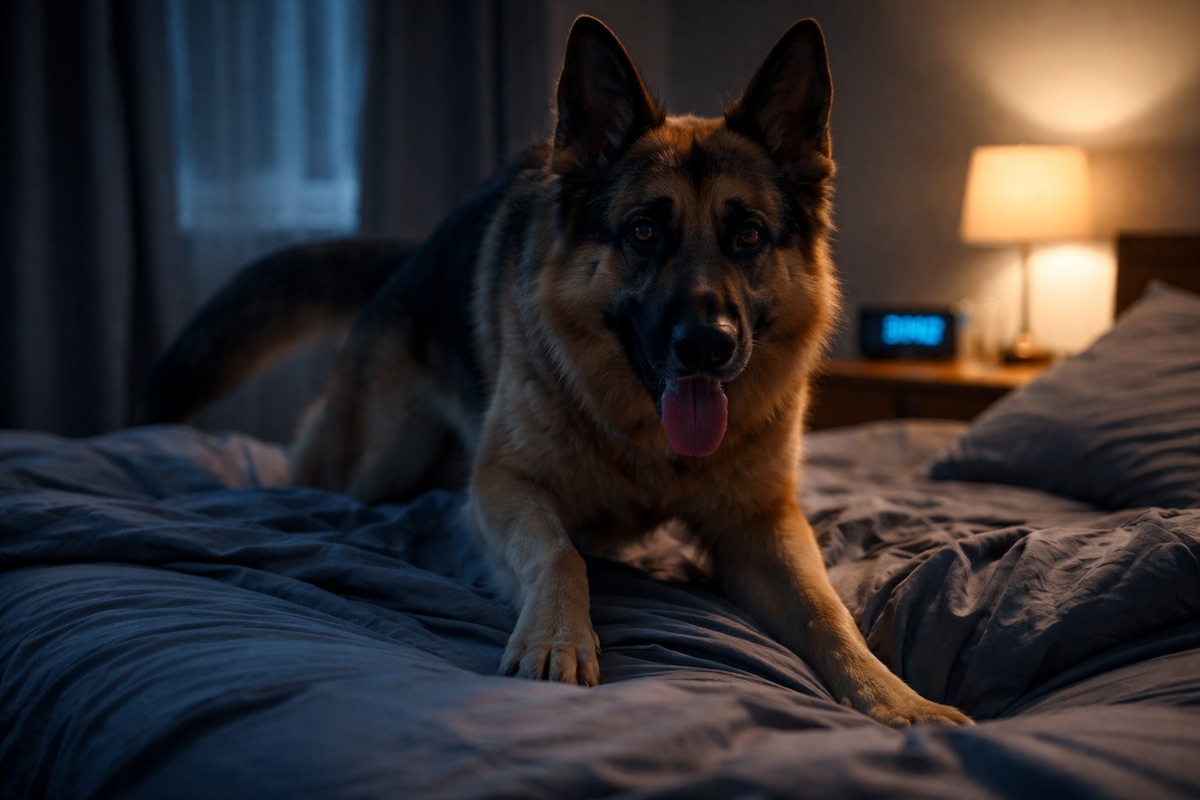
German Shepherds are active, intelligent dogs that need both physical and mental engagement during the day. But many owners notice a confusing pattern: when evening comes and the house becomes quiet, their German Shepherd suddenly becomes restless. Pacing, whining, watching every movement, or refusing to settle at night can leave owners wondering what’s going wrong.
Nighttime restlessness is rarely “random energy.” In many German Shepherds, it’s a sign that the nervous system hasn’t fully switched off after the day’s stimulation.
This article explains why German Shepherds sometimes become more active at night, how to recognize whether the behavior is normal or stress-related, and what you can realistically do to help your dog relax before bedtime. For a broader overview of how overstimulation, anxiety, daily structure, and behavior patterns connect, see the complete German Shepherd behavior guide.
Why German Shepherds Become Restless at Night
German Shepherds were bred to stay aware of their environment. While this trait is useful in working situations, it can create challenges in a modern home where the dog needs to transition from activity to rest on a predictable schedule.
When the daily rhythm lacks balance, restlessness often appears in the evening instead of during the day.
Common underlying causes include:
- Unreleased mental tension
- Overstimulation from daytime activities
- Irregular daily routines
- Insufficient decompression after exercise
- Environmental stress inside the home
Many dogs that struggle to settle at night show similar patterns described in mental overload in German Shepherds, where the brain remains active long after physical activity ends.
Normal Evening Energy vs Stress-Driven Restlessness
Some evening activity is normal, especially in young or highly driven dogs. The key difference is how quickly the dog returns to a relaxed state.
| Behavior | Normal Evening Energy | Stress-Driven Restlessness |
|---|---|---|
| Movement | Short bursts, then relaxation | Continuous pacing or scanning |
| Response to calming cues | Settles gradually | Remains tense or vocal |
| Body language | Loose posture | Rigid or hyper-alert |
| Sleep patterns | Falls asleep within minutes | Wakes repeatedly |
If your German Shepherd becomes more restless after long walks or intense play, the issue may be overstimulation rather than lack of exercise.
Signs Your German Shepherd Is Struggling to Switch Off
1. Pacing or Circling Before Bed
The dog walks around repeatedly instead of settling. This often indicates unresolved mental tension.
2. Whining or Quiet Vocalization
Some German Shepherds vocalize when they feel internally unsettled. This is frequently linked to patterns explained in why German Shepherds whine even when their needs seem met.
3. Watching Doors and Windows Constantly
Nighttime vigilance may signal that the dog still feels “on duty.” Many owners notice similar behavior when their dog stays constantly alert throughout the day.
4. Difficulty Falling Asleep
If your German Shepherd lies down but repeatedly stands up again, it may mean the brain hasn’t transitioned into rest mode.
Common Reasons Owners Overlook
Too Much Evening Stimulation
Late-night training, fast-paced games, or chaotic play sessions can keep adrenaline levels elevated long after activity ends.
Inconsistent Bedtime Routine
Dogs relax faster when evening patterns stay predictable. Sudden schedule changes can increase anticipation and restlessness.
Lack of Calm Decompression
Many owners focus on exercise but forget to include slow, low-arousal activities that signal the day is ending.
Building a structured daily routine often reduces nighttime issues more effectively than adding more exercise.
Before trying to “fix” nighttime behavior directly, it helps to understand that evening restlessness usually reflects the entire day’s rhythm. Small adjustments earlier in the day often change what happens at night.
How to Help a Restless German Shepherd Settle at Night
Create a Clear Evening Wind-Down Routine
Reduce stimulation gradually during the last hour before sleep. Dim lighting, quieter movement, and predictable patterns help the dog understand that the day is ending.
Replace High-Energy Play With Calm Activities
- Slow sniffing games
- Gentle obedience exercises
- Long-lasting chew items
Many dogs improve when the final activity of the day is calm rather than intense. The nervous system needs a signal that it’s safe to relax.
Teach a Consistent Resting Spot
A designated bed or mat helps create a physical association with calmness. Guide your dog there at the same time each night.
Adjust Your Own Energy
German Shepherds mirror their environment. Slower movements and calmer interaction can encourage the dog to settle more quickly.
When Nighttime Restlessness Might Be Medical
Although behavioral causes are common, sudden changes in nighttime behavior may indicate discomfort, pain, or digestive issues. Contact a veterinarian if restlessness appears suddenly or is accompanied by changes in appetite, movement, or sleep patterns.
Final Thoughts
A German Shepherd that struggles at night often isn’t misbehaving — they simply haven’t learned how to transition from engagement to rest.
When daily structure becomes clearer and evening routines become calmer, many dogs begin to settle naturally. Instead of trying to exhaust your German Shepherd before bedtime, focus on helping their nervous system slow down — and you may find that restful nights become much more consistent.
Author: XPETSI Editorial Team