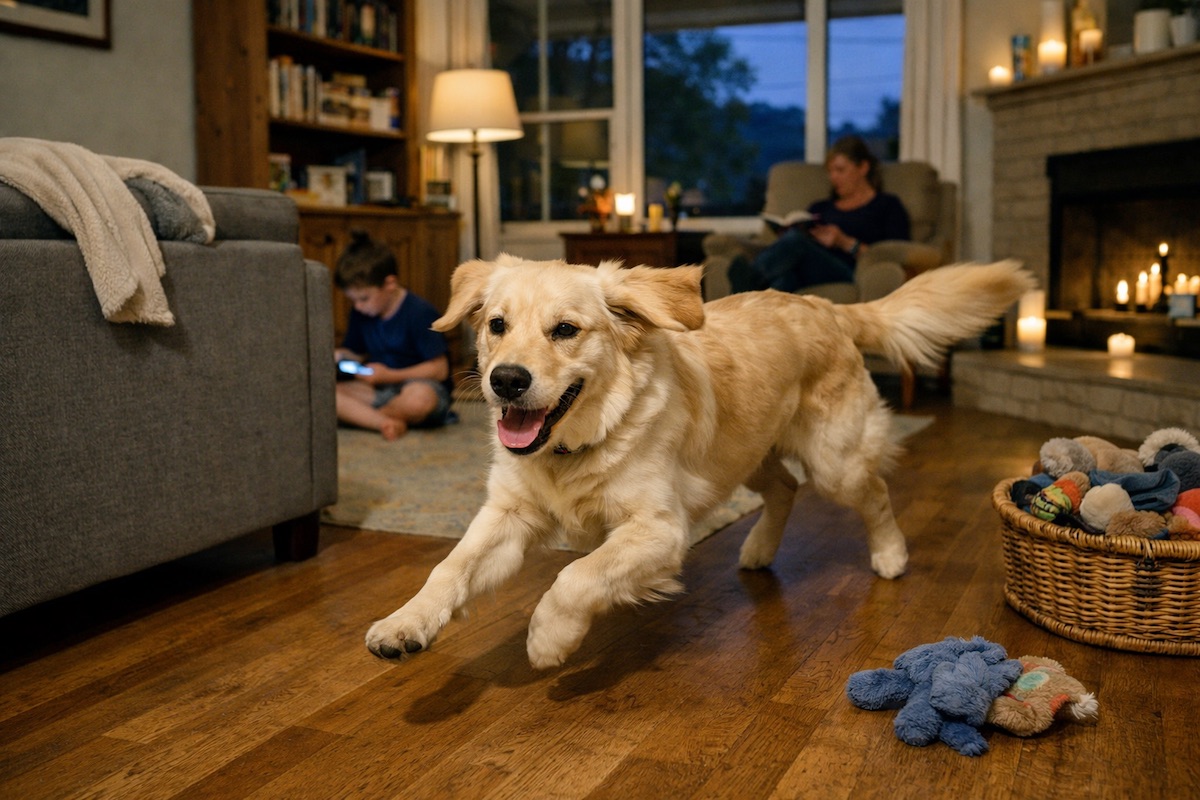
Many Golden Retriever owners notice a familiar pattern: as the evening approaches, their calm and friendly dog suddenly becomes restless, excitable, or unusually energetic. Running around the house, jumping on furniture, barking, or demanding attention can feel confusing — especially if the dog has already had walks and playtime earlier in the day.
Evening hyperactivity in Golden Retrievers is often linked to emotional buildup, fatigue, or overstimulation — not simply “extra energy.”
This article explains why some Golden Retrievers become hyper in the evening, how to distinguish normal excitement from nervous system overload, and what daily adjustments can help your dog settle more comfortably at the end of the day.
Why Evening Hyperactivity Happens
Evening is a transition period for both dogs and humans. Household activity patterns change, light levels shift, routines slow down, and anticipation of rest increases. For sensitive and social dogs like Golden Retrievers, these changes can trigger emotional and behavioral responses.
Hyperactivity in the evening often develops due to accumulated stimulation rather than a single event.
Common Reasons Golden Retrievers Become Hyper at Night
Emotional Buildup During the Day
Even if a dog appears calm throughout the day, subtle stimulation can accumulate. New experiences, social interactions, environmental noise, or training sessions all require emotional processing.
By evening, the nervous system may feel overloaded. Instead of relaxing, the dog may release tension through bursts of activity.
Hyper behavior can sometimes be a “release valve” for internal stress rather than a sign that the dog needs more exercise.
Overtiredness
Just like children, dogs can become more restless when they are tired but unable to settle. A Golden Retriever that has not experienced enough quality rest during the day may struggle to switch into recovery mode at night.
This can lead to pacing, vocalizing, jumping, or seeking constant interaction.
Unclear Evening Routine
If the transition from activity to rest is unpredictable, the dog may remain mentally alert. Inconsistent walk times, sudden bursts of play late in the evening, or irregular feeding schedules can increase anticipation.
Dogs often relax more easily when they understand what happens next.
Excessive High-Arousal Play
Intense fetch sessions or chaotic interaction close to bedtime can raise adrenaline levels. Without a calming transition afterward, the dog may remain excited long into the evening.
Seeking Attention or Social Interaction
Golden Retrievers are highly social. When family members gather in the evening, the dog may interpret this as a time for engagement. If earlier needs for connection were not fully met, excitement can increase.
Hyperactivity may reflect emotional need rather than physical surplus energy.
Difficulty Handling Idle Time
Some intelligent dogs never fully learn how to relax when stimulation stops. Evening quietness can feel uncomfortable, leading to self-created activity such as running, chewing, or attention-seeking.
Normal Evening Excitement vs Nervous System Overload
| Behavior | Healthy Evening Energy | Overloaded Hyperactivity |
|---|---|---|
| Duration | Short bursts, then settles | Prolonged restlessness |
| Body language | Loose and playful | Tense or frantic |
| Response to calming cues | Gradually relaxes | Struggles to switch off |
| After exercise | Calms down | Becomes more excited |
Understanding this difference helps prevent a common mistake: adding more stimulation when the dog actually needs recovery.
Signs Evening Hyperactivity May Reflect Stress
- Pacing around the house
- Whining or barking without clear cause
- Jumping or grabbing objects impulsively
- Difficulty lying down and staying relaxed
- Appearing tired but unable to rest
When hyperactivity increases after busy days or intense interaction, emotional overload may be the underlying cause.
How to Help a Golden Retriever Settle in the Evening
Create a Predictable Wind-Down Routine
Many Golden Retrievers struggle in the evening not because they have “too much energy,” but because the nervous system has difficulty shifting from daytime stimulation into rest mode. A consistent wind-down routine helps the dog recognize that activity is ending.
This routine might include a calm walk at a slower pace, gentle grooming, quiet time near the owner, or dimming lights in the home. Repeating the same sequence each evening builds emotional predictability. Over time, the dog begins to anticipate rest rather than excitement, making transitions smoother and less stressful.
Balance Activity Earlier in the Day
Evening hyperactivity often reflects emotional buildup from unmet needs during daytime hours. If engagement is inconsistent or overly intense, tension can accumulate and release later in bursts of excitement.
Structured physical exercise, short mental activities, and meaningful interaction earlier in the day help regulate energy and mood. A Golden Retriever that experiences clear cycles of engagement and recovery throughout the day is far more likely to relax naturally in the evening.
Introduce Calm Mental Activities
Not all stimulation increases excitement. Low-arousal enrichment — such as slow scent searches, gentle food puzzles, or simple focus exercises — can help release internal tension without raising adrenaline levels.
These activities provide a sense of purpose while encouraging concentration and emotional regulation. When mental engagement is calm and predictable, it supports the transition from activity into rest rather than prolonging arousal.
Avoid High-Energy Play Before Bedtime
Fast fetch sessions, rough play, or highly stimulating social interaction late in the evening can make settling much harder. Intense physical activity raises adrenaline and keeps the nervous system alert long after play has ended.
Instead of trying to “tire the dog out,” focus on gradually lowering excitement levels. Calm companionship, slow exploration, or quiet time together often prepares the dog for sleep more effectively than exhausting workouts.
Support Quality Rest
A comfortable, predictable sleeping environment helps signal safety and relaxation. Provide a quiet resting area away from constant movement, noise, or bright light. Some dogs relax better when their sleeping space remains consistent each night.
Encouraging uninterrupted downtime during the evening also teaches the dog that rest is a normal and expected part of the daily rhythm — not a sudden demand.
Dogs often settle more easily when stimulation decreases gradually rather than stopping suddenly.
Respond to Hyperactivity With Calm Structure
Evening excitement can be frustrating, but reacting with loud corrections, chaotic interaction, or emotional tension may increase arousal instead of reducing it. Calm, predictable guidance helps the dog regulate their own state.
Redirecting hyperactivity toward slow movements, relaxed positioning, or familiar calming routines builds emotional stability over time. Consistency matters more than intensity.
Use Gentle Environmental Signals
Small changes in the environment can support relaxation. Lower lighting, quieter background noise, or reducing household activity levels can help the dog recognize that the active part of the day is ending.
These subtle cues influence the nervous system without requiring direct training, making it easier for sensitive dogs to transition into rest.
Reinforce Calm Choices
Notice and quietly acknowledge moments when your Golden Retriever chooses to lie down, stretch out, or disengage from stimulation. Reinforcing calm behavior teaches that relaxation leads to comfort and connection.
Over time, this builds confidence in the dog’s ability to settle independently, reducing the need for attention-seeking or hyperactive behavior.
Ensure Emotional Needs Are Met
Hyperactivity can sometimes reflect unmet emotional needs — lack of interaction, uncertainty about routine, or difficulty coping with transitions. Providing predictable connection during the day helps prevent tension from surfacing at night.
Balanced engagement combined with structured independence creates the emotional security that supports deeper relaxation.
Evening calmness develops gradually. When structure, emotional balance, and predictable transitions become part of daily life, many Golden Retrievers begin to settle naturally without excessive control or correction.
When Evening Hyperactivity Requires Professional Support
If hyperactivity escalates into anxiety, destructive behavior, or severe sleep disturbance, consulting a trainer or veterinarian may help identify deeper causes.
Final Thoughts
Evening hyperactivity in Golden Retrievers is rarely just about having too much energy. More often, it reflects how the dog’s nervous system processes the events of the day.
A balanced daily rhythm — with clear engagement, recovery, and rest — helps many Golden Retrievers transition into calm evenings naturally.
Instead of asking how to tire your dog out at night, it may be more helpful to ask: Did my dog have enough clarity, structure, and emotional recovery throughout the day?
Author: XPETSI Editorial Team