German Shepherds are intelligent, energetic, and highly sensitive dogs. They don’t just need exercise — they need structure. Without a clear daily routine, many owners start noticing problems: anxiety, ignored commands, destructive behavior, overstimulation, or sudden mood changes.
A German Shepherd doesn’t calm down just because they are tired. They calm down when their day has a clear rhythm: engagement, recovery, and real rest.
This article explains what a healthy daily routine for a German Shepherd really looks like: how much walking they need, how to structure training, why rest matters just as much as activity, and the most common routine mistakes owners make.
This routine is written for a healthy adult German Shepherd. Puppies, seniors, and dogs in rehab often need shorter sessions and more frequent rest — but the same structure (engage → recover → rest) still applies.
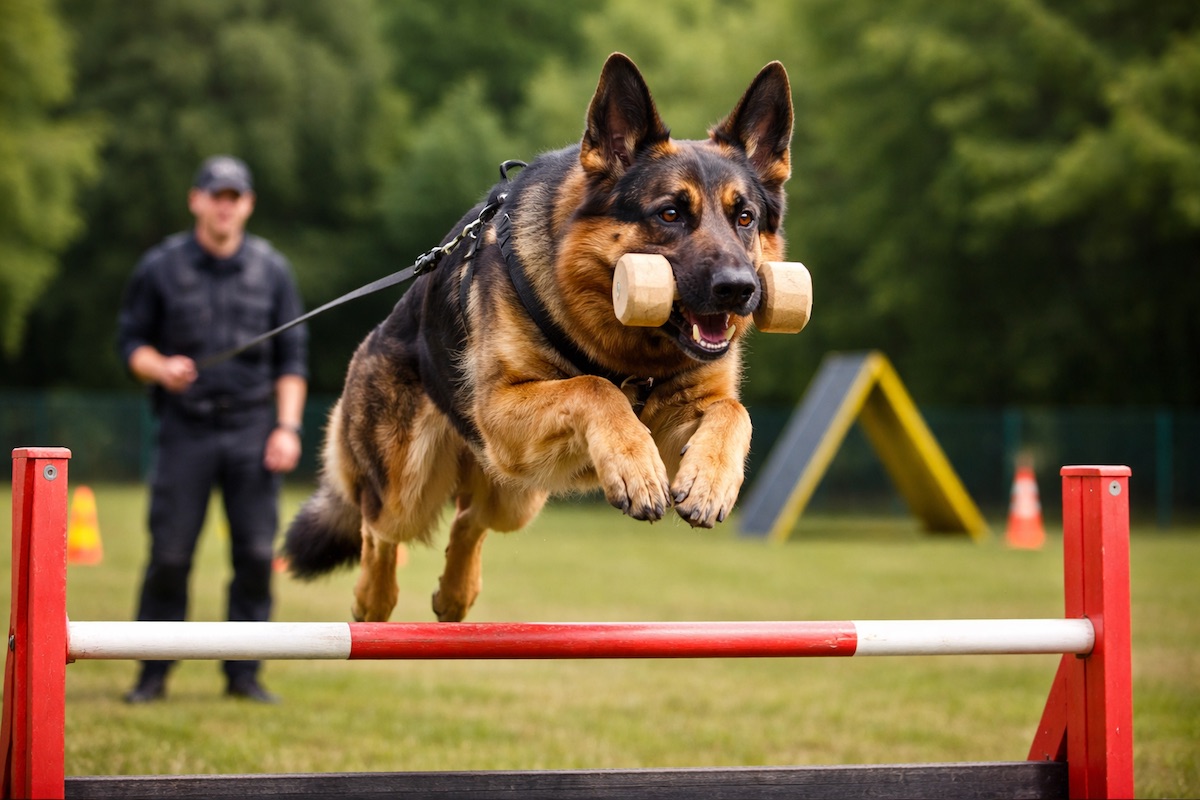
If your German Shepherd seems anxious, stubborn, overexcited, or “too much” to handle, the issue is often not the dog — it’s the daily rhythm.
Why German Shepherds Need a Structured Daily Routine
German Shepherds were bred to work closely with humans. They thrive when they know:
- What is expected of them
- When activity happens
- When it’s time to rest
- How to release mental and physical energy
An inconsistent or chaotic schedule often leads to problems such as:
- Constant alertness and anxiety
- Ignoring commands outside the house
- Overreacting to dogs, sounds, or movement
- Whining, pacing, or shadowing the owner
If this sounds familiar, you may want to read why anxiety becomes so persistent in German Shepherds, where routine imbalance is one of the key factors.
A common mistake is trying to “fix” behavior by adding more activity while keeping the day unpredictable. Without structure, more exercise often creates more arousal, not more calm.
Morning Routine: Walks, Mental Engagement, Calm Start
Morning Walk (30–45 minutes)
The morning walk sets the tone for the entire day. For a German Shepherd, this should not be a rushed bathroom break.
A good morning walk includes:
- 10–15 minutes of calm walking
- Short obedience refreshers (sit, heel, focus)
- Sniffing time to engage the brain
Sniffing is not “wasted time.” It’s a calming mental task that helps many German Shepherds settle better than intense exercise.
Overly intense exercise first thing in the morning can increase nervous energy rather than reduce it. Calm structure works better than chaos.
Mental Activation (5–10 minutes)
Before breakfast or right after the walk, add a short mental task:
- Food puzzles
- Basic command chains
- Scent games with treats
If your mornings feel chaotic, start small: one calm walk + one 5-minute thinking task. Many dogs show a noticeable improvement within a week when mornings become predictable.
Training Sessions: Short, Focused, Consistent
German Shepherds learn best in short, focused sessions, not long repetitive drills.
Ideal Training Schedule
- 2–3 sessions per day
- 5–10 minutes per session
- Clear start and clear end
Training should be spread throughout the day rather than crammed into one long session.
If your dog listens perfectly at home but ignores you outdoors, routine and context are often the issue. This is explained in why obedience breaks down in distracting environments.
Repeating commands (“sit… sit… SIT!”) teaches your dog the first cue doesn’t matter. Say it once, then reset the situation instead of escalating.
Midday Routine: Calm Activity and Recovery
Midday Walk (20–30 minutes)
This walk should be lighter than the morning one. The goal is maintenance, not exhaustion.
Good midday activities:
- Loose-leash walking
- Sniffing and exploration
- Low-arousal engagement
Avoid high-intensity fetch or rough play during midday unless your dog truly struggles with under-exercise.
Rest Time Is Not Optional
Many owners underestimate how much rest German Shepherds actually need.
An adult German Shepherd typically needs:
- 14–16 hours of rest per day
- Quiet, interruption-free downtime
- A predictable resting place
Overstimulated dogs often look “full of energy,” but the truth is they are exhausted and unable to switch off. Rest is not laziness — it is nervous system recovery.
Evening Routine: Controlled Energy Release
Evening Walk or Activity (30–60 minutes)
The evening is the best time for:
- Longer walks
- Structured play
- Advanced training exercises
However, intensity should decrease toward the end of the session to help your dog transition into rest.
Training + Decompression
End the evening with something calming:
- Slow obedience work
- Chew toys
- Calm sniffing games indoors
A simple rule that helps many German Shepherds: end the day with calm. If the last hour is chaotic, sleep and anxiety often get worse.
How Much Exercise Does a German Shepherd Really Need?
There is no single number, but a healthy adult German Shepherd usually needs:
- 90–120 minutes of total daily movement
- A mix of physical and mental work
- Structured downtime
That total can include calmer options like a sniff-focused walk — it doesn’t have to be nonstop high-intensity activity.
More is not always better. If your dog becomes more reactive or restless after exercise, the issue may be overstimulation — not lack of activity.
Common Daily Routine Mistakes to Avoid
1. Over-Exercising Without Mental Work
Physical exhaustion without mental engagement often creates a dog that needs more and more activity to feel balanced.
2. Inconsistent Schedules
Feeding, walking, and training at random times increases anxiety and vigilance.
3. Constant Stimulation
No rest time, constant interaction, and background noise prevent proper recovery.
4. Expecting Calm Without Teaching It
Calm behavior must be trained and reinforced, not assumed.
5. Ignoring Early Stress Signals
Whining, pacing, excessive following, or sudden stubbornness often signal routine imbalance. These early signs are explored further in common reasons German Shepherds whine even without obvious triggers.
Sample Daily Routine for an Adult German Shepherd
| Time | Activity |
|---|---|
| 7:00 | Morning walk + light training |
| 8:00 | Breakfast + mental game |
| 9:00–12:00 | Rest time |
| 13:00 | Midday walk |
| 14:00–17:00 | Rest and calm interaction |
| 18:00 | Evening activity + training |
| 20:00 | Decompression and quiet time |
| 21:30–22:00 | Final potty break + lights down |
Final Thoughts
If you want a calmer German Shepherd, build a calmer day. Routine, recovery, and predictable patterns often change behavior faster than “more exercise.”
A German Shepherd doesn’t need to be constantly entertained. They need clarity, balance, and predictability.
Most behavioral issues improve dramatically when owners stop asking “How do I tire my dog out?” and start asking “Is my dog’s day structured correctly?”
A well-designed daily routine creates a calmer, more focused, and happier German Shepherd — and a much easier life for the owner.
Author: XPETSI Editorial Team