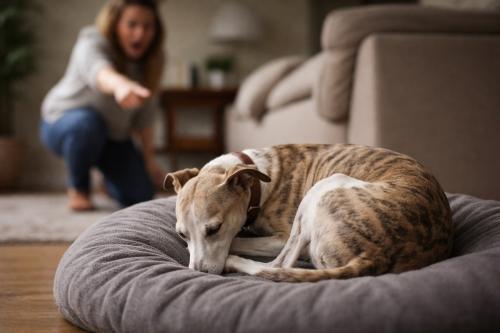
Many German Shepherd owners face the same confusing problem: their dog seems restless, unfocused, reactive, or unable to calm down. The first instinct is usually to assume the dog needs more exercise. Longer walks, more fetch, more running, more activity.
Restlessness does not always mean a dog needs more activity. In many German Shepherds, constant movement is actually a sign of nervous overload rather than lack of exercise.
But here’s the uncomfortable truth: many German Shepherds are not under-exercised — they are overstimulated. And adding more activity often makes the problem worse, not better.
This article will help you clearly tell the difference between an under-exercised German Shepherd and an overstimulated one, explain why these two states look so similar, and show you what actually helps in each case. For a broader overview of how overstimulation, anxiety, routine, and training patterns connect, see the complete German Shepherd behavior guide.
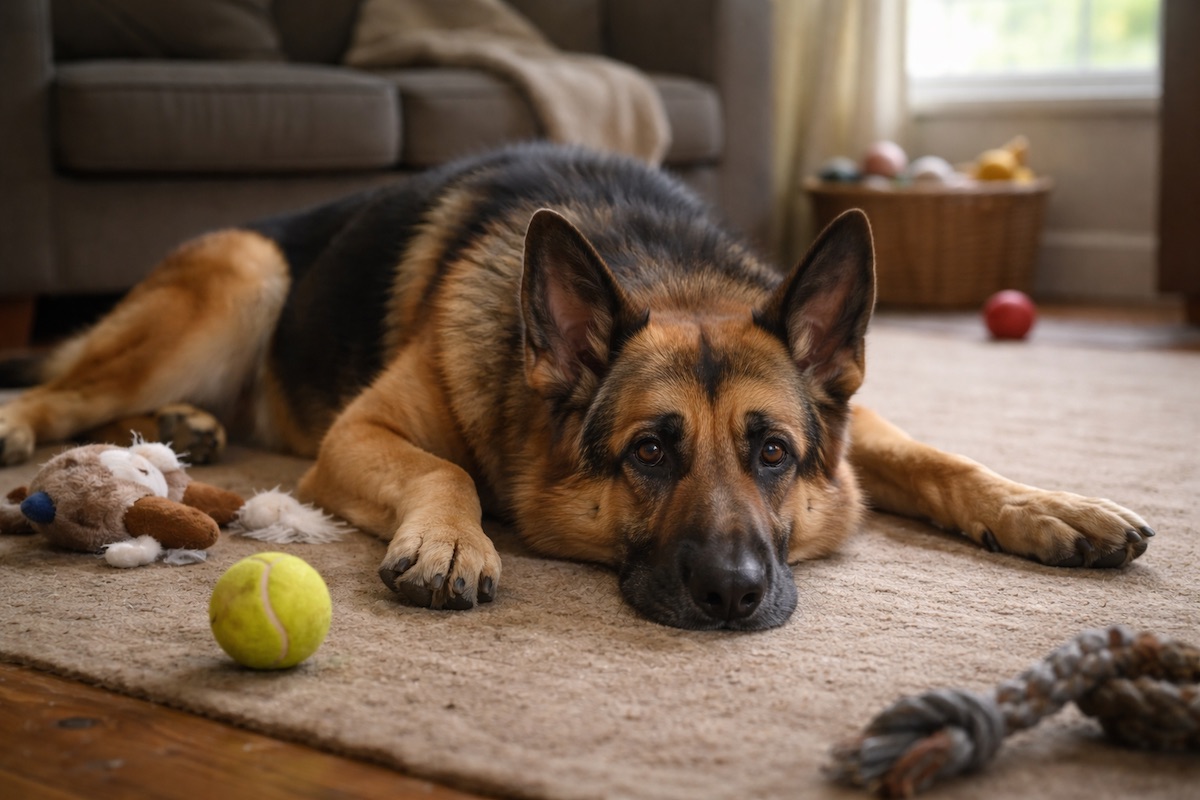
Why This Confusion Is So Common With German Shepherds
German Shepherds are intelligent, driven, and highly sensitive working dogs. They were bred to stay alert, make decisions, and respond quickly to their environment.
- They genuinely need physical and mental activity
- They are also extremely prone to nervous overload
Because these two needs exist at the same time, owners often misread overstimulation as “extra energy” and unintentionally increase pressure instead of creating balance.
Because of this combination, the behaviors of an under-exercised dog and an overstimulated dog can look almost identical on the surface.
What Under-Exercised Really Looks Like
An under-exercised German Shepherd lacks purposeful physical and mental outlets. This is not about missing one walk — it’s about a long-term mismatch between the dog’s needs and their daily routine.
- Excessive energy early in the day
- Seeking stimulation through chewing or digging
- Restlessness that improves after activity
- Increased interest in play and engagement
- Better focus after structured exercise
If your dog relaxes noticeably after structured activity, the issue may be lack of purposeful exercise rather than emotional overload.
Importantly, an under-exercised dog usually becomes calmer after appropriate activity.
What Overstimulated Really Looks Like
Overstimulation happens when a German Shepherd’s nervous system is constantly “on.” Too much input, too many demands, too little recovery.
- Excessive high-intensity exercise
- Constant training without rest
- Chaotic schedules
- Too many social or environmental triggers
- Lack of calm, predictable downtime
- Inability to relax even after long walks
- Whining or pacing during rest periods
- Overreacting to small sounds or movements
- Ignoring commands in stimulating environments
- Seeming “tired but wired”
An overstimulated German Shepherd often looks energetic on the outside but feels overwhelmed internally.
If your dog seems “tired but wired,” focus on recovery first — not more activity.
This state is closely linked to chronic anxiety and nervous overload in German Shepherds.
Side-by-Side Comparison: Under-Exercised vs Overstimulated
| Behavior | Under-Exercised | Overstimulated |
|---|---|---|
| Energy level | High but directed | Scattered and tense |
| Response to exercise | Calms down after activity | Becomes more reactive |
| Ability to rest | Can settle once tired | Struggles to relax |
| Focus during training | Improves with engagement | Drops in stimulating settings |
| Whining | Rare | Common during downtime |
Why More Exercise Often Makes Things Worse
Increasing intensity — more running, more fetch, more stimulation — is one of the most common mistakes owners make when the real issue is nervous overload.
- Longer runs
- More fetch
- More dog parks
- More training sessions
Instead of calming the dog, this teaches their nervous system to stay constantly aroused.
This is why some German Shepherds whine, pace, or ignore commands even after hours of activity — behaviors explored in guides focused on stress-related vocalization.
The Role of Daily Structure
German Shepherds thrive when their day follows a predictable rhythm of activity, mental engagement, recovery, and rest.
Often the biggest improvement comes not from increasing exercise but from creating a calmer, more predictable daily structure.
This is why building a structured daily routine that balances work and rest often reduces problem behaviors more effectively than increasing exercise.
How Mental Stimulation Fits In
Proper mental work uses focus, not excitement, has a clear start and end, and is followed by rest.
Mental stimulation should help a dog think clearly — not keep them constantly busy.
This balance is critical for German Shepherds that struggle with focus and obedience, especially those that listen well at home but struggle in distracting environments.
How to Tell What Your German Shepherd Actually Needs
- Does my dog calm down after structured exercise?
- Or do they become more restless afterward?
- Can my dog relax during the day without constant interaction?
- Do problem behaviors appear during rest or during boredom?
What Helps an Under-Exercised German Shepherd
- Longer, structured walks
- Purpose-driven activities
- Clear training goals
- Mental challenges with defined limits
What Helps an Overstimulated German Shepherd
- Reducing high-intensity exercise temporarily
- Adding predictable rest periods
- Teaching calm behavior
- Limiting constant interaction
- Creating a quieter daily rhythm
Many overstimulated dogs improve quickly when intensity decreases and recovery time increases.
Final Thoughts
Balance — not exhaustion — is what creates calm, focused behavior in intelligent breeds like German Shepherds.
Under-exercise and overstimulation look similar — but they require opposite solutions.
When you correctly identify what your dog truly needs, many frustrating behaviors begin to fade naturally.
Author: XPETSI Editorial Team