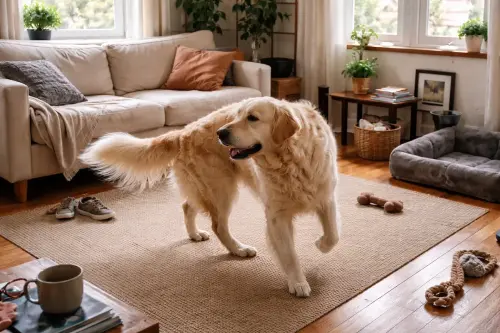
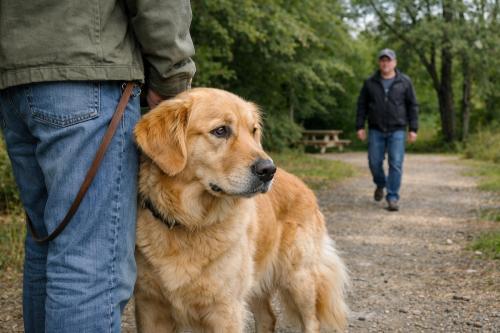
After a walk, a training session, or an exciting game, many intelligent dogs don’t immediately relax. Instead, they continue pacing, watching their surroundings, or looking for the next task. For owners, this can feel confusing — especially when the dog has already had plenty of activity.
Highly intelligent breeds often struggle not with energy itself, but with transitions. They move from action to action easily, yet shifting from engagement into calmness requires a different kind of learning — especially for dogs with strong environmental awareness, often described as thinking dogs processing constant input.

Calmness is not the absence of activity — it is a skill that must be taught. Many smart dogs stay active simply because no clear signal tells them the work is finished.
This article explores why intelligent dogs struggle to switch off, how transitions affect the nervous system, and practical ways to teach calm behavior after physical or mental engagement.
Why Intelligent Dogs Struggle With Transitions
Dogs bred for thinking roles — herding, working, or problem-solving — are naturally wired to anticipate what comes next. Activity activates focus, adrenaline, and emotional engagement. Without a clear ending, the brain stays in “ready mode,” especially when nervous system load remains high after stimulation.
Common signs of poor transitions include:
- Restlessness after walks or training
- Following the owner constantly
- Pacing indoors
- Watching doors or windows intensely
- Difficulty lying down and staying settled
These behaviors are often misunderstood as excess energy, when in reality the dog simply hasn’t learned how to shift gears.
Intelligent dogs don’t automatically know when activity ends. Without structure, they continue searching for the next task — a pattern often reinforced by the myth that smart dogs need constant stimulation.
What Happens Inside the Nervous System After Activity
During exercise or training, a dog’s nervous system becomes highly activated. Heart rate rises, focus sharpens, and the brain processes constant information. For sensitive or high-drive breeds, this activation doesn’t disappear instantly.
| Phase | What the Dog Feels | Common Behavior |
|---|---|---|
| During activity | Engaged and alert | Fast movement, strong focus |
| Immediately after | Still stimulated | Pacing, scanning |
| Successful transition | Gradual relaxation | Slow breathing, resting posture |
Without guidance, some dogs remain stuck in the second phase — physically tired but mentally active. This often happens when intense focus turns into mental pressure instead of balanced engagement.
Common Mistakes Owners Make After Activity
Ending Engagement Abruptly
Stopping play or training suddenly can leave the dog unsure whether the task is complete.
Adding More Stimulation Too Quickly
Talking excitedly, offering toys, or starting new interactions immediately after a walk may keep arousal levels high.
Expecting Instant Calmness
Many intelligent dogs need a gradual shift from action into rest rather than an immediate stop — especially when strong drive continues without clear direction, a pattern described as motivation turning into stress.
Calm behavior grows from predictable transitions — not from sudden silence after intense activity.
How to Teach Calm Transitions Step by Step
Create a Clear End-of-Activity Ritual
Use the same short routine every time an activity ends. This could be slowing your walking pace, removing training gear, or guiding your dog to a resting spot.
Slow Down Before Entering the House
The final minutes of a walk should feel quieter and less demanding. This helps the nervous system shift away from high alertness.
Reduce Verbal Energy
Lower your voice and movement intensity. Intelligent dogs often mirror the emotional tone around them.
Many dogs relax faster when the owner’s behavior becomes slower and more predictable after activity.
Reward Stillness — Not Just Action
Notice when your dog chooses to lie down, breathe slowly, or stop scanning the environment. Calmness improves when it receives attention and reinforcement.
Introduce Short Mental Cooldowns
Gentle thinking tasks — such as slow scent searching — can help the brain settle more effectively than additional high-energy play.
Signs Your Dog Is Learning Healthy Transitions
- Settles faster after walks or training
- Lies down without constant repositioning
- Shows softer body language indoors
- Stops following every movement in the house
- Falls asleep more easily during quiet periods
Progress often appears gradually. The goal is not instant calmness, but shorter and smoother transitions over time.
When Transitions Feel Especially Difficult
Some dogs struggle more than others due to:
- High emotional sensitivity
- Inconsistent daily routines
- Overstimulation from busy environments
- Too much high-intensity exercise
In these cases, reducing intensity and increasing predictability often helps more than adding new training exercises — especially for dogs that naturally find relaxation harder than calmer breeds.
Building a Daily Rhythm That Supports Calmness
Transitions become easier when the entire day follows a predictable flow. Intelligent dogs relax more naturally when they understand when to work and when to rest.
- Morning engagement with clear goals
- Midday quiet recovery
- Evening activity followed by slow decompression
- Consistent bedtime routines
Calm transitions are not a single technique — they are part of a lifestyle that balances stimulation with recovery.
Final Thoughts
Teaching calm transitions after activity is one of the most important skills for owners of intelligent dogs. These dogs are not restless because they want endless action — they are often waiting for guidance on when it’s safe to relax.
When endings become clear and predictable, many intelligent dogs begin switching off naturally — not because they are exhausted, but because they finally understand that the work is finished.
Instead of focusing only on how much activity your dog receives, pay attention to how that activity ends. The moments after engagement often shape behavior just as much as the activity itself.
Author: XPETSI Editorial Team