You play with your Golden Retriever hoping it will help them settle down afterward. A game of fetch, tug, or running around should leave them satisfied and ready to rest — at least in theory.
But sometimes play seems to flip the wrong switch.
Instead of calming down, your Golden Retriever comes back even more wired: racing through the house, grabbing toys, barking, jumping, or asking for another round as if the game never ended.
This doesn't mean you're doing something wrong. It means play is triggering a biological and behavioral response that increases excitement rather than reducing it.
Understanding why this happens is the first step to helping your dog truly calm down after play.
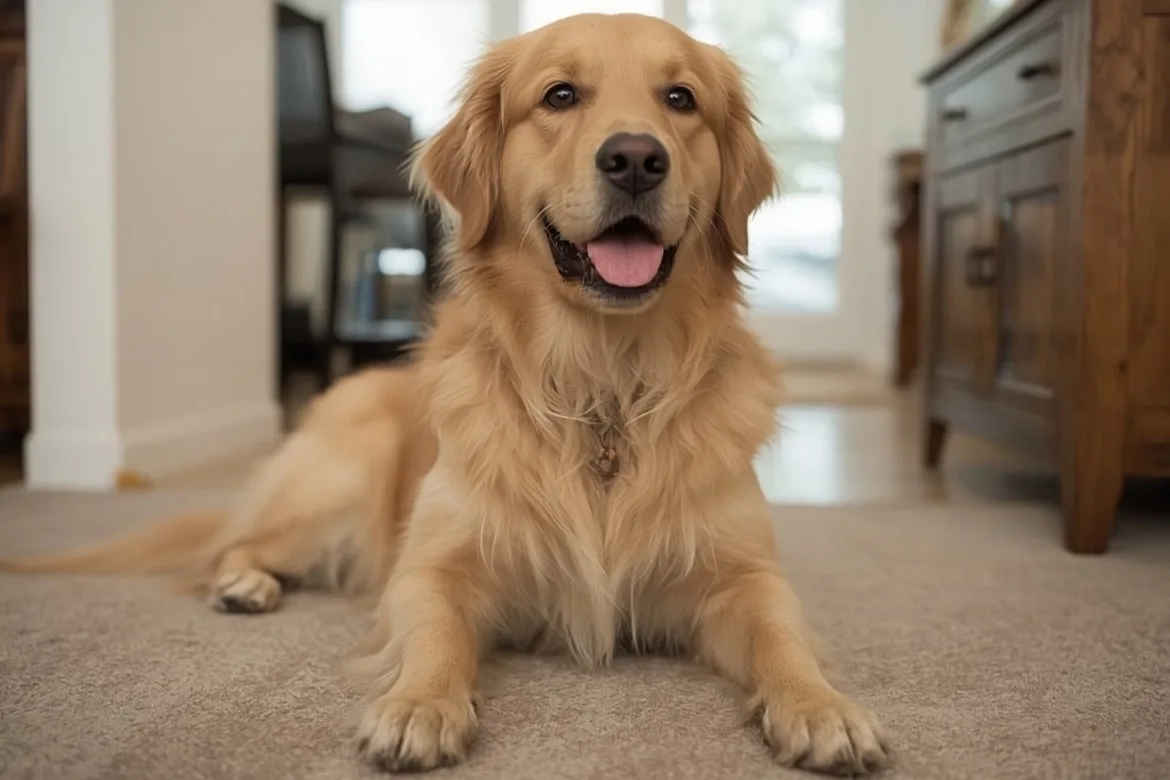
Play Triggers a Rush of Adrenaline and Excitement
Many owners think of play as a way to drain energy, but from the dog's perspective, play is often a highly stimulating event.
Games such as fetch, chasing, tug, and running activate the nervous system.
During play, the body releases chemicals associated with excitement and engagement:
- Adrenaline
- Endorphins
- Dopamine
These chemicals increase alertness, motivation, and readiness for action.
As a result, play often creates a temporary state of heightened arousal rather than immediate relaxation.
The activity may end, but the internal activation can continue long afterward.
Play does not instantly remove energy. In the short term, it often increases excitement before the nervous system has a chance to settle.
Physical Activity Does Not Always Tire the Brain
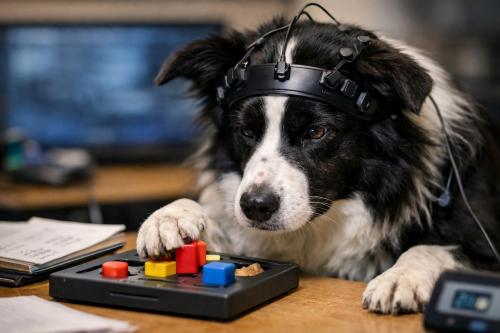
Golden Retrievers are intelligent working dogs. Their brains require stimulation just as much as their bodies.
Physical activity alone may leave part of the dog's needs unmet.
A dog can become:
- Physically tired
- Mentally under-stimulated
- Still seeking engagement
This often creates restlessness rather than relaxation.
Owners see a tired dog that continues looking for something to do.
This is one reason some dogs seem more energetic after exercise than before it.
For a deeper look at mental workload, see How Much Mental Stimulation Does a Golden Retriever Need.
Your Golden Retriever May Already Be Overtired
Another common issue is that dogs do not always show obvious signs of fatigue.
Many Golden Retrievers happily continue playing long after their ability to regulate themselves has started declining.
As tiredness increases:
- Self-control decreases
- Attention becomes less stable
- Reactions become bigger
- Excitement becomes harder to manage
Owners often interpret this as extra energy.
In reality, the dog may be moving into a state of overstimulation.
This can create the impression that play "created" more energy when it actually reduced regulation.
If this sounds familiar, you may also relate to Signs Your Golden Retriever Is Mentally Overloaded.
Excitement Can Build Faster Than Recovery
Healthy behavior involves a cycle:
activity → processing → recovery → rest
Many modern dogs experience plenty of activity but very little recovery.
For example:
- Play ends
- Interaction continues
- The dog stays engaged
- The nervous system never fully settles
Without enough recovery time, excitement accumulates.
This makes hyperactive behavior more likely later.
Sometimes the problem is not too much play. It is too little recovery after play.
Attention Can Become Part of the Reward
For some Golden Retrievers, the most exciting part of play is not the game itself.
It is the interaction with the owner.
When play ends, the dog may continue seeking:
- Eye contact
- Conversation
- Movement
- Engagement
If attention consistently follows hyper behavior, the dog may learn that staying excited keeps the interaction going.
This does not happen intentionally, but it can strengthen the pattern over time.
Dogs showing this behavior often overlap with patterns discussed in Why My Golden Retriever Needs Constant Attention.
Some Golden Retrievers Are Naturally More Intense
Not every Golden Retriever has the same energy level.
Several factors influence how strongly a dog responds to play:
- Age
- Genetics
- Working versus show lines
- Individual temperament
Puppies and adolescents often struggle most with transitions from excitement to calmness.
Dogs from high-drive working lines may also stay activated longer after play.
Why Hyperactivity Often Appears After Play Ends
Many owners notice that the most intense behavior starts after the game is over.
This happens because the dog is no longer focused on the activity itself.
The excitement remains, but the outlet disappears.
The result can be:
- Zoomies
- Barking
- Jumping
- Demanding attention
- Running around the house
What looks like "extra energy" is often unresolved stimulation looking for somewhere to go.
If your dog frequently shifts from calm behavior into sudden bursts of energy, you may also find similarities in Why My Golden Retriever Is Calm Then Suddenly Hyper.
A Better Post-Play Routine
Helping your Golden Retriever calm down often starts after the game ends.
Step 1: Slow the Transition
Instead of stopping abruptly, gradually reduce intensity.
Step 2: Add Mental Processing
Offer activities that encourage thinking rather than excitement:
- Scent games
- Food puzzles
- Simple problem-solving tasks
Step 3: Create Quiet Time
Allow the dog to rest in a low-stimulation environment.
Step 4: Reward Calmness
Notice and reinforce relaxed behavior rather than waiting for hyperactivity to appear.
The goal is not simply to make the dog tired. The goal is to help the dog move successfully from excitement into recovery.
Related Behavior Patterns
- Why Golden Retriever Hyper After Walk
- Signs Your Golden Retriever Is Overstimulated (But Not Hyper)
- Why My Golden Retriever Has No Off Switch
- Why My Golden Retriever Looks Tired but Acts Hyper
Final Thoughts
Play can sometimes make a Golden Retriever more hyper instead of calmer because excitement builds faster than recovery. The issue is usually not a lack of exercise — it is the combination of arousal, stimulation, and incomplete recovery.
When play is balanced with mental engagement, decompression, and calm transitions, many dogs find it much easier to settle afterward.
Author: XPETSI Editorial Team