Golden Retrievers are often described as easygoing, cheerful, and endlessly energetic. Because of this reputation, many owners assume that restlessness, overexcitement, or difficulty relaxing simply mean their dog needs more activity. In reality, some Golden Retrievers experience the opposite problem — mental overload.
Mental overload happens when a dog processes more stimulation, expectations, or environmental pressure than they can comfortably handle. Even friendly and sociable breeds like Golden Retrievers can struggle when their nervous system has no time to recover.
This article explains the most common signs that a Golden Retriever may be mentally overloaded, why this state develops, how to distinguish overload from normal enthusiasm, and what changes can help restore emotional balance.
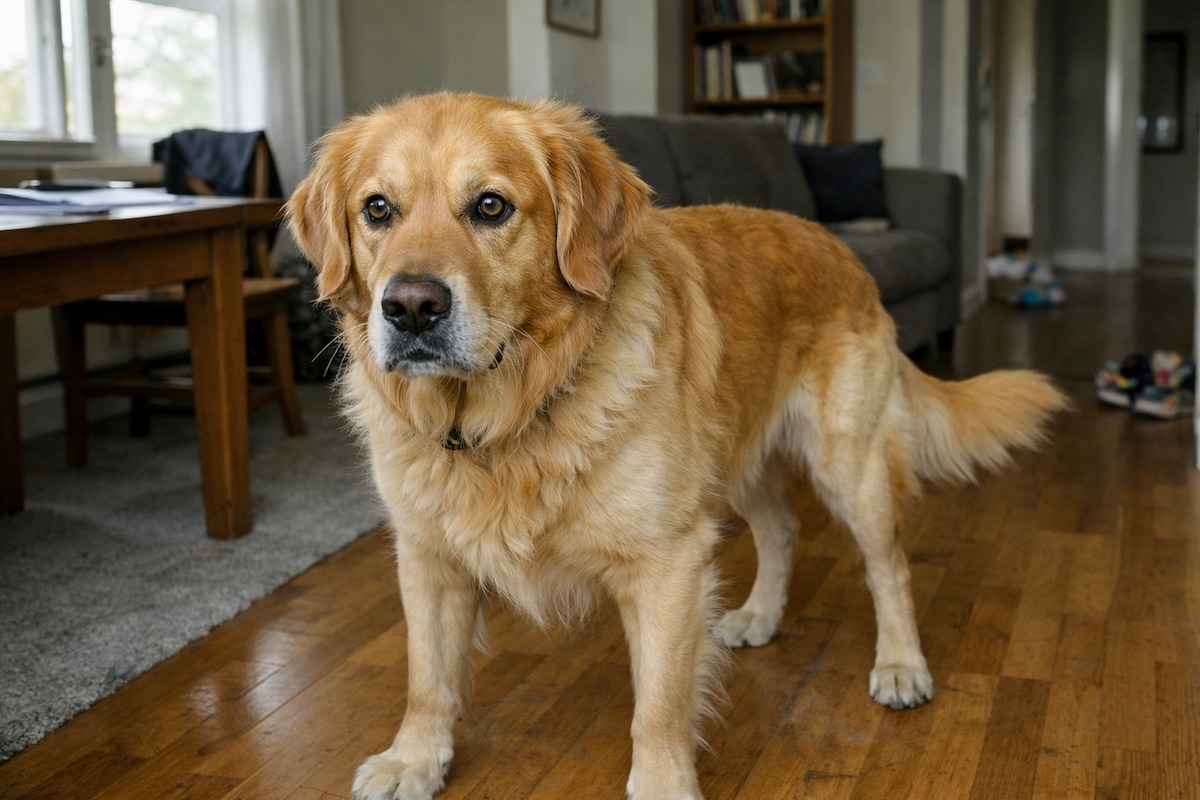
What Mental Overload Looks Like in Golden Retrievers
Mental overload does not always appear dramatic. Many dogs seem energetic, playful, or attentive on the surface while internally struggling to relax. Over time, this imbalance can affect behavior, focus, and emotional stability.
Instead of becoming calmer with activity, a mentally overloaded dog often becomes more reactive, distracted, or restless.
Common Signs Your Golden Retriever Is Mentally Overloaded
Difficulty Settling After Activity
One of the earliest signs is a dog that cannot relax after walks, play sessions, or training. They may lie down briefly, then get up again, reposition constantly, or follow movement around the house.
This pattern is often misunderstood as excess energy. In many cases, the dog is actually mentally tired but unable to switch off.
Constant Seeking of Interaction
Some Golden Retrievers begin to demand continuous engagement — bringing toys repeatedly, nudging for attention, or staying close to the owner at all times.
When engagement feels like a constant need rather than a joyful choice, the nervous system may be struggling to regulate itself.
Loss of Focus During Training or Walks
A mentally balanced dog usually improves with practice. A mentally overloaded dog may show the opposite pattern — declining concentration, slower responses, or sudden distraction in familiar situations.
This does not mean the dog has forgotten training. It often means their brain is processing too much information at once.
Overreaction to Normal Stimuli
Golden Retrievers experiencing overload may react strongly to everyday events such as door sounds, passing dogs, or changes in routine.
These reactions can look like excitement, but they often reflect heightened internal tension.
Restlessness Indoors
Pacing, wandering from room to room, or repeatedly checking windows and doors can indicate that the dog’s nervous system remains in an alert state even in safe environments.
True rest becomes difficult when the brain never fully leaves “monitoring mode.”
Whining or Vocalizing Without Clear Cause
Soft whining, sighing, or restless vocal sounds may appear when internal pressure builds. The dog may not be asking for anything specific — they may simply feel unsettled.
Vocalization during quiet periods is often a sign of emotional discomfort rather than boredom.
Appearing “Tired but Wired”
Perhaps the clearest sign of mental overload is when a Golden Retriever seems physically exhausted but emotionally unable to relax.
Owners often describe this state as their dog being hyper even after long walks or intense play.
Mental Overload vs Healthy Enthusiasm
| Behavior | Healthy Engagement | Mental Overload |
|---|---|---|
| Energy after activity | Gradually decreases | Remains elevated or increases |
| Focus | Improves with structure | Declines despite practice |
| Rest | Settles naturally | Struggles to relax |
| Emotional tone | Playful and flexible | Tense or reactive |
Recognizing this difference helps owners avoid the common mistake of increasing stimulation when the dog actually needs recovery.
Why Mental Overload Happens in Golden Retrievers
Several factors can contribute to overload:
- Too many high-arousal activities without calm transitions
- Constant training or stimulation throughout the day
- Unpredictable routines that increase anticipation
- Lack of true downtime or quiet resting space
- Emotional tension or chaotic environments
Balanced stimulation includes both engagement and recovery. Without rest, even positive experiences can become overwhelming.
How to Help a Mentally Overloaded Golden Retriever
Reduce Overall Intensity
When a Golden Retriever shows signs of mental overload, the first step is often not adding more activity — but simplifying daily life. High-energy games, fast-paced fetch sessions, or constant social interaction can keep the nervous system activated long after the activity ends.
Temporarily shifting toward calmer routines can make a significant difference. Choose slower walks with time for sniffing, reduce competitive or repetitive training drills, and allow interactions to feel more relaxed rather than performance-driven. Lowering intensity helps the dog move from a state of constant alertness into gradual emotional recovery.
Create Predictable Daily Structure
Golden Retrievers often feel more secure when their day follows a clear and consistent rhythm. Unpredictable schedules can increase anticipation and mental tension, especially in sensitive or highly engaged dogs.
Try to maintain regular meal times, predictable walk windows, and defined rest periods. Clear transitions between activity and downtime help the dog understand when engagement is expected — and when it is safe to switch off. Over time, this predictability reduces internal pressure and improves emotional stability.
Encourage Calm Rest
Some dogs struggle to relax simply because they never learned how to rest deeply. Providing a quiet, comfortable space where the dog can settle without interruption supports nervous system recovery.
Avoid constantly talking to, touching, or engaging the dog during rest periods. Calm independence helps build resilience and prevents the dog from feeling responsible for monitoring every movement in the household. True rest is not inactivity forced by commands — it is a relaxed state the dog can enter voluntarily.
Use Short Mental Activities
Gentle cognitive engagement can help release built-up tension without adding pressure. Brief scent searches, simple problem-solving tasks, or slow obedience exercises allow the dog to use their mind in a controlled and satisfying way.
These activities should remain short and end before the dog becomes tired or frustrated. The goal is to support emotional balance, not to create additional stimulation. When mental work is predictable and limited, it often helps Golden Retrievers transition more easily into calm behavior afterward.
Many Golden Retrievers become calmer when stimulation becomes structured and recovery becomes intentional. Emotional balance grows not from constant activity, but from clear cycles of engagement and rest.
When to Seek Professional Advice
If restlessness, anxiety, or reactivity continue to increase despite routine adjustments, consulting a trainer or veterinarian can help identify deeper behavioral or medical causes.
Final Thoughts
Mental overload is not a sign of a “difficult” Golden Retriever. It is often a sign of a sensitive, intelligent dog trying to cope with too much stimulation and too little clarity.
A calm, focused Golden Retriever is not created by constant activity — but by a healthy rhythm of engagement, recovery, and rest.
When daily life becomes more predictable and emotionally balanced, many dogs naturally regain their ability to relax, focus, and enjoy interaction without internal pressure.
Author: XPETSI Editorial Team