When a Golden Retriever gets too much to handle, many owners expect to see clear signs like barking, hyperactivity, or losing control. But overstimulation doesn't always look loud or out of control.
In a lot of cases, a dog can look calm, quiet, or even well-behaved on the outside, but on the inside, they are having trouble processing too much information. That's why it's easy to miss overstimulation, especially in dogs that don't show stress in a clear way.
Overstimulation is not always visible as excitement. Sometimes it looks like stillness, withdrawal, or subtle changes in behavior.
Recognizing these quieter signals can help you respond earlier and support your dog before stress builds into more noticeable problems.
What Overstimulation Really Means
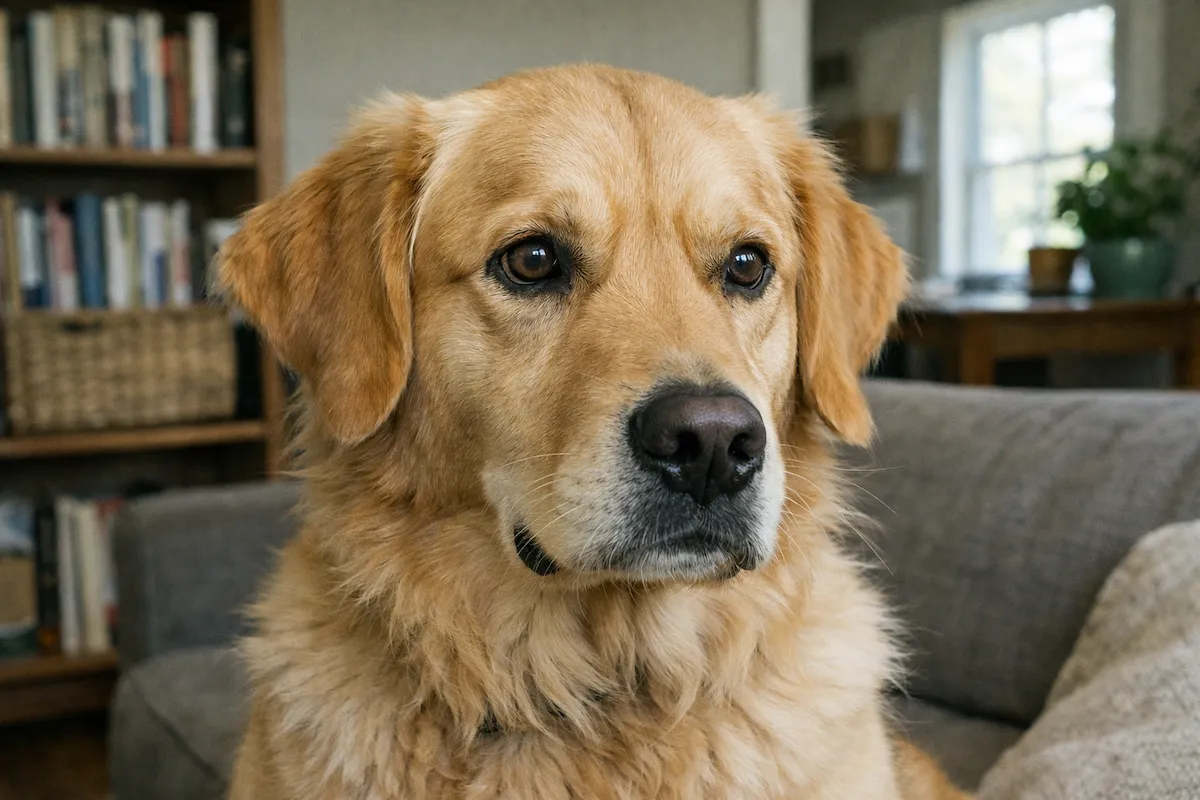
Overstimulation occurs when a dog receives more sensory, social, or emotional input than it can comfortably process. It is not just about “too much activity” — it is about how much information the nervous system is trying to handle at once.
Golden Retrievers are especially sensitive to this because they are highly social, observant, and responsive to their environment. They do not just experience activity — they actively process it.
This can include:
- Busy environments with many sounds and movements
Crowded streets, parks, or homes with constant activity create continuous input. The dog is exposed to sounds, motion, and changes without pause, leaving little time for the nervous system to reset. - Long walks with constant exposure to new stimuli
Even a calm walk can become overwhelming if it includes continuous novelty — new smells, people, dogs, and environments. The issue is not distance, but the amount of information being processed. - Frequent interaction without breaks
Play, training, attention, and social engagement are all forms of stimulation. When they happen back-to-back without quiet time, the dog has no opportunity to recover. - High mental demand without enough recovery time
Problem-solving, training, or constant engagement can create cognitive load. Without rest, this builds into fatigue rather than enrichment.
What matters is not each individual activity, but the cumulative effect. A dog may handle each experience well on its own, but struggle when they are combined without enough space in between.
As stimulation builds, the nervous system reaches a point where it can no longer process input efficiently. At this stage, behavior changes — but not always in obvious ways.
When this threshold is exceeded, the nervous system does not always react by becoming more active. Sometimes, it does the opposite.
Instead of hyperactivity, the dog may:
- Reduce movement and become still
- Narrow its focus rather than explore
- Disengage from interaction
- Show slower or delayed responses
This is not calmness — it is a sign that the system is overloaded and shifting into a protective state.
Overstimulation is not just “too much energy.” It is a state where the dog has received more input than it can process, and the nervous system responds by limiting further engagement.
Why Overstimulation Does Not Always Look Like Hyperactivity
Golden Retrievers are expressive dogs, but they also have the ability to suppress outward reactions in certain situations.
Instead of becoming hyper, an overstimulated dog may:
- Reduce movement
- Limit interaction
- Focus narrowly on specific stimuli
- Withdraw slightly from engagement
This can give the impression of calmness, even though the internal state is tense.
Not all overwhelmed dogs become loud — some become quiet and controlled.
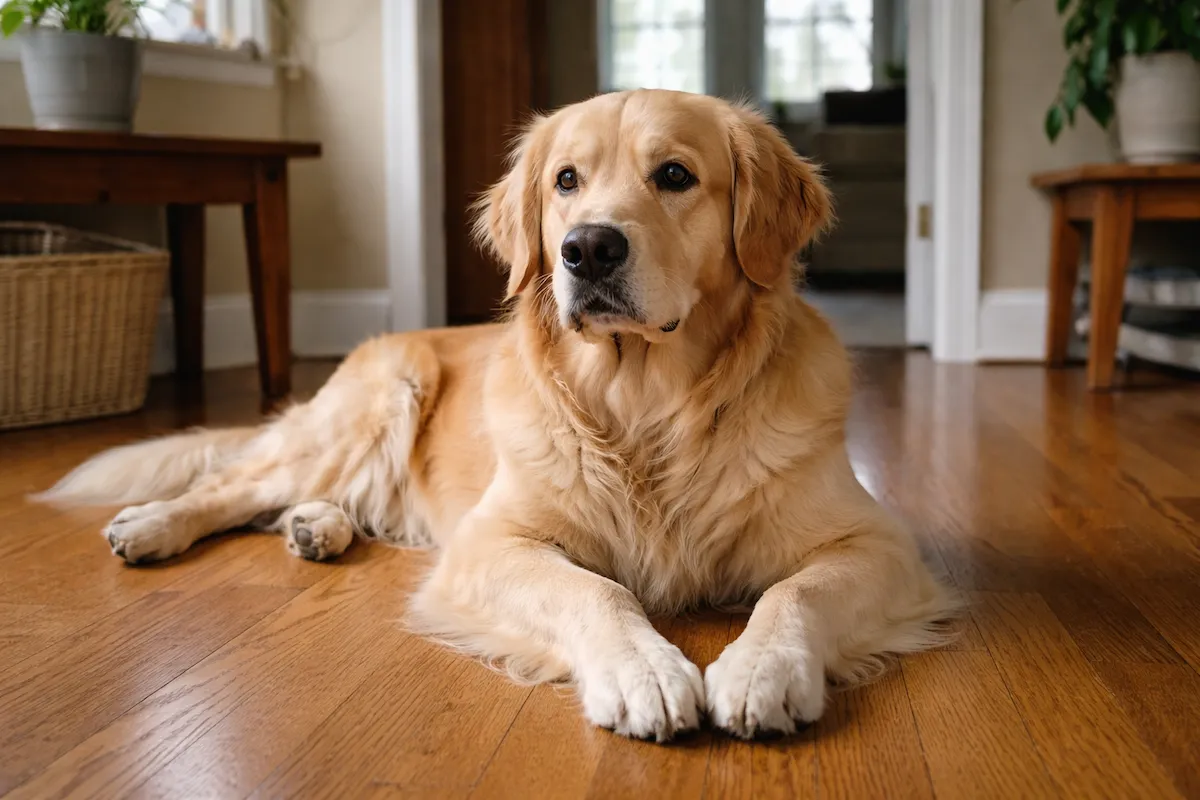
Subtle Signs Your Golden Retriever Is Overstimulated
- Still but not relaxed
The dog may lie down or stop moving, but the body remains slightly tense. Muscles are engaged, and the dog does not fully “sink” into rest. - Focused or fixed attention
Instead of naturally shifting attention, the dog may stare at a person, object, or direction for longer than usual. This reflects narrowed processing rather than calm focus. - Slower responses
Commands or familiar cues may take longer to process. This is not disobedience, but reduced cognitive capacity under load. - Reduced engagement
The dog may appear less interested in interaction, play, or exploration. It is not boredom — it is saturation. - Micro-signs of stress
Yawning, lip licking, blinking, or subtle posture changes can appear more frequently, even in quiet situations. - Difficulty transitioning to rest
The dog may lie down but frequently shift position, lift its head, or react to small stimuli.
Overstimulation often shows up as “almost calm” — a state where the dog is quiet, but not truly settled.
Common Situations That Lead to Hidden Overstimulation
Overstimulation often builds gradually through normal daily activities.
- Long, busy walks with constant input
- Dog parks or crowded environments
- Frequent social interaction without breaks
- Training sessions that are too long or intense
- Homes with constant movement or noise
Because these situations seem positive, it is easy to miss their cumulative effect.
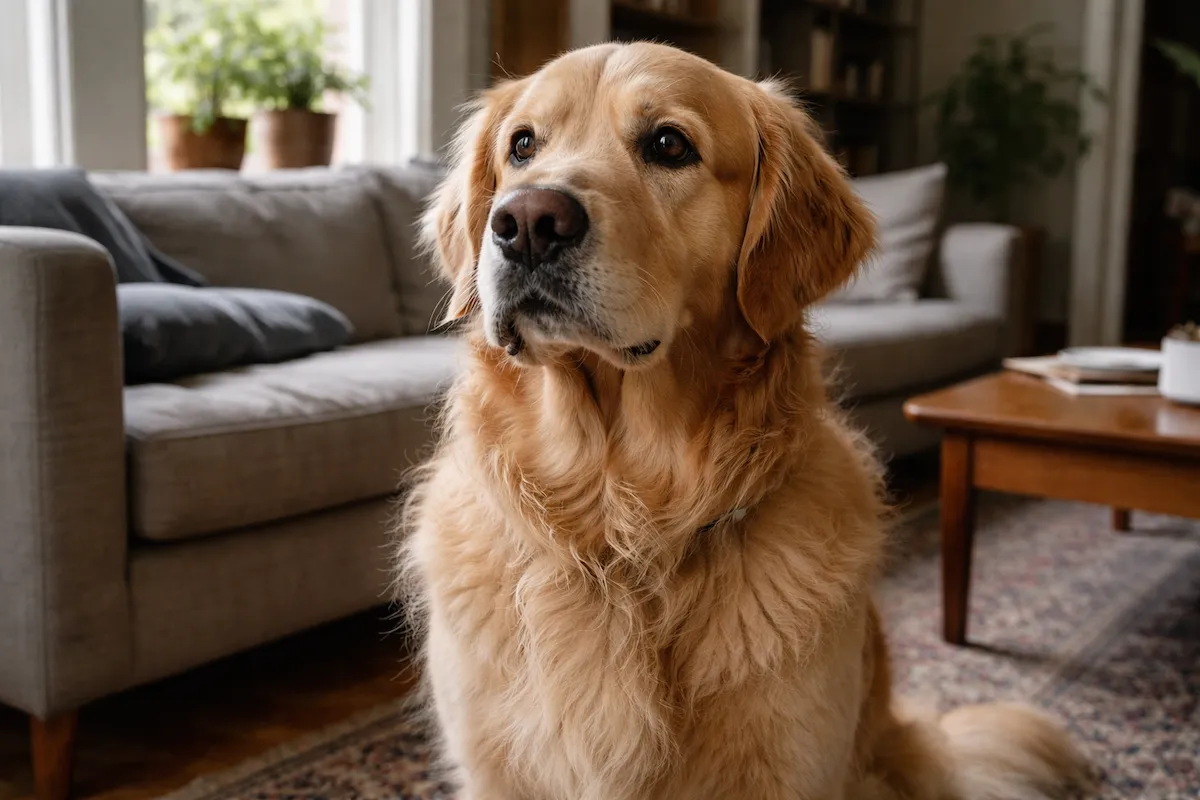
How Overstimulation Affects Behavior Later
One of the most confusing aspects of overstimulation is that its effects are not always immediate. A Golden Retriever may appear calm or controlled in the moment, but the nervous system is still processing what it has experienced.
Because of this, the visible reaction often happens later — sometimes hours after the original stimulation.
Instead of releasing tension right away, the dog carries it forward. When the environment becomes quieter or the pressure shifts, that stored stimulation begins to show up in different forms.
- Sudden bursts of hyperactivity
After appearing calm, the dog may suddenly become very active — running, jumping, or showing “zoomies.” This is not random energy, but a delayed release of accumulated stimulation that was not processed earlier. - Restlessness in the evening
Many owners notice that their dog cannot fully settle later in the day. The dog may pace, shift positions, or remain slightly alert. This often reflects a nervous system that never fully transitioned into recovery after earlier input. - Difficulty focusing outside
On the next walk or outing, the dog may struggle to engage or respond. Attention becomes scattered, and even familiar cues may be harder to process. This is a sign that the system is already carrying residual load. - Increased sensitivity to small triggers
Sounds, movements, or minor changes in the environment may trigger stronger reactions than usual. The dog is not overreacting — it is reacting from a state that is already elevated.
These behaviors are often interpreted as separate issues — excess energy, lack of training, or mood changes. In reality, they are frequently connected to earlier experiences that exceeded the dog’s processing capacity.
Overstimulation works cumulatively:
- Input builds throughout the day
- The dog continues to function, often appearing calm
- Processing is delayed rather than completed
- The release happens later, in a different form
This is why a day that seems “good” on the surface — with walks, interaction, and activity — can still lead to unsettled behavior later on.
What looks like “random” behavior later is often delayed release of earlier stimulation — not a new problem, but a continuation of what the dog has not yet processed.
How to Help a Golden Retriever Recover from Overstimulation
Reduce Input, Not Add More
Instead of increasing activity, give the dog space to process. Quiet environments help the nervous system settle.
Shorten High-Intensity Experiences
Long sessions are not always better. Shorter, controlled exposure prevents overload.
Allow Decompression Time
After stimulating activities, give your dog time without interaction, noise, or demands.
Create Predictable Routines
Consistency reduces the need for constant processing and helps the dog feel more stable.
Encourage Independent Calm
Support your dog in resting without needing to stay engaged with you or the environment.
Recovery from overstimulation comes from reducing pressure — not adding more activity.
Final Thoughts
A Golden Retriever does not need to be hyper to be overwhelmed. Sometimes the quietest behavior carries the most important signals.
By learning to recognize subtle signs of overstimulation, you can respond earlier, reduce stress, and help your dog develop a more balanced and stable emotional state.
Author: XPETSI Editorial Team