Many Golden Retriever owners are puzzled by a contradiction: the dog appears to be tired, yet instead of settling down, the behaviour becomes more hyperactive.
The dog may yawn, have difficulty settling, look physically tired or walk restlessly around the house – all while appearing hyper-stimulated, reactive or unable to relax.
It often seems backwards. Course owners hope that tiredness will bring calmness.
But in many cases the opposite happens.
A tired dog is not always a calm dog. Fatigue can reduce the ability to regulate stimulation and behavior.
Understanding why this happens requires looking at the relationship between stimulation, recovery, and nervous system regulation.
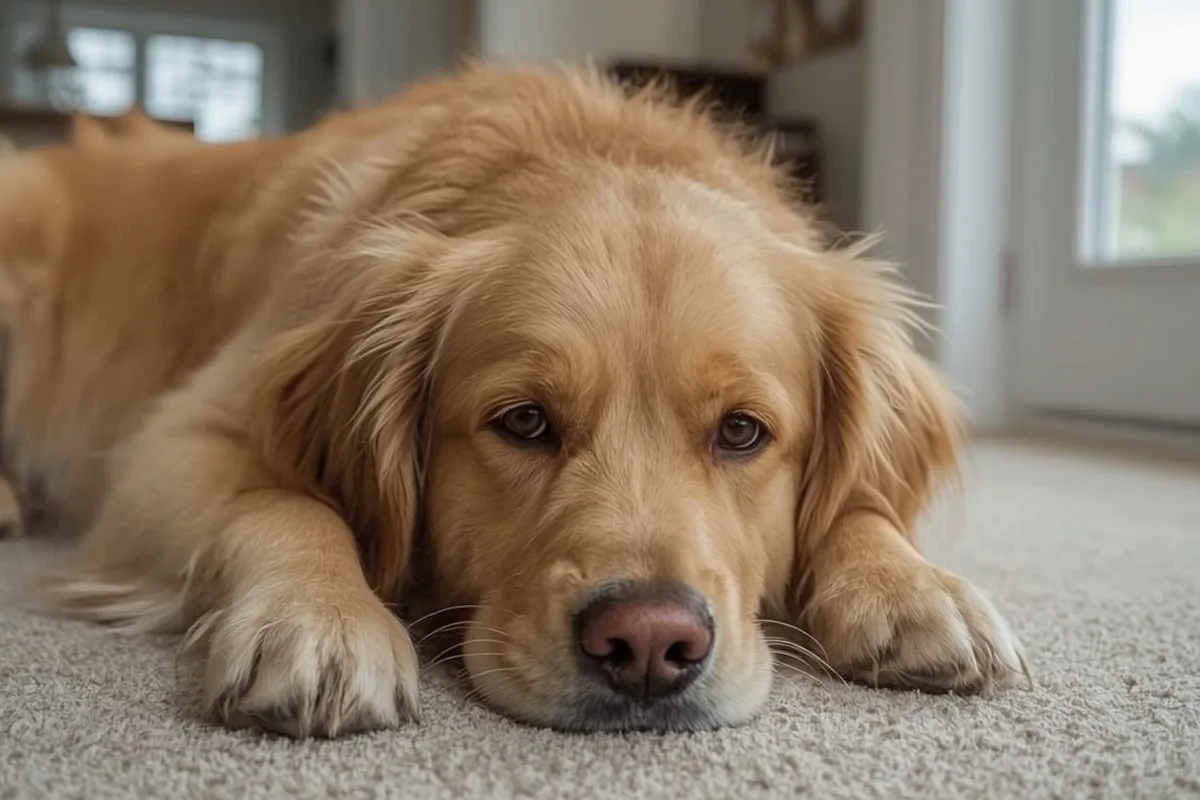
Physical Tiredness and Nervous System State Are Different
One of the biggest misunderstandings is assuming that physical fatigue automatically creates emotional calmness.
A Golden Retriever may be physically tired while the nervous system remains highly activated.
This creates a state where:
- The body feels fatigued
- The brain remains stimulated
- Behavior becomes unstable
The result is a dog that appears exhausted but still cannot fully settle.
Being tired and being relaxed are not the same thing.
Stimulation Continues After Activity Ends
Walks, play, training, social interaction, and environmental exposure all activate the nervous system.
Even after the activity itself ends, the internal activation may continue.
This means the dog can:
- Stop moving physically
- Still remain mentally engaged
- Continue processing stimulation internally
For some Golden Retrievers, this processing phase lasts much longer than owners expect.
If your dog often becomes more restless after activity instead of calmer, you may notice overlap with Why Golden Retriever Hyper After Walk.
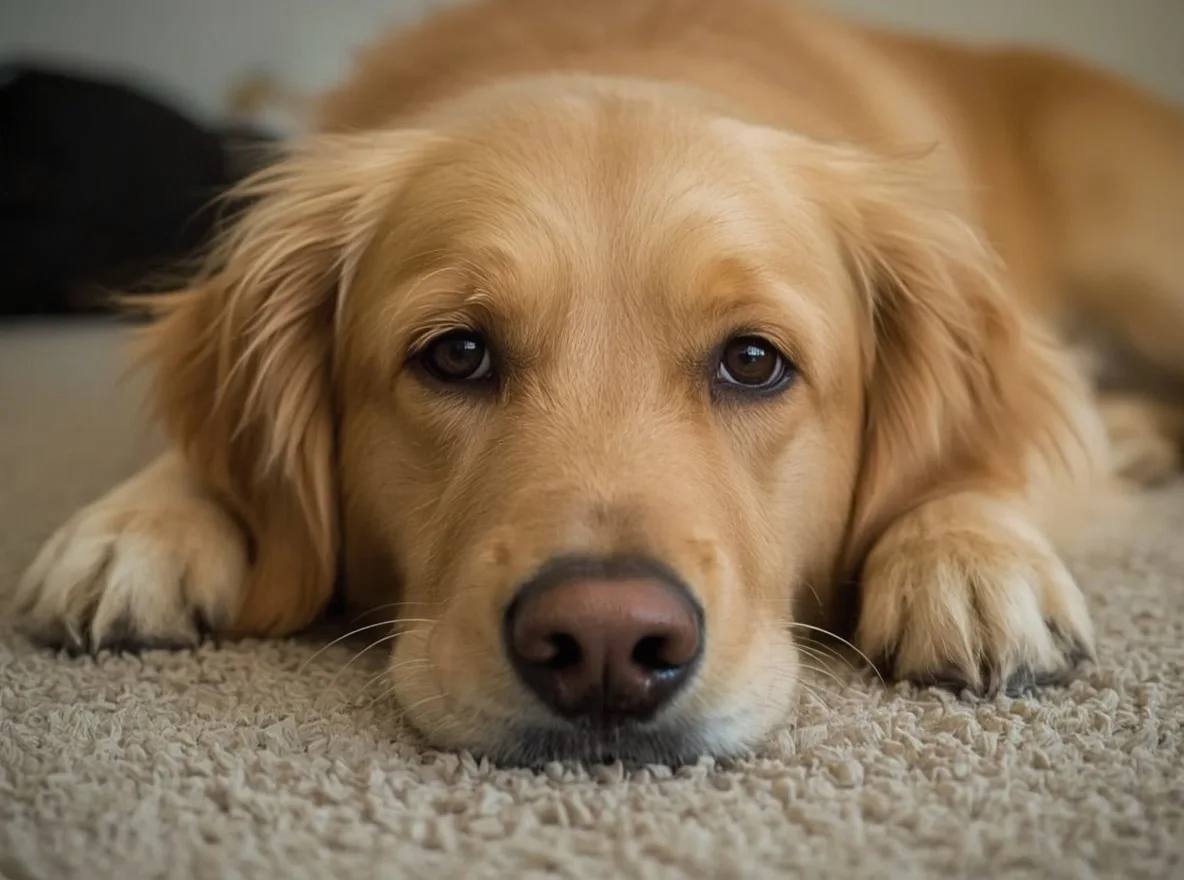
Fatigue Makes Regulation Harder
As tiredness increases, the ability to regulate behavior often decreases.
This is similar to overtired children becoming more hyperactive instead of sleepy.
When the nervous system becomes overloaded:
- Small triggers create larger reactions
- Attention becomes less stable
- Transitions into rest become more difficult
Instead of smoothly settling, the dog fluctuates between brief calmness and sudden bursts of activity.
Hyperactivity in tired dogs is often a sign of reduced regulation, not excess energy.
Accumulated Stimulation Builds Throughout the Day
This pattern often becomes strongest later in the day.
Throughout the day, stimulation gradually accumulates:
- Walks and environmental input
- Interaction with people
- Household activity and noise
- Excitement and alertness
Even when each activity seems manageable, the combined load becomes significant over time.
By evening, the dog may appear exhausted while still carrying unresolved stimulation.
If this pattern is especially noticeable later in the day, you may also relate to Why My Golden Retriever Gets Worse in the Evening.
Stillness Does Not Always Mean Relaxation
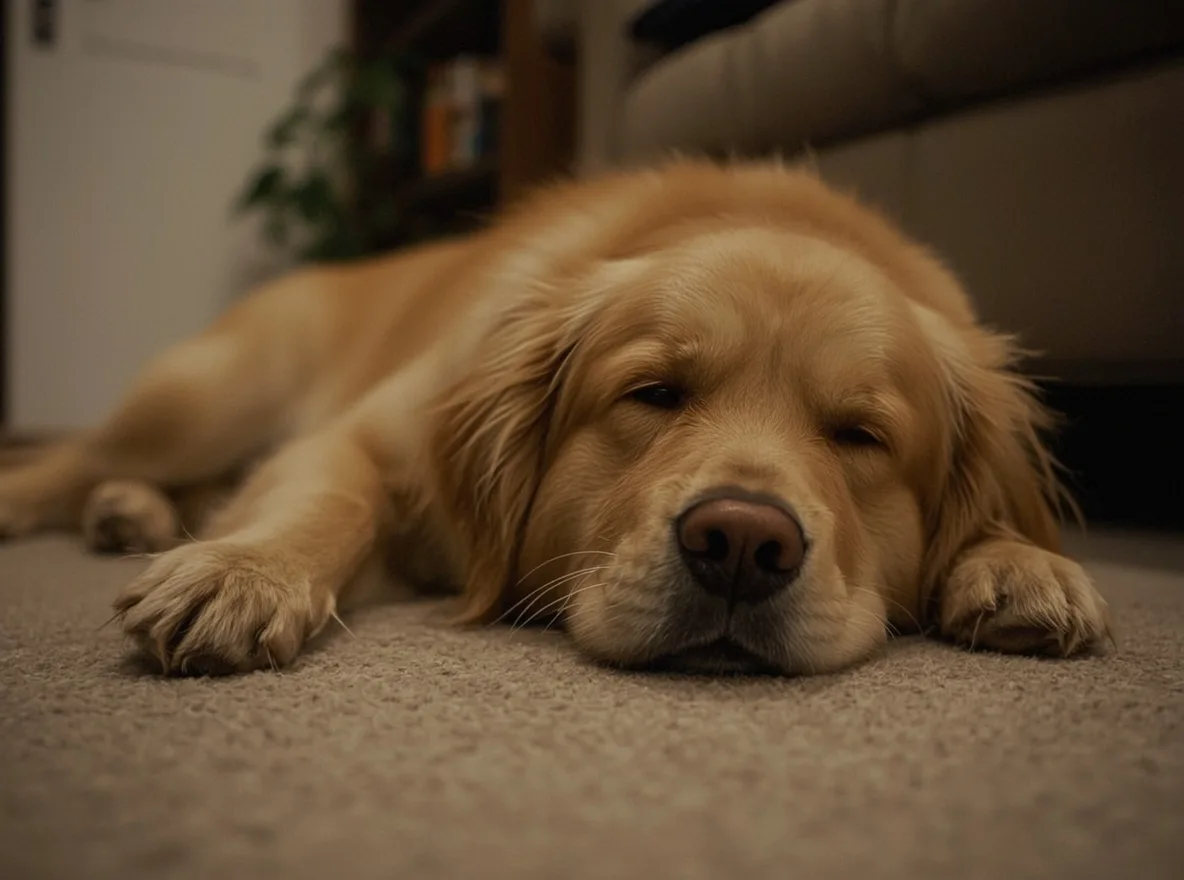
Some dogs appear calm while internally remaining active.
A Golden Retriever may:
- Lie down but remain alert
- Watch movement constantly
- Shift position frequently
- Struggle to fully disengage
This creates the illusion of rest without true recovery.
Dogs showing this pattern often resemble behaviors discussed in Why My Golden Retriever Seems Calm but Is Actually Stressed.
Why Hyperactivity Appears Suddenly
Many owners feel the hyperactivity comes “out of nowhere.”
In reality, stimulation often builds quietly before becoming visible.
The dog may appear relatively calm for a period of time while the nervous system continues carrying unresolved activation.
Eventually, even a small trigger can release that built-up energy:
- Movement in the house
- Excitement
- Interaction
- Noise or sudden change
This creates the impression of a sudden switch from tiredness to hyperactivity.
If your Golden Retriever frequently shifts from calm behavior into bursts of energy, you may also notice overlap with Why My Golden Retriever Is Calm Then Suddenly Hyper.
Signs the Dog Is Overtired Rather Than Relaxed
Common signs include:
- Restlessness despite fatigue
- Difficulty lying still for long
- Frequent pacing or repositioning
- Inconsistent attention
- Sudden bursts of activity
These behaviors often indicate that the dog needs recovery rather than more stimulation.
How to Support Better Recovery
Reduce Stimulation Before Exhaustion Builds
Instead of waiting until the dog is overtired, balance activity with recovery throughout the day.
Support Calm Transitions
Allow quiet decompression after walks, play, or interaction.
Avoid Constant Engagement
Continuous interaction can keep the nervous system activated even when the dog is tired.
Create Predictable Evenings
Lower stimulation and consistent routines help the dog shift into rest more smoothly.
Recovery happens when stimulation fully resolves — not simply when the body becomes tired.
Related Behavior Patterns
Dogs that look tired but remain hyperactive often show connected patterns:
- appearing overstimulated without obvious hyperactivity
- difficulty switching into rest mode
- difficulty relaxing indoors
- hyperactivity later in the day
Final Thoughts
A Golden Retriever that looks tired but acts hyper is often not lacking exercise — it is struggling to fully recover from accumulated stimulation.
By focusing on recovery, transitions, and nervous system balance, you can help your dog move from overtired instability into genuine relaxation.
Author: XPETSI Editorial Team