People often say that Golden Retrievers are friendly, easygoing, and emotionally stable. Because of this, many people think that a dog that looks calm is relaxed and happy. But in reality, being calm on the outside doesn't always mean that everything is calm on the inside.
Some Golden Retrievers appear quiet, still, or well-behaved — yet underneath, they may be experiencing tension, uncertainty, or subtle stress. This type of state is easy to overlook because it does not look dramatic or disruptive.
Calm behavior does not always mean a calm nervous system. In some cases, stillness is a form of coping, not relaxation.
Understanding the difference between true relaxation and suppressed or hidden stress can help you better support your dog’s emotional balance.
What “Calm” Actually Looks Like in Dogs
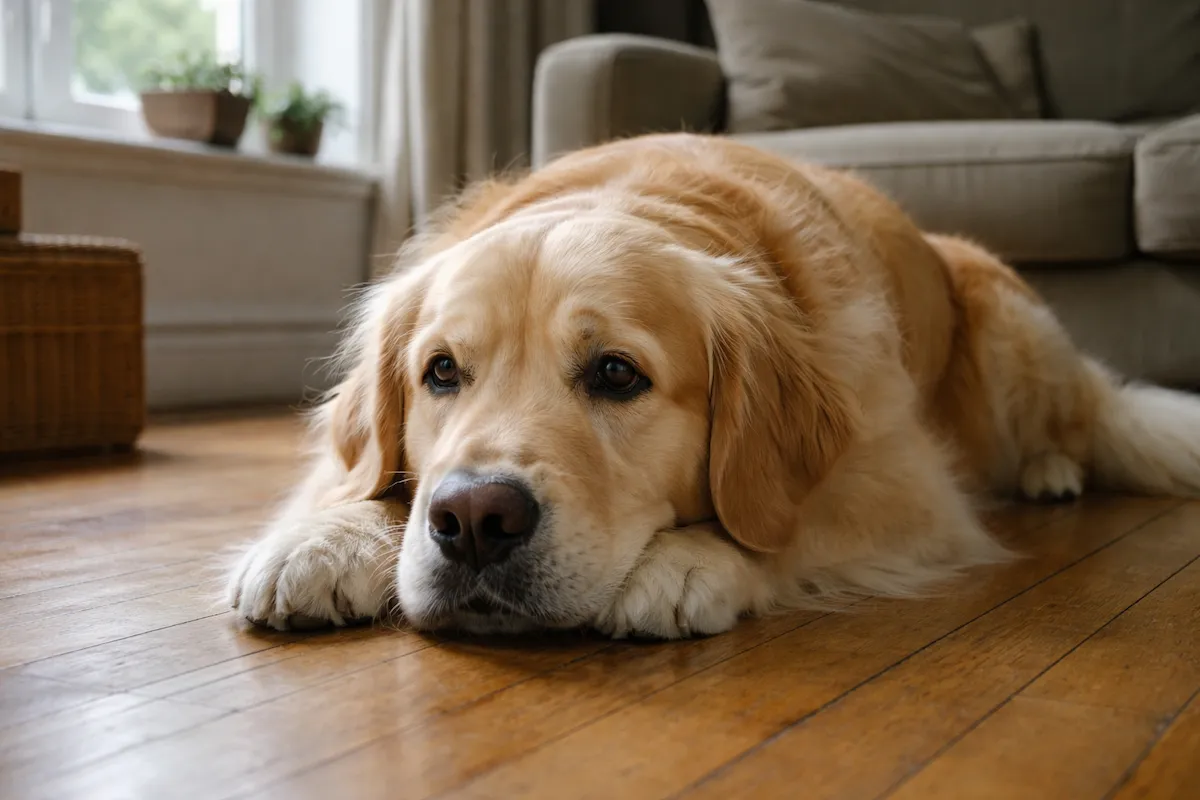
True calmness in a Golden Retriever is not just the absence of movement. It is a state where the dog feels safe, regulated, and comfortable in the environment.
A relaxed dog usually shows:
- Soft body posture
- Loose, natural movement
- Normal breathing rhythm
- Willingness to disengage and rest
In contrast, a dog that looks calm but is internally stressed may appear still — but not truly at ease.
Why a Golden Retriever May Appear Calm While Feeling Stressed
Overstimulation Shutdown
After prolonged stimulation — such as busy walks, social interaction, or high activity — the nervous system can become overloaded. Many people expect a dog to become more active or excitable in this state, but some dogs respond in the opposite way.
Instead of escalating, they reduce outward expression and become very still. This is often described as a “shutdown” response — a way for the nervous system to protect itself from further input.
In this state, the dog may:
- Lie down but remain alert rather than relaxed
- Avoid interaction instead of seeking rest
- Watch the environment closely without engaging
- Take longer to fully settle even in a quiet space
This kind of stillness is not restorative. The body is quiet, but the nervous system is still activated and processing.
What looks like calm after activity can sometimes be the result of overload — not recovery.
Learned Suppression
Golden Retrievers are highly social and responsive to human feedback. Over time, they learn which behaviors are encouraged and which are discouraged. If a dog repeatedly experiences that expressing excitement, uncertainty, or discomfort leads to correction or tension, it may begin to reduce those outward signals.
This does not mean the internal experience disappears. Instead, the dog becomes quieter externally while still processing the same emotions internally.
Signs of this pattern may include:
- Minimal reaction in situations that would normally trigger a response
- Quick “freezing” instead of expressing curiosity or hesitation
- Delayed reactions that appear later as restlessness or hyperactivity
From the outside, this can look like excellent self-control. In reality, it may reflect a dog that is holding tension rather than releasing it.
Uncertainty in the Environment
When a dog is unsure how to respond, stillness is often the safest option. This is especially common in environments that are unpredictable or difficult to read.
For example:
- New places with unfamiliar sounds and smells
- Interactions with unknown people or dogs
- Situations where the dog receives mixed signals
Instead of exploring or reacting, the dog may pause and observe. This can look like calm behavior, but it is often a form of cautious monitoring.
The dog is not relaxed — it is waiting for clarity.
Stillness in uncertain situations is often a strategy to stay safe, not a sign of comfort.
Emotional Overload
When multiple sources of stimulation combine — physical activity, social interaction, environmental noise, and mental effort — the dog’s ability to process information can become overwhelmed.
At this point, instead of continuing to react, the dog may temporarily “disconnect” from active engagement.
This can appear as:
- Reduced responsiveness to cues
- Slower reactions or hesitation
- A distant or unfocused expression
- Periods of stillness followed by sudden bursts of energy later
This is not calmness — it is a sign that the system has reached its limit and is no longer processing efficiently.
When a dog stops reacting, it does not always mean it is calm — sometimes it means it cannot process any more input.
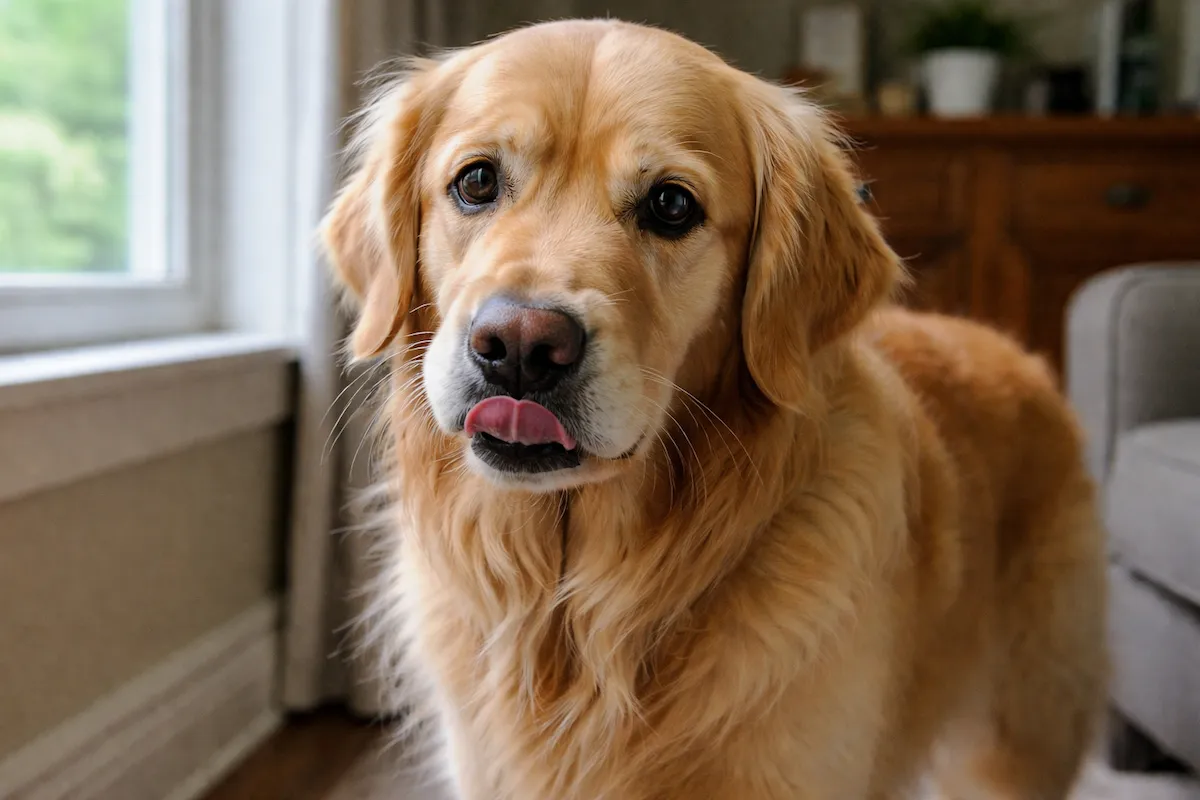
Subtle Signs of Hidden Stress
Golden Retrievers are generally expressive and social dogs, which makes it easy to assume that stress will always be obvious. However, not all stress looks dramatic. In many cases, it appears as small, easily overlooked changes in posture, attention, or behavior.
These signals are often quiet and consistent rather than intense. Because of this, they are frequently mistaken for normal calmness.
- Stiff body posture despite being still
The dog may be lying down or sitting quietly, but the body looks slightly tense rather than loose. Muscles may appear engaged, and movement — when it happens — is controlled rather than fluid. This kind of stillness lacks the softness of true relaxation. - Fixed gaze or “watching” behavior
Instead of disengaging from the environment, the dog continues to monitor it. This may look like quietly staring at a doorway, a person, or a specific area. The dog is not resting — it is staying alert, waiting for something to happen. - Slow or delayed responses
A stressed dog may respond more slowly to cues, sounds, or interaction. This is not always a training issue — it can reflect reduced processing capacity. The dog is taking longer to interpret information because the nervous system is already under load. - Frequent yawning or lip licking
These behaviors are often subtle stress signals rather than signs of tiredness or hunger. They can appear during quiet moments, interactions, or even when nothing obvious is happening. Repetition — rather than the behavior itself — is what makes it meaningful. - Difficulty fully settling into sleep
The dog may lie down and appear to rest, but frequently shifts position, lifts its head, or reacts to small sounds. Sleep may be light and easily interrupted. True rest requires a sense of safety, which may be missing in this state.
Additional subtle indicators can include:
- Choosing proximity to the owner but not fully relaxing
- Following movement without engaging
- Short periods of rest followed by sudden alertness
- Quiet restlessness that builds over time
A dog that looks calm but cannot fully relax is often experiencing low-level, ongoing stress — a state where the body is still, but the mind remains active and watchful.
Why This Is Often Misunderstood
Many owners associate calmness with good behavior. If a dog is quiet, not reacting, and not causing problems, it is easy to assume everything is fine.
However, emotional state and outward behavior are not always aligned.
A Golden Retriever may:
- Appear well-behaved
- Avoid reacting to stimuli
- Stay close and still
— while still feeling tension internally.
How This State Affects Behavior Over Time
If hidden stress is not recognized, it can gradually influence behavior.
- Increased sensitivity to small triggers
- Sudden bursts of hyperactivity
- Difficulty focusing outside
- Restlessness at home
What seems like “random” behavior often has roots in unresolved internal tension.
When stress remains unprocessed, it does not disappear — it shifts into other behaviors.
When Calmness Is Actually Healthy
Not all quiet behavior is a concern. Many Golden Retrievers are naturally gentle and relaxed.
The key difference is quality of rest:
- Healthy calm → flexible, soft, able to disengage
- Stress-based calm → rigid, watchful, unable to fully relax
Observing how your dog transitions between activity and rest provides important clues.
How to Help a Golden Retriever Truly Relax
Reduce Overall Stimulation
Balance activity with recovery. Too much constant engagement can prevent the nervous system from settling.
Create Predictable Routines
Consistency reduces uncertainty. When the dog understands daily patterns, it becomes easier to relax.
Allow Decompression Time
After walks or social interactions, give your dog quiet space to process the experience.
Encourage Independent Rest
Dogs need to learn how to relax without constant interaction or attention.
True calmness develops when the dog feels safe enough to fully let go — not just remain still.
Final Thoughts
A calm-looking dog is not always a relaxed dog. Understanding the difference can change how you support your Golden Retriever.
By paying attention to subtle signals and focusing on emotional balance — not just outward behavior — you can help your dog feel more stable, comfortable, and truly at ease.
Author: XPETSI Editorial Team