A lot of Golden Retriever owners notice that their dog is always looking for attention. They follow them around, watch everything they do, and even look for ways to interact with them when things are quiet. At first, this behavior might seem like love or loyalty. But as time goes on, it might start to feel too much or hard to handle.
The key question is not just why your dog wants attention, but why it seems unable to function without it.
Constant attention-seeking is not always about affection. In many cases, it reflects how the dog regulates its emotional state.
Understanding what drives this behavior can help you create a more balanced dynamic — one where your dog feels secure without needing continuous interaction.
Why Golden Retrievers Naturally Seek Attention
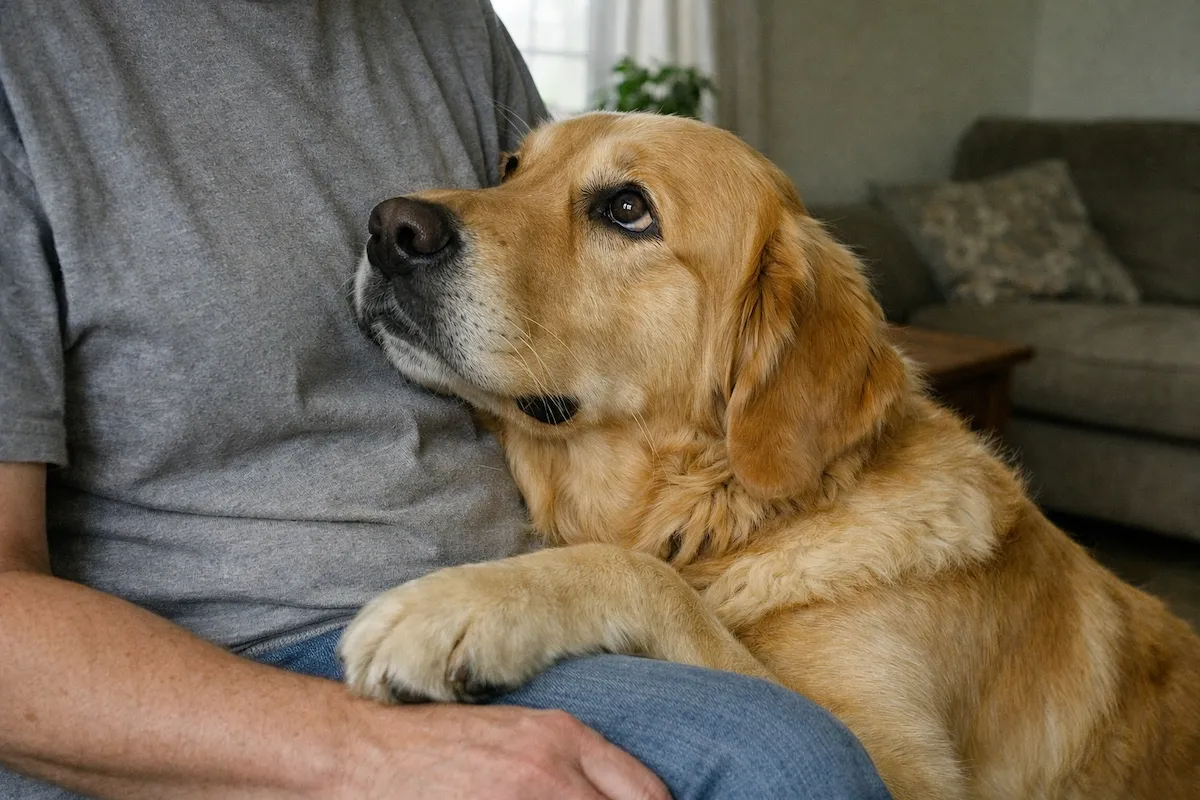
Golden Retrievers were bred to work closely with humans. Their role required continuous awareness of human behavior, responsiveness to cues, and strong social connection.
This makes attention-seeking normal to a certain degree.
- They are highly social and people-oriented
- They naturally look for interaction and feedback
- They tend to stay engaged rather than independent
However, when this tendency becomes constant, it often goes beyond normal social behavior.
When Attention-Seeking Becomes a Pattern
A Golden Retriever that needs constant attention is not just looking for interaction — it is relying on it.
This may look like:
- Following you from room to room
- Watching you continuously
- Interrupting rest to seek interaction
- Struggling to stay alone even briefly
The behavior is not just about wanting attention — it is about needing it to feel stable.
Emotional Regulation Through the Owner
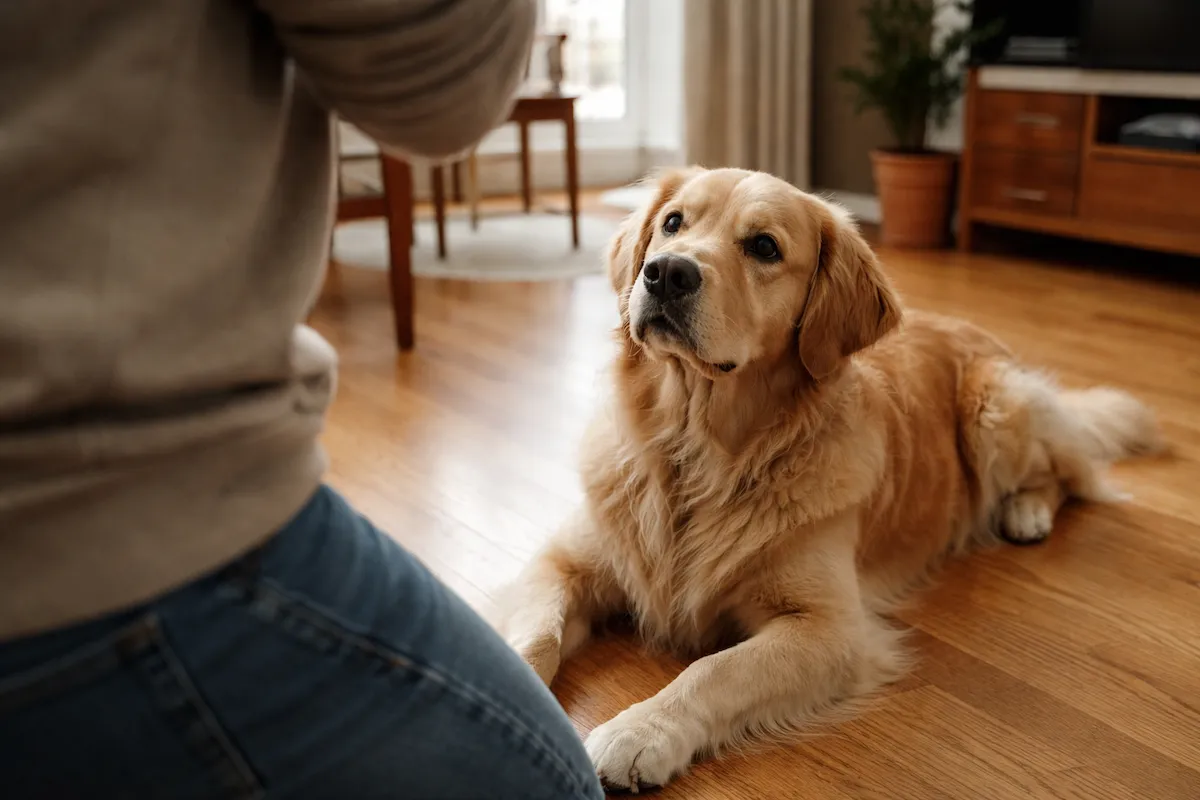
Dogs regulate their emotional state through the environment. Unlike humans, they do not rely on internal reasoning to calm themselves — they respond to what is happening around them. For social breeds like Golden Retrievers, the most important part of that environment is often the owner.
When a Golden Retriever depends heavily on its owner, your presence becomes its main source of stability. Instead of developing independent ways to settle, the dog learns to “borrow” regulation from you.
This means:
- When you are present → the dog feels secure
Your body language, movement, and predictability provide a reference point. The dog can relax because it is constantly receiving information about what is happening. - When you disengage → the dog feels uncertain
When attention or proximity is reduced, the dog loses its main source of orientation. This creates a subtle shift from stability to uncertainty, even if nothing in the environment has actually changed.
In this pattern, the dog is not regulating itself — it is staying regulated through you.
This often shows up as:
- Watching you to understand what will happen next
- Seeking interaction when internal tension increases
- Struggling to settle when you are inactive or out of sight
- Becoming more alert when your behavior changes
Over time, this creates a dependency loop:
- The dog feels uncertain → seeks attention
- Attention provides relief → tension decreases
- The behavior is reinforced → reliance increases
Because this pattern works in the short term, it becomes the default strategy. The dog does not learn alternative ways to process stress, rest independently, or tolerate low levels of uncertainty.
Importantly, this does not mean the dog is overly attached in a negative sense. It means the dog has learned that regulation comes from external interaction rather than internal balance.
Attention becomes a form of regulation — not just connection. The dog is not simply looking for engagement, but for a way to stabilize its internal state.
Common Reasons This Behavior Develops
Lack of Independent Rest
If a dog rarely experiences time without interaction, it may not learn how to relax on its own.
Constant Engagement
Frequent play, talking, or responding to every signal can unintentionally reinforce attention-seeking.
Inconsistent Routines
Unpredictable daily patterns can increase the need to monitor the owner for cues.
Overstimulation
When the dog is frequently stimulated but not given enough recovery time, it may rely on interaction instead of settling.
How This Behavior Reinforces Itself
Attention-seeking often becomes a cycle:
- The dog seeks attention
- The owner responds
- The behavior is reinforced
- The dog relies on it more frequently
Over time, the dog learns that attention is always available — and begins to expect it.
How It Affects Behavior Over Time
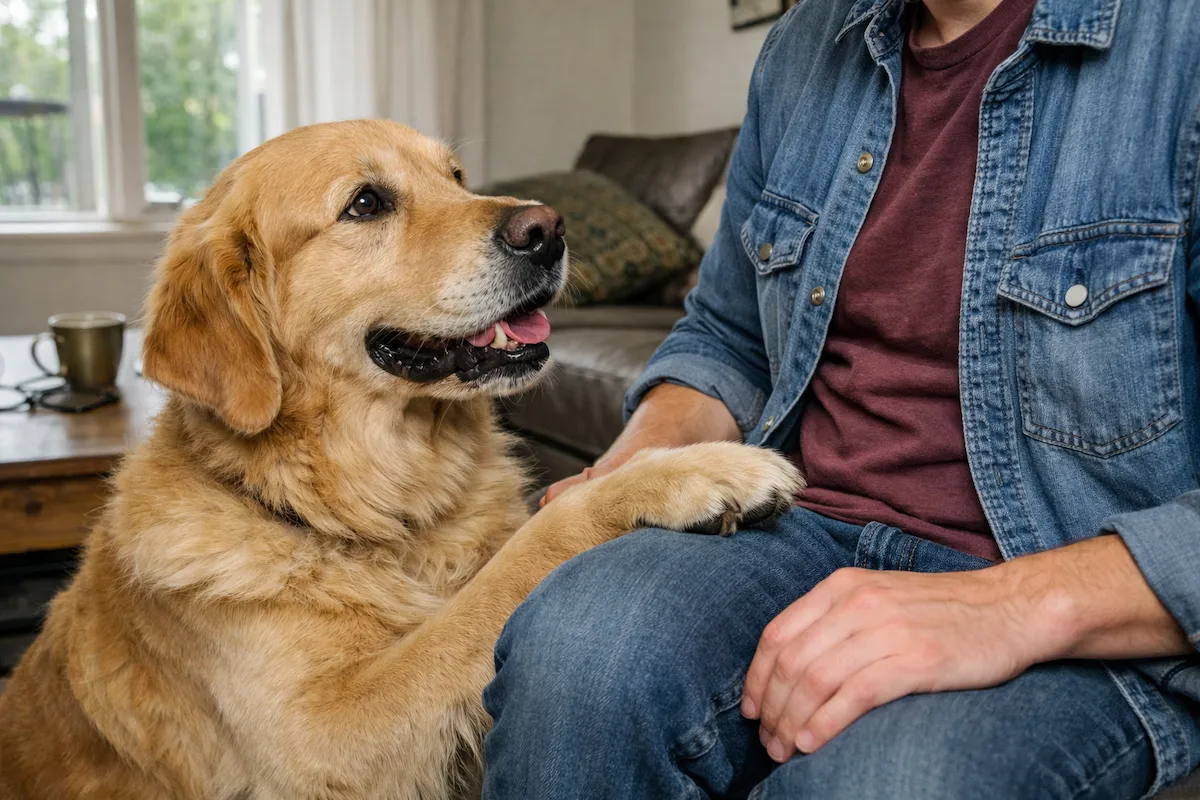
When a dog depends on constant attention, it can influence other behaviors:
- Difficulty settling alone
- Increased sensitivity to your movements
- Faster transitions from calm to excitement
- Reduced ability to relax independently
These changes are not separate problems — they are connected to the same underlying pattern.
Dependence on attention reduces the dog’s ability to regulate itself.
How to Support More Balanced Behavior
When a Golden Retriever relies on constant attention, the goal is not to remove connection — but to create balance. This means helping the dog feel stable not only during interaction, but also in moments of quiet and independence.
Change does not come from suddenly reducing attention, but from gradually reshaping how the dog experiences your presence, absence, and neutral time.
Encourage Independent Calm
Create small, consistent moments where your dog can rest without interaction. This might mean sitting in the same room without engaging, or allowing the dog to settle slightly further away instead of right next to you.
At first, the dog may continue to monitor you closely. This is normal. The goal is not to force distance, but to allow the dog to experience calm without needing constant feedback.
Over time, these moments help the dog realize that nothing needs to happen — and that it is safe to fully relax.
- Let the dog stay nearby without engaging
- Avoid calling attention to every calm moment
- Allow rest to happen naturally, not as a “task”
Reduce Constant Feedback
Many attention-seeking patterns are unintentionally reinforced through frequent responses. Talking, eye contact, or small interactions may seem harmless, but they teach the dog that attention is always available.
By allowing neutral moments — where nothing happens — you create space for the dog to settle on its own.
This does not mean ignoring the dog completely, but rather being more selective:
- Respond intentionally, not automatically
- Allow pauses between interactions
- Let some attention-seeking behaviors pass without reaction
These gaps are important. They reduce the expectation of constant engagement and support more stable behavior.
Build Predictable Structure
Predictability reduces the need for constant monitoring. When the dog understands the rhythm of the day, it no longer needs to watch you to anticipate what will happen next.
Structure does not need to be rigid — it just needs to be consistent enough to feel reliable.
- Regular timing for walks, meals, and rest
- Clear transitions between activity and calm periods
- Similar patterns from day to day
With consistency, the dog begins to trust the flow of the day instead of relying on your moment-to-moment behavior.
Separate Interaction from Presence
One of the most important shifts is helping your dog understand that your presence does not always mean interaction.
For many dogs, especially those that seek constant attention, being near the owner automatically triggers engagement. This keeps the nervous system in a state of readiness rather than rest.
By maintaining calm, neutral presence without interaction, you show the dog that it is safe to relax even when you are nearby.
- Move around without always engaging the dog
- Sit or work without initiating interaction
- Allow the dog to observe without needing to respond
Over time, this reduces the need to monitor you constantly and supports deeper relaxation.
A balanced dog can enjoy attention — but does not depend on it to feel stable. True confidence comes from the ability to rest, observe, and exist comfortably without constant interaction.
When Attention-Seeking Is Healthy
It is important to remember that Golden Retrievers are naturally social. Wanting attention is not a problem on its own.
The difference is flexibility:
- Healthy → seeks attention, then relaxes
- Dependent → seeks attention constantly, struggles without it
Final Thoughts
A Golden Retriever that needs constant attention is not “too needy” — it is showing how it has learned to feel secure.
By shifting from constant engagement to balanced interaction, you can help your dog develop confidence, independence, and a calmer internal state.
Connection remains — but it becomes a choice, not a necessity.
Author: XPETSI Editorial Team