Border Collies are famous for being “the smartest dog breed” — and that reputation often pushes owners into one of two extremes. Some don’t give the brain enough to do and end up with boredom behaviors. Others try to “use the brain” constantly: puzzles, drills, trick chains, games, enrichment, training sessions… and the dog becomes more restless, not calmer.
Mental work should create clarity and satisfaction. If your Border Collie becomes more edgy after “brain games,” the problem may be mental overload, not lack of stimulation.
This article explains how much mental work is usually healthy for Border Collies, what “too much” looks like, why cognitive overload happens so easily in this breed, and how to build a daily rhythm where engagement leads to real rest.
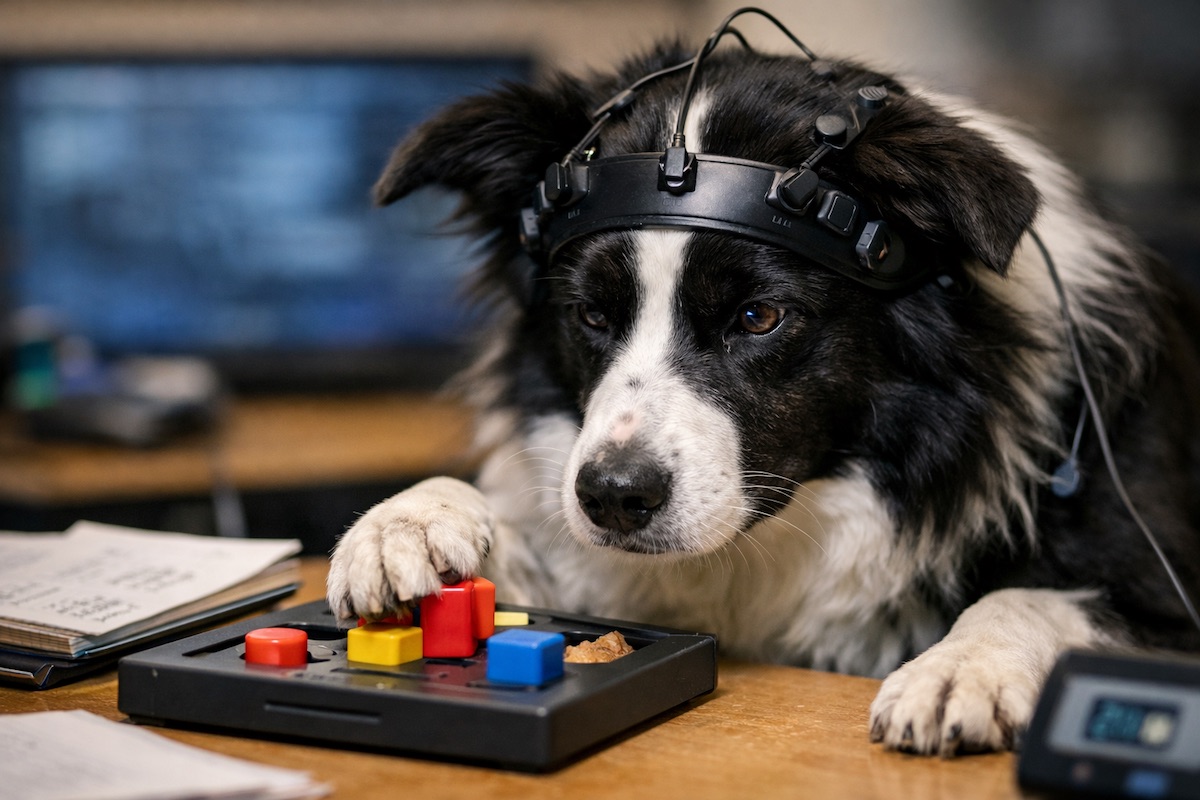
Why Border Collies Hit Mental Overload Faster Than Most Breeds
Border Collies were bred for sustained concentration, decision-making, and constant environmental tracking — something many owners begin to notice when living with a Border Collie’s constantly active mind. That doesn’t just mean they can learn faster — it means their brains stay “online” longer, especially in stimulating homes.
Many Border Collies struggle when:
- Every interaction becomes a task
- The dog is always “waiting for the next job”
- Training sessions are intense but recovery is missing
- High-speed play and mental challenges happen back-to-back
High intelligence does not equal unlimited capacity. Even “smart” dogs need mental recovery the same way athletes need rest days.
What Counts as Mental Work?
Mental stimulation is anything that requires your dog to process information, make choices, or maintain focus. It’s not just trick training.
- Structured training (obedience, tricks, skills)
- Scent work (searching, tracking, sniff-and-find)
- Problem solving (food puzzles, simple challenges)
- Impulse control (wait, settle, leave it, slow transitions)
- Environmental thinking (learning to stay calm around triggers)
Some activities are mentally demanding even if they don’t look like “training.” A busy walk with constant triggers can be a huge cognitive workload for a sensitive Collie — especially when compared to calmer, more thoughtful movement patterns described in slower thinking-focused walks.
So… How Much Mental Stimulation Is “Enough”?
There isn’t one perfect number because it depends on age, lifestyle, and the dog’s baseline arousal. But for most adult Border Collies, a healthy daily target looks like:
- 30–60 minutes of mental work total across the day
- Broken into 5–15 minute sessions
- Followed by real downtime after each session
If you do mental work in small “blocks,” and your dog can actually rest afterward, you’re usually in the healthy zone.
A typical balanced day might include:
- One short training session (5–10 min)
- One scent/search game (5–10 min)
- One calm enrichment item (puzzle/chew) during downtime
- One brief impulse-control routine in the evening (3–5 min)
When Mental Work Becomes Too Much
Border Collies often look like they want “more” because they are intense, responsive, and highly pattern-driven. But “more” can quietly create cognitive stress.
Overload usually happens when:
- Sessions are long and frequent
- Activities are high-arousal (fast, exciting, loud)
- There are no clear transitions into rest
- The dog is constantly asked to focus without recovery
A dog can be mentally exhausted and still unable to sleep. That “tired but wired” state is one of the clearest signs the workload is too high.
Signs Your Border Collie Is Mentally Overloaded
“Too much mental stimulation” rarely looks like a dog shutting down. More often it looks like a dog that can’t switch off.
- Restlessness indoors even after activity
- Pacing, scanning, difficulty settling
- Increased reactivity to sound/movement
- Whining or vocalizing during downtime
- Training focus gets worse (not better)
- More frantic behavior after enrichment or drills
If your dog lives in constant motion indoors, this often overlaps with the same pattern described in Endless Motion Indoors: When a Border Collie Can’t Switch Off.
Mental Underload vs Mental Overload
The tricky part is that boredom and overload can look similar: restlessness, attention-seeking, frustration. The difference is the dog’s response to structured engagement.
| Behavior | Underloaded | Overloaded |
|---|---|---|
| After a short thinking task | Calmer and satisfied | More edgy or restless |
| Focus in training | Improves quickly | Declines over time |
| Ability to rest | Can settle after work | Struggles to switch off |
| Reactivity to triggers | Stable | Increases |
If your dog becomes more chaotic after you “add brain work,” you’re probably solving the wrong problem.
What “Healthy Mental Work” Looks Like
Healthy mental stimulation has structure. It starts, it ends, and it leads into rest.
- Clear beginning (cue, routine, setup)
- Short duration (stop while the dog still wants more)
- Low to moderate arousal (focus over excitement)
- Recovery afterward (quiet time, settle spot, decompression)
Stopping early is not “under-training.” It prevents overload and builds a dog that can finish work and relax.
Common Owner Mistakes That Create Cognitive Stress
1) Turning Every Moment Into Training
If the dog is constantly “on,” the brain never recovers.
2) Chaining Hard Tasks Together
Fetch → trick drills → puzzle → busy walk can become one long stress block, especially when dogs already show reduced focus from overtraining patterns.
3) No “Off Switch” Skill
Some Border Collies don’t naturally rest. Relaxation has to be practiced, particularly for dogs that struggle because calmness doesn’t come automatically to high-drive herding breeds.
4) High-Arousal Mental Games
Fast, exciting games can be mentally demanding and emotionally activating at the same time.
Many owners notice overload only after the dog begins showing subtle pressure signals similar to those explored in the hidden stress that can come from intelligence itself.
How to Reduce Mental Overload Without Creating Boredom
Lower Intensity Before Adding More
For a few days, reduce high-arousal training and replace it with calm focus tasks (sniffing games, slow obedience, settle practice).
Use “Work Blocks” and “Recovery Blocks”
After each mental session, plan a quiet block of time. This is where the nervous system resets — something many owners build intentionally when adding mental recovery into the daily routine.
Teach an Off Switch
Practice a predictable relaxation routine: walk ends → water → settle spot → quiet chew → rest.
Make Walks Less Mentally Heavy
Not every walk should be challenging. Some walks should be decompression, not training — especially for dogs that show constant environmental scanning during outings.
The goal is not to keep your Border Collie busy. The goal is to create a rhythm where thinking leads to peace, not to more tension.
When to Consider Professional Help
If your Border Collie becomes increasingly reactive, cannot settle despite routine changes, or shows escalating anxiety, working with a trainer experienced in high-drive herding breeds can help. Also rule out pain or discomfort if the behavior changes suddenly.
Final Thoughts
Mental stimulation is essential for Border Collies — but quantity is not the main problem. Structure is.
Most Border Collies do best with short, predictable mental work followed by real downtime. If your dog can’t relax, reducing workload and teaching recovery often helps more than adding new games.
If you’re unsure whether your dog is bored or overloaded, watch what happens after a short calm thinking task. A balanced Border Collie becomes quieter. An overloaded Border Collie becomes more tense. That difference tells you what your next step should be.
Author: XPETSI Editorial Team