Many Golden Retriever owners notice a pattern that repeats almost every day: as evening approaches, their dog becomes more restless, reactive, or difficult to settle. Behavior that seemed manageable earlier in the day suddenly feels more intense.
This can look like hyperactivity, attention-seeking, loss of focus, or general instability. It often feels like something has changed — but in most cases, nothing new has happened. The difference is timing.
Evening behavior is rarely random. It is often the result of everything that has built up throughout the day.
Understanding why this happens can help you see the connection between daily experiences and evening behavior.
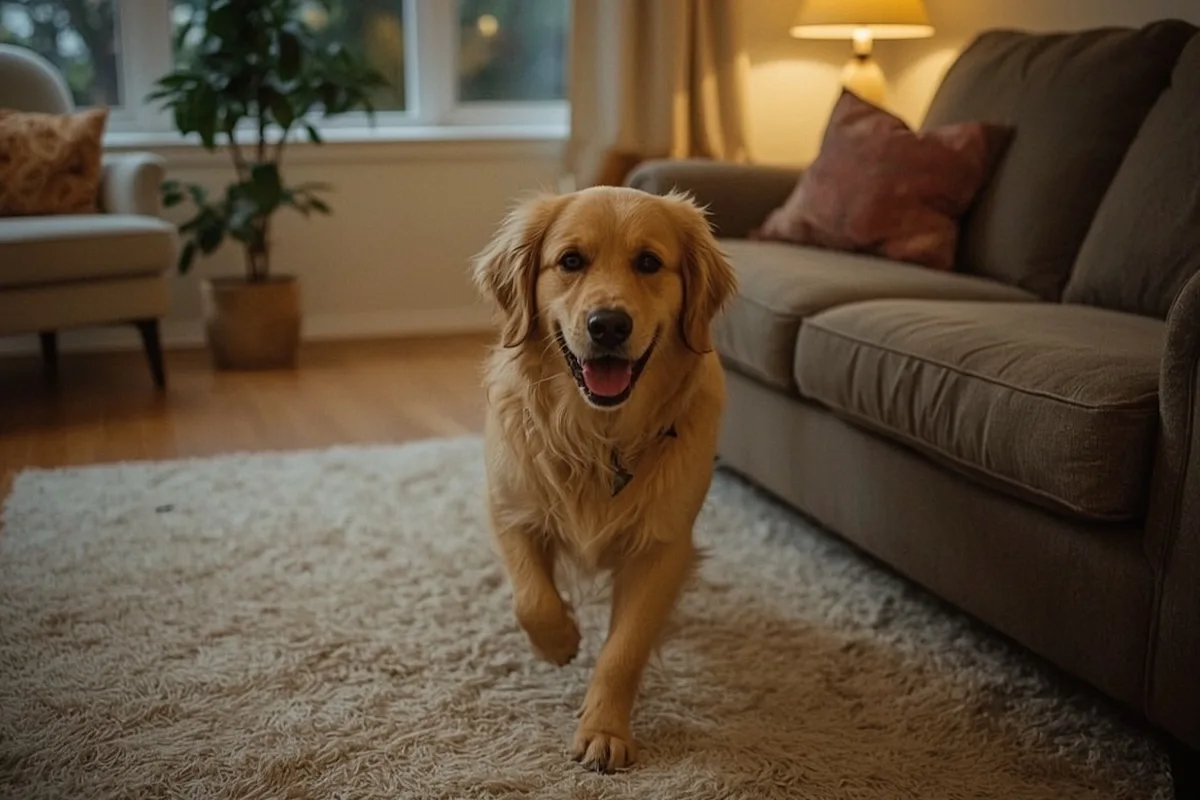
The Day Builds Up Stimulation
Throughout the day, your Golden Retriever experiences multiple layers of input. Even normal, everyday activities contribute to this build-up. The key is not that any single moment is too intense — it is how all of them combine over time.
Each experience adds a small amount of activation to the nervous system. On its own, it may seem insignificant. But when these experiences happen repeatedly without enough recovery, the effect becomes cumulative.
Common sources of daily stimulation include:
- Walks with constant sensory input
Walks are not just physical exercise — they are rich in information. Every step introduces new smells, sounds, movement, and interactions that the dog actively processes. - Play and interaction
Engagement with the owner or other dogs increases emotional activation. Even positive interaction adds to the overall load. - Household movement and noise
Doors opening, people moving, small sounds, and daily activity keep the environment dynamic. The dog remains partially attentive throughout the day. - Moments of excitement or alertness
Short bursts of stimulation — hearing a noise, reacting to movement, greeting someone — may seem brief, but they still activate the nervous system.
Each of these experiences adds to the overall level of activation. The important detail is that the nervous system does not reset instantly between them.
While some stimulation is processed immediately, not all of it is fully resolved before the next activity begins.
This creates a layering effect:
- New input arrives before previous input is processed
- Activation gradually increases rather than returning to baseline
- The dog remains in a partially active state for longer periods
Because this process is gradual, it is often invisible. The dog may appear calm at different points in the day, even though internal stimulation is still accumulating.
By the time evening arrives, the total load can be much higher than it seems based on any single activity.
The issue is not one specific event — it is the accumulation of many small inputs that never fully resolve. What happens in the evening often reflects everything that came before it.
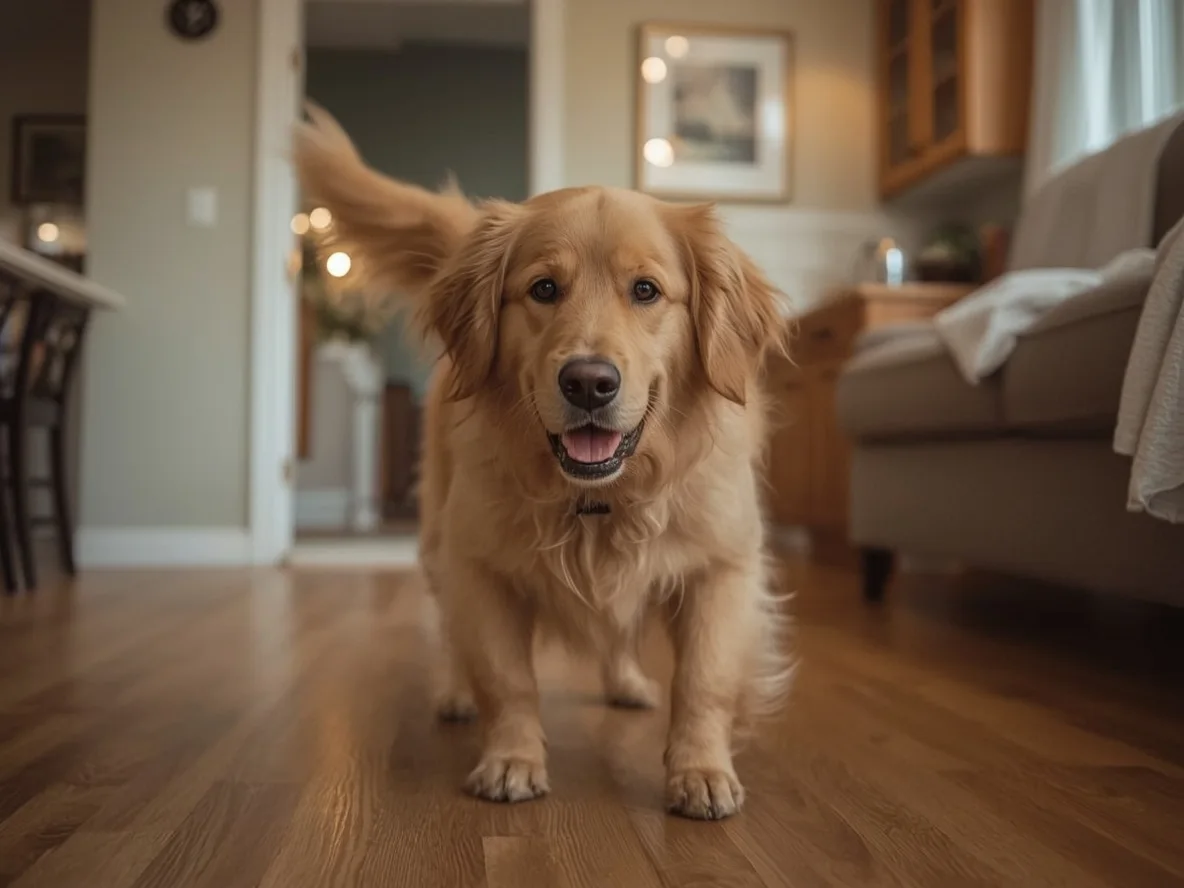
Stimulation Does Not Reset Automatically
It is easy to assume that once an activity ends, the dog returns to a neutral state. In reality, the nervous system often stays partially activated.
This means:
- Energy carries forward into later moments
- Internal processing continues even during quiet periods
- The baseline level of activation gradually rises
By the evening, the dog may already be operating at a higher level of internal tension than earlier in the day.
The dog you see in the evening is not starting fresh — it is carrying the entire day with it.

Fatigue Reduces Regulation
Another important factor is fatigue.
Just like humans, dogs do not always become calmer when they are tired. In many cases, tiredness makes it harder to regulate behavior.
This can lead to:
- Lower tolerance for stimulation
- Faster reactions to small triggers
- Reduced ability to settle
Instead of creating calmness, fatigue can make behavior feel more unstable.
Evening Environments Are Often Less Predictable
Evenings often bring subtle changes in the environment. These changes are not always obvious, but they affect how a dog experiences the space.
During the day, routines tend to be more structured. Movement, activity, and interaction often follow a clearer pattern. By evening, this structure can become less consistent.
Common changes include:
- More movement in the home
People return, move between rooms, prepare meals, or shift activities. Even small increases in movement create more visual and social input for the dog to monitor. - Changes in lighting
As natural light fades and artificial lighting is introduced, shadows, reflections, and visual contrast change. Dogs may become more attentive to subtle visual shifts that were not noticeable earlier. - Different routines or interactions
Evening routines are often less predictable. There may be more spontaneous interaction, varied activity, or changes in timing that the dog cannot fully anticipate.
Individually, these changes are minor. But combined with the stimulation already accumulated throughout the day, they increase the demand on the dog’s attention.
Instead of winding down, the dog remains engaged:
- Monitoring movement
- Responding to small changes
- Staying alert to what might happen next
This prevents the nervous system from fully shifting into a resting state.
Another important factor is anticipation. If the dog associates evening with activity, interaction, or unpredictability, it may remain mentally “ready” rather than relaxed.
As a result, the environment does not signal rest — it signals continued engagement.
These changes may seem minor, but they can increase the need for the dog to stay attentive and engaged. Instead of reducing stimulation, the evening environment often adds to it — making relaxation more difficult.
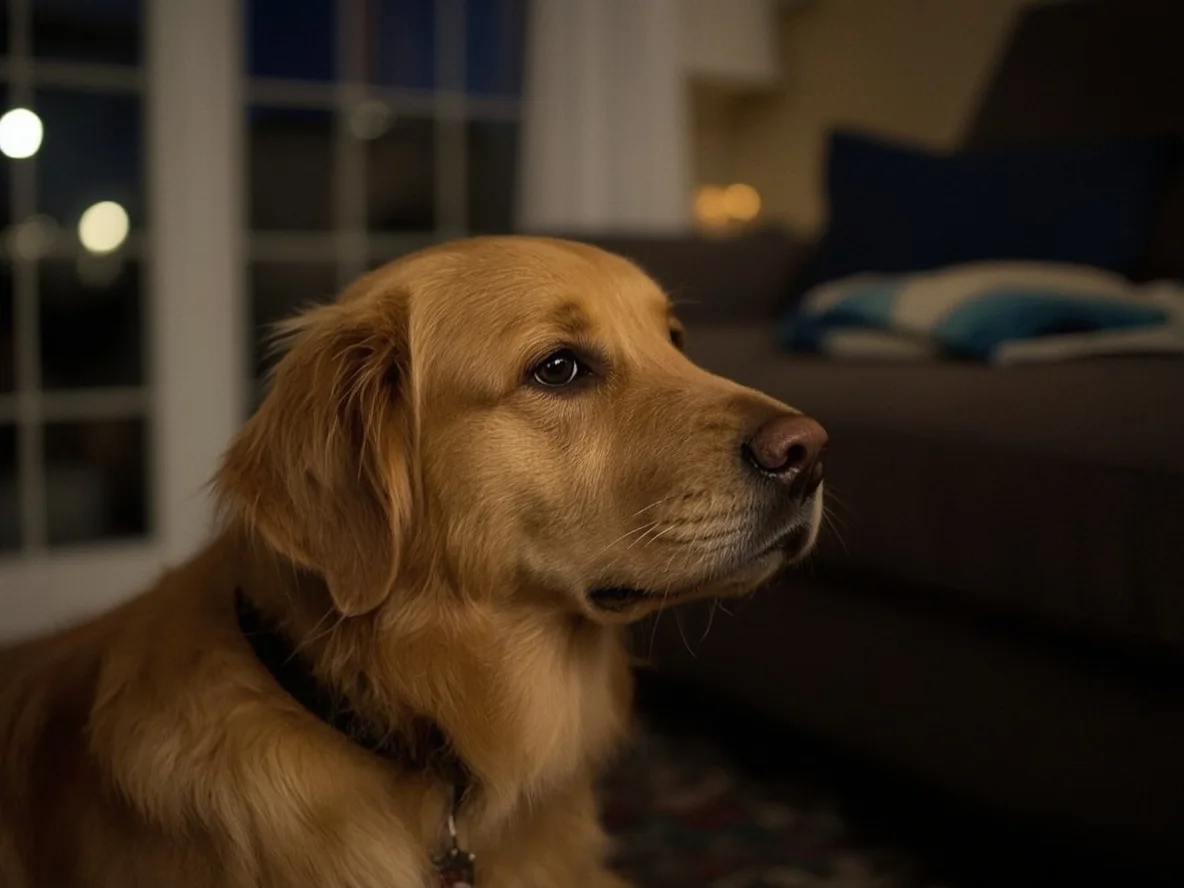
Transitions Become Harder
By the end of the day, the dog has less capacity to move smoothly between states.
Instead of:
activity → processing → rest
The pattern may look like:
- Activity → partial rest → renewed activity
- Short pauses without full relaxation
- Frequent shifts between calm and active behavior
This creates a feeling of instability, where behavior changes quickly and unpredictably.
The issue is not just energy — it is the difficulty of completing transitions after a full day of stimulation.

Why Behavior Feels Worse
Because of accumulated stimulation and reduced regulation, behavior in the evening often appears more intense:
- Hyperactivity feels stronger
- Attention becomes less stable
- Small triggers lead to bigger reactions
These are not new behaviors — they are amplified versions of patterns that were already present earlier in the day.
How to Support More Stable Evenings
Reduce Late-Day Stimulation
Avoid adding high-intensity activity late in the day when the dog is already carrying stimulation.
Create Clear Wind-Down Periods
Introduce calmer phases before evening fully begins. This helps the dog transition earlier rather than all at once.
Allow Quiet Decompression
Provide time and space for the dog to process without interaction or demands.
Maintain Predictable Patterns
Consistency in the evening reduces the need for constant monitoring and helps the dog settle more easily.
Stable evenings are not created at the end of the day — they are shaped by how stimulation is managed throughout it.
Final Thoughts
A Golden Retriever that “gets worse” in the evening is not changing randomly — it is showing the cumulative effect of the entire day.
By understanding how stimulation builds and how transitions work, you can support more stable behavior and help your dog settle more naturally as the day comes to an end.
Author: XPETSI Editorial Team