Most Golden Retriever owners think that their dog will naturally settle down at home. It makes sense that the dog should come inside and relax after going for a walk, playing, and spending time with people.
But for some dogs, the opposite is true. Instead of calming down, they stay restless, alert, or always looking for something to do. It doesn't seem like true relaxation happens, even when things are quiet.
Difficulty relaxing at home is not always about excess energy — it is often about how the dog processes stimulation and transitions into rest.
Understanding why this happens can help you support a more balanced and stable state, rather than trying to “tire the dog out” without addressing the underlying pattern.
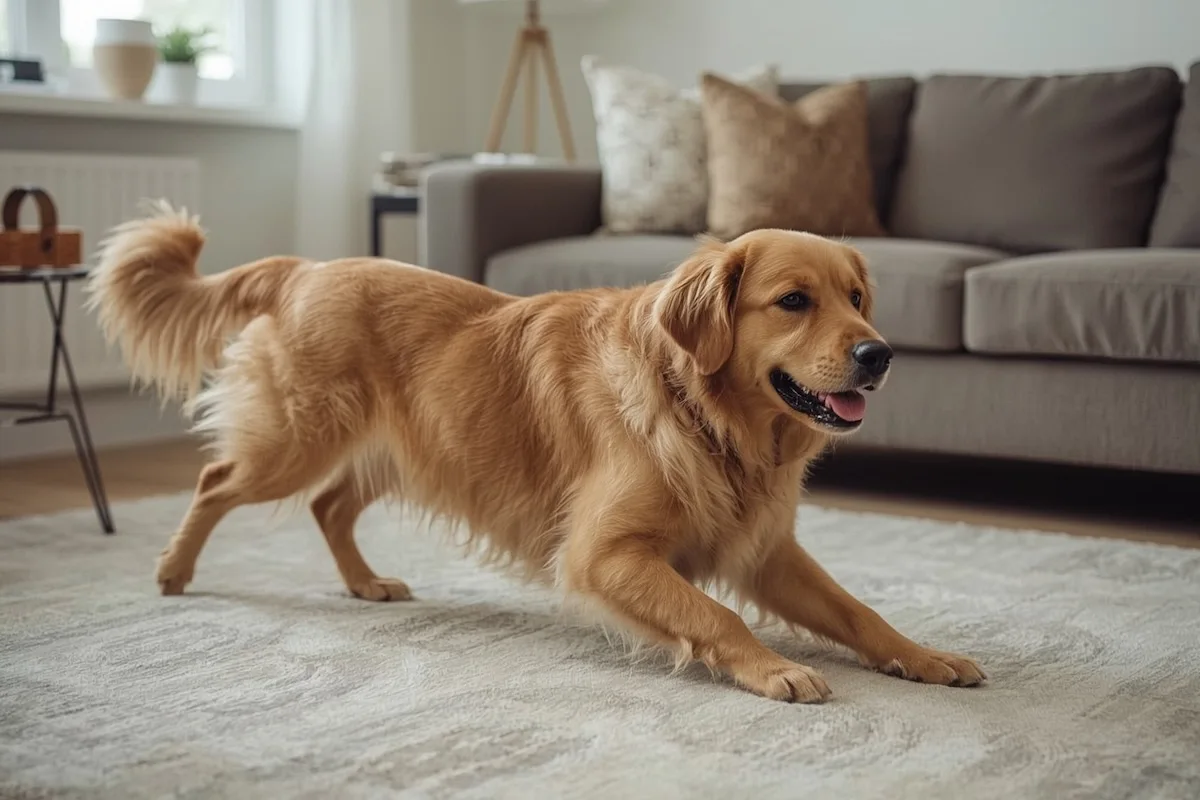
Home Does Not Always Mean Calm
While home is physically safe, it is not always mentally quiet for the dog.
Many Golden Retrievers remain engaged with their environment even indoors. Movement, sounds, and human activity can keep the nervous system active.
- People moving around the house
- Small environmental noises
- Anticipation of interaction
- Previous patterns of constant engagement
Instead of signaling rest, the home environment may still feel active and unpredictable.
Relaxation depends on internal state, not just physical location.
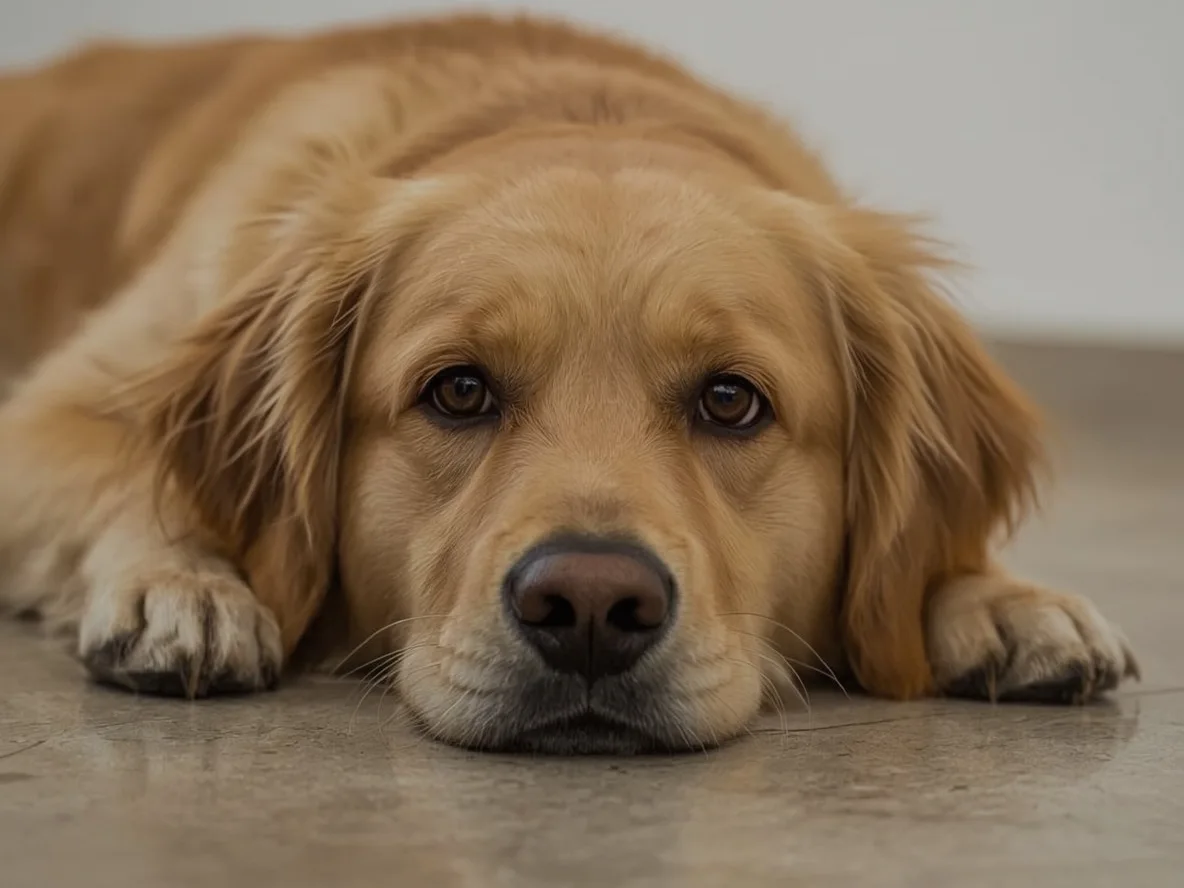
Overstimulation Carries Into the Home
One of the most common reasons a Golden Retriever struggles to relax is that stimulation does not end when the activity ends. From a human perspective, a walk or play session is finished once you return home. For the dog, however, the experience continues internally.
During activity, the nervous system becomes activated. Sights, sounds, smells, social interaction, and movement all contribute to a higher level of arousal. When this input is continuous, the system does not immediately return to baseline.
Instead, there is a carryover effect:
- The body slows down, but the nervous system remains active
- The environment becomes quieter, but internal processing continues
- External movement stops, but mental engagement does not
After walks, play, or social interaction, the dog often enters a processing phase rather than immediate rest. This phase is necessary, but if stimulation has been too intense or too prolonged, it becomes harder for the system to transition into full relaxation.
This can look like:
- Restlessness after returning home
Instead of settling, the dog continues to move, seek interaction, or shift attention between small stimuli. - Inability to lie down for long
The dog may lie down briefly but quickly get up again, as if it cannot maintain a resting state. - Frequent shifting or pacing
Movement continues in small forms — walking around, changing positions, or re-engaging with the environment. - Continued alertness
Even when physically still, the dog may watch, listen, and react to minor changes, indicating that the system has not fully settled.
What is happening here is not resistance — it is incomplete recovery.
Several factors can increase this carryover effect:
- Long or highly stimulating walks with constant input
- Social interaction that keeps the dog emotionally engaged
- Lack of quiet time immediately after activity
- Quick transitions from activity into a busy home environment
Without a clear shift from stimulation to recovery, the nervous system remains in a semi-activated state. This makes it difficult for the dog to move into deeper rest.
The dog is not refusing to relax — it has not yet transitioned into a state that allows relaxation to happen. What you see at home is often the continuation of what started outside.
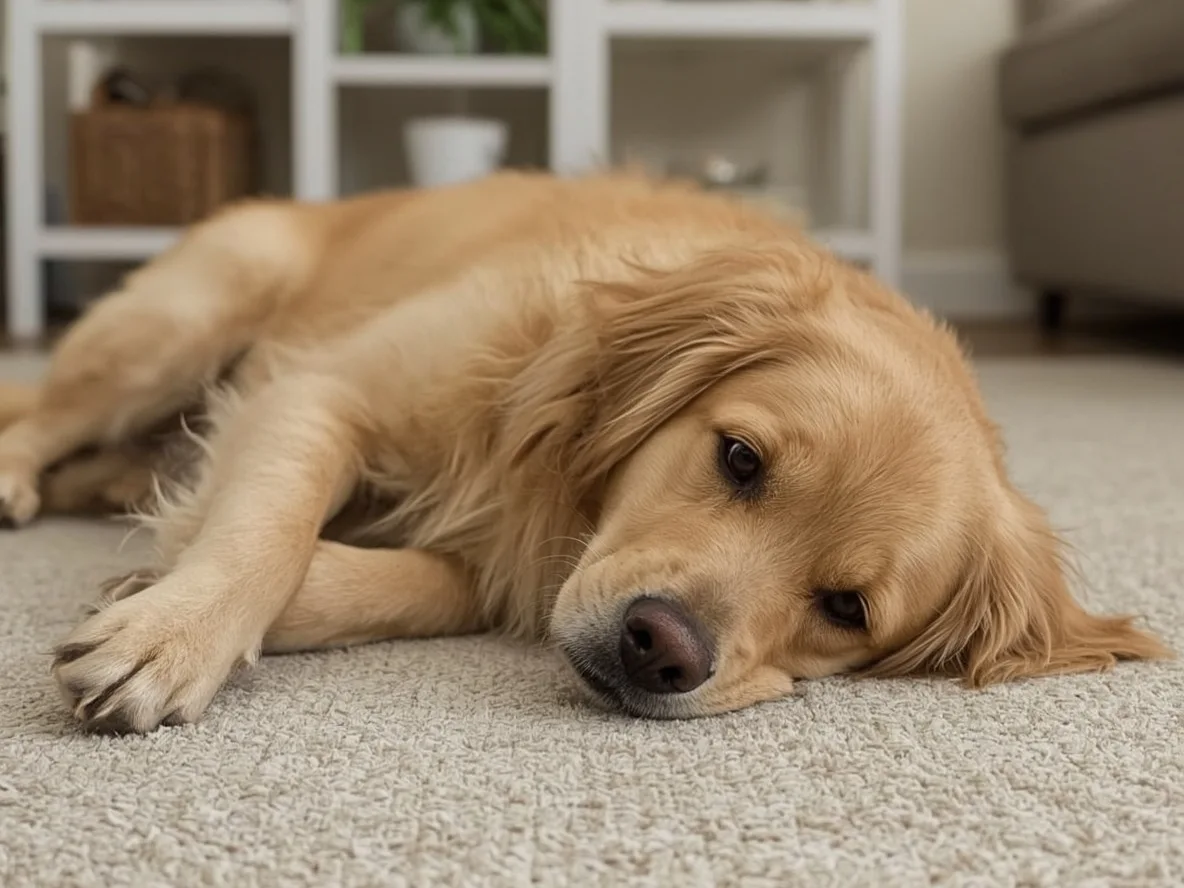
Difficulty Transitioning Between States
Relaxation requires a transition:
activity → processing → rest
For some dogs, this transition is incomplete.
Instead of moving into rest, the dog remains in a partially active state:
- Activity continues in smaller forms
- Processing does not fully resolve
- Rest is shallow and easily interrupted
This creates the impression that the dog is always “on,” even when it appears calm.
The issue is not the absence of rest — it is the absence of a complete transition into rest.
Attention Keeps the System Active
At home, interaction is often frequent and unstructured. Even small moments of engagement can keep the dog mentally active.
For example:
- Talking to the dog frequently
- Responding to every movement or signal
- Initiating interaction during quiet moments
Over time, the dog learns that being near the owner means staying engaged.
Instead of relaxing, it remains ready for interaction.
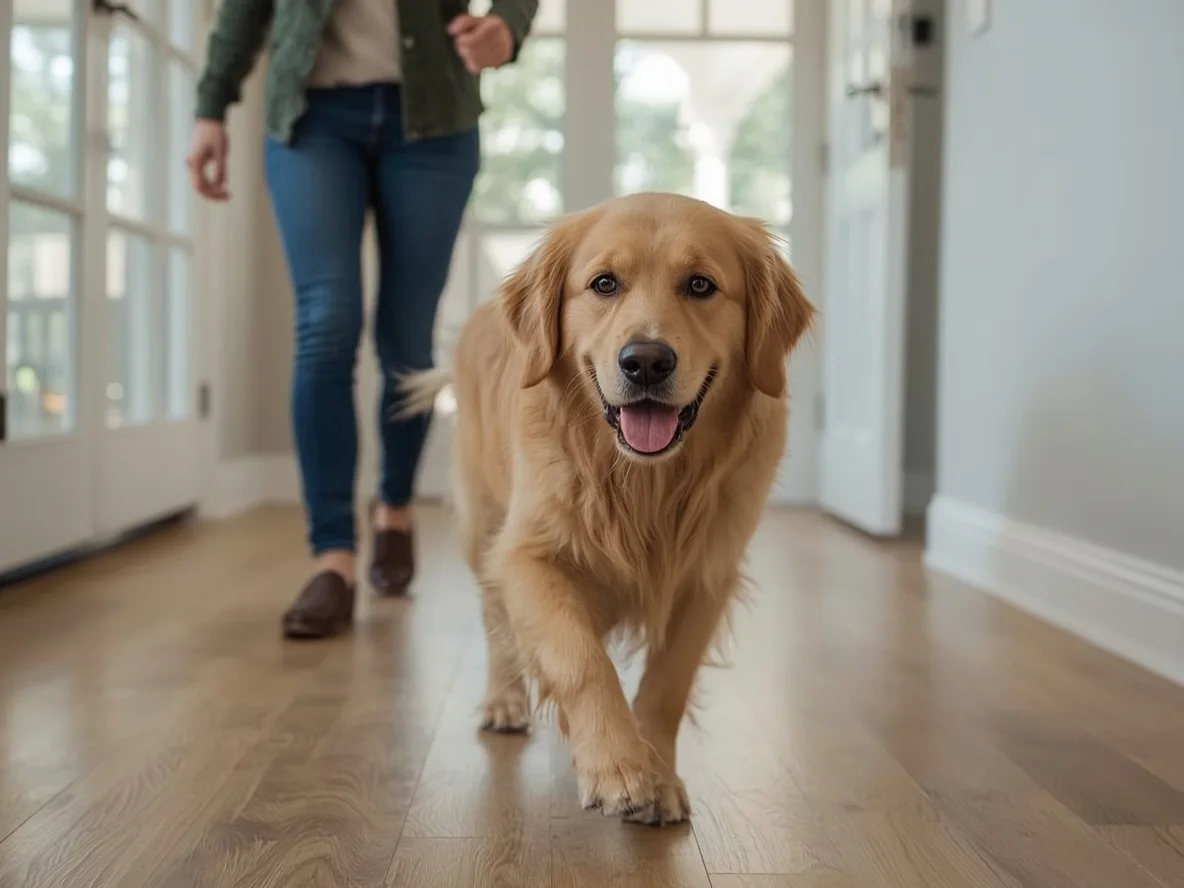
Emotional Dependence on the Owner
Some Golden Retrievers rely heavily on their owner for emotional stability. This does not happen suddenly — it develops gradually through everyday interactions where the dog learns that its sense of safety comes from staying connected to you.
Golden Retrievers are naturally social and attentive, which makes them especially likely to form strong orientation toward their owner. In a balanced state, this creates healthy connection. But when this orientation becomes constant, it can turn into dependence.
When this happens, relaxation becomes linked to your behavior:
- If you move → the dog becomes alert
Even small changes — standing up, walking across the room, shifting position — immediately capture the dog’s attention. The dog monitors your actions instead of remaining settled. - If you engage → the dog becomes active
Interaction quickly shifts the dog out of rest. Because engagement is frequent, the dog learns to stay ready for it rather than fully relaxing. - If you are unpredictable → the dog stays watchful
When your behavior changes often or lacks a clear pattern, the dog compensates by continuously observing you to anticipate what will happen next.
In this pattern, the dog is not simply being attentive — it is using you as its primary reference point for understanding the environment.
This creates a continuous loop:
- The dog feels stable when connected to you
- Disengagement creates uncertainty
- The dog increases monitoring behavior
- Relaxation becomes dependent on your state
Because of this, even calm environments do not lead to relaxation. The dog is not responding only to the environment — it is responding to you within that environment.
Instead of settling, the dog remains partially engaged:
- Watching your movements
- Reacting to small changes
- Staying ready for interaction
This prevents the nervous system from fully shifting into a resting state.
Importantly, this is not a behavioral problem in the traditional sense. It is a pattern of regulation — the dog has learned that stability comes from external reference rather than internal balance.
Over time, this can lead to:
- Difficulty relaxing even in quiet conditions
- Increased sensitivity to your behavior
- Reduced ability to settle independently
A dog that depends on the owner for stability may struggle to relax independently, because relaxation is no longer a self-regulated state — it is something tied to constant connection.
Why More Activity Does Not Always Help
A common response to restlessness is increasing activity.
However, more stimulation without recovery can make the problem worse:
- The nervous system remains activated for longer
- The dog becomes more sensitive to input
- Transitions into rest become harder
Instead of creating calm, additional activity can extend the cycle of stimulation.
How to Support Relaxation at Home
Create Clear Transitions
Slow down the end of activity. Allow the dog to gradually shift into a quieter state rather than stopping abruptly.
Allow Processing Time
After stimulation, give your dog space without interaction. This helps the nervous system settle.
Reduce Constant Engagement
Not every moment needs interaction. Quiet presence supports deeper relaxation.
Encourage Independent Rest
Allow your dog to relax without needing to stay focused on you.
Relaxation develops when the dog experiences calm without needing continuous input.
When Relaxation Improves
As the dog learns to transition more effectively, behavior begins to change:
- Longer periods of stillness
- Deeper and more consistent rest
- Reduced need for interaction
- More stable energy levels
This happens gradually as the nervous system becomes more balanced.
Final Thoughts
A Golden Retriever that struggles to relax at home is not simply energetic — it is a dog that has not yet learned how to move from stimulation into rest.
By focusing on balance, transitions, and recovery, you can help your dog develop the ability to truly settle — not through exhaustion, but through stability.
Author: XPETSI Editorial Team