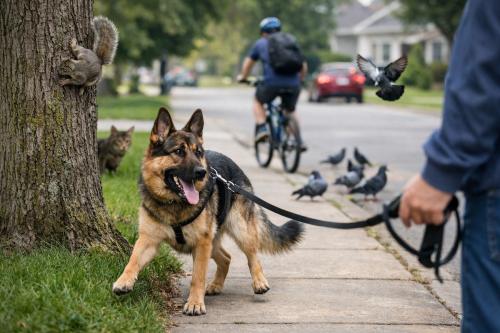
Some dogs seem to notice everything. A small sound in another room, a shift in body language, movement far in the distance — nothing escapes their attention. These highly aware dogs are often described as intelligent, observant, or deeply connected to their environment. But there is another side to this heightened awareness that many owners don’t recognize until behavior begins to change: awareness can slowly turn into overload.
A thinking dog is not simply “busy.” Their brain processes layers of information constantly — and without balance, that awareness can become exhausting rather than empowering.
This article explores what makes certain dogs more perceptive than others, how awareness shifts into cognitive pressure, and what helps restore clarity when a dog’s mind starts working harder than it should — especially when nervous system load builds quietly over time.

What Is a “Thinking Dog”?
The term “thinking dog” describes animals that actively analyze their surroundings rather than reacting impulsively. These dogs often pause before moving, watch subtle environmental changes, and respond strongly to emotional cues from humans.
Common traits include:
- Strong environmental awareness
- Quick learning ability
- High responsiveness to tone and movement
- Preference for structure and predictable routines
- Deep focus during engagement
These qualities are often praised — and for good reason. Thinking dogs excel at learning and communication. However, their constant mental engagement also means they rarely switch off automatically, which is why many highly intelligent dogs struggle to relax even in safe environments.
Awareness becomes challenging when the brain feels responsible for processing everything at once.
Why Some Dogs Experience Awareness More Intensely
Not all dogs experience the world in the same way. Breeds developed for close human cooperation or decision-making tend to process more environmental information. But personality and early experiences also shape how a dog perceives their surroundings.
Highly aware dogs often:
- Monitor subtle movement in the environment
- Anticipate routines before they happen
- React quickly to emotional changes
- Stay mentally active even during rest
While these traits can look like confidence or intelligence, they can also increase neurological effort throughout the day — especially if daily life is built around endless stimulation instead of structured recovery.
When Awareness Turns Into Overload
Awareness becomes overload when the nervous system cannot organize incoming information efficiently. Instead of feeling curious or engaged, the dog begins to show signs of internal pressure.
Constant Scanning
The dog watches everything continuously, rarely settling into a relaxed state.
Loss of Rhythm
Movement becomes inconsistent — stopping, hesitating, or switching focus rapidly.
Delayed Responses
Commands that were once easy may take longer to process because the brain is already busy.
Difficulty Relaxing Indoors
Even quiet environments may feel stimulating to a dog whose nervous system remains activated.
Overload does not mean the dog is weak. It means the brain has reached a limit in how much information it can comfortably manage.
Subtle Signs of Cognitive Overload in Thinking Dogs
- Frequent repositioning instead of resting deeply
- Hard staring followed by sudden distraction
- Hyper-awareness of small sounds
- Shadowing behavior or constant observation
- Loss of engagement during complex environments
These signs often appear gradually, making them easy to overlook until behavior becomes more obvious. Some dogs look intensely “focused,” but that intensity can actually be mental pressure rather than healthy focus.
The Emotional Side of Awareness
Thinking dogs do not just process physical movement — they also read emotional energy. Changes in tone, posture, or daily rhythm can influence how safe or uncertain the environment feels.
Because of this emotional sensitivity, overload may increase when:
- Household energy feels tense or unpredictable
- Training expectations remain high throughout the day
- Environments change suddenly without gradual exposure
A highly aware dog may not react loudly to stress. Instead, they often become quieter, more observant, or mentally distant.
Why More Stimulation Doesn’t Solve Overload
When a dog appears restless or distracted, many owners assume the solution is more activity. However, adding intensity to an already overloaded nervous system can increase pressure rather than restore balance.
Signs that stimulation may be too high include:
- Difficulty settling after training
- Rigid focus that looks tense rather than relaxed
- Short attention span during complex tasks
- Emotional sensitivity that increases over time
The goal is not to reduce awareness — it is to help the nervous system organize information more calmly.
Helping a Thinking Dog Find Balance
Create Predictable Rhythms
Consistent routines help reduce the amount of decision-making required throughout the day.
Encourage Soft Focus Instead of Intense Monitoring
Reward moments when your dog disengages naturally rather than demanding constant eye contact or performance.
Introduce Calm Observation Time
Slow walks or quiet environments allow the brain to process information without pressure.
Protect Mental Recovery
Structured downtime gives the nervous system an opportunity to reset — and it becomes much easier when owners practice calm transitions after activity.
Thinking dogs do not need less awareness — they need environments that make awareness feel manageable.
How Balance Changes Behavior
When overload decreases, many dogs begin to show subtle but powerful improvements:
- More flexible focus during walks
- Improved emotional stability at home
- Greater ability to settle between activities
- Clearer responses during training
These changes often appear without adding new techniques — simply by adjusting rhythm and reducing unnecessary pressure. For many high-drive dogs, this is also the missing ingredient that prevents motivation from turning into stress.
Final Thoughts
A thinking dog is not difficult — they are deeply aware of a world that moves quickly around them.
When awareness becomes overload, behavior shifts from confident engagement to internal tension. Understanding this transition allows owners to respond with clarity instead of frustration.
Rather than asking how to reduce awareness, consider a different question: Does my dog have enough space to slow down between moments of attention? When the answer becomes yes, many thinking dogs rediscover calm focus naturally.
Author: XPETSI Editorial Team