Many German Shepherd owners expect one simple result after a long walk: a calm, relaxed dog. But instead of settling, some German Shepherds pace, whine, stay hyper-alert, or follow their owners around the house as if the walk never happened. This behavior feels confusing — especially when you’ve already invested time and effort into exercise.
This guide explains why some German Shepherds struggle to relax after physical activity, how to tell the difference between healthy energy and nervous overload, and what changes actually help your dog switch off. For a broader understanding of how exercise, alertness, and mental balance connect, explore the complete German Shepherd behavior guide.
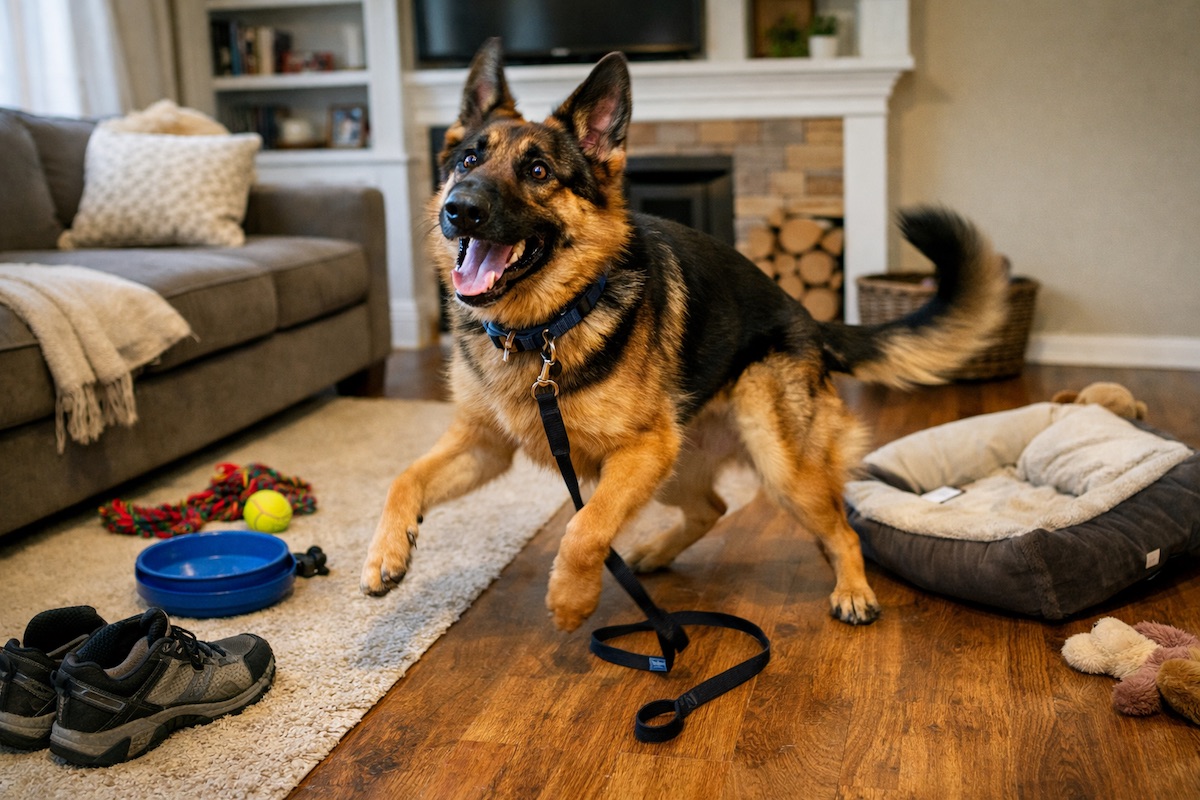
If your German Shepherd refuses to settle after walks, it does not always mean they need more activity. In many cases, the nervous system is overstimulated rather than under-exercised.
Why German Shepherds Don’t Always Relax After Exercise
German Shepherds are working dogs bred to stay alert, observe their environment, and respond quickly. Exercise activates both the body and the brain — but without a clear transition into rest, the dog may stay mentally “on duty” long after the walk ends.
Some dogs that struggle to settle after activity also show patterns described in evening restlessness in German Shepherds, where the nervous system stays activated long after stimulation ends.
Instead of feeling tired, the dog may feel:
- Mentally charged
- Emotionally tense
- Overaware of their surroundings
- Unsure whether activity has truly ended
Many owners assume more exercise will fix the problem. However, increasing intensity can sometimes make post-walk restlessness worse, especially in dogs already struggling with overstimulation versus under-exercise.
Normal Post-Walk Energy vs Stress-Driven Restlessness
Not every energetic moment after a walk is a problem. The key difference is how quickly the dog returns to a calm state.
| Behavior | Normal Energy | Possible Overstimulation |
|---|---|---|
| Movement | Short bursts, then relaxation | Constant pacing or scanning |
| Attention | Responds to calm cues | Seems distracted or tense |
| Body language | Loose posture | Rigid or hyper-alert |
| Vocalization | Rare | Whining or restless sounds |
If your dog becomes more restless after longer or more intense walks, the problem may be nervous overload rather than lack of exercise.
Common Reasons a German Shepherd Won’t Settle After Walks
1. Overstimulation During the Walk
Busy environments, constant training, or high-speed games can keep adrenaline levels elevated. Even though the dog appears physically tired, the brain remains active.
Many dogs that struggle to relax after walks also show patterns described in mental overload in German Shepherds, where stimulation exceeds recovery time.
2. Lack of a Clear “End of Activity” Signal
If walks end abruptly and the household energy stays high, the dog may not understand that it’s time to switch off.
- No predictable cooldown routine
- Immediate play or excitement after returning home
- Inconsistent daily structure
Dogs relax faster when their day follows a predictable rhythm of activity and rest.
3. Too Much High-Intensity Exercise
Fetch, running, or constant stimulation can train the nervous system to stay activated instead of calm.
A German Shepherd that is physically exhausted but mentally alert often needs less intensity — not more.
4. Mental Underload After Physical Activity
Sometimes the opposite happens: the walk releases physical energy but leaves the brain unsatisfied. Without a short focus activity afterward, the dog may struggle to settle.
Balanced mental engagement — like scent work or short obedience practice — can help transition the dog into rest, especially when paired with techniques explained in healthy daily mental stimulation.
5. Constant Owner Interaction
Some German Shepherds remain restless because the owner continues talking, touching, or engaging after the walk. Even positive attention can keep the dog activated.
If every movement after a walk receives attention, the dog may believe activity is still expected.
Signs Your Dog Is Struggling to Switch Off
- Pacing around the house after returning from a walk
- Whining during quiet moments
- Following you constantly
- Watching doors and windows
- Lying down briefly but getting up again
These patterns often overlap with behaviors described in constant alertness in German Shepherds, where the dog’s nervous system never fully powers down.
How to Help Your German Shepherd Settle After Walks
Create a Post-Walk Decompression Routine
Instead of ending the walk abruptly, slow down the final minutes.
- Walk calmly before entering the house
- Reduce verbal excitement
- Guide the dog into a predictable resting space
A calm ending teaches the nervous system that the activity is complete — making relaxation easier.
Lower Stimulation Immediately After Returning Home
Avoid high-energy play or chaotic greetings. Quiet transitions help the dog shift from engagement into rest mode.
Add a Short Mental Cooldown
Five minutes of calm problem-solving — like scent searching or slow obedience — can help the brain settle more effectively than intense exercise.
Teach Relaxation as a Skill
Many German Shepherds don’t automatically know how to relax. Practicing calm behavior is often necessary. Techniques explained in teaching relaxation at home can make a major difference.
Adjust the Intensity of Walks
Not every walk should be fast or demanding. Mixing structured calm walks with engagement helps balance energy and recovery.
What Not to Do When Your Dog Won’t Settle
Adding More Exercise Immediately
This often increases nervous arousal instead of reducing it.
Constantly Correcting Restlessness
Excessive correction can add pressure without teaching calm behavior.
Ignoring Routine Structure
Random schedules create anticipation and prevent relaxation.
Calmness comes from predictable rhythm — not from exhausting your German Shepherd completely.
When Restlessness Might Be Medical
If your German Shepherd suddenly stops settling after walks despite a stable routine, consider physical causes such as pain, discomfort, or digestive issues. Contact a veterinarian if restlessness appears alongside:
- Changes in appetite
- Limping or stiffness
- Sudden sleep disruption
- Unusual vocalization
Final Thoughts
A German Shepherd that refuses to settle after walks is not necessarily “too energetic.” Often, the dog simply hasn’t learned how to transition from activity to rest.
When walks become calmer, routines become predictable, and relaxation is practiced intentionally, many German Shepherds begin settling naturally. Instead of asking how to tire your dog out more, try asking a different question: does my dog understand when the day’s work is finished?
Author: XPETSI Editorial Team