German Shepherds are known for their intelligence, loyalty, and strong work drive. While these qualities make them incredible companions, they also mean many German Shepherds struggle with one surprisingly difficult skill: relaxing at home. Owners often describe dogs that pace constantly, follow them from room to room, react to every sound, or seem unable to fully switch off — even after exercise.
Relaxation is not something most German Shepherds “just learn.” It is a skill that often needs to be taught, reinforced, and built into the dog’s daily routine.
This guide explains why some German Shepherds struggle to relax, the most common mistakes owners make when trying to calm their dog, and practical steps you can use to teach calm behavior without suppressing your dog’s natural personality. For a broader overview of how anxiety, overstimulation, daily structure, and behavior patterns connect, see the complete German Shepherd behavior guide.
Why Some German Shepherds Can’t Relax at Home
German Shepherds were bred to stay aware of their environment. In a working context, constant alertness is an advantage. Inside a modern home, however, that same awareness can turn into restlessness if the dog doesn’t understand when it’s safe to switch off.
Common reasons a German Shepherd struggles to relax include:
- Unpredictable daily routines
- Too much high-intensity activity
- Lack of clear boundaries between work and rest
- Mental overload or chronic overstimulation
- Owner tension or inconsistent expectations
Many dogs that seem hyperactive are actually overwhelmed rather than under-exercised. This is closely connected to the patterns described in signs of mental overload in German Shepherds.
What Relaxation Really Looks Like in a German Shepherd
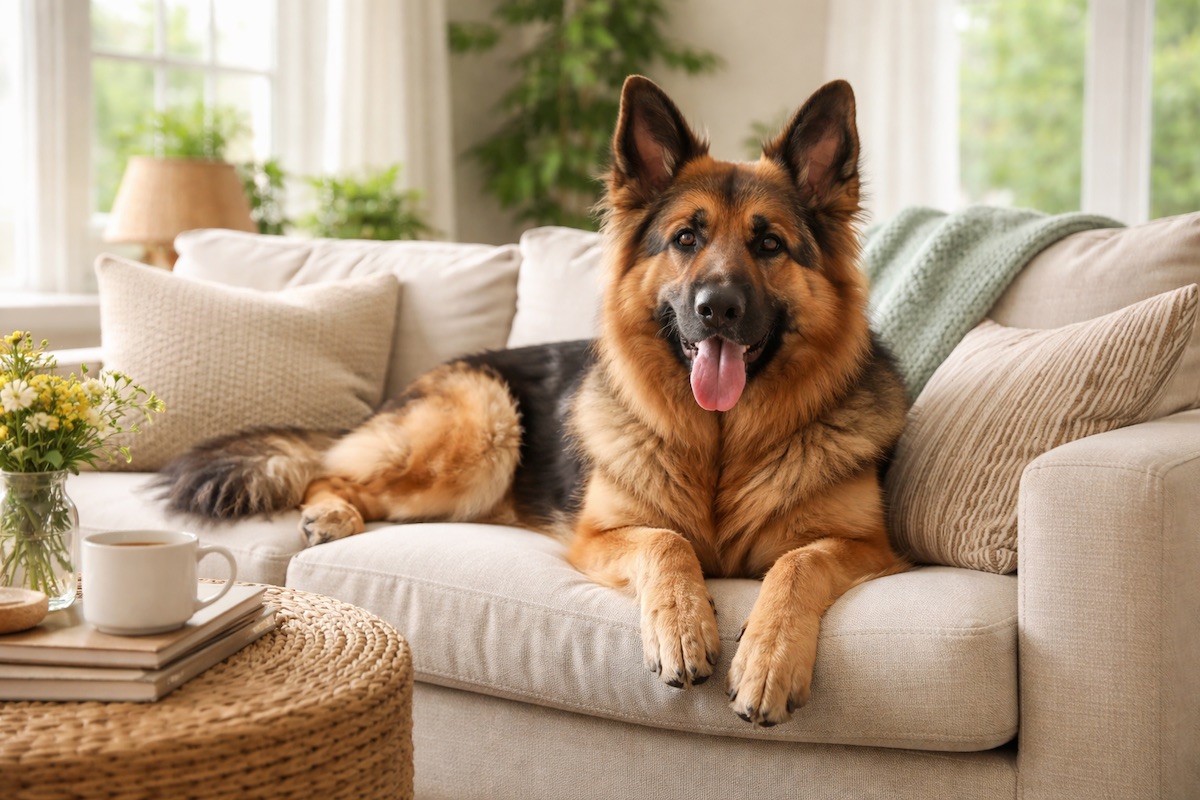
Relaxation does not always mean sleeping. A relaxed German Shepherd may still be aware of the environment, but their body language changes noticeably.
Signs of healthy relaxation include:
- Loose muscles and slower breathing
- Choosing to lie down without constant repositioning
- Soft eye contact instead of intense staring
- Minimal reaction to background noise
- Ability to remain calm without constant interaction
Many owners accidentally reward excitement more than calm behavior. If relaxation is never reinforced, the dog may believe constant alertness is expected.
Many owners try to teach relaxation directly, but calm behavior usually starts with structure. Before asking your German Shepherd to settle, it helps to make the day itself predictable.
Step 1: Create Predictable Transitions Between Activity and Rest
German Shepherds relax more easily when they know exactly when activity ends. Without clear transitions, the dog stays mentally prepared for the next task.
Simple ways to create transitions:
- Use the same calm phrase after walks or training
- Guide your dog to a resting area consistently
- Lower your own energy after active sessions
Dogs that struggle to relax often improve when daily structure becomes more predictable. Building a clear daily routine is one of the strongest long-term solutions.
Step 2: Reduce High-Arousal Activities Temporarily
If your German Shepherd is constantly restless, increasing intensity may make things worse. High-speed fetch, chaotic play, or nonstop training can keep the nervous system in a heightened state.
Sometimes the fastest way to teach relaxation is not by adding more exercise — but by reducing stimulation and allowing the dog’s nervous system to reset.
Replace high-intensity sessions with:
- Calm structured walks
- Scent games
- Slow obedience exercises
Step 3: Teach a “Relaxation Spot”
Many German Shepherds benefit from having a clear physical place associated with calmness. This could be a dog bed, mat, or quiet corner of the house.
Start by guiding your dog to the spot after activity and rewarding calm posture — not excitement.
- Reward lying down calmly
- Avoid over-talking or stimulating interaction
- Gradually increase the duration of calm behavior
Consistency matters more than duration. Even a few minutes of calm practice every day can teach your dog that relaxation is part of the routine.
Step 4: Reinforce Calm Choices Throughout the Day
Many owners only engage their dog during high-energy moments. Instead, start noticing when your German Shepherd chooses to settle on their own.
Quiet praise or a gentle reward for calm behavior helps the dog understand what you want to see more often.
Over time, this changes the dog’s default behavior from constant engagement to balanced awareness.
Step 5: Adjust Your Own Energy and Expectations
German Shepherds mirror their environment. Fast movements, loud voices, or constant monitoring can keep the dog mentally activated.
Small changes can make a big difference:
- Move more slowly during calm periods
- Avoid sudden excitement indoors
- Maintain consistent rules and boundaries
Dogs that feel clear guidance often relax faster than dogs exposed to constant emotional pressure.
Common Mistakes When Teaching Relaxation
Trying to Exhaust the Dog Physically
Excessive exercise can increase arousal instead of reducing it.
Giving Attention Every Time the Dog Moves
Constant interaction may reinforce restlessness.
Expecting Instant Results
Relaxation develops gradually. For some German Shepherds, it can take weeks of consistent structure.
If your dog seems alert all day, understanding the difference between normal alertness and stress can help guide your expectations.
How Long Does It Take for a German Shepherd to Learn to Relax?
Progress depends on the dog’s age, temperament, and past routine. Some dogs show improvement within days once stimulation decreases. Others need several weeks of consistent structure before relaxation becomes natural.
The goal is not to eliminate your German Shepherd’s awareness — it is to teach them when they no longer need to stay on duty.
Final Thoughts
Teaching relaxation is not about suppressing energy. It’s about helping your German Shepherd understand that calmness is safe, expected, and part of daily life.
When routine becomes predictable, stimulation becomes balanced, and calm behavior is reinforced, many German Shepherds learn to settle more easily at home. Instead of trying to tire your dog out completely, focus on helping them switch off — and you may see a calmer companion without losing the intelligent awareness that makes the breed unique.
Author: XPETSI Editorial Team