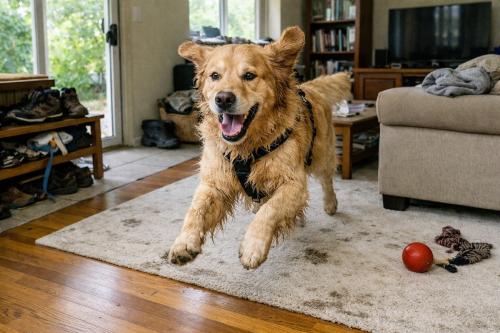
Golden Retrievers are widely loved for their affectionate nature and easygoing temperament. They often greet people with enthusiasm, seek physical contact, and show strong social curiosity. While this friendliness is one of the breed’s most appealing traits, it can sometimes become overwhelming. Jumping on strangers, pulling toward every person on walks, or struggling to settle around guests are common challenges many owners face.
Excessive friendliness is rarely just “good personality.” In many Golden Retrievers, overly intense social behavior reflects emotional excitement, lack of boundaries, or difficulty regulating arousal.
This article explores why Golden Retrievers may become overly friendly, how to distinguish healthy sociability from overstimulation, and what helps build calmer, more balanced social behavior.
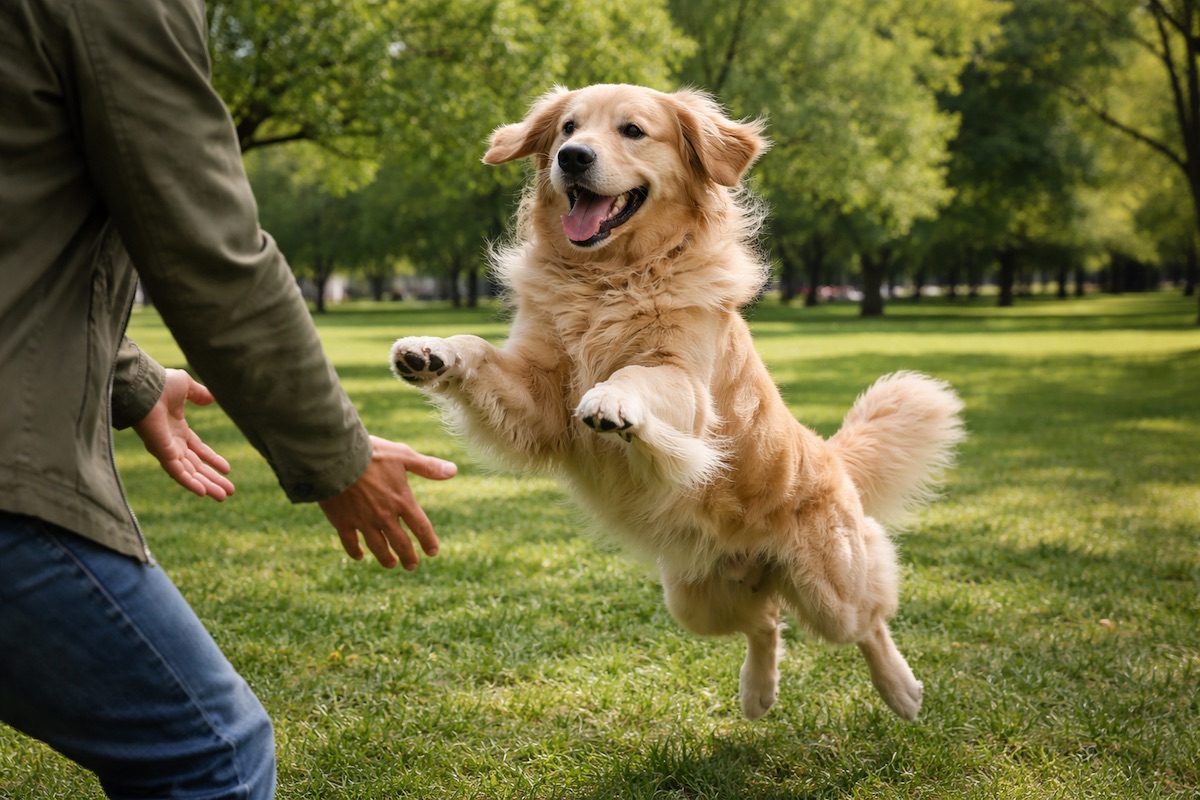
Is It Normal for Golden Retrievers to Be Extremely Friendly?
Golden Retrievers were developed as cooperative working dogs that formed close relationships with humans. Their willingness to interact and trust new people is part of their genetic foundation.
Healthy friendliness usually includes:
- Curiosity toward new people
- Relaxed tail wagging and soft body language
- Ability to disengage after greeting
- Calm interest rather than intense excitement
Problems arise when friendliness becomes impulsive or constant. Instead of enjoying social interaction, the dog may appear unable to control their reactions.
Overly friendly behavior is often linked to emotional arousal rather than pure happiness.
Common Reasons Golden Retrievers Become Overly Friendly
1. High Social Motivation
Golden Retrievers often find human interaction highly rewarding. Praise, touch, and attention can quickly become powerful motivators.
If every greeting leads to excitement or reward, the dog may begin seeking social interaction constantly. Over time, this can create difficulty staying calm in public settings.
2. Lack of Clear Social Boundaries
Many owners unintentionally reinforce enthusiastic greetings during puppyhood. Jumping, rushing toward visitors, or demanding attention may be seen as cute early on.
Without gentle structure, the dog may never learn how to approach people calmly or wait for permission before engaging.
3. Emotional Overarousal
Some Golden Retrievers become overly friendly because social situations raise their arousal level significantly. Instead of relaxed curiosity, they experience heightened excitement that reduces impulse control.
This can lead to:
- Jumping on people
- Pulling strongly on the leash
- Vocalizing or whining when unable to greet
- Difficulty settling after social encounters
Excitement and friendliness can look similar — but excitement often feels tense and impulsive rather than calm and flexible.
4. Insufficient Emotional Regulation Skills
Some dogs simply have not learned how to manage their internal state. They may feel overwhelmed by positive emotions and struggle to slow themselves down.
Teaching calm engagement and gradual exposure to social situations helps build self-regulation over time.
5. Constant Social Exposure Without Recovery
Frequent visits to busy parks, crowded streets, or highly stimulating environments can keep a Golden Retriever in a continuous state of social anticipation.
Without quiet downtime, the nervous system may remain activated, increasing impulsive friendliness instead of balanced sociability.
Healthy Friendliness vs Over-Friendly Behavior
| Behavior | Balanced Sociability | Over-Friendly Response |
|---|---|---|
| Approach to people | Calm and curious | Rushing or jumping |
| Body language | Loose and relaxed | Tense or overly excited |
| Ability to disengage | Moves on easily | Fixates on interaction |
| After greeting | Settles quickly | Remains hyperactive |
True friendliness includes emotional flexibility — not constant excitement.
How Over-Friendliness Can Affect Daily Life
While friendly behavior is usually seen as positive, excessive enthusiasm can create practical challenges:
- Difficulty controlling the dog on walks
- Stressful greetings for guests or children
- Reduced focus during training outdoors
- Increased frustration when interaction is restricted
In some cases, constant social excitement can also contribute to nervous system overload, making relaxation harder at home.
How to Help a Golden Retriever Become Socially Balanced
Teach Calm Greeting Skills
Many Golden Retrievers greet people with overwhelming enthusiasm simply because excitement has been reinforced more often than calm behavior. Teaching structured greeting skills helps the dog understand that social interaction is not a race — it is a controlled, predictable process.
Instead of allowing jumping, spinning, or frantic movement, reward moments when the dog approaches slowly, keeps four paws on the ground, or chooses to sit before receiving attention. Calm behavior should consistently lead to social rewards such as gentle petting, soft praise, or brief interaction.
Over time, the dog begins to associate emotional regulation with successful connection. This reduces internal pressure and helps transform greetings from chaotic bursts of energy into more stable, confident social behavior.
Limit Overstimulating Social Situations
Highly social dogs can become overwhelmed in busy environments where multiple people, noises, and movements compete for attention. Frequent exposure to intense social settings without preparation can increase excitement levels rather than build true confidence.
Gradual exposure works better. Start with calm, predictable meetings in quieter places — for example, greeting one familiar person in a relaxed outdoor area. As the dog learns to stay emotionally balanced, social complexity can increase slowly.
This step-by-step approach allows the nervous system to adapt without triggering hyperarousal. Instead of associating people with explosive excitement, the dog learns that social interaction can feel safe, clear, and manageable.
Reinforce Disengagement
One of the most overlooked skills in friendly dogs is the ability to disengage voluntarily. Many Golden Retrievers feel responsible for maintaining constant social connection, which can create emotional fatigue over time.
Praise and calmly acknowledge moments when your dog chooses to step away from guests, lie down nearby, or observe interaction without participating. These quiet decisions build emotional independence and reduce the internal need to stay involved at all times.
When disengagement is supported rather than interrupted, the dog develops more flexible social behavior. Instead of feeling compelled to greet everyone, they begin to choose when and how to interact.
Build Emotional Regulation
Balanced social behavior depends not only on training skills but also on the dog’s ability to regulate emotional arousal. Structured routines that include predictable engagement, short learning sessions, and genuine downtime help stabilize the nervous system.
Training exercises that incorporate pauses, calm observation, and soft focus transitions can be especially helpful. These moments teach the dog that excitement is not the only available emotional state. Learning to shift between engagement and rest creates stronger resilience in social environments.
Over time, emotional regulation allows the dog to remain friendly without becoming overwhelming. Social interaction becomes smoother, more confident, and less physically intense.
Balanced social behavior develops when excitement decreases and clarity increases. Dogs that understand when to engage — and when to relax — often become more confident and enjoyable companions in everyday social situations.
When Over-Friendliness May Signal Deeper Stress
In some Golden Retrievers, excessive friendliness can be a coping strategy rather than pure sociability. Dogs may seek constant interaction because they feel uncertain or overstimulated.
Signs to watch for include:
- Difficulty resting after social events
- Persistent scanning of the environment
- Whining or pacing indoors
- Declining focus in busy places
If these patterns appear, adjusting routine structure and reducing overall stimulation can help restore balance.
Final Thoughts
Golden Retrievers are naturally social dogs, but healthy friendliness is calm, flexible, and emotionally balanced.
When enthusiasm becomes impulsive or constant, it often reflects overstimulation, unclear boundaries, or undeveloped self-regulation skills. By teaching calm greetings, supporting emotional recovery, and creating predictable routines, owners can help their Golden Retriever remain friendly — without becoming overwhelming.
A socially balanced dog does not lose warmth or connection. Instead, they learn how to express friendliness in a way that feels safe, controlled, and sustainable in everyday life.
Author: XPETSI Editorial Team