Walking your dog should be a simple, enjoyable routine. But for many owners, walks turn into a confusing struggle when their dog suddenly stops, freezes in place, and refuses to move—no matter how much you encourage, pull gently on the leash, or call their name.
If your dog freezes and won’t move on walks, you’re not alone. This behavior is surprisingly common and often misunderstood. Many owners assume their dog is being stubborn or difficult, but in reality, freezing on walks is almost always an emotional or environmental response, not disobedience.
In this article, we’ll break down why dogs freeze and refuse to move on walks, what your dog is communicating in that moment, how to tell the difference between fear and overload, and what you can do to help your dog feel confident and safe outside.
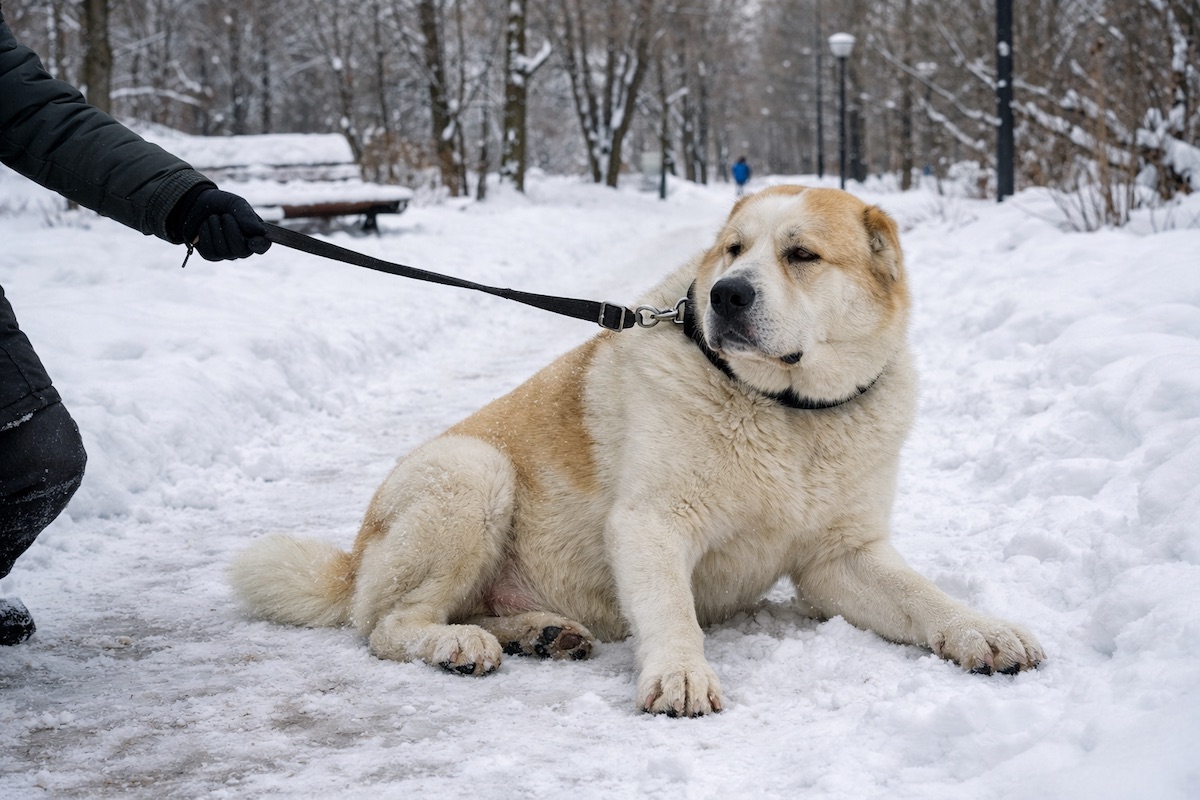
What Does “Freezing” on Walks Look Like?
Freezing can look different from dog to dog, but common signs include:
- Stopping suddenly and refusing to take another step
- Planting all four paws firmly on the ground
- Leaning backward or pulling away from the direction of travel
- Lowered head or stiff body posture
- Ignoring treats, praise, or commands
Some dogs freeze briefly and then recover. Others may remain frozen for minutes, making walks nearly impossible.
The Most Common Reasons Dogs Freeze and Refuse to Move
1. Fear or Anxiety
The most common cause of freezing on walks is fear.
Your dog may be frightened by:
- Loud noises (traffic, construction, sirens)
- Unfamiliar environments
- Strangers or other dogs
- Past negative experiences in that location
When dogs feel unsafe, they often choose immobility as a survival response. Freezing is part of the natural fight–flight–freeze response.
For some dogs, freezing is part of a broader pattern where they seem to act scared for no reason, especially in unfamiliar outdoor environments.
A fearful dog isn’t refusing to walk—they are protecting themselves.
2. Overstimulation and Sensory Overload
Some dogs freeze not because they are scared, but because the environment is simply too much to process.
Overstimulation can come from:
- Busy streets
- Strong smells
- Multiple dogs or people nearby
- Fast-moving objects like bikes or cars
Overwhelmed dogs may freeze instead of reacting, similar to dogs that show shaking from stress when they cannot process their environment.
3. Leash Pressure and Feeling Trapped
Leashes change how dogs experience the world.
Dogs may freeze when:
- The leash becomes tight
- They feel pulled toward something uncomfortable
- They cannot create distance from a trigger
Being physically restrained can increase stress and make freezing more likely, especially in sensitive or anxious dogs.
4. Unclear Direction or Conflicting Signals
Dogs rely heavily on body language.
If your posture, leash handling, or movement is unclear, your dog may hesitate.
Examples include:
- Stopping suddenly while expecting your dog to continue
- Pulling the leash while hesitating yourself
- Changing direction abruptly
Confusion can cause dogs to stop and wait rather than guess incorrectly.
5. Lack of Confidence Outside
Some dogs are confident indoors but insecure outdoors.
This is common in:
- Puppies
- Rescue dogs
- Dogs with limited early socialization
For these dogs, freezing is a way to slow down and assess their surroundings before moving forward.
6. Physical Discomfort or Pain
Never ignore the possibility of pain.
Dogs may freeze if walking causes discomfort due to:
- Joint or hip pain
- Paw injuries
- Muscle strain
- Ill-fitting harnesses or collars
If freezing appears suddenly or is accompanied by limping or reluctance to move at home, a veterinary check is essential.
Why Dogs Freeze Instead of Pulling or Barking
Not all dogs respond to stress the same way.
Some dogs:
- Bark or lunge
- Pull forward
- Become reactive
Others shut down.
Freezing is common in dogs that are:
- Sensitive
- Conflict-avoidant
- Highly observant
This does not mean your dog is weak. It means they are choosing the safest option they know.
Is My Dog Being Stubborn?
In almost all cases, no.
A dog that freezes and refuses to move is usually:
- Afraid
- Overwhelmed
- Confused
- Physically uncomfortable
Dogs that freeze on walks often don’t do it out of stubbornness, just like dogs that ignore commands outside despite listening well at home. Stubbornness implies choice and defiance. Freezing is about self-preservation.
How to Tell What’s Causing Your Dog to Freeze
Ask yourself:
- Does freezing happen in specific locations?
- Does it occur near certain triggers (dogs, people, noises)?
- Does my dog recover quickly or stay frozen?
- Does my dog move if we change direction?
Patterns will reveal the cause.
What to Do When Your Dog Freezes on Walks
1. Stop Pulling the Leash
Pulling increases pressure and stress.
Instead:
- Pause
- Relax the leash
- Give your dog a moment
Reducing pressure often helps dogs recover faster.
2. Create Distance From Triggers
If your dog freezes near something scary, move farther away if possible.
Distance lowers intensity and helps your dog regain composure.
3. Use Encouragement, Not Force
Soft encouragement works better than pressure.
Try:
- Cheerful voice
- Turning sideways
- Taking a few steps away from your dog
Avoid dragging or lifting unless absolutely necessary for safety.
4. Lower the Difficulty of Walks
If your dog freezes frequently, walks may be too challenging.
Consider:
- Shorter walks
- Quieter routes
- Familiar environments
Confidence builds gradually.
5. Build Confidence Through Training
Confidence off-leash often translates to confidence on walks.
Helpful activities include:
- Basic obedience training
- Pattern games
- Rewarding exploration
Training gives dogs tools to cope with uncertainty.
6. Reward Movement, Not Freezing
Reward your dog when they choose to move—even one step.
This teaches that moving forward leads to positive outcomes.
What Not to Do
- Do not yank or drag your dog
- Do not scold or punish freezing
- Do not force your dog toward fear triggers
- Do not rush the process
These actions increase fear and reduce trust.
When Freezing Can Lead to Bigger Problems
If freezing is ignored or punished, it may escalate into:
- Refusal to go outside
- Leash reactivity
- Aggression toward other dogs
- General anxiety
If freezing is ignored or punished, some dogs may later become aggressive toward other dogs as a defensive response on walks.
Early support prevents long-term issues.
When to Seek Professional Help
Consider working with a trainer or behavior specialist if:
- Your dog freezes on most walks
- Fear appears to worsen over time
- Your dog shuts down completely
- You feel stuck or frustrated
Professional guidance can make a dramatic difference.
Final Thoughts
If your dog freezes and refuses to move on walks, it’s not a battle of wills.
It’s communication.
Your dog is telling you they are overwhelmed, unsure, or uncomfortable. By slowing down, reducing pressure, and building confidence step by step, most dogs learn that walks are safe and predictable again.
Progress may be gradual, but with patience and understanding, frozen paws can turn back into confident steps.
Author: XPETSI Editorial Team