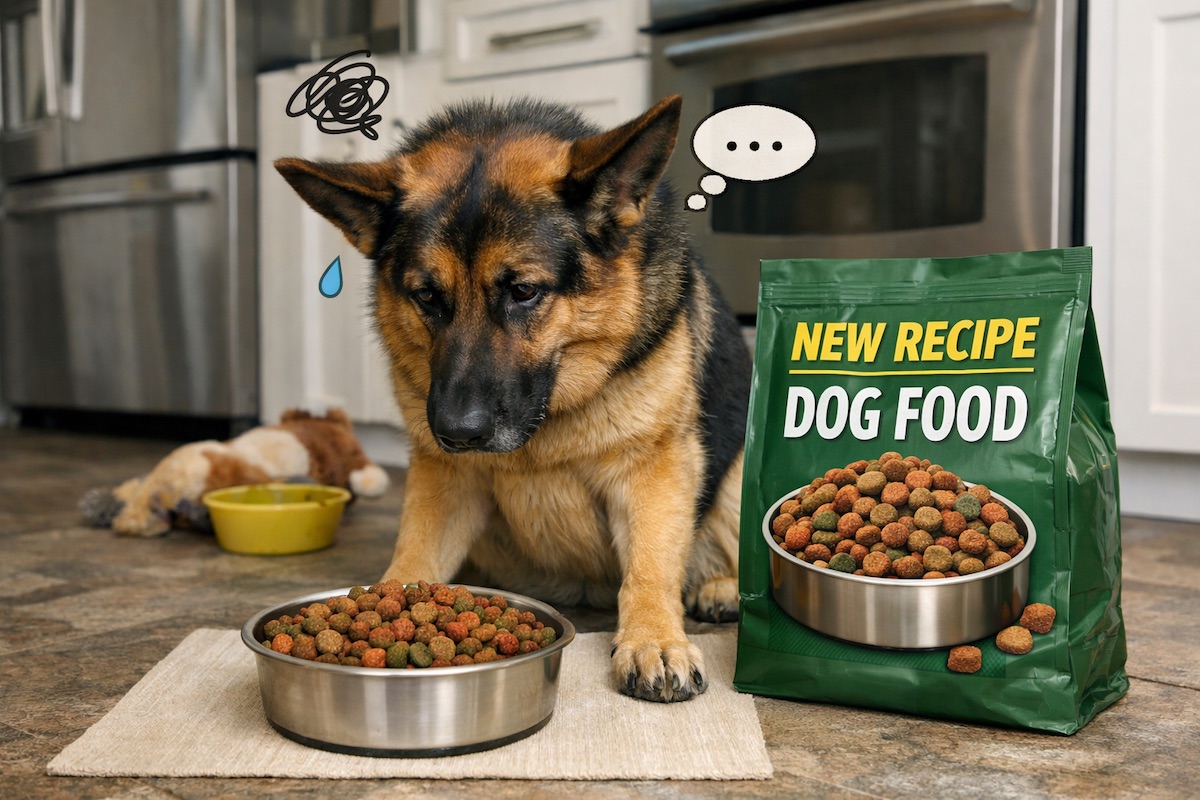
Switching your German Shepherd to a new food can feel surprisingly stressful. You pour the fresh kibble or wet food into the bowl, expecting curiosity — and instead your dog sniffs it, walks away, or looks at you like you’ve made a terrible mistake.
Food refusal after a switch is usually about change, not “stubbornness.” What matters is the whole picture: how long it lasts, whether your dog is acting normal otherwise, and whether any digestive or medical symptoms show up.
If you’re asking “Why is my German Shepherd not eating new food?” you’re not alone. This is a very common issue, and in many cases it’s not a sign of serious illness. German Shepherds are intelligent, sensitive dogs, and they can be hesitant when something feels unfamiliar.
In this guide, you’ll learn the most common reasons German Shepherds refuse new food, how to tell normal adjustment from a real problem, and what you can do to help your dog eat confidently again. If your dog’s appetite drop came alongside general tension, whining, or difficulty settling, you may also want to read why German Shepherd anxiety can become constant (stress often shows up in appetite).
Is It Normal for German Shepherds to Refuse New Food?
Yes — it can be completely normal, especially in the first few days. German Shepherds are creatures of habit. A sudden change in smell, texture, or taste can be enough to trigger hesitation.
- Food refusal often lasts 1–3 days in healthy adult dogs
- Appetite returns once the dog feels comfortable
- There are no other symptoms like vomiting or lethargy
If your German Shepherd is drinking normally, has normal energy, and shows no vomiting/diarrhea, short-term refusal during a food transition is often just an adjustment period.
Common Reasons Your German Shepherd Won’t Eat New Food
1) The Change Was Too Sudden
The most common reason is switching foods too quickly. Your dog may not recognize the new food as “safe” yet, and German Shepherds often have sensitive stomachs that don’t love abrupt changes.
Typical signs: your dog sniffs, takes a few bites, then walks away — or refuses completely on the first day.
2) Smell and Texture Feel Wrong
Dogs experience food mainly through smell. Even if the ingredients are great, the new food may smell too strong, too weak, or simply unfamiliar. Texture matters too — kibble size, crunchiness, moisture, and shape can affect whether your German Shepherd accepts it.
3) Stress or Routine Changes
German Shepherds are emotionally sensitive, and appetite often drops when stress increases. A food change that happens at the same time as a life change can make refusal more likely.
- moving to a new home
- new people or pets in the household
- schedule changes
- recent travel, boarding, or noisy environments
If the food switch happened during a stressful week, don’t assume the food is the “problem.” Appetite drops are a common stress response in German Shepherds — especially when the day feels unpredictable.
4) Learned “Waiting for Something Better”
German Shepherds learn patterns fast. If your dog refused food in the past and you responded by adding treats, toppers, or switching foods immediately, they may have learned:
“If I wait, I get something better.”
This doesn’t mean your dog is being “bad.” It means they’re smart and responsive to outcomes.
5) Mild Digestive Discomfort
Sometimes your dog avoids new food because it doesn’t feel good after eating it. This can happen if the new formula is richer, higher in fat, or simply harder to digest for your dog.
Possible clues:
- eating a few bites and stopping
- lip licking or repeated swallowing
- eating grass during walks
- soft stools or mild stomach gurgling
If you’re seeing grass-eating plus hesitation, compare patterns in German Shepherd eating grass: normal or a health concern?.
6) Dental or Medical Issues (Less Common, But Important)
Refusing food can sometimes be linked to discomfort that makes chewing unpleasant. This is more likely if your German Shepherd refuses not only the new food, but also familiar food or treats.
- tooth pain or gum inflammation
- nausea or GI upset
- infection or illness
How Long Can a German Shepherd Refuse New Food?
A healthy adult German Shepherd can usually skip meals for 24–48 hours without harm, as long as:
- water intake is normal
- energy level is stable
- there are no additional symptoms
Puppies, seniors, and dogs with health conditions should not go that long without eating. If they refuse food, it’s safer to contact a veterinarian sooner.
Normal vs Concerning Food Refusal
| Situation | Usually Normal | Potential Concern |
|---|---|---|
| Duration | 1–2 days | More than 48 hours |
| Behavior | Acts normal otherwise | Lethargic, withdrawn, weak |
| Interest in other food | Will eat old food or treats | Refuses all food and treats |
| Digestive signs | No vomiting/diarrhea | Vomiting, diarrhea, repeated bile |
| Trend | Improves with routine | Gets worse or becomes frequent |
What to Do If Your German Shepherd Won’t Eat New Food
1) Transition Slowly (7–10 Days)
The safest method is a gradual transition:
- Days 1–3: 75% old food + 25% new food
- Days 4–6: 50% old food + 50% new food
- Days 7–9: 25% old food + 75% new food
- Day 10: 100% new food
Slow transitions protect both your dog’s digestion and their “trust” in the bowl. Many refusals disappear once the switch stops feeling abrupt.
2) Keep Mealtimes Calm and Predictable
German Shepherds thrive on structure. Feed at consistent times and avoid turning meals into emotional events.
- feed at the same times daily
- place the bowl down and step back
- remove the bowl after 15–20 minutes
- avoid hovering, pleading, or hand-feeding as a default
If your dog does better with predictable rhythms in general, you can build that foundation with a structured daily routine.
3) Don’t Upgrade the Bowl Too Fast
If you add treats or human food every time your dog refuses, you may accidentally teach picky behavior. If you use a topper, keep it minimal and consistent — not random and exciting.
4) Make Sure the Food Fits Your Dog
Some German Shepherds are sensitive to rich formulas. If your dog has a history of stomach upset, choose gentler options and involve your vet if vomiting or diarrhea appears.
5) Check Teeth and Mouth Comfort
If your German Shepherd drops kibble, chews oddly, or suddenly prefers soft foods, consider a dental check. Chewing pain can look like “picky eating.”
What About German Shepherd Puppies?
Puppies may refuse new food because they are still learning routines, dealing with teething discomfort, or reacting to stress more strongly than adults.
Rule of thumb: if a German Shepherd puppy refuses food for more than 24 hours, it’s safer to contact a veterinarian for advice.
When to Contact a Vet
It’s a good idea to call your veterinarian if:
- your dog refuses food for more than 48 hours
- your German Shepherd refuses all food and treats
- vomiting, diarrhea, fever, or severe lethargy appears
- your dog shows signs of pain or bloating
- your dog is very young, senior, or has known medical conditions
Frequently Asked Questions (FAQ)
Should I switch back to the old food if my German Shepherd refuses the new one?
If your dog is healthy and simply hesitant, a slow transition (mixing old and new) usually works better than switching back and forth repeatedly. If your dog has vomiting or diarrhea, contact your vet and consider returning to a tolerated diet while you get guidance.
How can I make new food more appealing without creating picky habits?
Use a gradual transition, keep mealtimes consistent, and avoid constant “upgrades.” If you use a topper, keep it small and predictable rather than changing flavors daily.
Is it normal if my German Shepherd won’t eat but drinks water?
Sometimes yes, especially during short adjustment periods. But if refusal lasts over 48 hours or your dog seems unwell, it’s safer to contact a veterinarian.
Final Thoughts
So, why is your German Shepherd not eating new food? In most cases, it’s because the change was too sudden, the smell or texture feels unfamiliar, or stress and routine disruption play a role.
German Shepherds value predictability. With a slow transition, calm structure, and patience, most dogs accept new food within a few days. If refusal is prolonged or paired with symptoms like vomiting, diarrhea, or low energy, it’s time to involve a veterinarian and rule out medical causes.
Author: XPETSI Editorial Team