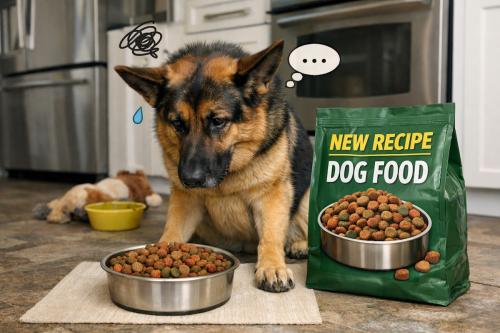
Many dog owners notice a strange habit after mealtime: instead of walking away or resting, their dog starts licking the floor intensely. This behavior can look harmless, confusing, or even concerning. Some dogs do it occasionally, while others repeat it after every meal. Understanding why dogs lick the floor after eating helps you distinguish between normal instincts and potential health issues.
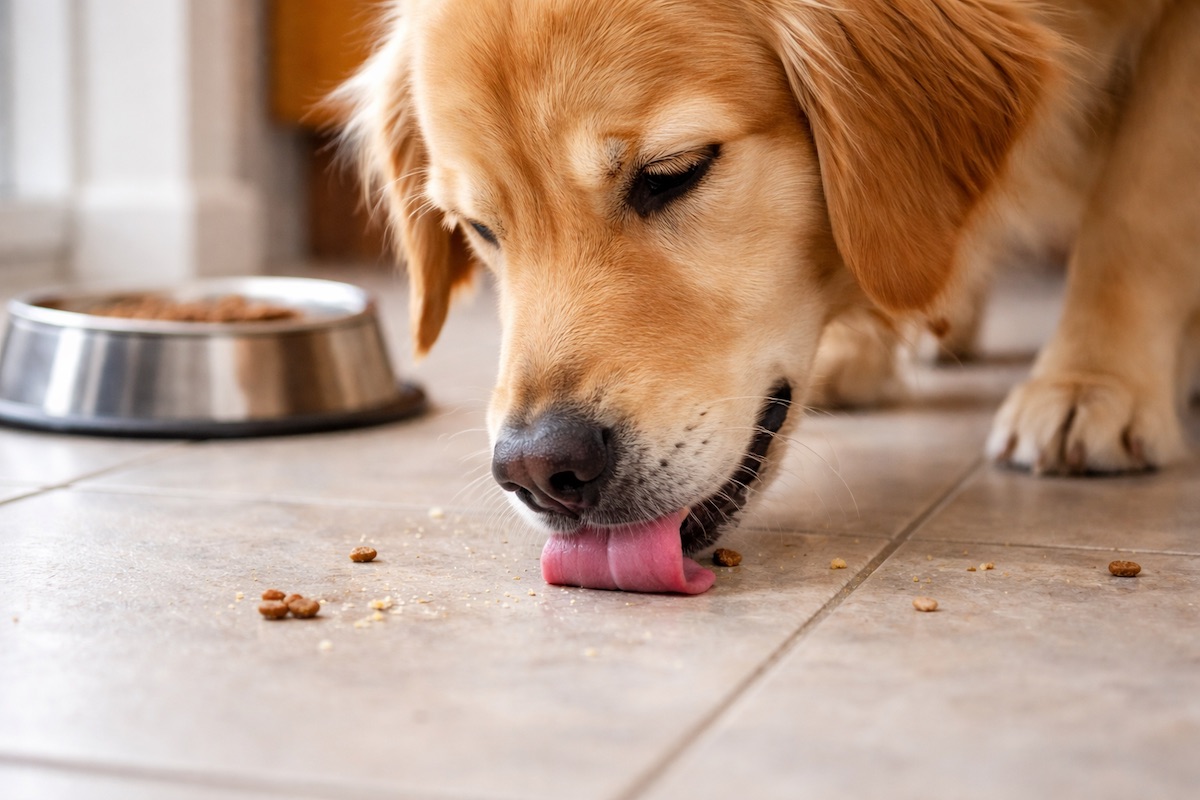
In most cases, floor licking is linked to natural canine behaviors such as food-seeking instincts, sensory exploration, or learned habits. However, it can also be associated with digestive discomfort, anxiety, nutritional imbalances, or medical conditions that require attention. This article explores all possible reasons in detail and explains when floor licking is normal and when it may signal a deeper problem.
Natural and Instinctive Reasons Dogs Lick the Floor After Eating
Leftover Food Smell and Taste
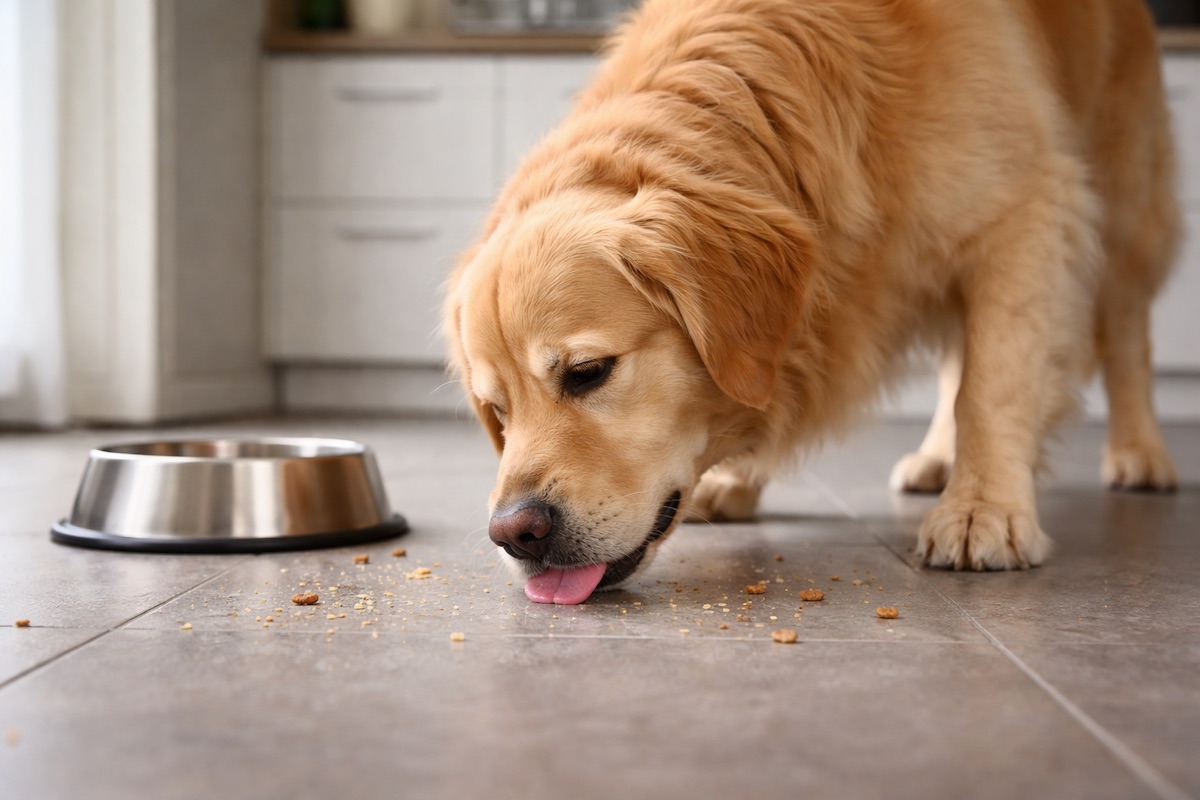
Dogs experience the world through scent and taste far more intensely than humans. Even after a bowl looks clean, microscopic food particles, oils, and flavors remain on the floor. Dogs can smell and taste these traces easily, which often triggers licking behavior.
This instinct comes from scavenging behavior in wild canines, where wasting food could mean missing calories necessary for survival. Licking the floor is simply your dog making sure nothing edible was missed.
Food Anticipation and Habit
If your dog has been rewarded with food scraps, spills, or treats dropped on the floor in the past, they may associate mealtime with post-meal rewards. Over time, this becomes a learned behavior. Even if no food is present anymore, the habit remains.
Dogs thrive on routine. Once floor licking becomes part of their post-meal ritual, it may continue even when there is no longer a reward.
Instinctive Foraging Behavior
Domestic dogs retain many behaviors from their wild ancestors. Foraging does not stop when the main meal ends. Licking the floor mimics natural ground-scanning behavior used to find scraps, bones, or edible remnants in the environment.
Behavioral and Emotional Causes
Anxiety or Stress After Eating
Some dogs lick the floor as a self-soothing behavior. Licking releases endorphins, which help calm the nervous system. If your dog feels anxious, overstimulated, or insecure after meals, floor licking may help them relax.
This is especially common in dogs that eat quickly, live in multi-pet households, or feel food-related stress.
Boredom or Lack of Mental Stimulation
If a dog lacks mental enrichment, repetitive behaviors often appear. Licking the floor provides sensory input and occupies the brain. Dogs that finish meals quickly and have nothing else to do may resort to licking simply to stay engaged.
This behavior may increase in dogs that do not receive enough physical exercise or interactive play.
Attention-Seeking Behavior
Some dogs learn that licking the floor gets a reaction from their owners. Whether it is laughter, scolding, or concern, attention reinforces behavior. Over time, dogs may lick the floor deliberately to interact with their humans.
Digestive and Medical Reasons
Acid Reflux or Stomach Discomfort
Dogs with mild acid reflux or gastrointestinal discomfort may lick surfaces to cope with nausea or irritation. Floor licking can stimulate saliva production, which may temporarily neutralize stomach acid.
If floor licking is accompanied by lip smacking, swallowing, or restlessness, digestive discomfort is a possible cause.
Nausea and Upset Stomach
Nauseous dogs often display unusual licking behaviors. They may lick floors, walls, furniture, or even air. This behavior can appear after eating if the food does not sit well or if the dog eats too fast.
Occasional nausea is normal, but frequent episodes should be evaluated.
Gastrointestinal Disorders
Chronic floor licking may be associated with conditions such as gastritis, inflammatory bowel disease, or food sensitivities. These conditions often cause persistent discomfort that dogs try to relieve through repetitive licking.
Nutritional Factors
Vitamin or Mineral Deficiencies
Dogs lacking certain nutrients may lick surfaces in an attempt to obtain missing elements. This behavior is sometimes linked to deficiencies in minerals such as iron or zinc.
A well-balanced diet usually prevents this, but homemade or poorly formulated diets may increase the risk.
Inadequate Diet Satisfaction
If a dog does not feel full or satisfied after eating, they may continue searching for food. Low-protein diets or insufficient portion sizes can trigger post-meal floor licking.
Dogs that lick excessively after meals may benefit from a diet review.
Obsessive and Compulsive Behaviors
Compulsive Licking Patterns
In some dogs, floor licking becomes a compulsive behavior rather than a functional one. These dogs lick repeatedly without any apparent reward or stimulus.
Compulsive licking is more common in anxious dogs or those with a history of stress, trauma, or insufficient stimulation.
When Habit Becomes a Disorder
If licking interferes with daily life, causes skin irritation around the mouth, or appears uncontrollable, it may indicate a behavioral disorder that requires intervention.
Environmental and Cleaning Factors
Cleaning Product Residues
Strong-smelling floor cleaners may attract dogs. Some cleaning products leave behind residues with scents or tastes that dogs find interesting.
If floor licking increases after cleaning, consider switching to pet-safe, unscented products.
Food Preparation Areas
Dogs often lick floors in kitchens or dining areas because food is frequently prepared there. Oils, crumbs, and cooking scents accumulate over time, making these areas especially attractive.
When Floor Licking Is Normal
- Occurs occasionally after meals
- Stops quickly on its own
- No signs of distress or illness
- Dog remains active and healthy
In these cases, floor licking is usually harmless and does not require intervention.
When Floor Licking May Be a Problem
- Happens after every meal
- Lasts for long periods
- Accompanied by vomiting, diarrhea, or weight loss
- Dog appears anxious or restless
Persistent or escalating licking should not be ignored.
How to Reduce Floor Licking Behavior
Adjust Feeding Routine
Slower feeding methods, such as puzzle feeders or slow bowls, can reduce post-meal discomfort and anxiety.
Improve Diet Quality
Ensuring a balanced, high-quality diet helps prevent nutritional deficiencies and digestive irritation.
Increase Mental and Physical Stimulation
Providing enrichment activities after meals, such as walks or interactive toys, redirects licking behavior.
Manage Stress
Creating a calm feeding environment and reducing competition can help anxious dogs feel more secure.
Should You See a Veterinarian?
You should consult a veterinarian if floor licking is frequent, intense, or accompanied by other symptoms. A professional evaluation can rule out medical conditions and guide appropriate treatment.
Final Thoughts
Dogs lick the floor after eating for many reasons, ranging from harmless instincts to underlying health issues. Occasional licking is normal and usually nothing to worry about. However, persistent or obsessive behavior deserves attention.
By observing patterns, adjusting diet and environment, and seeking professional advice when needed, you can ensure your dog stays healthy, comfortable, and content after every meal.
Author: XPETSI Editorial Team