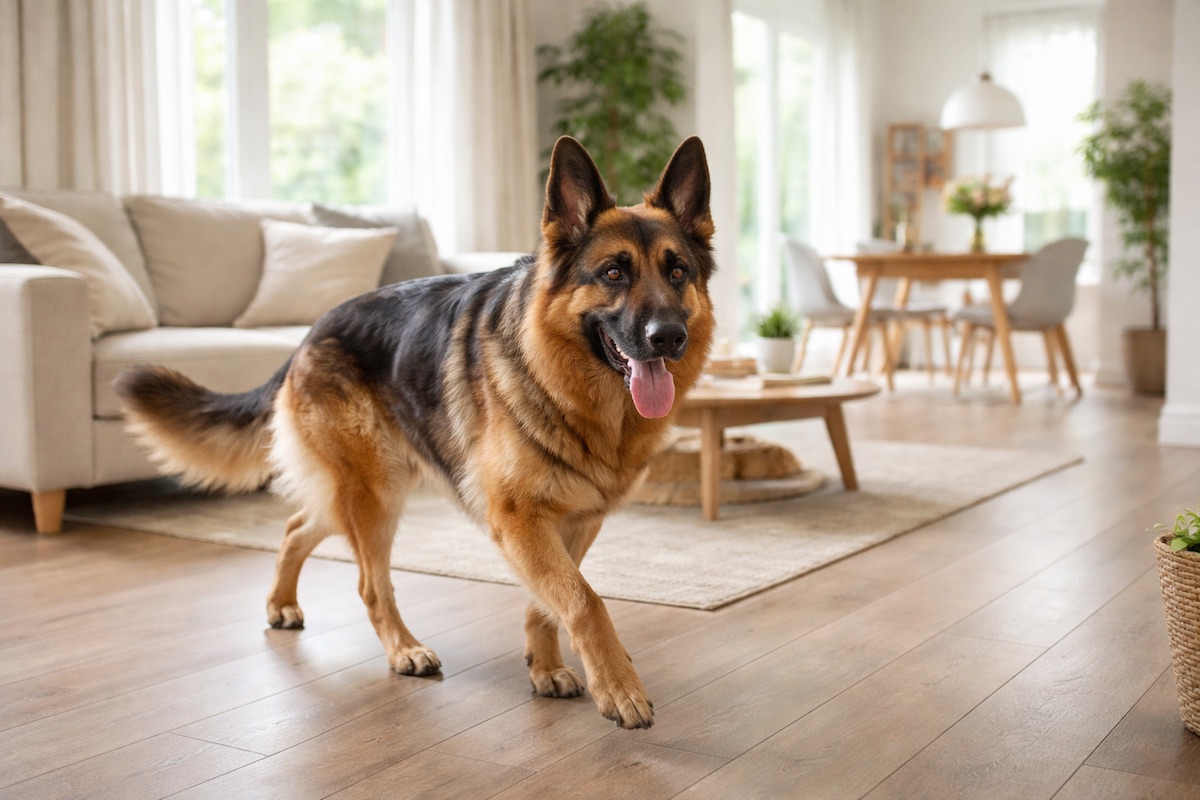
German Shepherds are naturally alert, intelligent, and highly aware of their surroundings. But when pacing becomes constant — moving from room to room, circling the house, or never fully settling — many owners start to worry. Is the dog bored? Anxious? Under-exercised? Or is something deeper happening beneath the surface?
Pacing is rarely just “extra energy.” In many German Shepherds, constant movement is a visible sign that the nervous system cannot fully switch off.
This article explains why German Shepherds pace around the house, how to tell the difference between normal movement and stress-driven behavior, what common causes owners often overlook, and what actually helps reduce restlessness long-term. For a broader overview of how pacing connects with anxiety, alertness, and daily structure, explore the complete German Shepherd behavior guide.
Is Pacing Normal for German Shepherds?
Some level of movement is completely normal. German Shepherds are observant dogs that like to monitor their environment. Brief pacing before walks, meals, or exciting events can simply reflect anticipation.
The concern begins when pacing becomes:
- Frequent or constant throughout the day
- Unrelated to specific triggers
- Accompanied by whining, tension, or scanning behavior
- Persistent even after exercise
A German Shepherd that never truly settles is often dealing with internal tension rather than excess physical energy.
In many cases, pacing is connected to the same patterns discussed in chronic anxiety and nervous overload in German Shepherds, where structure and emotional balance play a major role.
Common Reasons German Shepherds Pace Around the House
1. Nervous System Overload
One of the most common causes of pacing is overstimulation. Too much activity, constant interaction, or unpredictable routines can keep the dog’s brain active long after the body is tired.
Signs pacing may be linked to overload:
- Restlessness after walks or training
- Difficulty lying down for long periods
- Watching every movement in the environment
- Appearing “tired but wired”
This pattern closely overlaps with behaviors described in mental overload signals in German Shepherds.
2. Lack of Predictable Daily Structure
German Shepherds relax more easily when they understand what happens next. Random walk times, inconsistent feeding, or irregular training schedules can create constant anticipation — which often appears as pacing.
Many dogs improve significantly once owners implement a structured daily routine with clear transitions.
Predictability reduces pacing because the dog no longer feels responsible for monitoring every moment of the day.
3. Mental Underload or Boredom
Although overstimulation is common, some German Shepherds pace because their mind lacks direction. Without focused engagement, intelligence turns into restless scanning of the environment.
Short thinking exercises or calm scent games can sometimes reduce pacing more effectively than increasing physical exercise.
4. Constant Alertness Indoors
Some German Shepherds remain “on duty” at home — tracking sounds, watching doors, and reacting to subtle movement. When alertness never turns off, pacing becomes a way to release internal pressure.
If your dog seems unable to relax inside, explore how constant alert behavior can shift from awareness to stress.
5. Difficulty Transitioning From Activity to Rest
After walks or play, many German Shepherds need help understanding that engagement has ended. Without clear transitions, the dog may continue pacing as if waiting for the next task.
This is especially common in dogs that struggle with learning how to relax at home.
Pacing is rarely a single behavior problem — it usually reflects a deeper imbalance between stimulation and recovery.
How to Tell If Pacing Is Stress-Related
| Behavior | Normal Movement | Stress-Driven Pacing |
|---|---|---|
| Duration | Short bursts | Persistent throughout the day |
| Body language | Loose posture | Tense or hyper-alert |
| Response to rest cues | Settles gradually | Continues moving |
| After exercise | Calms down | Becomes more restless |
If pacing increases after activity instead of decreasing, the issue is often overstimulation rather than lack of exercise.
Why More Exercise Often Makes Pacing Worse
Many owners respond to pacing by increasing walks, fetch sessions, or high-energy play. While exercise is important, excessive intensity can keep adrenaline levels elevated.
- Long fetch sessions
- Fast-paced training
- Constant engagement without downtime
Instead of calming the dog, these activities may train the nervous system to stay activated — a pattern similar to dogs that appear energetic but are actually overstimulated.
What Actually Helps Reduce Pacing
Create Clear Daily Structure
Consistent routines reduce anticipation and help the dog understand when it’s safe to rest.
Introduce Calm Transitions
Slow movements, quiet cues, and predictable post-activity rituals signal that engagement has ended.
Reward Stillness — Not Just Activity
Many owners accidentally reinforce excitement more than calm behavior. Quiet praise for relaxed posture teaches the dog that settling is expected.
Limit High-Arousal Games Temporarily
Switch intense play for calm walks or scent work to lower overall nervous system activation.
Even small changes — one calm walk, one short mental task, and one uninterrupted rest period — can significantly reduce pacing over time.
When Pacing May Be Medical
Although behavioral causes are most common, sudden or extreme pacing can sometimes indicate physical discomfort. Contact a veterinarian if pacing appears alongside:
- Changes in appetite or sleep
- Signs of pain
- Digestive issues
- Sudden behavioral shifts
Final Thoughts
Pacing is often your German Shepherd’s way of saying, “I don’t know how to switch off yet.”
Instead of viewing pacing as disobedience or endless energy, try to look at the bigger picture: daily structure, emotional balance, and clear transitions between activity and rest.
When life becomes more predictable and stimulation becomes calmer, many German Shepherds begin to settle naturally — not because they are forced to relax, but because they finally feel safe enough to do so.
Author: XPETSI Editorial Team