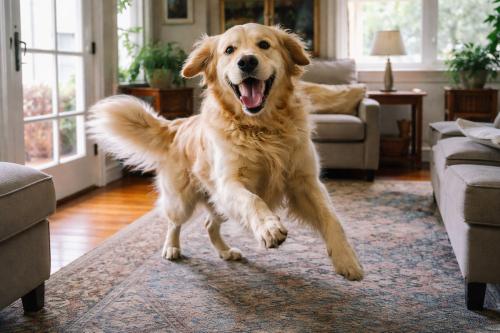
Many Golden Retriever owners notice a frustrating pattern: at home, their dog responds well, listens, and stays engaged — but outside, everything changes. Commands are ignored, attention disappears, and the dog seems more interested in the environment than in the owner.
This behavior is often misunderstood as stubbornness or lack of training. In reality, it usually reflects how the dog processes stimulation and attention in different environments.
When a dog “ignores” you outside, it is often not a choice — it is a limitation in attention under increased stimulation.
Understanding what changes between indoor and outdoor environments can help you see why this happens and how to support more consistent behavior.
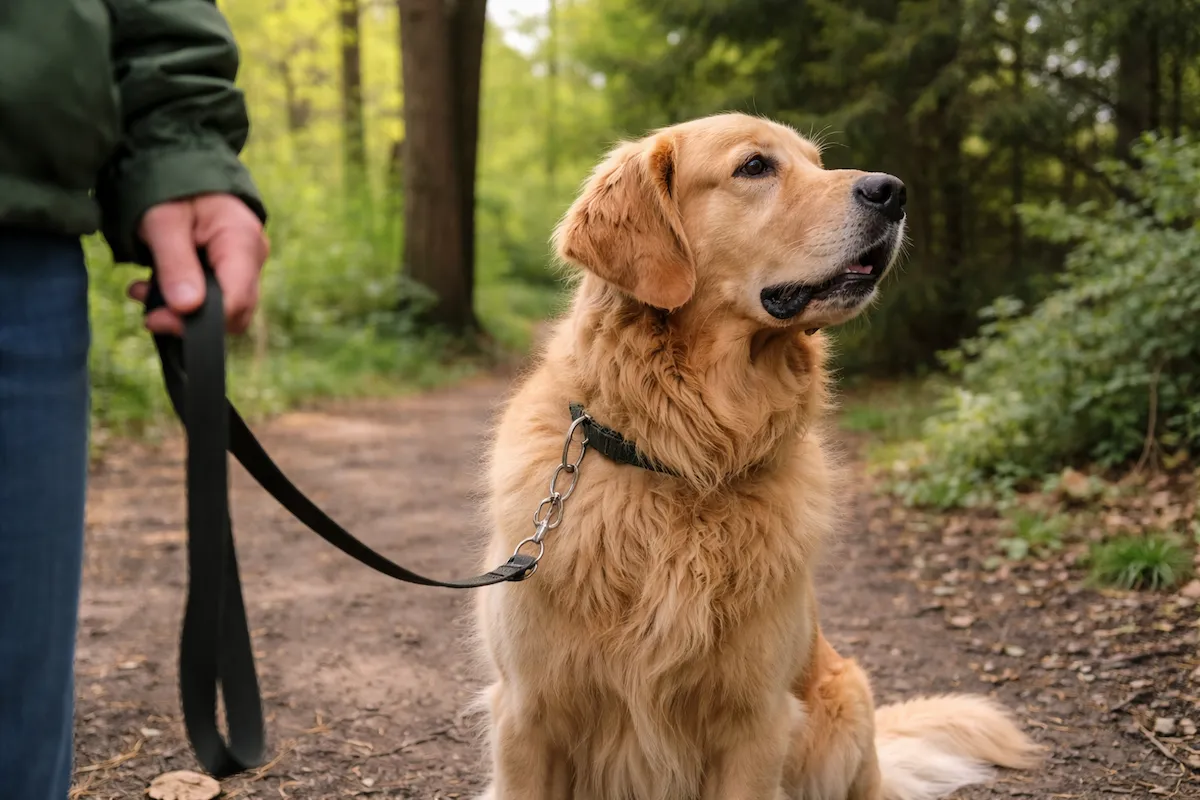
Why Behavior Changes Outside
Inside the home, the environment is predictable and controlled. The dog already understands the space, the sounds are familiar, and there are fewer variables to monitor. Because of this, the brain does not need to constantly process new information, leaving more capacity for attention and interaction.
Outside, the situation is completely different.
Instead of a stable environment, the dog is exposed to continuous change:
- Constant new smells and scent trails
For a dog, scent is one of the most powerful sources of information. Every step introduces new запахи — other dogs, people, food, animals. Each scent carries meaning, and the dog actively processes it rather than ignoring it. - Movement of people, dogs, and objects
Motion naturally attracts attention. Even small movements in the distance can shift focus away from the owner and toward the environment. - Unpredictable sounds
Cars, voices, sudden noises, and environmental sounds create a need for constant monitoring. The dog cannot fully “filter out” these inputs the way humans can. - Changing environments and surfaces
Different textures, spaces, and layouts require adaptation. The dog is not just walking — it is continuously interpreting where it is and what is happening.
For a Golden Retriever, this creates a high level of input that the brain must process continuously. Instead of focusing on a single interaction, attention becomes distributed across many stimuli at once.
What changes is not obedience — it is capacity.
Inside → low input → more available attention Outside → high input → reduced available attention
Because of this shift, the dog does not stop “knowing” what to do — it simply has less ability to prioritize your signals over everything else happening around it.
The issue is not that the dog stops listening — it is that the environment becomes louder than the owner, and the brain prioritizes processing over responding.
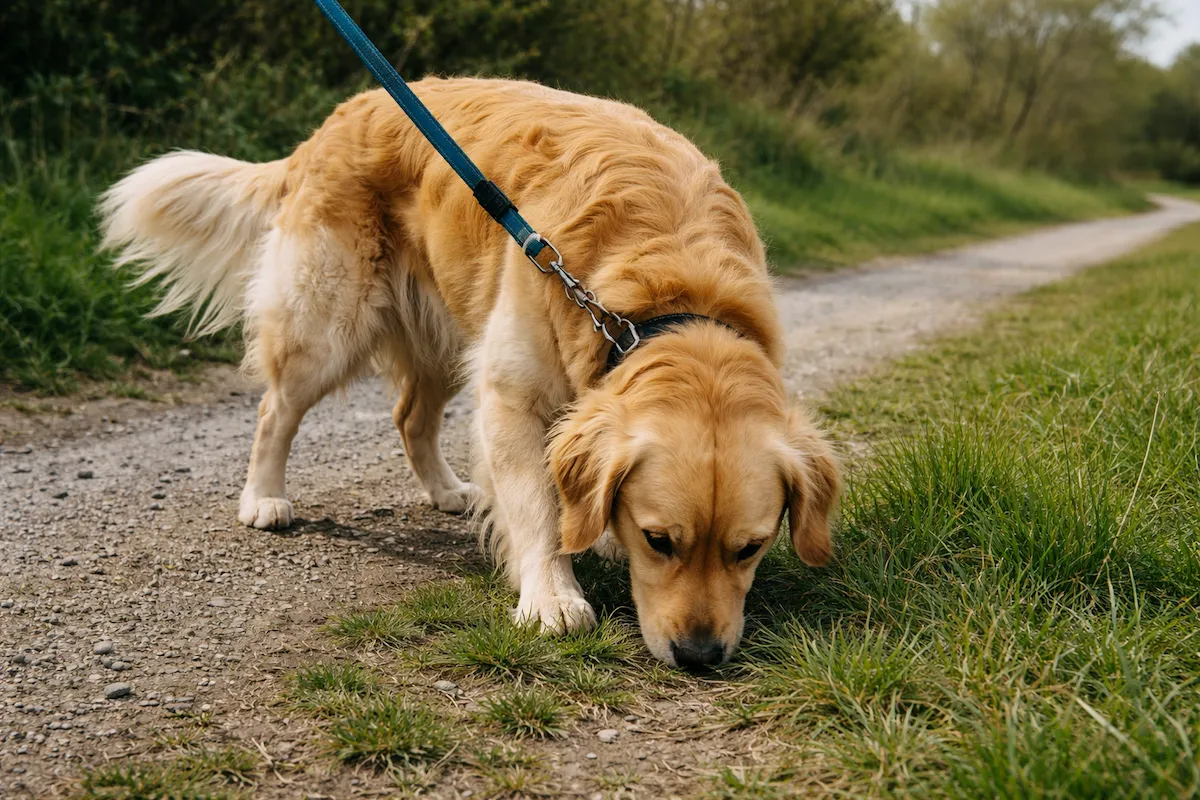
Attention Is Limited, Not Infinite
Dogs do not have unlimited attention. When the environment becomes more stimulating, attention is distributed differently.
Instead of focusing on you, the dog may prioritize:
- New or interesting smells
- Movement in the distance
- Sounds that require monitoring
- Social information from other dogs or people
This is not defiance — it is prioritization.
Your dog is not ignoring you — it is allocating attention to what feels most relevant in that moment.
Overstimulation Reduces Responsiveness
As stimulation increases, the dog’s ability to process and respond decreases.
In highly stimulating environments, your Golden Retriever may:
- Take longer to respond to cues
- Miss signals entirely
- Appear distracted or disconnected
- Shift attention rapidly between stimuli
This is especially common in dogs that are already sensitive to environmental input.
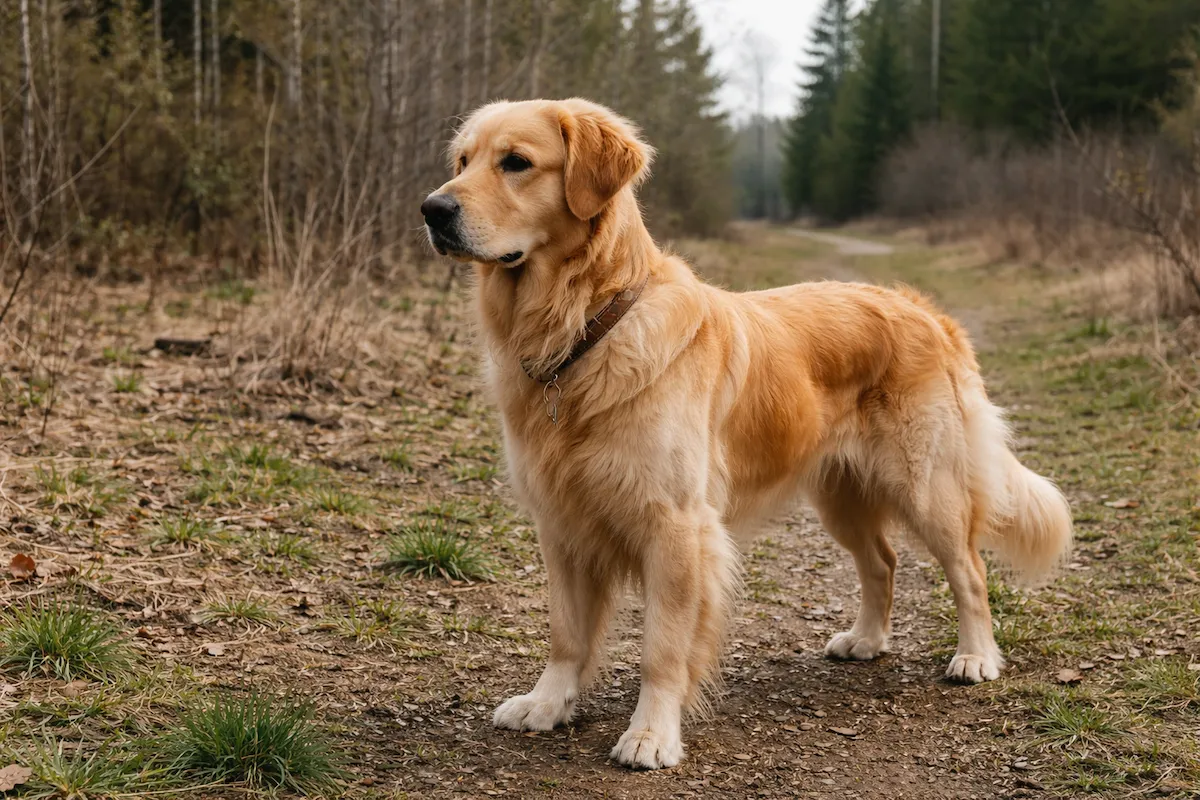
Scent Takes Priority Over Commands
Golden Retrievers experience the world heavily through scent. Outside, smell becomes one of the strongest forms of information.
Sniffing is not just curiosity — it is active processing.
When the dog is following a scent trail:
- Attention becomes highly focused
- Other inputs are temporarily reduced
- Verbal cues may not register fully
This is why calling your dog during intense sniffing often seems ineffective.
Emotional State Affects Attention
Attention is not only about training — it is closely linked to emotional state. A dog’s ability to focus, process information, and respond depends on how it feels in the moment.
This means that the same Golden Retriever can behave very differently depending on its internal state — even in similar situations.
If your Golden Retriever feels:
- Excited → attention becomes scattered
Excitement increases energy and reactivity, but reduces stability of attention. The dog may shift focus rapidly between smells, movement, and sounds. In this state, attention is wide and unfocused rather than directed. - Uncertain → attention shifts to monitoring the environment
When the dog is unsure, it prioritizes awareness over interaction. Instead of focusing on you, it scans the surroundings, watching for potential changes. This is not disobedience — it is a safety strategy. - Overstimulated → responsiveness decreases
When too much input accumulates, the brain reduces its ability to process additional information. The dog may hear you, but cannot respond efficiently. Signals become delayed, inconsistent, or absent.
In all of these states, the ability to focus on you becomes reduced — not because the dog has forgotten what to do, but because the internal conditions do not support attention.
It is helpful to think of attention as a limited resource:
- In calm states → attention is available and flexible
- In active emotional states → attention is redirected or reduced
This explains why a dog can respond perfectly at home, but struggle in more complex environments. The difference is not knowledge — it is state.
Another important detail is that emotional states can shift quickly. A dog may start a walk relatively focused, then gradually lose attention as stimulation builds.
Because of this, inconsistency is common:
- Responds sometimes, ignores at other times
- Seems focused at the beginning, distracted later
- Reacts differently depending on environment
This variability often leads owners to believe the dog is being selective or stubborn. In reality, it reflects changing internal conditions.
A dog cannot respond consistently if it is not in a state that supports attention. Reliable focus comes from emotional stability, not just repetition of commands.
Why This Pattern Reinforces Itself
Ignoring behavior often becomes stronger over time through repetition.
- The dog focuses on the environment
- Commands are not followed
- The environment remains more rewarding
- The pattern repeats
Without changes in structure, the dog continues to prioritize external input over owner interaction.
How to Support Better Attention Outside
Reduce Environmental Pressure
Start in quieter environments where the dog can process information more easily. Gradually increase complexity over time.
Allow Processing Time
Instead of expecting immediate responses, give your dog time to disengage from stimuli.
Balance Movement and Observation
Slow walks with opportunities to observe and sniff can help reduce overload.
Build Predictable Patterns
Consistency helps the dog understand what to expect, reducing the need to constantly scan the environment.
Better attention comes from a calmer internal state — not from increasing pressure.
When Ignoring Is Actually a Signal
Ignoring you outside is often a sign that the environment is too demanding for your dog’s current capacity.
It can indicate:
- Overstimulation
- Excess excitement
- Uncertainty or vigilance
Seeing it this way shifts the focus from control to understanding.
Final Thoughts
A Golden Retriever that ignores you outside is not being difficult — it is responding to a world that is more intense than it can fully process.
By adjusting the environment, reducing pressure, and supporting your dog’s ability to regulate, you can gradually build more stable and consistent attention — even in complex situations.
Author: XPETSI Editorial Team