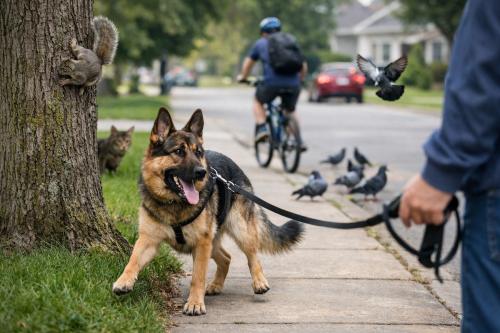
German Shepherds are famous for their intelligence, awareness, and ability to read their environment. But sometimes that same intelligence can look like something else entirely — constant tension, overreaction to small triggers, difficulty relaxing, or a dog that seems to be thinking too much about everything around them.
Many owners start wondering: Is my German Shepherd overthinking? While dogs don’t “overthink” in the human sense, they can experience cognitive stress — a state where the brain stays active for too long without enough recovery.

Cognitive stress happens when a German Shepherd processes more stimulation, expectations, or environmental pressure than they can comfortably handle — even if the dog looks energetic on the outside.
In this article, we’ll explore what “overthinking” really means in dogs, the most common signs of cognitive stress, why German Shepherds are especially prone to it, and what helps bring the nervous system back into balance. For a broader overview of how these behaviors connect, see the complete German Shepherd behavior guide.
Can Dogs Really Overthink?
Dogs don’t analyze problems the way humans do, but highly intelligent breeds like German Shepherds constantly interpret information from their surroundings. They notice subtle movements, emotional cues from people, and changes in routine.
When the brain stays in a state of constant processing without enough calm recovery time, the dog may appear:
- Restless even after exercise
- Overly alert indoors
- Easily distracted during walks
- Unable to fully relax
This isn’t stubbornness or bad behavior. It’s often a nervous system that never fully powers down, similar to patterns described in constant alert behavior in German Shepherds.
Many owners mistake cognitive stress for “too much energy.” In reality, the dog may be mentally tired but unable to switch off.
Why German Shepherds Are Prone to Cognitive Stress
German Shepherds were bred for complex working roles that required constant awareness and decision-making. Their brains are naturally active, and that sensitivity is part of what makes them exceptional companions.
However, this also means they:
- React quickly to environmental changes
- Absorb emotional tension from people
- Struggle with unpredictable routines
- Need clear transitions between activity and rest
Without structure, their intelligence turns inward — creating internal pressure instead of calm focus. Many of these patterns overlap with how anxiety develops in German Shepherds.
A German Shepherd that seems “always thinking” is often carrying too much mental load without enough clear downtime.
Signs Your German Shepherd May Be Experiencing Cognitive Stress
1. Constant Scanning of the Environment
Your dog watches doors, windows, and small movements instead of settling. Even while lying down, the ears stay upright and the body looks tense.
This behavior suggests the brain remains in monitoring mode rather than relaxation mode, often linked to mental overload in German Shepherds.
2. Difficulty Relaxing After Activity
One of the clearest signs is a dog that appears tired but cannot rest. After walks or training, they may pace, reposition constantly, or stare around the room instead of settling.
Healthy mental engagement usually leads to calmness afterward. If activity increases restlessness, cognitive overload may be present.
3. Overreaction to Small Sounds
A dog experiencing cognitive stress may react to everyday noises — footsteps, distant voices, or minor environmental changes — as if they are important signals.
This is not necessarily fear; it’s often an overloaded nervous system struggling to filter information.
4. Loss of Focus During Walks or Training
When the brain is overwhelmed, focus decreases. Commands that normally work may suddenly fail, especially in busy environments.
The dog may look distracted, slow to respond, or hyper-alert rather than engaged — similar to issues explained in why some German Shepherds struggle to focus during walks.
5. Increased Vocalization
Whining, sighing, or quiet vocal sounds can appear when internal tension builds up. Many German Shepherds vocalize when they cannot settle mentally, a pattern often discussed in stress-related whining behavior.
6. Restlessness Indoors
Pacing from room to room or constantly following the owner may look like high energy, but it often reflects internal unease rather than boredom.
If your dog seems unable to stop moving even in a calm environment, the issue may be mental overload — not lack of exercise.
Cognitive Stress vs Healthy Intelligence
| Behavior | Healthy Mental Engagement | Cognitive Stress |
|---|---|---|
| Alertness | Comes and goes naturally | Constant vigilance |
| After Training | Relaxed and satisfied | More restless or reactive |
| Focus | Improves with structure | Declines over time |
| Rest | Falls asleep easily | Struggles to settle |
Understanding this difference helps owners avoid one of the most common mistakes: trying to solve mental overload with more stimulation.
Common Causes of Cognitive Stress in German Shepherds
Too Much Mental Pressure
Constant training, puzzles, and engagement without recovery time can overwhelm even highly intelligent dogs.
Chaotic Daily Structure
Irregular schedules keep the brain anticipating what comes next instead of relaxing between activities.
Excessive High-Intensity Exercise
Fast-paced games and constant excitement can keep adrenaline levels elevated long after activity ends.
Emotional Tension in the Environment
German Shepherds are extremely sensitive to human energy. Stress in the household often transfers directly to the dog.
Mental stimulation is beneficial only when balanced with predictable rest. Without recovery, even positive activities can become overwhelming.
How to Help a German Shepherd That Seems to Be “Overthinking”
Reduce Stimulation Before Adding More
If your dog seems mentally overwhelmed, temporarily simplify routines. Replace intense play with calm walks and slower engagement.
Create Clear Transitions Between Activity and Rest
Use consistent cues or routines that signal when engagement ends and relaxation begins.
Limit Training Session Length
Short, focused sessions often work better than long repetitive drills.
Encourage Real Downtime
Provide a quiet resting space where your dog is not constantly interrupted or monitored.
Many German Shepherds improve quickly when intensity decreases and recovery time increases. Calm structure often reduces cognitive stress faster than adding new exercises.
Reward Calm Choices
Notice and reinforce moments when your dog chooses to lie down or relax. Calmness is a learned skill.
When Cognitive Stress Might Be Misinterpreted
Some behaviors linked to cognitive overload may be mistaken for:
- Stubbornness
- Hyperactivity
- Attention-seeking
- Lack of training
In reality, the dog may simply be mentally exhausted.
If increasing activity makes behavior worse instead of better, consider reducing intensity and focusing on recovery instead.
When to Seek Professional Help
If your German Shepherd shows escalating anxiety, aggression, or severe difficulty relaxing, professional guidance can help.
- A trainer experienced with working breeds
- A veterinary behaviorist
- Your veterinarian to rule out medical causes
Final Thoughts
So, is your German Shepherd overthinking? In many cases, what looks like overthinking is actually cognitive stress — a brain that has been active for too long without enough balance.
Intelligent dogs do not need constant stimulation. They need clear structure, purposeful engagement, and permission to switch off.
When daily life becomes predictable and calm transitions are built into the routine, many German Shepherds begin to relax naturally. Instead of trying to keep your dog busy all day, focus on helping their nervous system feel safe enough to rest — and you may see a calmer, more focused companion emerge.
Author: XPETSI Editorial Team