Grapes might look like a small, harmless snack, but they are one of the most dangerous foods for dogs that people eat every day. Many owners are shocked to find out that even a little bit can cause big health problems.
Grapes and raisins are considered toxic to dogs, and there is no known safe amount. Even a few grapes can cause severe reactions in some dogs.
Understanding why grapes are dangerous, what symptoms to watch for, and what to do if your dog eats them is essential for keeping your pet safe.
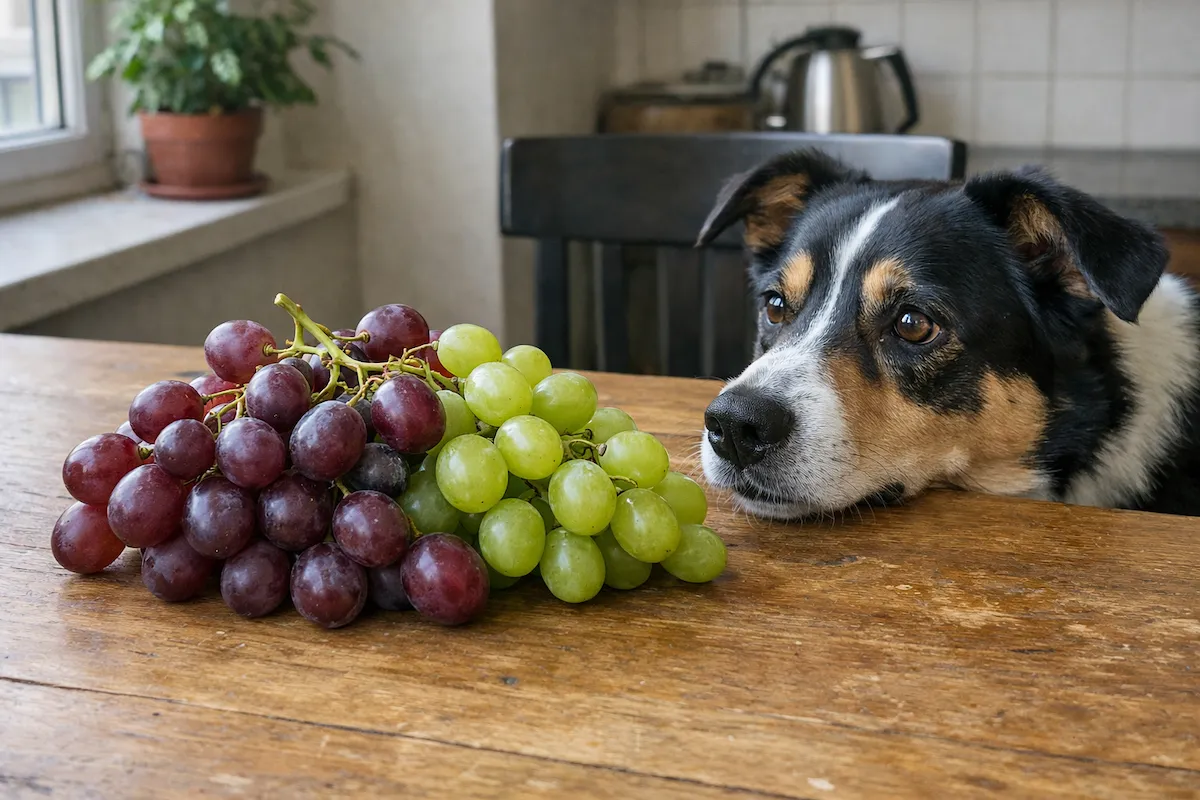
Can Dogs Eat Grapes?
No — dogs should not eat grapes under any circumstances. Unlike some foods that are safe in small amounts, grapes are unpredictable and potentially life-threatening.
Both fresh grapes and dried grapes (raisins) carry the same risk. The toxic effect does not depend on the type, color, or size of the grape.
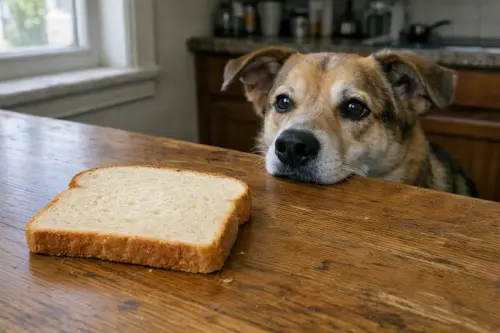
There is no proven safe portion of grapes for dogs. Even small quantities can be dangerous — unlike foods such as bread or avocado, which may be tolerated in small amounts.
Why Even Small Amounts Are Dangerous
- There is no safe dose for grapes or raisins
- Some dogs react severely to very small quantities
- The toxic substance is still not fully understood
Why Are Grapes Toxic to Dogs?
The exact substance that causes toxicity is still not fully understood. However, research confirms that grapes can lead to acute kidney failure in dogs.
What makes grapes especially dangerous is their unpredictability:
- Some dogs react to very small amounts
- Others may show delayed symptoms
- The same dog may react differently at different times
Because the toxic mechanism is unclear, all exposure should be treated as a potential emergency — similar to other dangerous foods like onions and garlic.
What Happens If a Dog Eats Grapes?
Symptoms can appear within a few hours or develop over the course of a day. Early signs may include:
- Vomiting
- Lethargy or weakness
- Loss of appetite
- Diarrhea
As toxicity progresses, more serious symptoms may develop:
- Abdominal pain
- Dehydration
- Reduced or no urination
- Signs of kidney failure
Kidney damage can occur quickly and may become life-threatening without prompt treatment.
How Many Grapes Are Dangerous for Dogs?
There is no reliable safe threshold. Toxicity has been reported in dogs that consumed only a few grapes, while others showed no symptoms after larger amounts.
Because of this unpredictability, veterinarians recommend treating any ingestion as potentially serious.
The risk is not dose-dependent in a predictable way — which is why complete avoidance is essential.
What Should You Do If Your Dog Eats Grapes?
Act Immediately
Do not wait for symptoms to appear. Contact your veterinarian or an emergency clinic as soon as possible.
Do Not Attempt Home Remedies Without Guidance
Inducing vomiting or giving treatments without professional advice can be unsafe. Always follow veterinary instructions.
Monitor Your Dog Closely
If advised by a veterinarian, observe your dog for changes in behavior, appetite, or urination.
Early intervention significantly improves outcomes. Acting quickly can prevent serious complications.
Why Waiting Is Dangerous
Delaying action after grape ingestion reduces the chances of successful treatment.
- Early intervention is critical
- Symptoms may appear too late for easy treatment
- Waiting can lead to severe complications
Are Raisins More Dangerous Than Grapes?
Raisins are actually more concentrated than fresh grapes, which may increase the risk. Even small quantities of raisins can be harmful.
Common sources include:
- Baked goods (cookies, cakes, bread)
- Trail mix
- Breakfast cereals
Always check ingredients carefully before sharing food with your dog.
All Forms of Grapes Are Dangerous
- Fresh grapes
- Raisins, currants, sultanas
- Baked goods containing grapes
- Grape juice and extracts
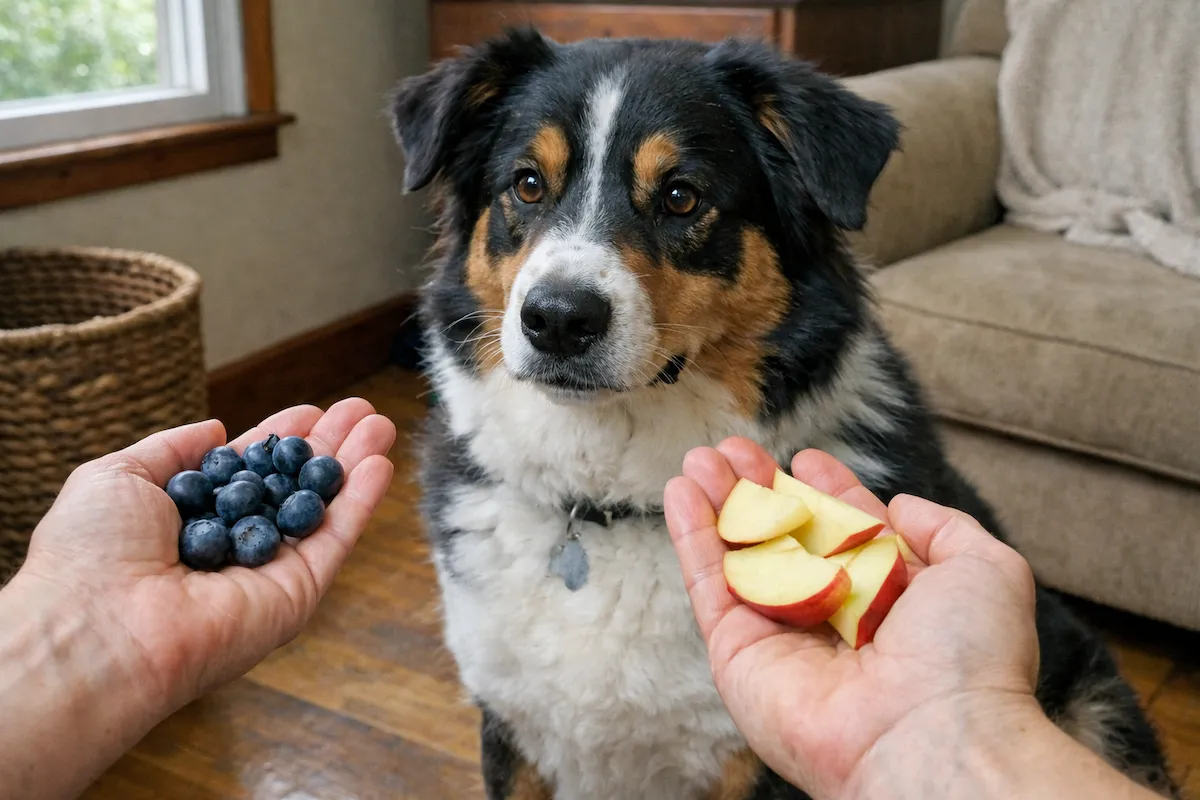
Safe Alternatives to Grapes for Dogs
If you want to offer fruit as a treat, choose options that are generally considered safe in moderation:
Safe treats should be given in moderation and as part of a balanced diet.
Common Mistakes Owners Make
- Assuming small amounts are safe
- Sharing food without checking ingredients
- Waiting for symptoms before seeking help
- Not realizing raisins are also toxic
When it comes to grapes, caution is always the safest approach.
Final Thoughts
Grapes are one of the few foods that should never be given to dogs — not even as a small treat.
While many foods can be offered safely in moderation, grapes and raisins are different. Their effects are unpredictable and potentially severe.
When in doubt, it is always better to choose safer alternatives and avoid unnecessary risk. Keeping your dog’s diet simple, predictable, and safe is one of the best ways to protect their health.
Author: XPETSI Editorial Team