Onions and garlic are common ingredients in many kitchens, often used to add flavor to meals. Because they are so widely used, many dog owners wonder whether small amounts are safe to share. The answer, however, is clear — these foods can pose a serious risk to dogs.
Onions and garlic are toxic to dogs and should be completely avoided — even in small amounts or cooked forms.
Understanding why these ingredients are dangerous, how toxicity develops, and what signs to watch for can help you protect your dog from accidental exposure.
Can Dogs Eat Onions or Garlic?
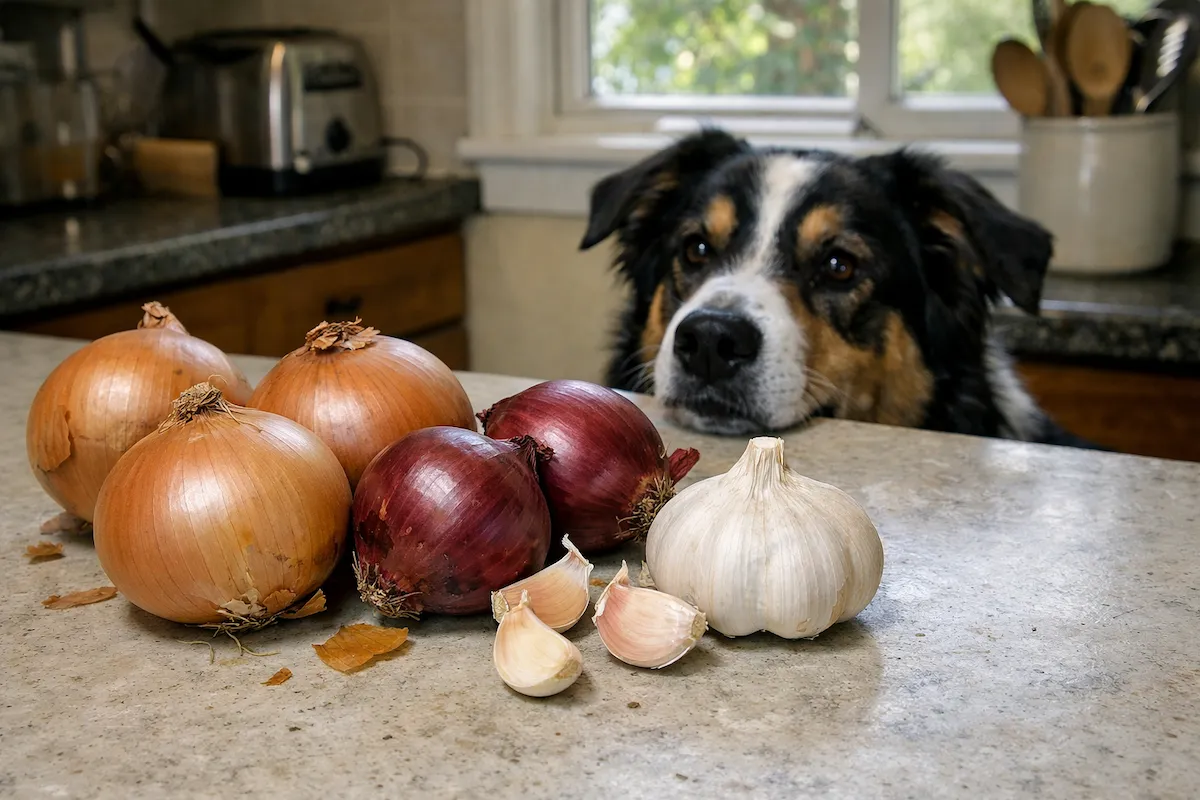
No — dogs should not eat onions or garlic in any form. This includes raw, cooked, powdered, dried, or processed versions. Even foods that contain small amounts, such as sauces or leftovers, can be harmful over time.
Both onions and garlic belong to the Allium family and contain compounds that damage a dog’s red blood cells.
There is no completely safe form or amount of onion or garlic for dogs.
Are All Forms of Onions and Garlic Dangerous?
Yes — all forms are toxic, regardless of how they are prepared.
- Raw onions or garlic
- Cooked dishes (soups, sauces, leftovers)
- Onion or garlic powder
- Seasonings and spice blends
Powdered forms are especially concentrated. A small amount of garlic powder can equal several cloves of fresh garlic.
Cooking does not reduce toxicity — the harmful compounds remain active.
Why Are Onions and Garlic Toxic to Dogs?
These foods contain compounds such as thiosulfates that damage red blood cells, leading to a condition called hemolytic anemia. This reduces the body’s ability to carry oxygen.
Garlic is more concentrated than onions, meaning smaller amounts can cause similar or even stronger effects.
The danger is not always immediate — damage can build gradually, especially with repeated exposure.
Can Small Amounts Become Dangerous Over Time?
Yes. One of the most overlooked risks is cumulative toxicity.
Small amounts of onion or garlic given regularly — for example in table scraps or seasoned food — can slowly damage red blood cells without obvious early symptoms.
Even if your dog seems fine after small exposures, repeated intake can lead to serious health problems over time.
What Happens If a Dog Eats Onions or Garlic?
Symptoms may appear gradually and are often delayed. Early signs include:
- Lethargy or unusual tiredness
- Reduced appetite
- Weakness
- Vomiting or digestive upset
As toxicity progresses, more serious symptoms may develop:
- Pale gums
- Rapid breathing
- Increased heart rate
- Dark or reddish urine
Symptoms may appear several days after exposure, which makes the cause easy to miss.
Are Some Dogs More Sensitive?
Yes. Sensitivity varies depending on the dog.
- Smaller dogs are affected by lower amounts
- Some breeds may be more sensitive
- Individual tolerance can differ significantly
Because sensitivity is unpredictable, avoiding these foods completely is the safest approach.
Are Cooked Onions or Garlic Less Dangerous?
No. Cooking does not remove the toxic compounds. Whether raw, cooked, fried, or powdered, onions and garlic remain harmful to dogs.
This includes:
- Onion powder in seasoning mixes
- Garlic in sauces or soups
- Processed foods containing these ingredients
Hidden Sources of Onion and Garlic
Dogs are often exposed accidentally through everyday foods.
- Leftovers from human meals
- Seasoned meat or broths
- Soups and sauces
- Snack foods and processed meals
Other related plants can also be harmful:
- Leeks
- Chives
- Shallots
Many cases of toxicity come from hidden ingredients rather than obvious foods.
Common Myth: Garlic Is Good for Dogs
Some sources suggest that garlic may have benefits, such as acting as a natural flea repellent.
However, there is no reliable scientific evidence supporting this. Veterinary consensus considers garlic unsafe for dogs.
The potential risks of garlic outweigh any unproven benefits.
What Should You Do If Your Dog Eats Onions or Garlic?
Act Early
Do not wait for symptoms to appear. Early action can prevent serious complications.
Contact a Veterinarian
Even if the amount seems small, professional advice is recommended.
Monitor Closely
Watch for signs such as lethargy, pale gums, or unusual behavior over the next few days.
Early intervention significantly improves outcomes.
Safe Alternatives to Onions and Garlic
If you want to offer your dog something flavorful, consider safer options:
- Plain cooked chicken
- Carrots
- Blueberries
- Small pieces of apple (without seeds)
Simple, unseasoned foods are always the safest choice for dogs — especially compared to dangerous foods like grapes or higher-risk options like avocado.
Common Mistakes Owners Make
- Assuming cooked onions or garlic are safe
- Feeding small amounts regularly
- Not checking ingredients in prepared foods
- Ignoring delayed symptoms
Toxicity often develops gradually, making it easy to overlook until it becomes serious.
Final Thoughts
Onions and garlic are everyday foods for humans — but for dogs, they represent a real health risk.
Avoiding these ingredients completely is the safest approach. With so many safe alternatives available, there is no need to take unnecessary risks.
Keeping your dog’s diet simple, predictable, and free from toxic foods is one of the most effective ways to support long-term health.
Author: XPETSI Editorial Team