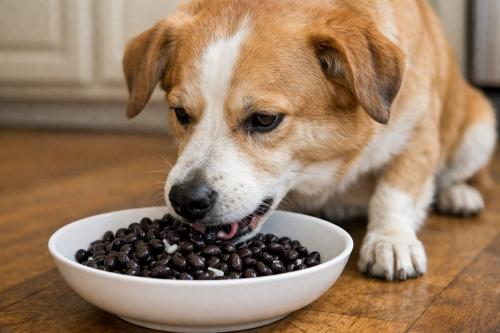
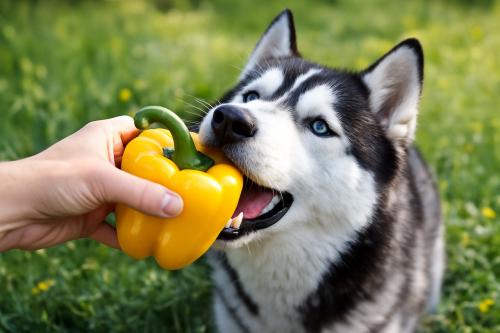
Many dog owners assume that if a food is healthy for humans, it should also be safe for dogs. Avocado is a good example of why this assumption can be misleading.
While small amounts of avocado flesh are not considered highly toxic, the fruit comes with several risks that are often overlooked — especially when it comes to fat content, preparation, and portion size.
Dogs can eat small amounts of avocado flesh, but the fruit contains compounds that may be harmful in larger quantities. Some parts of the avocado are more dangerous than others.
Understanding which parts are safe, what risks to watch for, and how avocado fits into a dog’s diet can help prevent accidental harm.
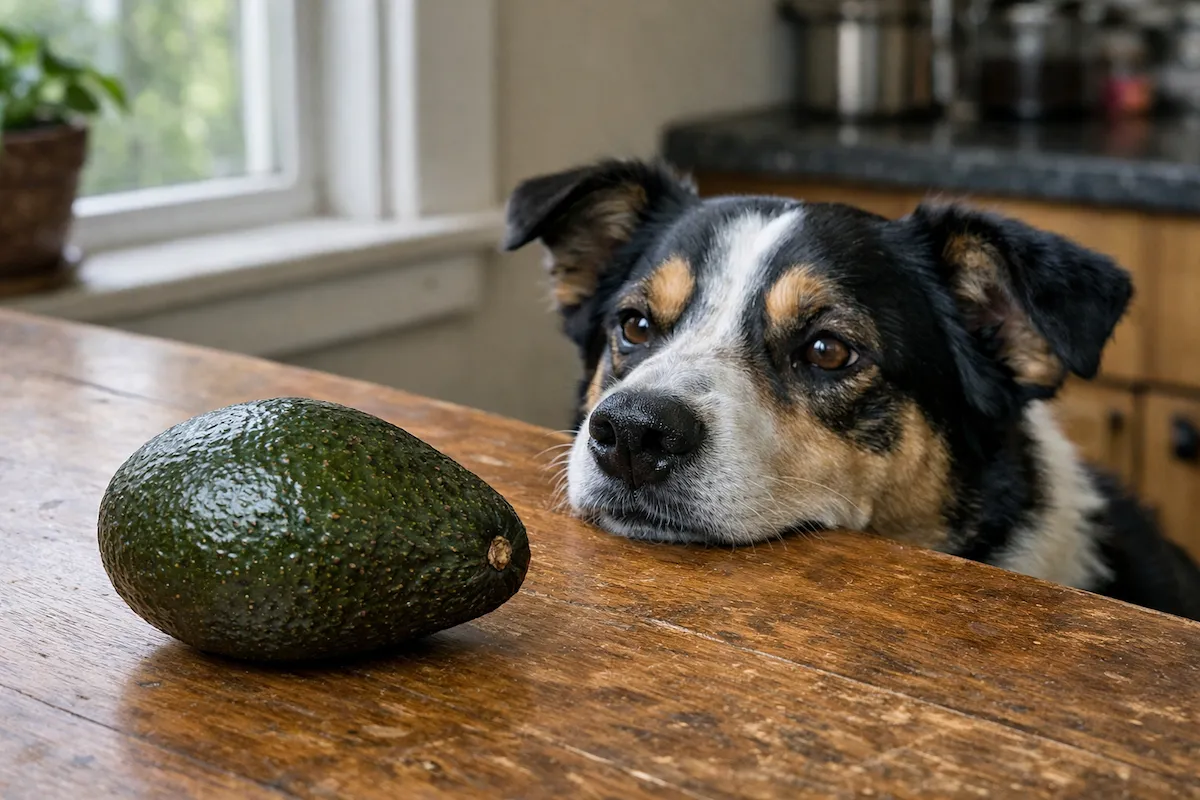
Can Dogs Eat Avocado?
Yes, dogs can eat small amounts of ripe avocado flesh. It is not considered highly toxic to dogs in moderate quantities, and some dogs tolerate it without issues.
However, avocado should be given with caution and only occasionally.
Avocado is not toxic in the same way as grapes or onions and garlic, but it is not entirely risk-free either.
Why Avocado Can Be Risky for Dogs
Persin Content
Avocado contains a compound called persin, which can be toxic to some animals. Dogs are generally more resistant than other species, but large amounts may still cause digestive upset.
High Fat Content
Avocado is rich in fat. While healthy for humans, excess fat can be difficult for dogs to process, especially if consumed frequently.
Too much fat at once can lead to digestive discomfort or more serious issues in sensitive dogs.
Potential Digestive Upset
Some dogs may experience vomiting or diarrhea after eating avocado, particularly if they are not used to it.
Hidden Risk: Fat Content and Pancreatitis
Many articles focus on vitamins in avocado but overlook one of the biggest practical risks — fat content.
- Avocado is high in fat and can exceed a dog's tolerance quickly
- This may trigger pancreatitis, a painful and potentially serious condition
- Dogs prone to digestive issues or weight gain are at higher risk
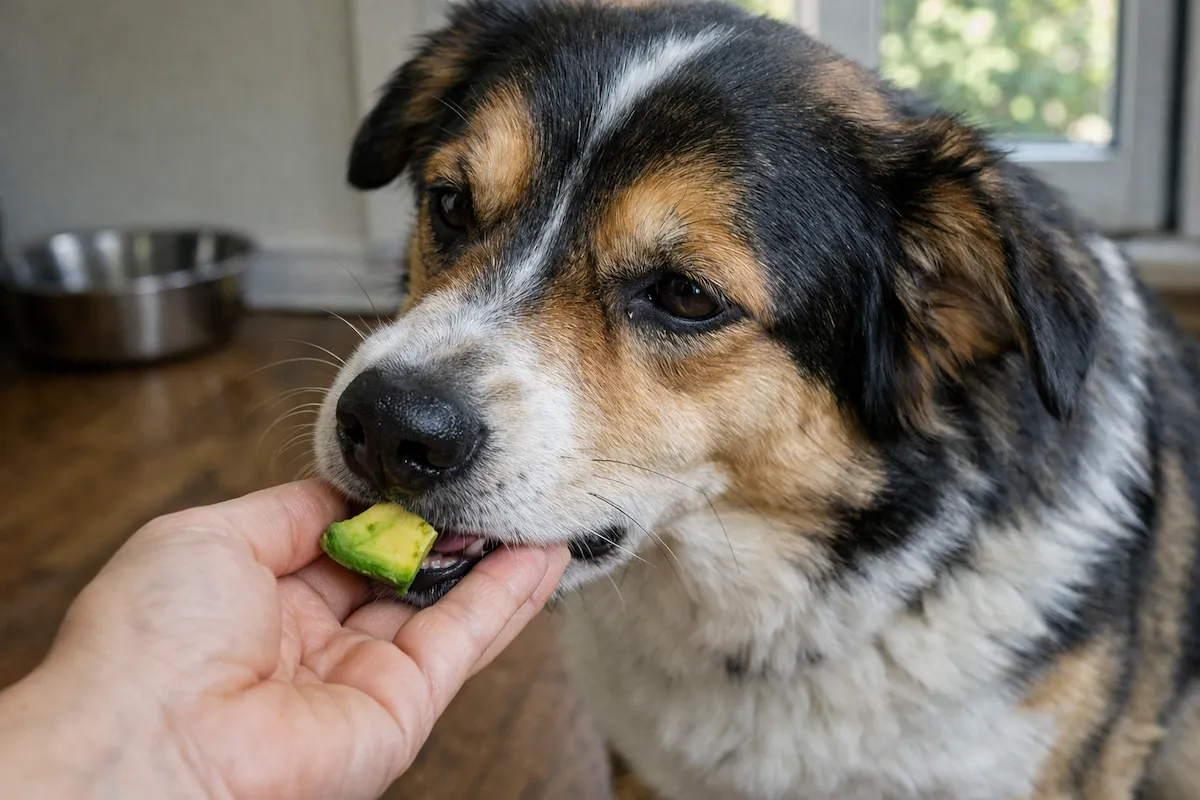
Which Parts of the Avocado Are Dangerous?
Not all parts of an avocado affect dogs in the same way. While the flesh is less risky, other parts can create serious problems.
- Pit: choking hazard and risk of intestinal blockage
- Skin: difficult to digest and higher in persin
- Leaves and plant parts: not safe for dogs
Why Some Dogs React Differently
Not all dogs process avocado the same way, which is often overlooked in general advice.
- Some dogs tolerate small amounts without issues
- Others may develop vomiting or soft stool even after a small bite
- Sensitivity depends on digestion, health, and overall diet
When to Avoid Avocado Completely
- Dogs with a history of pancreatitis
- Overweight dogs
- Dogs with sensitive digestion
Can Dogs Eat Avocado Every Day?
No, avocado should not be a daily food for dogs. Even if tolerated, its high fat content makes regular feeding unnecessary and potentially problematic.
Avocado is best treated as an occasional treat, not a regular addition to meals — similar to foods like eggs or cheese, which also require moderation.
How Much Avocado Is Safe?
If you choose to offer avocado:
- Small dogs: a very small piece occasionally
- Medium dogs: small portion from time to time
- Large dogs: moderate portion occasionally
Always remove the pit and skin, and avoid seasoning.
Small, occasional portions reduce the risk of digestive issues.
Signs Avocado Does Not Suit Your Dog
- Vomiting
- Diarrhea
- Lethargy
- Abdominal discomfort
If these signs appear, discontinue feeding avocado and consult a veterinarian if needed.
Better Alternatives to Avocado
If you want to offer your dog a healthy treat, there are many options that provide nutritional benefits without the risks associated with avocado. These alternatives are generally easier to digest, lower in fat, and more predictable in how dogs respond to them.
-
Blueberries
Small, easy to serve, and rich in antioxidants, blueberries are one of the safest fruit options for dogs. They are low in calories and can be used as occasional rewards without significantly affecting the overall diet. Their size also makes portion control simple. -
Apples (without seeds)
Apples provide fiber and vitamins while being relatively low in fat. Removing the seeds is important, as they contain compounds that are not safe for dogs. Sliced apples can be a refreshing and crunchy treat that many dogs enjoy. -
Bananas
Bananas are soft, easy to digest, and naturally sweet. They provide potassium and can be useful in small amounts as a treat or training reward. Because they contain natural sugars, moderation is important to avoid excess calorie intake. -
Carrots
Carrots are low in calories, easy on digestion, and provide a satisfying crunch. They can support dental health through chewing and are a reliable option for regular use in small amounts.
These foods offer a safer balance of nutrients without the higher fat content or potential complications associated with avocado. They are also more consistent in how dogs tolerate them, which makes feeding decisions easier.
Many fruits and vegetables provide similar or better benefits than avocado, with fewer risks and more predictable digestion.
Why Guacamole Is More Dangerous Than Avocado
One of the most overlooked risks is not the avocado itself, but how it is usually served.
- Guacamole often contains onion and garlic, which are toxic to dogs
- Salt and spices can irritate the digestive system
- Even small amounts may be more harmful than plain avocado flesh
Common Mistakes Owners Make
-
Feeding avocado with the skin or pit
The pit presents a serious choking and blockage risk, while the skin is difficult to digest and may contain higher concentrations of harmful compounds. Only the soft inner flesh should ever be considered — and even then, in small amounts. -
Giving large portions
Because avocado is high in fat, even moderate amounts can become excessive quickly. Large portions increase the likelihood of digestive upset and calorie imbalance. -
Offering avocado daily
Regular feeding can shift the overall diet toward higher fat intake and reduce nutritional balance. What seems like a healthy addition can become problematic when repeated too often. -
Assuming “healthy for humans” means safe for dogs
Dogs process foods differently than humans. Nutritional value for people does not always translate into safety or benefit for pets. Avocado is a good example of a food that is beneficial for humans but requires caution for dogs. -
Ignoring early signs of intolerance
Mild symptoms such as loose stools or reduced appetite may be overlooked, especially if they appear gradually. Paying attention to these early signals helps prevent more serious issues.
Not all healthy foods for humans are equally suitable for dogs. Safe feeding depends on digestion, portion size, and how the food fits into the overall diet.
Final Thoughts
Dogs can eat small amounts of avocado flesh, but it is not an essential or ideal food.
Because of its fat content and potential risks, avocado is best kept as an occasional treat rather than a regular part of the diet.
When choosing what to feed your dog, it is often safer to rely on simpler, well-tolerated foods rather than more complex options.
Author: XPETSI Editorial Team