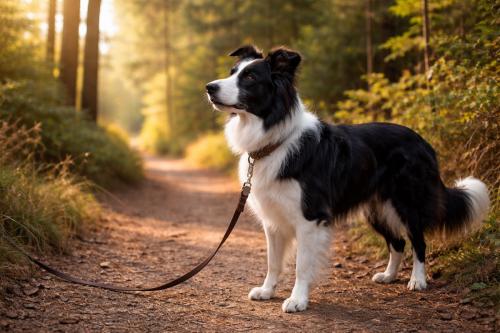
Border Collies are often praised for their intelligence, responsiveness, and endless drive. But behind that impressive focus lies a challenge many owners don’t expect: calmness does not come naturally to many dogs of this breed. Instead of relaxing at home, some Border Collies pace, watch every movement, or struggle to settle even after activity.
Calmness is not the absence of energy in a Border Collie — it is a learned state that develops when structure, mental balance, and clear transitions exist in daily life.
If you’ve ever wondered why your Border Collie seems constantly “on,” this article will help you understand what makes relaxation difficult for this breed, how drive and nervous tension can look similar, and what actually helps a highly intelligent dog switch off without losing their natural enthusiasm.
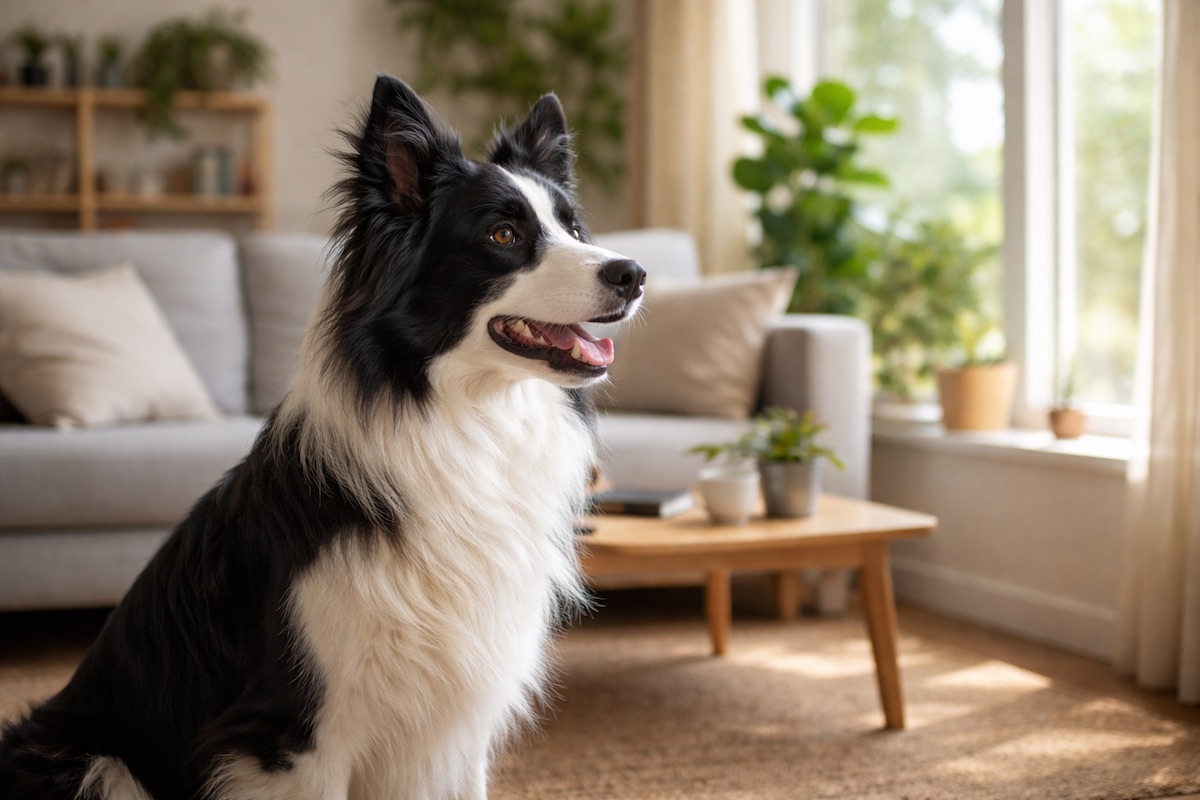
Why Calmness Doesn’t Come Naturally to Many Border Collies
Border Collies were bred for continuous engagement — monitoring livestock, reacting to subtle movement, and working closely with humans for long periods. This history created dogs that feel most comfortable when their brain is active.
Because of this background, many Border Collies:
- Stay alert even in quiet environments
- Look for tasks when nothing is happening
- Struggle with unclear downtime
- Become restless when routines lack structure
What looks like endless energy is often a nervous system that never learned how to transition fully into rest mode.
Unlike some breeds that naturally relax between activities, Border Collies often need guidance to understand when the “workday” is over — a theme explored further in how the Border Collie mindset shapes daily behavior.
The Difference Between Healthy Drive and Internal Tension
One of the biggest misconceptions about Border Collies is that constant motion equals happiness. In reality, healthy drive and nervous tension can look surprisingly similar on the surface.
| Behavior | Healthy Drive | Nervous Tension |
|---|---|---|
| Movement | Purposeful and focused | Restless or repetitive |
| Response to rest | Can settle after activity | Struggles to switch off |
| Focus | Clear and engaged | Hyper-alert or distracted |
| Body language | Loose and balanced | Tense or scanning constantly |
Understanding this difference is essential. Many owners try to “burn off” tension with more activity, which can accidentally increase arousal instead of creating calmness — especially when the dog is already experiencing patterns similar to the fine line between drive and anxiety in Border Collies.
Why High Intelligence Can Make Relaxation Harder
Border Collies process a huge amount of information from their surroundings. Sounds, movement, routines, and even emotional changes in the household all contribute to their mental workload.
When the brain receives constant input without clear recovery periods, the dog may:
- Follow people around the house
- Watch doors and windows
- React to minor environmental changes
- Lie down briefly but get up again quickly
A dog that appears “busy” all day may actually be struggling with cognitive fatigue rather than boredom.
This type of mental pressure often connects to the same patterns described in cognitive fatigue in highly intelligent dogs, where too much thinking reduces the ability to relax.
Common Reasons Border Collies Struggle to Relax
Constant Mental Engagement
Frequent training sessions, puzzles, or problem-solving activities can keep the brain activated long after the activity ends. Dogs that receive constant stimulation sometimes begin showing subtle stress patterns discussed in early warning signs before restlessness appears.
Unclear Daily Rhythm
When walks, play, and training happen unpredictably, the dog stays in anticipation mode instead of resting between events.
High-Arousal Play Indoors
Fast-paced games inside the home can blur the boundary between work and rest, making calmness feel unfamiliar — especially for dogs already struggling with indoor restlessness and endless motion.
Owner Energy and Environment
Border Collies are extremely sensitive to human emotion. Busy, loud, or tense environments often increase vigilance rather than relaxation.
Many dogs begin settling more easily once activity becomes predictable and transitions between engagement and rest become clearer.
Signs Your Border Collie Finds Calmness Difficult
- Pacing or circling indoors
- Constant monitoring of movement
- Difficulty lying down for long periods
- Restlessness after training sessions
- Seeming mentally “on duty” even during quiet time
These behaviors don’t necessarily mean something is wrong — they often reflect a dog that hasn’t learned how to switch from focus to recovery. Some dogs may also begin shadowing their owners constantly, a behavior explored in why Border Collies follow people everywhere.
How to Help a Border Collie Learn to Relax
Create Predictable Transitions
Use consistent cues or routines that signal when activity ends. Calm endings help the nervous system slow down gradually.
Balance Thinking and Recovery
Short mental tasks followed by genuine downtime often work better than long sessions of continuous engagement. Many owners find success after building routines similar to structured mental recovery into the daily schedule.
Lower Arousal Indoors
Replace fast-paced indoor play with calm interaction or structured rest periods.
Reward Stillness
Notice and reinforce moments when your dog chooses to relax. Many Border Collies simply need confirmation that calm behavior is allowed.
Teaching calmness is not about reducing intelligence or drive — it’s about helping a highly active brain feel safe enough to rest.
Why “More Activity” Isn’t Always the Solution
It’s natural to assume that a restless Border Collie needs more exercise or more training. However, excessive stimulation can keep adrenaline levels elevated and make relaxation harder.
- Long training sessions without breaks
- High-speed games repeated throughout the day
- Constant interaction without quiet time
Instead of creating calmness, these patterns often reinforce the idea that the dog must stay engaged at all times — especially when daily mental workload already exceeds a healthy balance described in how much thinking work Border Collies actually need.
Sometimes the biggest improvement comes not from adding activity — but from intentionally reducing intensity.
What Calmness Looks Like in a Balanced Border Collie
A relaxed Border Collie doesn’t lose awareness or personality. Instead, you may notice:
- Softer body posture indoors
- Longer periods of uninterrupted rest
- Improved focus during training
- Less reactive behavior to small environmental changes
Calmness becomes part of the dog’s routine rather than something forced or temporary — often emerging naturally when lifestyle balance aligns with the bigger framework explained in the Border Collie behavior guide on intelligence, sensitivity, and balance.
Final Thoughts
Calmness is not the opposite of drive — it is the balance that allows a Border Collie to think clearly and recover fully.
If your Border Collie seems unable to relax, it doesn’t mean you’re doing something wrong. Often, it simply means the dog needs clearer structure, calmer transitions, and intentional recovery time built into the day.
When routine becomes predictable and stimulation becomes balanced, many Border Collies learn that they don’t always need to stay in work mode — and that calmness is just another skill they are capable of mastering.
Author: XPETSI Editorial Team