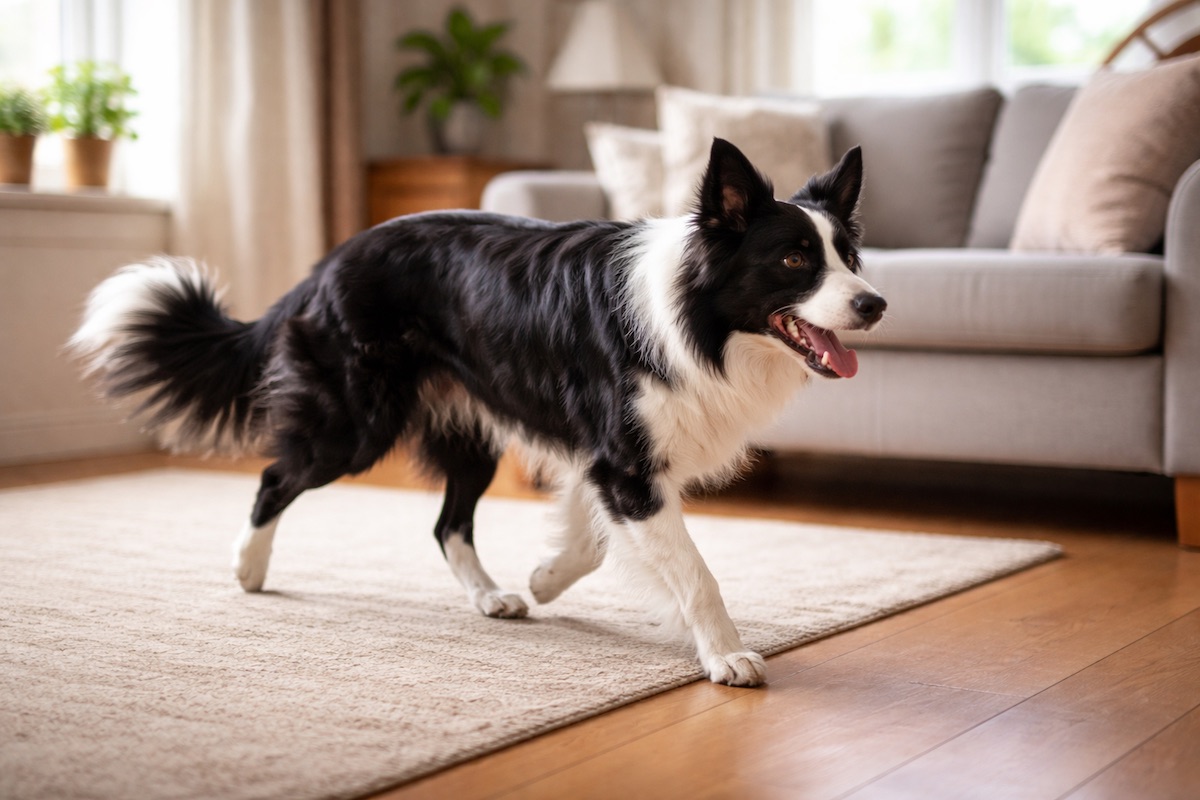
Border Collies are famous for their energy, intelligence, and intense focus. But some owners notice a difficult pattern developing at home: the dog keeps moving constantly. Pacing from room to room, watching every sound, following people without resting — it can feel like the dog simply never switches off. While this behavior is often described as “too much energy,” endless motion indoors is rarely just physical activity. In many Border Collies, it reflects a nervous system that hasn’t learned how to relax.
A Border Collie that cannot settle inside the house is not always under-exercised. Very often, the brain is overstimulated rather than underworked.
This article explains why some Border Collies struggle to relax indoors, how to recognize the difference between healthy activity and stress-driven motion, and what practical changes help create real calmness without suppressing the dog’s natural drive.
Why Endless Indoor Motion Happens in Border Collies
Border Collies were bred to work continuously while monitoring livestock, terrain, and human signals at the same time. Their brains are designed for constant awareness and decision-making — something many owners begin to notice when living with a constantly thinking working mind at home. When that level of mental engagement meets an unpredictable home environment, some dogs remain in a state of permanent alertness.
Instead of resting, they continue scanning their surroundings, waiting for direction or stimulation.
- Watching movement from room to room
- Pacing without a clear purpose
- Reacting to small sounds or shadows
- Struggling to lie down for long periods
This behavior is often misunderstood as boredom, but many Border Collies that pace indoors are actually mentally overloaded rather than lacking activity.
Normal Activity vs Inability to Switch Off
| Behavior | Healthy Energy | Difficulty Switching Off |
|---|---|---|
| Movement | Short bursts followed by rest | Constant pacing or scanning |
| Body posture | Loose and flexible | Tense or hyper-alert |
| After exercise | Gradual relaxation | More restlessness |
| Response to calm cues | Settles with guidance | Remains mentally active |
If your Border Collie becomes more restless after intense activity instead of calmer, overstimulation may be the real issue.
Common Reasons a Border Collie Can’t Switch Off Indoors
1. Mental Overstimulation
Constant training, puzzles, or high-intensity play can keep the brain active long after the session ends. Some dogs begin showing subtle cognitive fatigue patterns where engagement stops feeling productive and turns into pressure — similar to what owners notice when training suddenly stops feeling effective in highly intelligent dogs.
2. Lack of Clear Daily Structure
Dogs relax more easily when they understand what comes next. Random schedules create anticipation, and anticipation often looks like restless motion. Many owners see improvements after building intentional recovery periods into the daily routine.
- Irregular walk times
- Unpredictable training sessions
- Inconsistent expectations at home
3. Emotional Sensitivity to the Environment
Border Collies are extremely perceptive. Busy households, constant movement, or emotional tension can keep the dog mentally activated, especially in dogs that show strong emotional sensitivity to subtle changes at home.
Many Border Collies don’t rest because they feel responsible for monitoring everything around them.
4. Too Much Physical Intensity Without Calm Recovery
Fast fetch games, agility-style play, or high-speed running can increase adrenaline levels. Without a calm transition afterward, the nervous system stays activated — something often confused with drive when it may actually resemble high arousal that borders on anxiety rather than healthy focus.
5. Lack of Learned Relaxation Skills
Relaxation is not automatic for highly driven breeds. Some Border Collies simply haven’t learned how to settle because calm behavior has never been reinforced, which is why many owners discover that calmness itself must be practiced as a skill.
Signs Your Border Collie Is Mentally “Stuck On”
- Pacing even after long walks
- Watching doors, windows, or shadows constantly
- Following people without resting
- Lying down briefly but standing up again
- Reacting quickly to minor environmental changes
A dog that appears energetic all day may actually be mentally tired — but unable to disengage from their surroundings.
Why Adding More Exercise Often Backfires
When a Border Collie seems restless, many owners increase physical activity. While exercise is important, too much intensity can reinforce the cycle of constant activation.
Instead of teaching calmness, endless high-energy routines can train the dog to expect movement at all times.
- Long fetch sessions
- Frequent high-speed play
- Nonstop mental challenges
More activity does not always equal more relaxation. For sensitive working breeds, balance matters more than volume.
How to Help a Border Collie Learn to Switch Off
Create Predictable Transitions
Signal clearly when activity ends. Slow movements, quieter tone of voice, and guiding your dog toward a resting area can help shift the nervous system into recovery mode — especially when combined with structured mental recovery strategies.
Introduce Calm Decompression Time
After walks or play, allow slow sniffing, quiet time, or gentle chewing activities instead of jumping into another task. Many Border Collies benefit from slower, more thoughtful engagement similar to thinking-focused walks instead of fast-paced routines.
Reward Calm Behavior
Notice moments when your Border Collie chooses to lie down or relax. Quiet reinforcement teaches the dog that stillness is safe and expected.
Reduce High-Arousal Games Temporarily
Switch intense fetch sessions for calmer activities like structured walking or scent exploration.
Many Border Collies improve dramatically when daily intensity decreases slightly and recovery periods become more predictable.
Teach a Relaxation Space
A specific mat or bed associated with calmness can help the dog understand where and when rest happens. Consistency is more important than duration.
When Endless Motion Might Be Medical
Although behavioral causes are common, sudden or extreme restlessness may signal physical discomfort. Consider veterinary guidance if you notice:
- Sudden personality changes
- Sleep disruption
- Digestive issues or appetite changes
- Signs of pain or stiffness
What a Balanced Border Collie Day Looks Like
Healthy routines for this breed usually include rhythm rather than constant engagement:
- Purposeful mental engagement in short sessions
- Moderate physical exercise
- Clear downtime after activity
- Predictable evening wind-down
A balanced Border Collie is not constantly busy — they move between focus and recovery throughout the day.
Final Thoughts
Endless motion indoors does not mean your Border Collie is “too much dog.” More often, it means the dog hasn’t learned when they are allowed to rest.
By adjusting routine, lowering overstimulation, and reinforcing calm behavior, many owners see dramatic improvements without reducing their dog’s intelligence or drive. Instead of trying to tire your Border Collie out completely, focus on helping them understand one important message: it’s safe to switch off.
Author: XPETSI Editorial Team