Many dog owners experience a confusing and sometimes worrying situation: their dog suddenly starts acting scared for no clear reason. Your dog may freeze, hide, shake, whine, bark at empty spaces, refuse to enter a room, or cling to you as if something terrible is happening — yet there is no obvious threat.
You look around. Nothing has changed. No strangers, no loud noises, no visible danger. Still, your dog behaves as if something is very wrong.
So why does a dog act scared of nothing?
The truth is, dogs are far more sensitive to their environment than humans. What looks like “nothing” to us can be a powerful trigger to a dog. Fear in dogs almost always has a cause — even if that cause is invisible, subtle, or rooted in past experiences.
In this in-depth guide, we’ll explore all the common and lesser-known reasons dogs act scared of nothing, how to tell the difference between normal fear and a real problem, and what you can do to help your dog feel safe again.
Dogs Experience the World Differently Than Humans
Before assuming something is “wrong,” it’s important to understand how dogs perceive the world.
Dogs have:
- Much sharper hearing than humans
- A stronger sense of smell
- Different vision, especially in low light
- A heightened awareness of subtle changes
This means your dog may be reacting to stimuli you cannot hear, smell, or see.
Examples include:
- High-frequency sounds from electronics
- Distant sirens or construction noise
- Ultrasonic pest devices
- Vibrations in walls or floors
- Scents carried through vents or open windows
To your dog, these are not imaginary. They are very real experiences.
Common Signs a Dog Is Acting Scared
Fear in dogs doesn’t always look dramatic. Some signs are subtle and easy to miss.
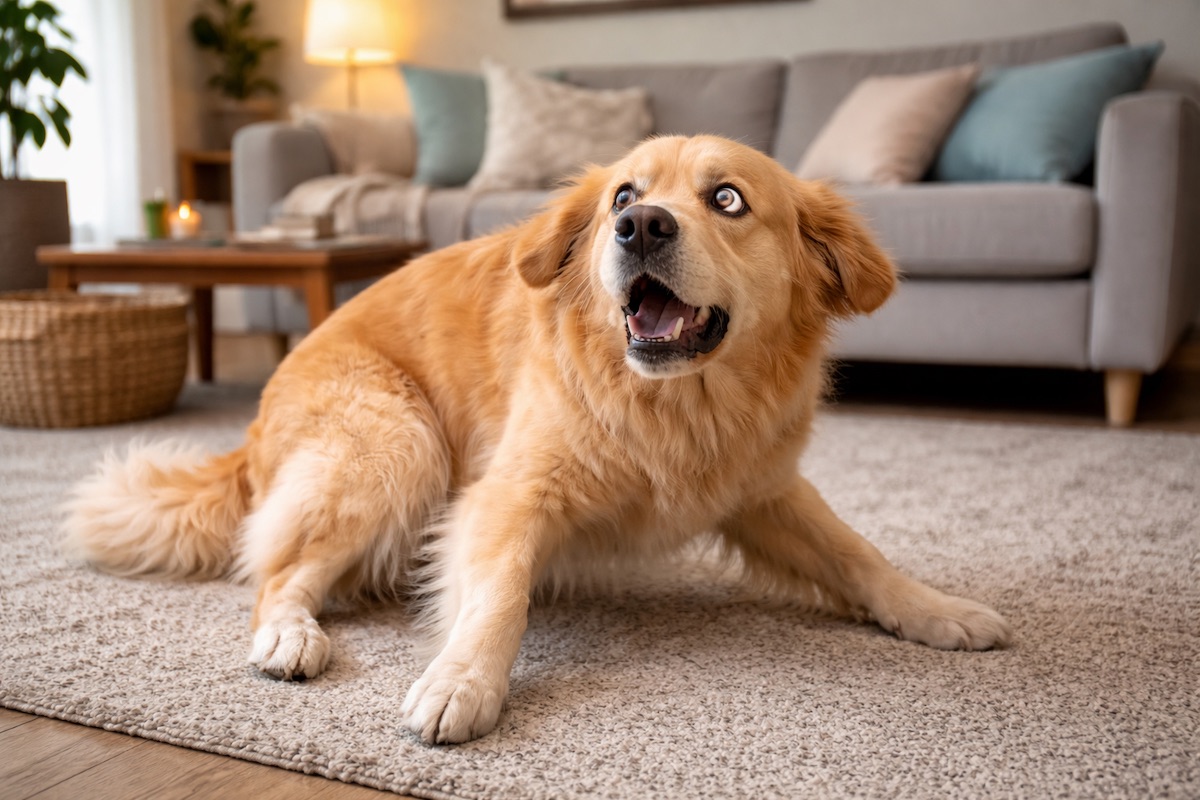
Common fear behaviors include:
- Freezing or suddenly stopping movement
- Tucked tail
- Flattened ears
- Wide eyes or “whale eye”
- Trembling or shaking
- Hiding behind furniture or people
- Pacing or restlessness
- Excessive panting
- Clinginess or avoidance
Some dogs become vocal, while others shut down completely.
Sudden Fear vs. Ongoing Fear
Understanding the pattern of your dog’s fear is important.
Sudden fear episodes
These often come from:
- Unexpected sounds
- Environmental changes
- Startle responses
Ongoing or recurring fear
This may indicate:
- Anxiety disorders
- Poor socialization
- Past trauma
- Medical issues
If fear appears repeatedly or escalates over time, it deserves closer attention.
Dogs Can Hear Sounds Humans Can’t
One of the most common reasons dogs act scared of “nothing” is sound.
Dogs can hear frequencies up to four times higher than humans. Sounds that are faint or inaudible to you may be loud and disturbing to your dog.
Common hidden sound triggers include:
- Smoke detectors with low batteries
- Electrical buzzing
- Wi-Fi routers
- Air conditioning systems
- Water pipes
- Neighbors’ appliances
If your dog suddenly stares at a wall, ceiling, or corner while acting afraid, sound is often the culprit.
In some dogs, sudden fear appears only in specific environments, such as panic that happens exclusively during car rides.
Dogs React to Smells We Don’t Notice
A dog’s sense of smell is incredibly powerful. Scents that seem nonexistent to humans can be overwhelming to dogs.
Your dog may act scared because they smell:
- Another animal nearby
- A predator scent (such as fox or coyote)
- Strong cleaning chemicals
- Mold or gas
- Hormonal changes in humans
This is one reason dogs sometimes act fearful in a specific room or location.
Environmental Changes Can Trigger Fear
Dogs rely heavily on routine and familiarity.
Even small changes can feel threatening, such as:
- New furniture
- Moved objects
- Different lighting
- New smells
- Seasonal changes
A shadow cast differently at night or a reflection on the wall can frighten some dogs.
Past Trauma and Learned Fear
Dogs remember negative experiences strongly.
If your dog has experienced:
- Abuse
- Neglect
- Harsh punishment
- A frightening event
They may react fearfully long after the event has passed.
Triggers may not make sense to you, but your dog’s brain has linked them to danger.
Fear Periods in Puppies and Adolescents
Puppies naturally go through developmental fear stages.
These typically occur:
- Around 8–11 weeks
- Again during adolescence
During these periods, puppies may suddenly become afraid of things they previously ignored.
This is normal and usually temporary.
Genetics and Breed Tendencies
Some dogs are naturally more sensitive.
Breeds known for heightened sensitivity include:
- Herding breeds
- Sighthounds
- Companion breeds
Genetics can influence how strongly a dog reacts to stress.
Anxiety Disorders in Dogs
Some dogs develop anxiety that is not tied to a single trigger.
Types of anxiety include:
- Generalized anxiety
- Noise phobia
- Separation anxiety
- Environmental anxiety
Dogs with anxiety may act scared even in familiar environments.
Medical Causes of Sudden Fear
Fearful behavior can sometimes be linked to health issues.
Possible medical causes include:
- Pain or discomfort
- Vision loss
- Hearing loss
- Neurological conditions
- Cognitive decline
If fear appears suddenly and intensely, a veterinary check is important.
Nighttime Fear in Dogs
Many dogs act scared “of nothing” at night.
Reasons include:
- Reduced visibility
- Shadows and reflections
- Quieter environments amplifying sounds
- Fatigue lowering stress tolerance
Dogs that seem calm during the day may struggle more at night.
Human Emotions Can Influence Dog Fear
Dogs are experts at reading human emotions.
If you are stressed, anxious, or tense, your dog may pick up on it and react fearfully.
Sometimes dogs appear scared “for no reason” because they sense something is wrong with their owner.
Why Dogs Suddenly Become Afraid of a Familiar Place
If your dog avoids a room or area, it may be associated with:
- A loud noise that occurred there
- A painful experience
- A strange smell
- A visual change
Dogs form strong location-based memories.
What Not to Do When Your Dog Acts Scared
How you respond matters.
Avoid:
- Forcing your dog to face the fear
- Yelling or punishment
- Mocking or dismissing the behavior
- Overreacting dramatically
These responses can increase fear rather than reduce it.
How to Help a Dog Who Acts Scared of Nothing
The goal is to create safety and confidence.
- Stay calm and relaxed
- Maintain routines
- Offer gentle reassurance
- Provide safe spaces
- Use positive reinforcement
Let your dog approach situations at their own pace.
When to Seek Professional Help
Consider professional help if:
- Fear worsens over time
- Your dog stops eating or sleeping
- Fear leads to aggression
- Behavior changes suddenly
A veterinarian or behavior specialist can help identify the root cause.
Can Dogs Grow Out of Fear?
Many dogs improve with time, patience, and proper support.
Fear does not mean your dog is broken or weak.
With understanding and consistency, most dogs regain confidence.
Frequently Asked Questions
Can dogs really be scared of nothing?
No. Dogs are almost never scared without a reason. What appears to be “nothing” to humans is often a sound, smell, vibration, memory, or emotional trigger that dogs can sense but people cannot.
Can dogs hear or sense things humans can’t?
Yes. Dogs have much more sensitive hearing and smell than humans. They can react to high-frequency sounds, distant noises, subtle vibrations, or scents that are completely undetectable to us.
Is it normal for a dog to suddenly act scared?
Sudden fear can be normal, especially in puppies, adolescent dogs, or during developmental fear periods. However, if the behavior appears abruptly in an adult dog or keeps getting worse, it should be taken seriously.
Why does my dog act scared at night for no reason?
At night, sounds are quieter, shadows change, and dogs rely more on their senses. Reduced visibility and amplified noises can make dogs feel more vulnerable and anxious after dark.
Can past trauma cause a dog to act scared years later?
Yes. Dogs can form long-lasting associations between certain triggers and fear. A sound, smell, or place may remind them of a past negative experience, even if the event happened long ago.
Should I comfort my dog when they are scared?
Yes, calm reassurance is helpful. Speaking softly and staying relaxed can help your dog feel safe. Avoid panicking or overreacting, as that may reinforce fear.
Can medical problems cause unexplained fear in dogs?
Yes. Pain, vision or hearing loss, neurological issues, or cognitive decline can cause dogs to behave fearfully. A veterinary check is recommended if fear appears suddenly or intensely.
Do some dog breeds act more fearful than others?
Yes. Genetics play a role in sensitivity. Some breeds are naturally more alert or emotionally sensitive, which can make them more reactive to environmental changes.
When should I seek professional help for my dog’s fear?
You should consult a veterinarian or behavior specialist if fear is frequent, worsening, leads to aggression, disrupts daily life, or is accompanied by changes in appetite, sleep, or energy.
Can a dog outgrow fear and anxiety?
Many dogs improve with time, patience, and positive support. With consistent routines, gentle training, and a safe environment, most dogs can regain confidence and feel secure again.
Final Thoughts
When a dog acts scared of “nothing,” there is almost always something behind it — even if humans can’t perceive it. Dogs live in a world shaped by sound, scent, memory, and emotion, and their reactions reflect that reality.
Fear is a form of communication, not misbehavior.
By learning to recognize triggers, responding with empathy, and supporting your dog through fear, you strengthen trust and deepen the bond you share.
A dog who feels safe is a dog who can truly thrive.
Author: XPETSI Editorial Team