Many Golden Retriever owners notice a confusing pattern during walks or training sessions outdoors. At home, the dog responds well, stays connected, and seems eager to learn. But once outside, everything changes. The dog pulls toward distractions, ignores familiar cues, and appears mentally “elsewhere.”
If you’ve ever wondered “Why does my Golden Retriever lose focus outside?”, you’re not alone. This behavior is extremely common in friendly, curious, and emotionally sensitive breeds. In this article, we’ll explore why focus often disappears outdoors, how to distinguish normal curiosity from nervous overload, and what actually helps your dog stay calmer and more connected.
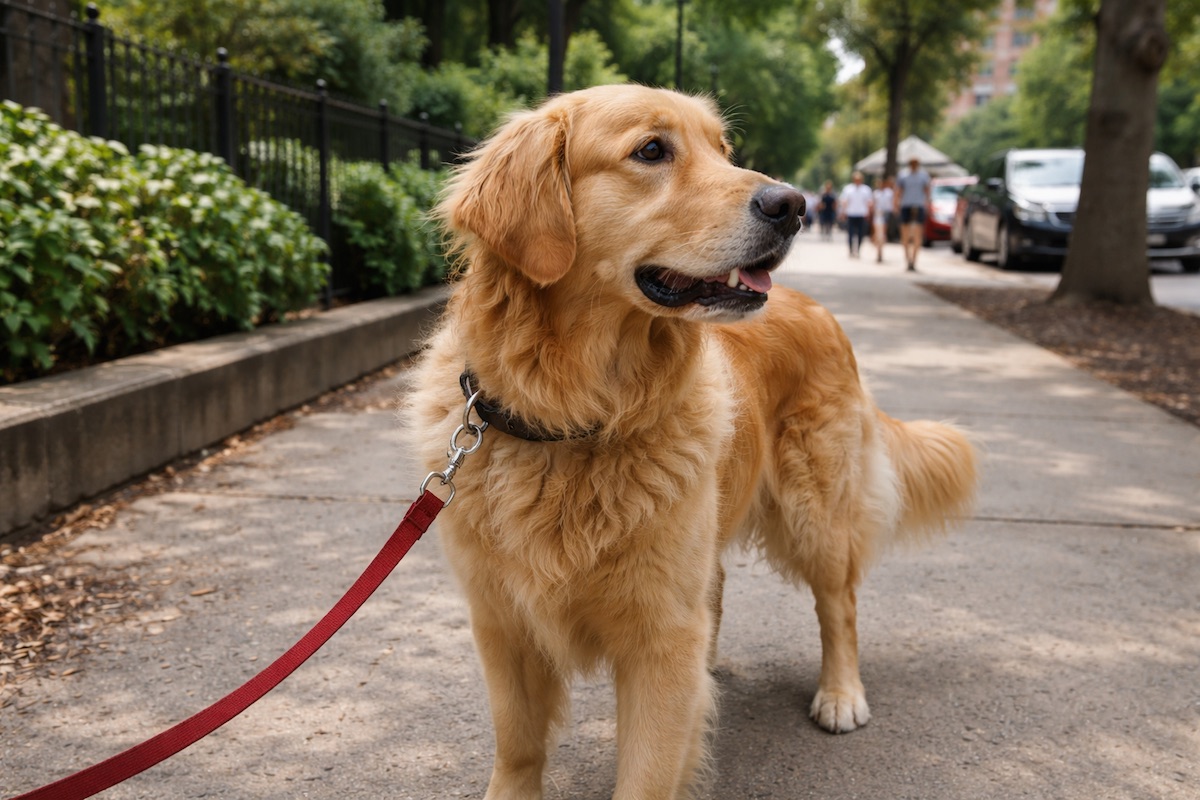
Loss of focus outside is rarely stubbornness. In many Golden Retrievers, it reflects emotional excitement, environmental overwhelm, or unclear expectations.
Why Focus Changes So Much Outside the Home
Indoors, the environment is predictable and familiar. Outdoors, a Golden Retriever encounters constant movement, new scents, sounds, and social opportunities. This sensory richness can make even well-trained dogs struggle to concentrate.
Unlike structured indoor training sessions, outdoor environments provide:
- Unpredictable distractions
- Strong social stimulation
- Novel smells and visual triggers
- Changes in emotional arousal
For many Golden Retrievers, the brain becomes busy processing information rather than responding to commands. This shift is not a training failure — it is a normal adjustment to a more stimulating context.
A dog that loses focus outside is often overwhelmed or overexcited, not disobedient.
Common Reasons Golden Retrievers Lose Focus Outdoors
1. Social Excitement and Friendly Motivation
Golden Retrievers are naturally people-oriented and sociable. Seeing other dogs, children, or strangers can trigger strong emotional engagement that competes with the owner’s cues.
The dog may become so motivated by greeting opportunities that training temporarily feels less important.
2. Sensory Overload From the Environment
Busy streets, parks, and unfamiliar locations create high levels of stimulation. When too many signals arrive at once, focus becomes fragmented.
Some dogs respond by pulling toward stimuli, others by scanning constantly or appearing unable to settle into a calm walking rhythm.
3. Lack of Gradual Exposure to Distractions
Dogs that learn commands only in quiet settings may struggle to generalize those skills outdoors. Without progressive training in increasingly stimulating environments, focus often breaks down.
What looks like ignoring commands may actually be difficulty transferring learning from one context to another.
4. Emotional Arousal From Physical Activity
Fast-paced walks, jogging, or energetic play before training can increase adrenaline levels. Highly aroused dogs often struggle to think clearly.
Movement and excitement can energize the body while reducing mental clarity.
5. Unclear Communication or Tension on the Leash
Some Golden Retrievers lose focus because they sense frustration or pressure from their handler. Tight leash handling, repeated commands, or inconsistent cues can increase mental stress.
When communication feels tense, the dog may shift attention toward the environment instead of the owner.
6. Mental Fatigue or Overstimulation
In certain cases, dogs lose focus because they are mentally tired rather than under-stimulated. Long training sessions or constant enrichment can create cognitive fatigue that reduces responsiveness.
Normal Curiosity vs Problematic Loss of Focus
| Behavior | Normal Engagement | Focus Breakdown |
|---|---|---|
| Looking around | Brief and flexible | Constant scanning |
| Response to cues | Delayed but present | Ignoring familiar commands |
| Body language | Loose and curious | Tense or frantic |
| Recovery | Reconnects easily | Remains distracted |
Curiosity is healthy. Persistent mental disconnection often signals emotional overload.
How to Help Your Golden Retriever Stay Focused Outside
Start With Lower-Stimulation Environments
Many Golden Retrievers struggle to focus outdoors not because they lack training, but because the environment feels mentally overwhelming. Busy streets, unfamiliar dogs, sudden noises, and constant movement can quickly overload an observant dog’s nervous system.
Begin practicing focus in calmer locations such as quiet parks, residential areas with minimal traffic, or familiar walking routes. In these settings, your dog has a better chance to notice you, respond to cues, and experience success.
Gradually increase environmental complexity once focus becomes more stable. This step-by-step approach builds confidence and resilience without pushing the dog into frustration or mental fatigue.
Slow Down the Pace of Walks
Fast, goal-oriented walking often creates subtle pressure. When a dog is constantly pulled forward or expected to move quickly, their brain has less time to process sensory input. This can reduce responsiveness and increase distraction.
Allow your Golden Retriever to sniff, pause, and calmly observe the surroundings. Sniffing is not simply a delay — it is an important regulatory activity that helps dogs lower stress levels and organize information.
Slower walks also encourage softer body language and more natural check-ins, making focus feel voluntary rather than forced.
Use Short, Positive Engagement Moments
Instead of long obedience drills outdoors, look for small opportunities to reinforce connection. Reward brief eye contact, choosing to walk closer to you, or calmly responding to a simple cue.
Frequent small successes help your dog understand that staying connected is safe and rewarding. Over time, this builds stronger and more reliable focus than demanding extended concentration in challenging environments.
Keep engagement moments light and encouraging. A relaxed tone and clear timing often matter more than complex training techniques.
Manage Emotional Arousal
Golden Retrievers are enthusiastic dogs, and high-energy play can raise arousal levels significantly. If intense games like fast fetch or rough play happen immediately before a walk, your dog may struggle to think clearly once outside.
Try beginning walks with calm movement instead of excitement. Gentle walking, quiet transitions out the door, and reduced verbal stimulation can help your dog start the outing in a more balanced emotional state.
Clear thinking is easier when the nervous system is not already in overdrive.
Create Predictable Walking Routines
Predictability reduces mental tension. When your Golden Retriever knows what to expect — where the walk usually goes, how it begins, and how it ends — the brain spends less energy monitoring uncertainty.
Consistent routes, familiar start signals such as putting on the leash calmly, and recognizable end rituals help your dog understand the structure of the activity.
Dogs that feel secure about the sequence of events often show better attention and smoother emotional transitions.
Reduce Pressure and Repetition
When focus drops, many owners instinctively repeat commands or increase leash tension. While this reaction is understandable, it can unintentionally add more pressure and make concentration harder.
Instead, pause briefly and allow your dog time to process the environment. Soft communication, clear single cues, and patient body language often restore responsiveness more effectively than constant correction.
Remember that attention is not only a skill — it is also a reflection of emotional comfort.
Focus grows from emotional balance — not from control or intensity.
When Loss of Focus May Indicate Anxiety
If your Golden Retriever appears tense even in calm environments, deeper emotional stress may be involved. Signs include:
- Constant vigilance
- Difficulty settling after walks
- Overreaction to small noises
- Restlessness indoors
In these cases, reducing stimulation and building structured routines may help more than increasing training demands.
Common Mistakes That Make Focus Worse
- Expecting perfect obedience in highly stimulating places
- Increasing exercise when the dog is already overstimulated
- Using frequent corrections instead of calm guidance
- Skipping gradual exposure to distractions
More pressure rarely improves attention. Clarity and emotional safety usually work better.
How Long Does It Take to Improve Outdoor Focus?
Some Golden Retrievers show progress within a few calmer training sessions. Others need several weeks of consistent routines and gradual exposure before their nervous system adapts.
The goal is not to eliminate curiosity — it is to help your dog stay connected even while exploring the world.
Final Thoughts
A Golden Retriever that loses focus outside is not being difficult. Most of the time, the dog is simply processing too much stimulation at once.
By reducing environmental pressure, building predictable routines, and supporting calm engagement, many owners find that outdoor focus improves naturally. Instead of trying to control every distraction, focus on helping your dog feel safe, balanced, and clear about what is expected.
When emotional stability grows, attention and cooperation often follow.
Author: XPETSI Editorial Team