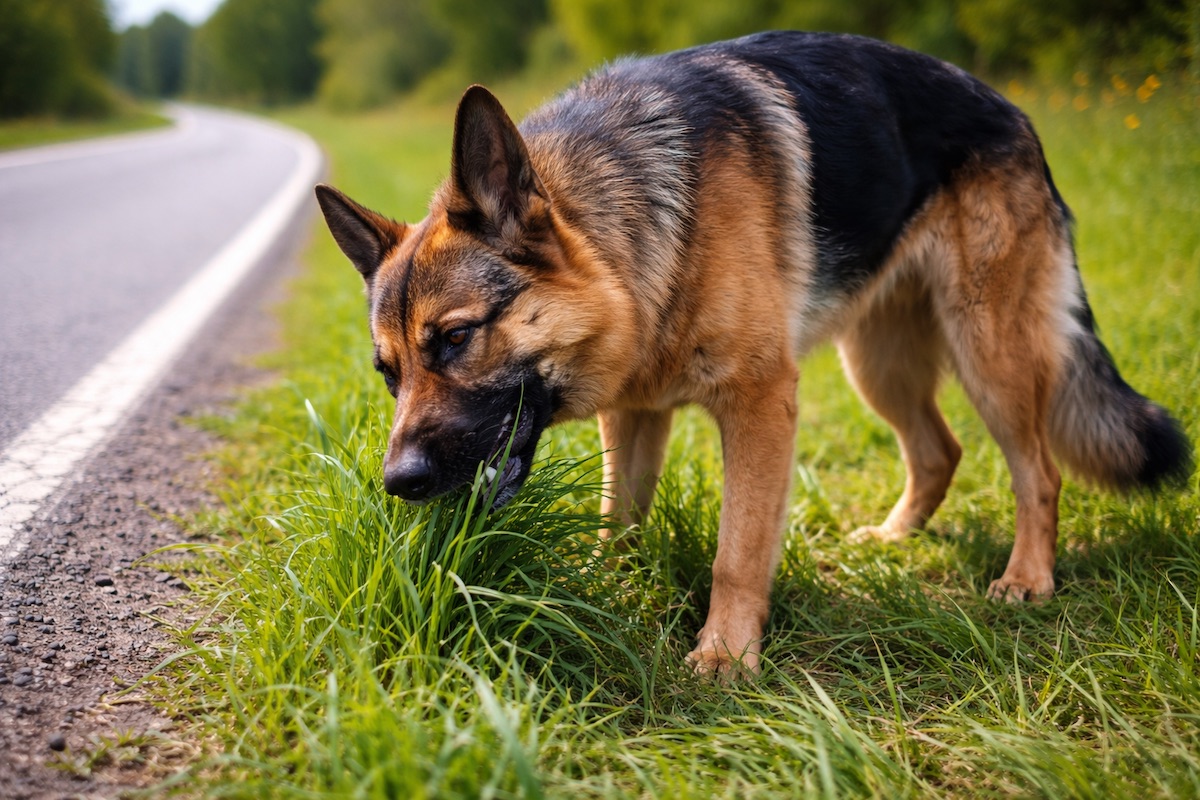
If you own a German Shepherd, you’ve probably seen this scene: your dog lowers their head during a walk and starts nibbling grass like a tiny lawnmower. For some owners, it’s no big deal. For others, it’s instantly stressful: Is my dog sick? Do they lack nutrients? Is this dangerous?
Grass eating is a behavior, not a diagnosis. The same “lawnmower moment” can mean curiosity, stress relief, mild nausea, or a habit — so the most important clue is always the pattern: when it happens, where it happens, and what happens afterward.
The truth is that German Shepherd eating grass can be completely normal — but it can also be a sign that something isn’t quite right. In many cases, it’s harmless instinct, curiosity, or mild digestive self-regulation. In other cases, grass eating becomes frequent, obsessive, or is followed by vomiting, diarrhea, or other symptoms that deserve attention.
In this guide, we’ll cover why German Shepherds eat grass, when it’s considered normal, when it becomes a concern, the risks that matter most (like pesticides), and what you can do to help your dog safely. For a bigger picture of how stress, routine, and stimulation affect German Shepherd behavior, see this German Shepherd behavior guide.
Is It Normal for German Shepherds to Eat Grass?
Yes. Many dogs eat grass sometimes, and German Shepherds are no exception. This behavior is often called grazing, and it’s common across many breeds. Most dogs that eat grass are not sick before or after, and many never vomit at all.
For German Shepherds, grass eating is often linked to:
- Instinctive behavior (ancient canine habits)
- Curiosity and exploration on walks
- Digestive self-regulation (seeking roughage or soothing the stomach)
- Stress relief or boredom (especially in high-energy working breeds)
Occasional grass nibbling isn’t automatically a problem. What matters is frequency, intensity, context, and symptoms.
Why Do German Shepherds Eat Grass?
There isn’t one single reason. Dogs can eat grass for multiple reasons — and your German Shepherd may do it for different reasons at different times.
1) Instinct and Ancestral Habits
Dogs evolved from wild canids that ate whole prey, including the stomach contents of herbivores (which contained plant material). Even though modern dogs don’t need grass nutritionally, the instinct can remain.
Normal pattern: your dog grabs a few blades, chews briefly, then moves on without stress.
2) Mild Nausea or Digestive Discomfort
Some German Shepherds eat grass when their stomach feels unsettled. People often assume dogs eat grass to vomit — and sometimes that happens — but not always. Still, German Shepherds can have sensitive digestion, and grass eating may appear when:
- the stomach feels acidic or empty
- your dog has mild nausea
- their gut is irritated from something they ate
If your dog eats grass and then vomits yellow foam or bile, it may be linked to an empty stomach or acid build-up. If it happens often, it’s worth addressing.
3) Boredom and Under-Stimulation
German Shepherds are smart, active working dogs. When they don’t get enough mental engagement, they often “invent” things to do — and grass eating can become a self-stimulating habit.
Clues boredom is the cause:
- grass eating happens on the same repetitive walk route
- your dog seems restless or unfocused
- the behavior decreases when you add training games or sniffing activities
If your dog also struggles to settle or seems “busy” even after activity, compare the two patterns in Overstimulated or Under-Exercised? How to Tell the Difference.
4) Stress, Anxiety, or Emotional Self-Soothing
German Shepherds are emotionally sensitive and often react strongly to environmental changes. Grass eating can act like a calming behavior, similar to licking or repetitive sniffing.
Common triggers include:
- crowded parks
- loud noises
- unfamiliar dogs or strangers
- changes in routine or household stress
If grass eating happens mainly in stressful places, focus on reducing pressure rather than “correcting” the grass. Removing the coping behavior without reducing the stress often makes anxiety worse.
If your dog seems tense most of the day (not just on walks), this may be part of a bigger pattern explained in Why Is My German Shepherd So Anxious All the Time?.
5) Seeking Fiber (Less Common, But Possible)
Nutrient deficiency is rarely the main reason if your German Shepherd eats a balanced diet. Still, some dogs may seek roughage if they have irregular stools or mild constipation. Grass contains fiber, but it’s not a safe “fiber supplement” because it can bring pesticide and parasite risks.
If you suspect your dog is using grass as “digestive help,” don’t treat grass as a solution. It’s better to track patterns and discuss diet timing or stool changes with your vet than let grazing become a daily habit.
If you want the broader non-breed breakdown, see 10 Common Reasons Behind Dogs Eating Grass.
When Grass Eating Is Normal
Grass eating is usually normal if:
- it happens occasionally (not daily)
- your dog has normal energy and mood
- there is no repeated vomiting
- appetite remains normal
- stool looks normal
In these cases, grass eating is often just part of normal canine behavior.
When Grass Eating May Be a Health Concern
You should pay closer attention if grass eating becomes frequent, intense, or compulsive, especially if it’s paired with other symptoms.
Red flags include:
- eating grass daily or obsessively
- vomiting after most grass-eating episodes
- diarrhea, soft stools, or mucus in stool
- loss of appetite
- lethargy or “not acting like themselves”
- signs of pain (hunched posture, guarding the belly)
A helpful rule: occasional grazing with normal energy is usually benign. daily grazing with symptoms is a “track + act” situation (pattern tracking first, vet help if it escalates).
Is Eating Grass Dangerous for German Shepherds?
The grass itself is usually not toxic — but what’s on the grass (or in the area) can be the real risk.
1) Pesticides and Herbicides
Many lawns are treated with weed killers or pesticides. Even small exposure can irritate your dog’s stomach and cause vomiting or diarrhea.
2) Parasites
Grass can carry parasite eggs or larvae, especially in areas visited by many dogs or wildlife.
3) Foreign Objects and Irritation
Sticks, mulch, rocks, or trash hidden in grass can cause choking, mouth injuries, or GI problems.
Related: Why Dogs Eat Strange Things?.
Practical takeaway: even if grass eating is “normal,” it’s smarter to prevent it in unknown parks, chemically treated lawns, or heavy dog-traffic areas.
Puppies vs Adult German Shepherds
German Shepherd Puppies
Puppies explore the world with their mouths. Grass eating in puppies often comes from curiosity, teething, or sensory exploration. Occasional nibbling is usually normal, but monitor it closely if your puppy vomits or eats grass constantly.
Adult German Shepherds
In adult dogs, grass eating is more often tied to habit, digestion, stress, or routines. A sudden increase in grass eating in an adult dog is more concerning than casual occasional grazing.
Normal vs Concerning: Quick Comparison
| What You See | Usually Normal | Potential Concern |
|---|---|---|
| Frequency | Occasional | Daily/obsessive |
| Vomiting | Rare or never | Often after grass |
| Energy | Normal | Lethargic, “off” |
| Appetite | Normal | Reduced appetite |
| Context | Curiosity, sniffing walks | Stressful places, digestive episodes |
What to Do If Your German Shepherd Eats Grass
1) Track the Pattern (The Most Important Step)
Before changing food or worrying, observe:
- When does it happen — morning, evening, after meals, on an empty stomach?
- Where — your yard, dog park, random sidewalks?
- How often — occasional, weekly, daily?
- What happens next — vomiting, normal behavior, diarrhea?
Patterns reveal whether this is curiosity, habit, stress, or digestive discomfort.
2) Make Walks More Engaging
If boredom is part of the issue, add purposeful tasks:
- short training bursts (sit, heel, touch)
- sniff walks (let your dog explore safely)
- change routes and environments
- carry a toy or treats for redirection
If your dog struggles to focus outside, a predictable structure helps. You can build that structure with a daily routine that balances activity and rest.
3) Reduce Stress and Pressure
If grass eating happens in anxious situations, don’t punish it. Instead:
- increase distance from triggers (crowds, loud areas)
- use calm voice and predictable routines
- reward relaxed behavior
- avoid forcing interactions with strangers or dogs
4) Support Digestive Comfort
If you suspect nausea or acid stomach:
- keep a consistent feeding schedule
- avoid long fasting gaps
- discuss diet and meal timing with your vet if vomiting is frequent
5) Choose Safer Areas
If your dog loves grass, pick safer spots:
- avoid recently treated lawns
- avoid areas with heavy dog traffic
- keep your dog moving past risky patches
Should You Stop Your German Shepherd From Eating Grass?
If grass eating is occasional and your dog is healthy, you don’t need to panic. But you should prevent it when:
- you’re not sure whether the lawn is chemically treated
- your dog eats grass compulsively
- vomiting happens frequently afterward
- there are other symptoms (diarrhea, appetite loss, pain)
Best approach: gentle redirection, not harsh correction. Teach “leave it,” reward compliance, and move on — especially in risky areas.
When to Call the Vet
Contact your veterinarian if:
- your German Shepherd vomits repeatedly (especially more than once in a day)
- grass eating becomes sudden and obsessive
- there’s diarrhea, blood, severe lethargy, or refusal to eat
- your dog shows signs of pain or bloating
Frequently Asked Questions (FAQ)
Do German Shepherds eat grass because they lack nutrients?
Usually no. Most dogs on a balanced diet are not nutrient-deficient. Grass eating is more often instinct, curiosity, stress relief, or mild digestive discomfort.
Why does my German Shepherd eat grass and then vomit yellow bile?
This can happen when the stomach is empty or acidic (sometimes called “bilious vomiting”). If it happens frequently, talk to your vet about meal timing or diet adjustments.
Is grass eating a sign of parasites?
Grass eating alone doesn’t prove parasites, but grass can expose dogs to parasite risk. If your dog has diarrhea, weight loss, or dull coat, a vet fecal test is a good idea.
Can grass hurt my German Shepherd’s stomach?
Grass can irritate the stomach, especially if eaten in large amounts, or if it’s coarse and dry. The bigger risk is pesticides, foreign objects, or parasites on the grass.
Should I let my German Shepherd eat grass at the dog park?
It’s safer not to. Dog parks often have heavy dog traffic, which can increase parasite exposure, and you can’t always know if grass has been treated with chemicals.
Final Thoughts
German Shepherd eating grass is often normal — but it’s not something to ignore when it becomes frequent or is paired with symptoms. Occasional nibbling without vomiting, diarrhea, or behavior changes is usually harmless. But daily grazing, repeated vomiting, or signs of discomfort can indicate stress or digestive issues that deserve attention.
Instead of guessing, focus on patterns: when it happens, where it happens, and what happens afterward. With safer walk choices, better structure, and timely veterinary support when needed, you can keep your German Shepherd healthy and confident — without overreacting to normal dog behavior.
Author: XPETSI Editorial Team