Many dog owners are shocked the first time they see their dog chewing on a rock, swallowing dirt, or obsessively eating grass during a walk. These behaviors look strange, unhealthy, and sometimes dangerous. Yet for dogs, eating non-food items is surprisingly common and can happen for many different reasons — from natural instincts to medical or behavioral issues.
This article explains why dogs eat strange things, including rocks, dirt, grass, wood, fabric, and household objects. You’ll learn when this behavior is normal, when it’s a warning sign, and what you should do to keep your dog safe.
Is It Normal for Dogs to Eat Non-Food Items?
In short: sometimes yes, sometimes no.
Dogs explore the world with their mouths. Puppies especially use chewing and tasting as part of normal development. Occasional grass nibbling, dirt licking, or object mouthing does not automatically mean something is wrong.
However, when a dog repeatedly eats non-food items — especially swallowing rocks, dirt, plastic, socks, or wood — this behavior becomes concerning. Chronic ingestion of non-edible materials may signal nutritional deficiencies, stress, boredom, digestive discomfort, or a condition called pica.
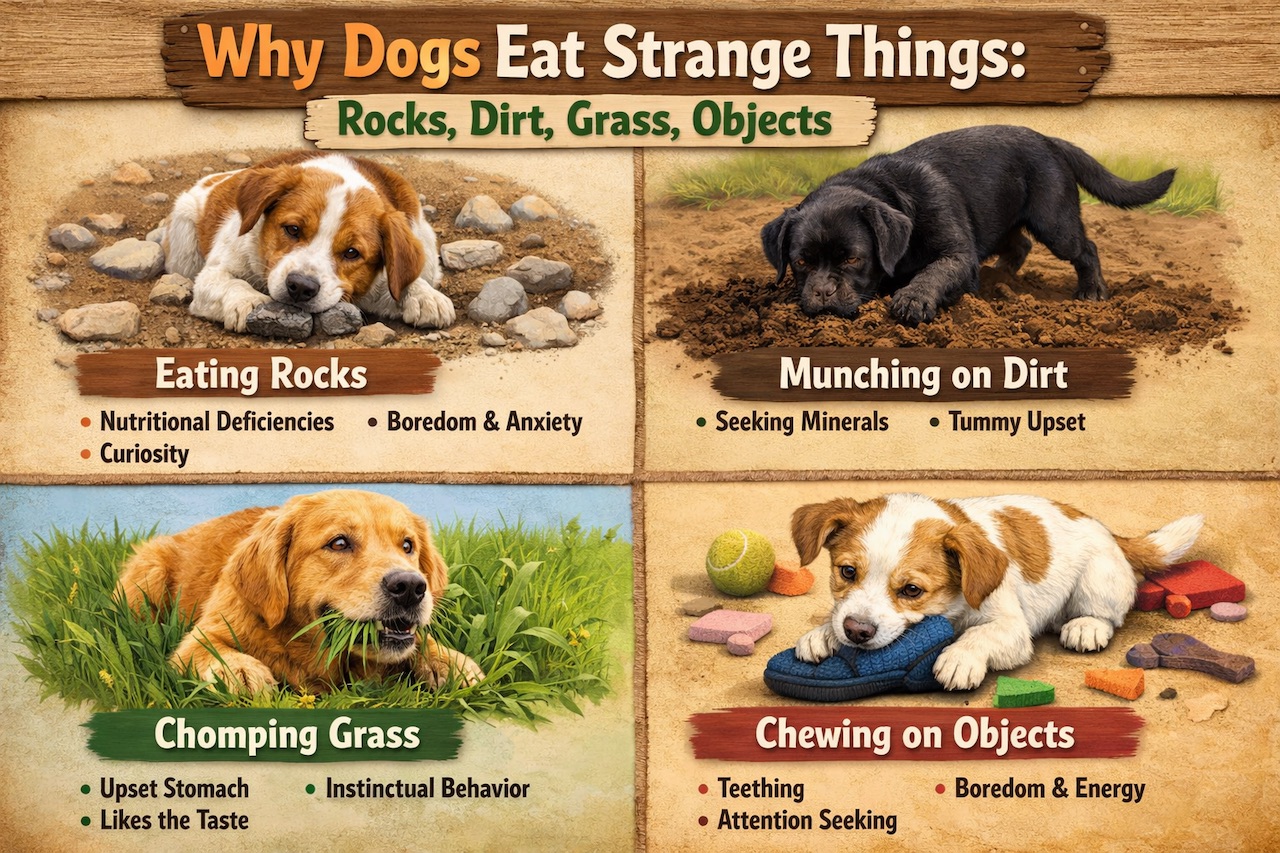
Why Dogs Eat Rocks
Eating rocks is one of the most alarming behaviors for dog owners. Unlike grass or dirt, rocks offer no nutritional value and pose a serious choking or intestinal blockage risk.
Common Reasons Dogs Eat Rocks
- Puppy exploration: Puppies mouth everything as they learn about their environment.
- Boredom or lack of stimulation: Dogs with insufficient mental or physical exercise may develop compulsive behaviors.
- Anxiety or stress: Rock eating can be a coping mechanism for nervous dogs.
- Nutritional imbalances: Mineral deficiencies (especially iron) may trigger abnormal cravings.
- Learned behavior: Some dogs repeat the behavior because it gained attention from owners.
Rock eating is never considered safe. Even if your dog “seems fine,” internal damage may already be occurring.
Why Dogs Eat Dirt
Dirt eating is more common than rock eating and can have both harmless and concerning explanations.
Possible Causes of Dirt Eating
- Curiosity: Dirt contains smells from animals, plants, and food.
- Digestive discomfort: Some dogs eat dirt to soothe stomach irritation.
- Mineral deficiencies: Dogs may seek trace minerals found in soil.
- Stress or confinement: Dogs left alone for long periods may develop repetitive habits.
While small amounts of dirt usually pass harmlessly, soil may contain parasites, pesticides, or sharp debris. Persistent dirt eating should never be ignored. Learn more in our detailed guide: Why Dogs Eat Dirt
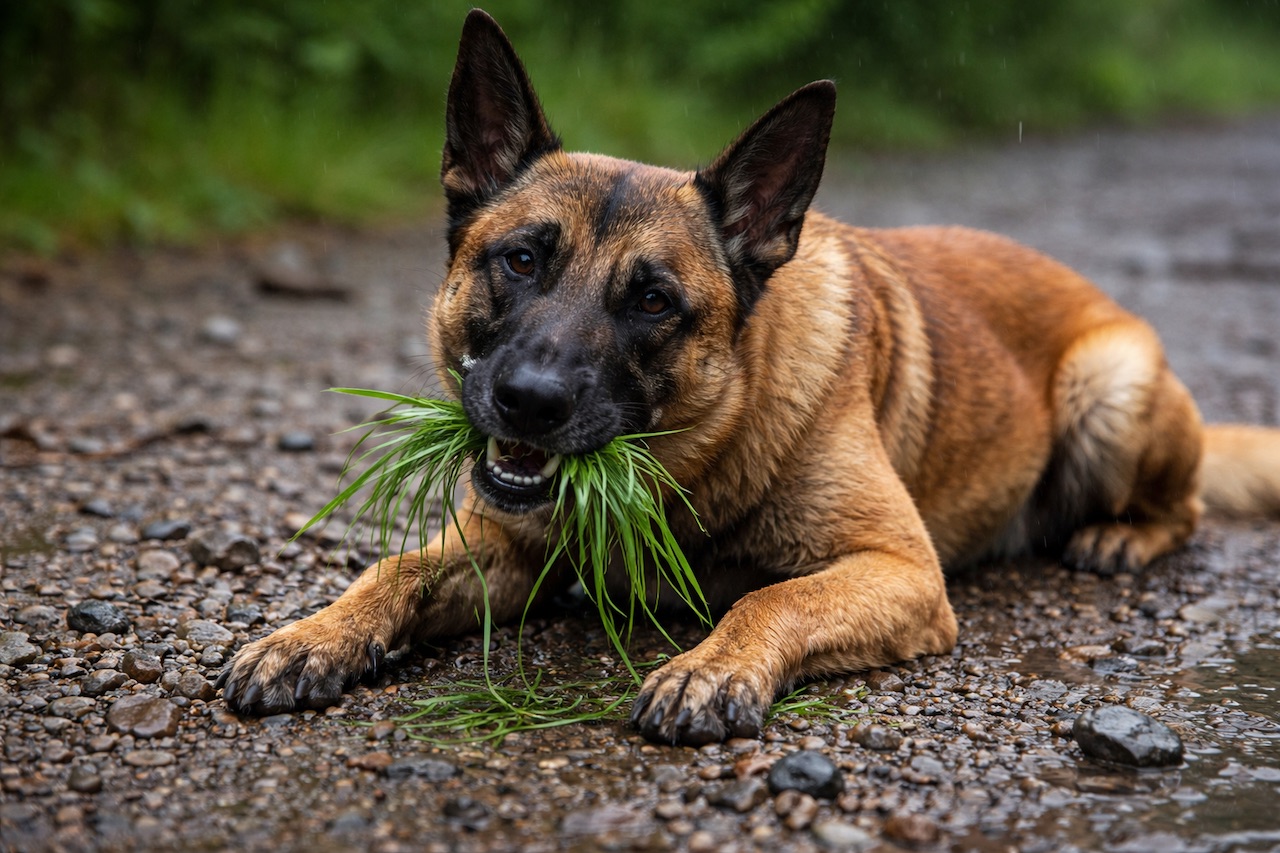
Why Dogs Eat Grass
Grass eating is one of the most misunderstood dog behaviors. Many owners believe dogs eat grass only to make themselves vomit — but that’s not always true.
Grass Eating Explained
- Natural instinct: Wild canines consume plant matter through prey stomach contents.
- Digestive regulation: Grass may help with gut motility.
- Boredom: Grazing during walks can simply fill time.
- Taste and texture: Some dogs genuinely enjoy grass.
Occasional grass eating is generally normal. Frequent vomiting after grass consumption, however, may signal gastrointestinal problems.
Why Dogs Eat Objects (Socks, Toys, Plastic, Wood)
Eating household objects is one of the most dangerous forms of abnormal ingestion.
Common Objects Dogs Eat
- Socks and underwear
- Plastic wrappers
- Wood and mulch
- Toys and stuffing
- Rocks and gravel
These behaviors often stem from anxiety, separation stress, boredom, or compulsive tendencies. Certain breeds and high-energy dogs are more prone to destructive chewing.
Grass vs Dirt vs Rocks vs Objects: Risk Comparison
| What Dogs Eat | Common Reasons | Potential Health Risks | When It’s Usually Normal | When to Worry | What Owners Should Do |
|---|---|---|---|---|---|
| Grass | Curiosity, instinctive behavior, mild stomach discomfort, boredom | Pesticides, parasites, vomiting, diarrhea | Occasional grazing with no other symptoms | Frequent grass eating with vomiting, lethargy, or appetite loss | Monitor frequency, avoid treated lawns, consult a vet if persistent |
| Dirt / Soil | Mineral deficiency, stress, anxiety, boredom, puppy exploration | Parasites, bacteria, toxins, digestive upset | Rare licking or sniffing during outdoor play | Repeated eating, weight loss, behavioral changes | Improve diet, increase mental stimulation, veterinary check |
| Rocks | Pica, stress, attention-seeking, nutritional imbalance | Choking, broken teeth, intestinal blockage, surgery risk | Almost never considered normal | Any intentional rock chewing or swallowing | Immediate prevention, leash control, vet visit recommended |
| Objects (toys, socks, plastic, wood) | Chewing instinct, anxiety, boredom, teething (puppies) | Obstruction, poisoning, choking, emergency surgery | Chewing appropriate dog toys only | Swallowing non-food items or destructive chewing | Dog-proof home, provide safe chews, address anxiety or training |
Pica in Dogs: When Eating Non-Food Becomes a Disorder
Pica is a condition where dogs repeatedly consume non-edible items. It is considered a behavioral or medical disorder rather than a simple habit.
Signs of Pica
- Repeated ingestion of rocks, dirt, or objects
- Ignoring food in favor of non-food items
- Digestive issues without clear cause
- Obsessive chewing or licking
Pica may be linked to anemia, endocrine disorders, gastrointestinal disease, or chronic anxiety.
Medical Reasons Dogs Eat Strange Things
Not all abnormal eating behaviors are behavioral. Medical causes should always be ruled out.
Possible Medical Triggers
- Iron deficiency anemia
- Parasites
- Inflammatory bowel disease
- Malabsorption syndromes
- Hormonal disorders
If your dog suddenly starts eating unusual items, a veterinary checkup is essential.
Behavioral and Emotional Triggers
Dogs often use their mouths to self-soothe. Stressful environments, changes in routine, or lack of stimulation can all contribute.
Common Emotional Causes
- Separation anxiety
- Under-exercise
- Loneliness
- Lack of enrichment
- Past trauma
Addressing the emotional root often reduces the behavior significantly.
Why Puppies Eat Strange Things More Often
Puppies are especially prone to chewing and swallowing inappropriate objects.
This behavior peaks during teething and exploration stages. Proper supervision, puppy-proofing, and chew alternatives are critical during this phase.
Risks of Eating Non-Food Items
- Choking
- Intestinal blockage
- Poisoning
- Dental damage
- Surgery or emergency treatment
Even small objects can cause life-threatening complications.
What to Do If Your Dog Eats Strange Things
Immediate Steps
- Remove access to dangerous items
- Increase mental and physical stimulation
- Provide safe chew alternatives
- Observe patterns and triggers
When to See a Vet
- Repeated ingestion of non-food items
- Vomiting, diarrhea, or lethargy
- Abdominal pain
- Sudden behavior changes
How to Prevent Dogs from Eating Rocks, Dirt, and Objects
- Daily structured exercise
- Interactive toys and puzzles
- Balanced, vet-approved diet
- Training and redirection
- Environmental management
Prevention works best when both physical and mental needs are met.
When This Behavior Is Normal vs Concerning
Generally normal:
- Occasional grass eating
- Puppy mouthing during teething
Concerning:
- Swallowing rocks or objects
- Obsessive dirt eating
- Behavior persists despite enrichment
Final Thoughts
Dogs eat strange things for many reasons — instinct, curiosity, stress, boredom, or underlying medical issues. While some behaviors are harmless, others can be dangerous and require immediate attention.
Understanding the why behind your dog’s behavior is the first step toward protecting their health and well-being. With proper care, training, and veterinary guidance, most dogs can overcome abnormal eating habits safely.
Author: XPETSI Editorial Team