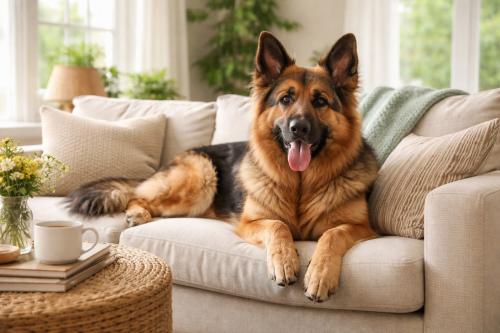
At first glance, your dog appears to be resting. They're lying on their bed or the couch, but something still doesn't seem right. Their eyes stay open, their ears keep twitching, they lift their head at every sound, change positions every few minutes, or never seem to fully settle.
Many owners assume their dog is relaxing simply because they're lying down. In reality, lying down and feeling relaxed are not always the same thing.
A dog can remain physically still while their nervous system is still highly alert. Understanding the difference can help explain why some dogs never seem completely at ease, even during rest.
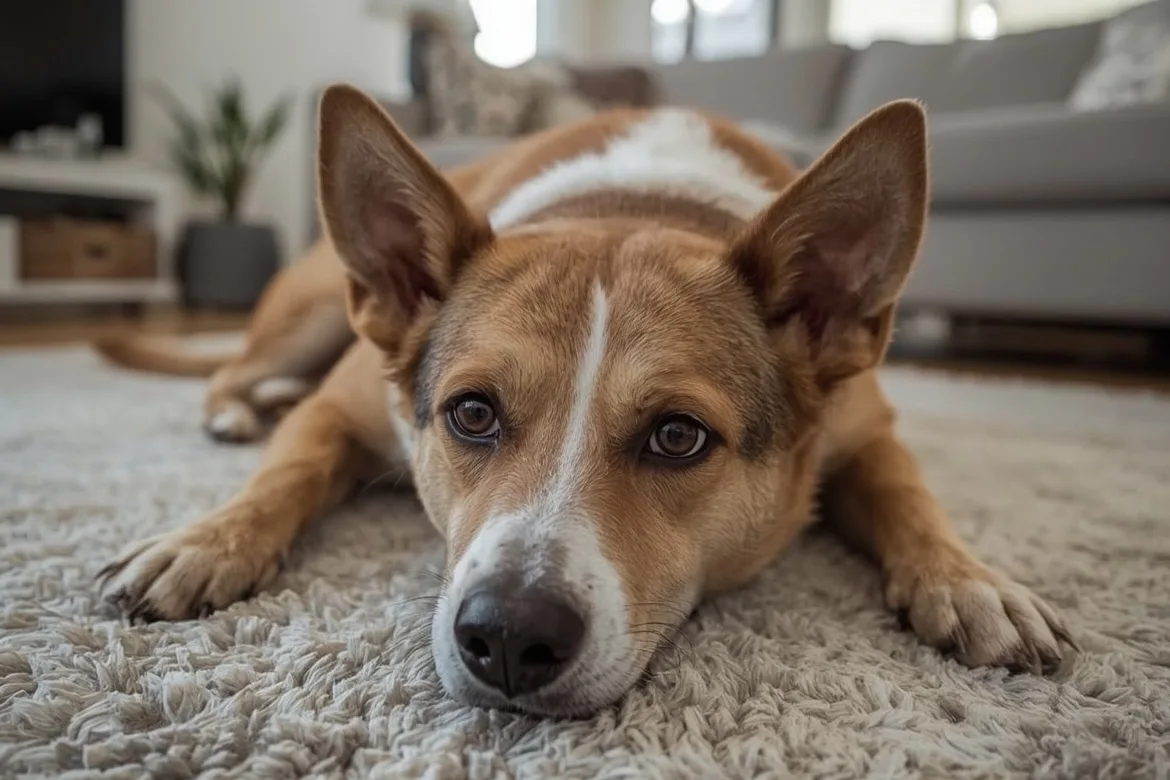
A dog doesn't have to be pacing or running around to be overstimulated. Some dogs show restlessness quietly by remaining alert, frequently changing position, or never fully switching into deep relaxation.
Resting Does Not Always Mean Relaxing
Dogs naturally spend many hours lying down throughout the day. However, simply being in a resting position doesn't guarantee that the body and brain are actually recovering.
A relaxed dog typically breathes evenly, softens their facial muscles, blinks slowly, and eventually drifts into deeper sleep.
A restless dog may stay in the same place but continue scanning the room, reacting to sounds, watching people move around, or repeatedly lifting their head.
The difference often comes down to how calm the nervous system feels rather than what the body is doing.
Your Dog May Still Be Processing Excitement
If your dog recently returned from a walk, played with other dogs, greeted visitors, or experienced a busy environment, their brain may still be processing everything that happened.
Excitement doesn't stop the moment the activity ends.
Adrenaline and mental arousal can remain elevated for quite some time, leaving your dog physically tired but mentally unable to settle.
This is one reason why exercise doesn't always lead to immediate relaxation.
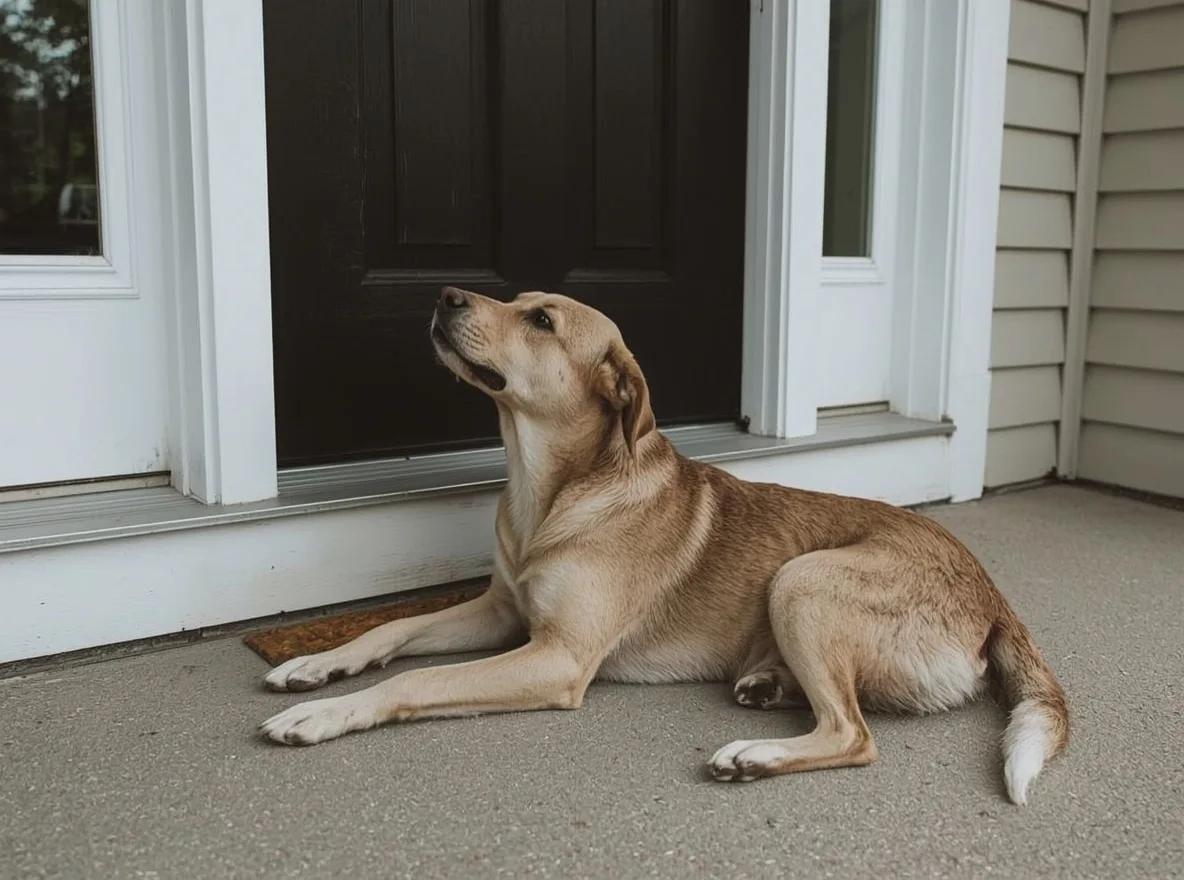
Small Signs of Restlessness
Restlessness isn't always dramatic.
Some of the most common signs include:
- frequently changing sleeping positions;
- lifting the head whenever someone moves;
- ears constantly rotating toward sounds;
- watching doors or windows;
- getting up and lying back down repeatedly;
- sighing often without falling asleep;
- remaining alert for long periods.
Individually, these behaviors are often completely normal. When they happen constantly, they may suggest that your dog is finding it difficult to fully relax.
The Home Environment May Be Keeping Your Dog Alert
Some homes are naturally busy places.
Children running around, televisions, visitors, delivery drivers, neighborhood noises, and household activity can all keep sensitive dogs paying attention instead of resting.
Many dogs feel responsible for monitoring everything happening around them.
Even while lying down, they may remain ready to respond at any moment.
Some Dogs Simply Have Higher Baseline Alertness
Every dog has a different personality.
Some are naturally laid-back and fall asleep almost anywhere.
Others stay aware of their surroundings even during quiet moments. Herding breeds, guarding breeds, and highly observant individuals often remain more environmentally aware than average.
This doesn't automatically indicate a problem, especially if the dog also experiences periods of deep, uninterrupted sleep.
Restlessness Can Follow Mental Overload
A dog doesn't have to look hyper to be mentally overloaded.
After a busy day filled with new experiences, training sessions, social interactions, or stimulating walks, some dogs appear calm on the outside while their brain is still working through everything they experienced.
This quiet form of arousal is one reason some owners mistake overstimulation for normal resting behavior.
Helping Your Dog Relax More Fully
Most dogs benefit from having predictable opportunities to unwind after exciting activities.
Helpful habits may include:
- providing a quiet resting space;
- keeping post-walk routines calm;
- offering chewing or licking activities;
- allowing decompression after busy outings;
- avoiding constant excitement throughout the day.
Many dogs gradually become better at settling when recovery becomes part of their daily routine instead of moving directly from one stimulating activity to the next.
Learning to relax is a skill. Dogs that experience balanced routines with both activity and recovery often become calmer over time without needing more exercise.
When Restlessness May Be Related to Physical Discomfort
Behavior is only one possible explanation.
If your dog suddenly becomes unable to settle, frequently changes position, pants excessively while resting, cries, limps, or appears uncomfortable, physical pain or illness should also be considered.
Joint discomfort, digestive problems, skin irritation, or other medical conditions may make lying still difficult even if your dog wants to rest.
If the behavior appears suddenly, becomes more frequent, or is accompanied by other unusual symptoms, a veterinary examination is the safest next step.
When Is It Probably Normal?
Looking around occasionally, changing position once in a while, or briefly reacting to household sounds is completely normal for most dogs.
The concern arises when your dog rarely seems able to fully switch off, remains constantly alert, or appears unable to reach deep relaxation despite having appropriate exercise, good sleep opportunities, and a predictable routine.
Final Thoughts
A dog that looks restless while lying down isn't necessarily refusing to relax. In many cases, their body has stopped moving, but their brain is still processing excitement or staying alert to the environment.
Helping your dog recover from stimulation, providing quiet routines, and recognizing the difference between resting and genuine relaxation can often make a noticeable difference. Over time, many dogs learn not only how to stay physically still, but also how to truly relax.
Author: XPETSI Editorial Team