Many dog owners are surprised or even alarmed when they notice their dog deliberately eating dirt from the yard. While this behavior can look strange, it is actually more common than most people think. In some cases, dogs eating dirt is harmless and temporary. In others, it can signal nutritional deficiencies, behavioral issues, or underlying health problems that should not be ignored.
Understanding why dogs eat dirt is essential for knowing when this behavior is normal and when it may be dangerous. Dogs explore the world with their mouths, but repeated or obsessive dirt eating deserves closer attention. This article explains the most common causes, potential risks, and what you should do if your dog keeps eating soil from the yard.
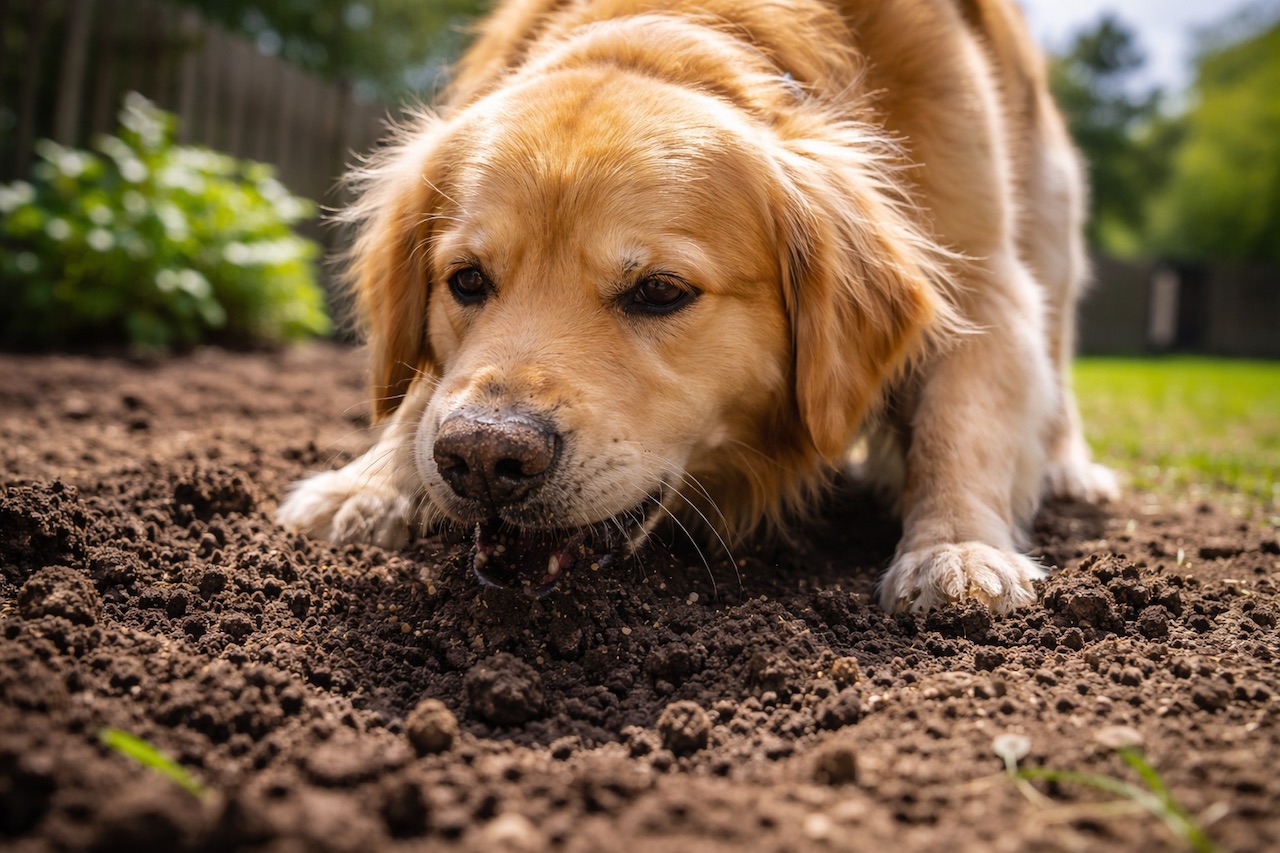
Eating dirt is one of the most common forms of unusual eating behavior in dogs. This behavior is part of a broader pattern known as dogs eating non-food items, including grass, rocks, and household objects. Read our complete guide: Why Dogs Eat Strange Things.
Why Do Dogs Eat Dirt?
Dogs may eat dirt for several different reasons, ranging from instinctive behavior to medical concerns. In many cases, more than one factor is involved.
Nutritional Deficiencies
One of the most common reasons dogs eat dirt is a lack of essential nutrients. Dogs with deficiencies in minerals such as iron, zinc, or magnesium may instinctively seek soil as a source of missing elements. This behavior is known as pica and is often linked to an unbalanced diet or poor nutrient absorption.
Digestive Discomfort
Some dogs eat dirt to soothe stomach discomfort. Similar to grass eating, soil consumption may occur when a dog experiences nausea, acid imbalance, or digestive irritation. Certain types of dirt contain clay-like minerals that can temporarily coat the stomach lining.
Boredom or Stress
Dogs left alone in the yard for long periods may eat dirt out of boredom. Stress, anxiety, or lack of mental stimulation can also trigger repetitive behaviors, including soil consumption. Dogs may develop this habit as a coping mechanism.
Curiosity and Exploration
Puppies and young dogs often eat dirt simply because they are curious. They explore textures, smells, and tastes as part of normal development. This behavior usually fades as the dog matures.
Is Eating Dirt Dangerous for Dogs?
Occasional dirt ingestion is usually not harmful, but frequent or large amounts can pose serious health risks.
Parasites and Bacteria
Soil may contain parasites such as roundworms, hookworms, or harmful bacteria like Salmonella and E. coli. Dogs that regularly eat dirt are at higher risk of gastrointestinal infections.
Chemicals and Fertilizers
Yard soil often contains lawn treatments, pesticides, fertilizers, or herbicides. Even small amounts of these chemicals can be toxic to dogs and may cause vomiting, neurological symptoms, or organ damage.
Intestinal Blockages
Large quantities of dirt, especially compacted soil or clay, can lead to constipation or intestinal blockages. This risk increases if dirt contains small stones or debris.
When Is Dirt Eating Considered Normal?
In certain situations, dirt eating may not be a cause for concern:
- Occasional dirt tasting with no other symptoms
- Puppies exploring their environment
- Temporary behavior during dietary changes
- No signs of illness, weight loss, or digestive issues
If the behavior is infrequent and your dog appears healthy, monitoring may be sufficient.
When Should You Be Concerned?
Dirt eating becomes a problem if it is frequent, obsessive, or accompanied by other symptoms.
- Persistent dirt eating every day
- Vomiting or diarrhea
- Weight loss or lethargy
- Changes in appetite
- Signs of anemia or weakness
In these cases, a veterinary examination is strongly recommended.
How to Stop a Dog From Eating Dirt
Improve Diet Quality
Feed a complete and balanced dog food appropriate for your dog’s age and size. In some cases, a veterinarian may recommend supplements after blood testing.
Increase Mental and Physical Stimulation
Provide daily walks, training sessions, interactive toys, and playtime. A mentally satisfied dog is less likely to develop compulsive behaviors.
Limit Yard Access
If necessary, supervise your dog outdoors or restrict access to areas where dirt eating occurs most frequently.
Check for Medical Issues
Persistent dirt eating should always be discussed with a veterinarian to rule out anemia, gastrointestinal disorders, or hormonal imbalances.
Normal vs Concerning Dirt Eating
| Situation | Normal Behavior | Concerning Behavior | What It May Indicate | What to Do |
|---|---|---|---|---|
| Occasional dirt sniffing or licking | Rare, brief interest in soil | Frequent licking or chewing dirt | Curiosity, new environment | Monitor behavior, limit access |
| Puppy tasting dirt once or twice | Exploratory puppy behavior | Daily dirt eating sessions | Normal exploration vs developing pica | Redirect, provide toys, training |
| Dirt eating after rain | Temporary interest in wet smells | Actively digging and eating mud | Sensory curiosity vs anxiety | Supervise outdoor time |
| Dirt ingestion during play | Accidental ingestion while running | Intentionally swallowing soil | Play-related vs compulsive behavior | Interrupt play, refocus dog |
| Eating dirt only in one spot | Investigating smells | Repeated visits to the same area | Fertilizers, animal waste, minerals | Block access, test soil if needed |
| Dirt eating with normal appetite | No change in food intake | Reduced appetite for regular food | Boredom vs nutritional deficiency | Review diet, consult vet |
| Dirt eating without symptoms | No vomiting or diarrhea | Vomiting, diarrhea, lethargy | Mild habit vs digestive upset | Vet check recommended |
| Seasonal dirt eating | Short-term, seasonal behavior | Year-round dirt consumption | Environmental vs behavioral issue | Behavioral assessment |
| Dirt eating in stressed situations | Rare stress response | Frequent during anxiety triggers | Stress coping mechanism | Address anxiety, training support |
| Dirt eating combined with chewing objects | Occasional mixed behavior | Multiple non-food items consumed | Pica or compulsive disorder | Immediate veterinary consultation |
Final Thoughts
So, is it normal for dogs to eat dirt from the yard? In small, occasional amounts, it can be normal. However, frequent dirt eating should never be ignored. While curiosity and mild digestive discomfort are common causes, persistent behavior may indicate health risks that require professional attention.
By observing your dog closely, improving diet quality, and providing proper enrichment, most cases of dirt eating can be reduced or eliminated safely.
Author: XPETSI Editorial Team