Golden Retrievers often behave as if they are hungry all the time. They follow people into the kitchen, stare during meals, search for crumbs on the floor, and seem ready to eat again even shortly after finishing their food. For many owners, this raises a confusing question: is my dog actually hungry, or is something else going on?
In most cases, constant food-seeking behavior in Golden Retrievers is not about real starvation. Instead, it reflects a mix of breed tendencies, emotional patterns, learning history, and environmental habits that make food feel extremely important to the dog.
This article explains why Golden Retrievers often act hungry, how to tell the difference between real hunger and learned behavior, when food obsession may be linked to stress or overstimulation, and what owners can do to create healthier balance.
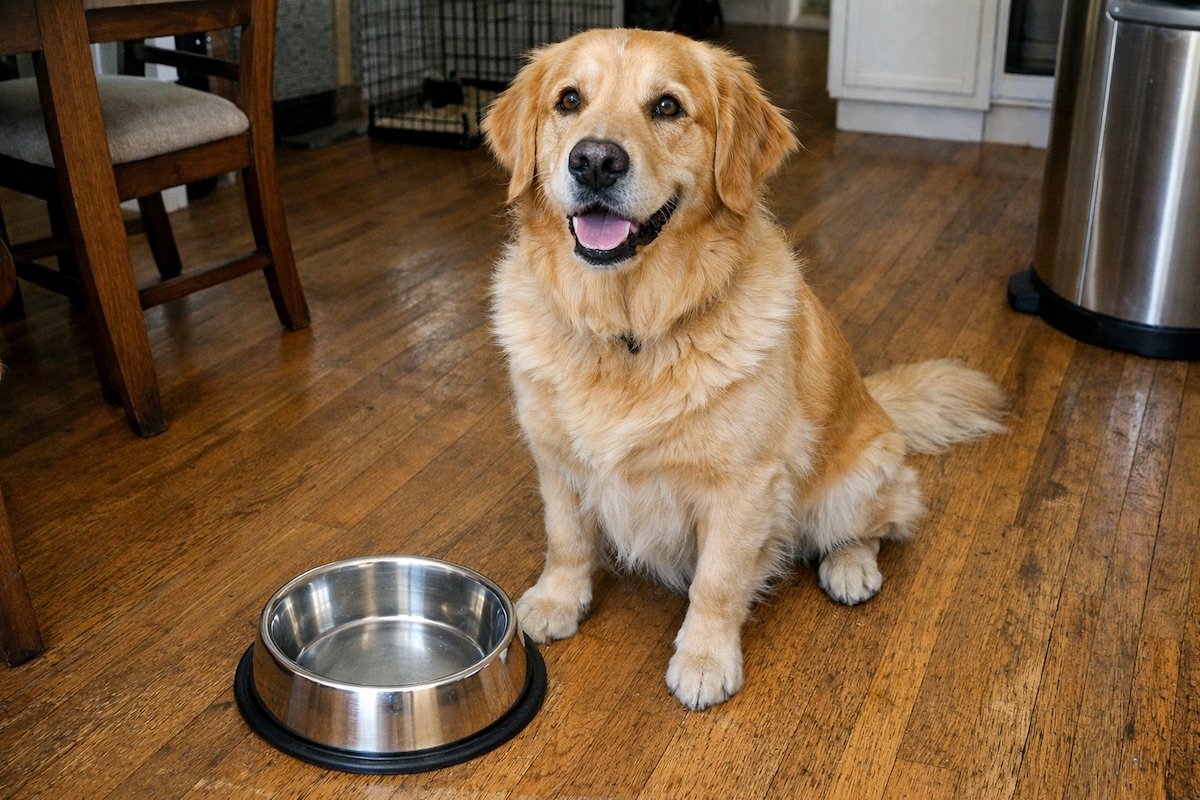
Many Golden Retrievers are not hungry in a medical sense. They are responding to patterns, anticipation, and emotional habits that make food feel constantly relevant.
Why Golden Retrievers Often Seem Hungry All the Time
Golden Retrievers are naturally food-motivated dogs. Their breed temperament combines enthusiasm, sociability, and strong reward responsiveness, which makes food one of the easiest things for them to focus on.
Many Goldens quickly learn that food is connected to:
- Attention from people
- Training and rewards
- Predictable daily routines
- Excitement and anticipation
Because of this, food can become important not only as nutrition, but also as a source of stimulation and emotional clarity.
A Golden Retriever may act hungry not because their body lacks food, but because their brain has learned that food is one of the most meaningful events in the day.
Real Hunger vs Learned Food-Seeking
One of the most important things to understand is the difference between physical hunger and habitual food-focused behavior.
| Pattern | True Hunger | Learned Food-Seeking |
|---|---|---|
| After meals | Settles more easily | Continues searching for food |
| Kitchen behavior | Interested at mealtime | Constant monitoring of food-related areas |
| Begging | Mostly near meals | Appears throughout the day |
| Emotional tone | Food-driven | Anticipatory or restless |
Dogs that are truly hungry usually calm down after eating. Dogs driven by learned anticipation often remain preoccupied with food even after a full meal.
Why Food Becomes So Emotionally Important
For many Golden Retrievers, food is not just rewarding — it is emotionally regulating. If the dog feels bored, uncertain, overstimulated, or unable to relax, food becomes an easy object of focus.
Food-related behavior may increase when the dog experiences:
- Unclear daily routines
- Too much excitement without recovery
- Inconsistent meal timing
- Frequent use of treats in every interaction
- Limited opportunities for true rest
In these situations, the dog may not be hungry for calories. They may be seeking something predictable and emotionally satisfying.
Food often becomes more important when the rest of daily life feels mentally noisy or emotionally unclear.
Breed Traits That Make Goldens Extra Food-Motivated
Golden Retrievers tend to be:
- Strongly people-oriented
- Responsive to rewards
- Quick to form habits
- Emotionally expressive
This means they often notice the smallest food-related cues — opening a cupboard, touching a food bag, standing near the kitchen counter. Over time, these signals become part of an anticipation loop.
Instead of waiting calmly, the dog begins to stay mentally connected to the possibility of food throughout the day.
When Acting Hungry Is Really About Anticipation
Some Golden Retrievers act hungry because they have learned that food might appear at any time. Random treats, table scraps, dropped food, and inconsistent boundaries all teach the dog that constant monitoring can pay off.
Typical signs of anticipation-based food behavior include:
- Watching people eat intensely
- Following family members into the kitchen
- Checking counters or food-prep areas repeatedly
- Begging even right after meals
If a dog never knows when food may appear, searching for it becomes a logical daily strategy.
Could Stress or Overstimulation Make Food Behavior Worse?
Yes. In some dogs, food obsession becomes stronger when the nervous system is overloaded.
This often looks like:
- Restlessness after walks or play
- Difficulty settling during quiet moments
- Food-seeking when nothing else is happening
- Whining or pacing near the kitchen
Food becomes a coping pattern because it gives the dog something simple and rewarding to focus on. Owners may think the dog needs more food, when in reality the dog may need more calm structure.
A dog that seems obsessed with food may sometimes be struggling with emotional regulation rather than physical appetite.
How Owners Accidentally Reinforce Food Obsession
Many food-focused habits become stronger because they are unintentionally rewarded.
This often happens when:
- Begging sometimes leads to scraps
- Treats appear unpredictably
- Food is used constantly during training
- Attention is given whenever the dog watches or follows
Even occasional reinforcement can teach the dog that staying focused on food is worthwhile.
How to Help a Golden Retriever Stop Acting Hungry All the Time
Create Predictable Meal Structure
Golden Retrievers often feel calmer when daily events follow a clear and reliable rhythm. Feeding your dog at roughly the same times each day helps reduce internal anticipation and prevents constant food monitoring. When meals appear unpredictably, the dog may begin watching the kitchen, following the owner, or reacting to every small movement that could signal feeding time.
Structured feeding does not mean rigid scheduling down to the minute, but rather creating a general pattern the dog can trust. For example, morning and evening meals served after calm routines — such as a short walk or quiet settling period — can help the dog associate food with stability rather than excitement. Over time, predictable structure lowers emotional tension and makes it easier for the dog to relax between meals.
Use Treats More Intentionally
Treats are powerful tools for learning, but when they appear randomly throughout the day, they can increase food fixation instead of supporting balanced behavior. A Golden Retriever that constantly receives small rewards outside of clear training moments may start scanning the environment for opportunities to earn food.
Using treats intentionally means linking them to specific behaviors or training sessions. This creates clarity: the dog understands when food is likely to appear and when it is not. Calm praise, gentle interaction, or short play sessions can replace food rewards in everyday situations. This balanced approach helps prevent the dog from relying on food as the main source of emotional reassurance.
Reduce Kitchen Anticipation
Many Golden Retrievers develop strong emotional associations with the kitchen. Sounds of packaging, movement near the counter, or even the owner entering the room can trigger intense anticipation. Over time, the dog may begin monitoring food preparation areas constantly, unable to relax when meals are not actually being prepared.
Creating clear boundaries helps reduce this pattern. For example, teaching the dog to stay on a resting mat while food is prepared or gently guiding them away from the kitchen during non-feeding times builds understanding. Consistency is key — when the dog learns that not every kitchen activity leads to food, internal pressure gradually decreases and calm behavior becomes easier.
Support Calm Rest
Food obsession is not always about hunger. In many cases, it reflects a nervous system that remains active and searching for stimulation. Dogs that struggle to rest deeply often turn toward food-related behaviors as a form of engagement or comfort.
Encouraging true downtime can make a significant difference. Providing a quiet resting area, limiting unnecessary interruptions, and reinforcing moments when the dog chooses to relax independently helps shift focus away from constant food anticipation. When rest becomes emotionally safe and predictable, many Golden Retrievers naturally become less preoccupied with eating.
Food obsession often decreases when life becomes more predictable and emotionally balanced.
When to Consider a Medical Cause
Behavior explains many cases, but sudden or extreme hunger should always be discussed with a veterinarian.
Possible medical reasons include:
- Digestive issues
- Parasites
- Hormonal imbalance
- Poor nutrient absorption
- Medication side effects
If your dog seems frantic about food, loses weight, or shows other physical changes, medical evaluation is important.
Final Thoughts
Golden Retrievers often act hungry because food means more than nutrition. It can represent reward, predictability, stimulation, and emotional comfort all at once.
The goal is not to remove food motivation — it is to prevent food from becoming the dog’s main way of coping with daily life.
When meals become predictable, boundaries become clearer, and calm routines are built into the day, many Golden Retrievers stop acting hungry all the time. In most cases, the behavior softens not because the dog is denied food, but because life finally feels structured enough that food no longer needs to be the center of attention.
Author: XPETSI Editorial Team