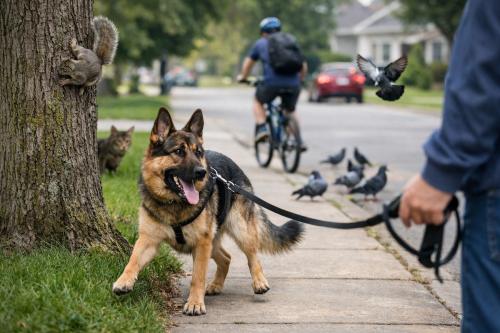
Border Collies are known for their intense awareness of the world around them. Many owners admire how quickly their dog notices movement, sounds, or changes in the environment. But during walks, this natural awareness can sometimes turn into something else — constant scanning, hyper-alert behavior, and difficulty staying connected with the handler. These patterns often appear in dogs navigating the intense mental processing described in living with a Border Collie brain.
Over-scanning is not always “high intelligence at work.” In many Border Collies, it’s a sign that the brain is processing too much information without enough emotional balance.
If your Border Collie seems unable to relax outside, constantly watches everything, or struggles to stay present during walks, this article will help you understand why it happens and what actually helps restore calm focus. For a broader understanding of how sensitivity and intelligence interact, see the Border Collie behavior guide.
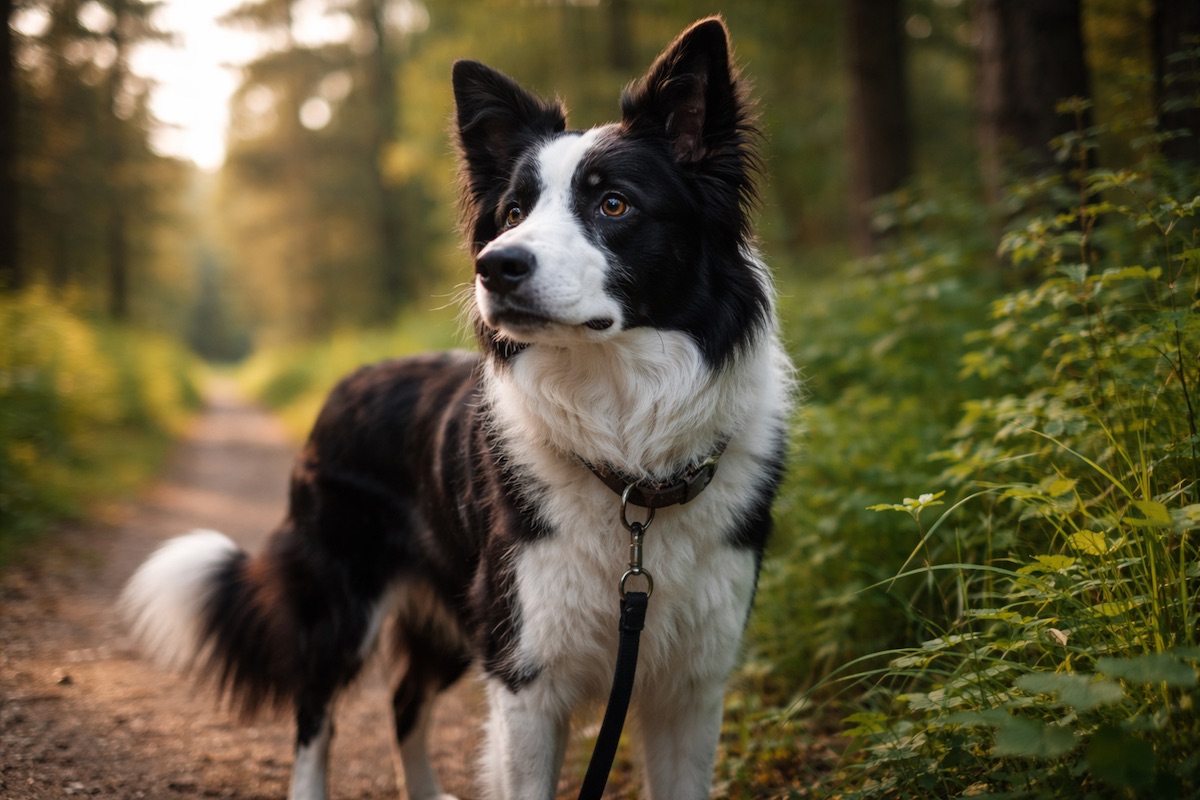
What Does Over-Scanning Look Like?
Border Collies naturally observe their surroundings, but over-scanning goes beyond normal curiosity. Instead of brief awareness followed by relaxation, the dog stays in a continuous monitoring state — a pattern often connected with losing rhythm in busy environments.
- Constantly looking around instead of walking calmly
- Freezing or slowing down to watch distant movement
- Reacting to subtle sounds others barely notice
- Ignoring familiar cues outdoors
- Difficulty reconnecting with the handler
A Border Collie that scans nonstop is often not being stubborn — their nervous system may feel responsible for monitoring everything at once.
Why Border Collies Tend to Over-Scan
1. Genetic Sensitivity to Movement
Border Collies were bred to control motion and read subtle environmental changes. This makes them exceptionally aware of moving objects, people, and animals.
In modern environments filled with constant stimulation, that same instinct can become overwhelming — especially when daily mental workload becomes too high.
2. Cognitive Overload
Highly intelligent dogs process more information than many other breeds. When the brain receives too many signals at once, scanning becomes a coping strategy, similar to early signs of cognitive fatigue in smart dogs.
- Busy sidewalks
- Fast-moving bicycles
- Unpredictable noises
- Changing routes
Over-scanning often appears when the dog cannot decide which stimulus matters most — so they try to track everything.
3. Emotional Tension From the Handler
Border Collies are extremely responsive to human body language. Tight leash handling, anticipation, or subtle frustration can increase alertness — especially in dogs with strong emotional sensitivity.
When the handler feels tense, the dog may interpret the environment as important or potentially unsafe.
4. Too Much High-Arousal Activity
Fast-paced games, intense training, or constant engagement before walks can raise adrenaline levels. A highly aroused dog struggles to filter information calmly, particularly when training intensity has already been high.
5. Lack of Clear Walking Rhythm
Border Collies thrive on patterns. Sudden changes in pace, direction, or expectations can increase uncertainty — which leads to more scanning, similar to patterns seen in hesitation during walks.
Normal Awareness vs Over-Scanning
| Behavior | Healthy Awareness | Over-Scanning |
|---|---|---|
| Looking Around | Brief checks, then relaxation | Continuous monitoring |
| Body Language | Loose and balanced | Rigid or tense |
| Response to Cues | Reconnects quickly | Struggles to respond |
| Energy Level | Focused curiosity | Hyper-alert vigilance |
Understanding this difference helps prevent one of the most common mistakes: trying to force focus when the dog actually needs emotional regulation first — especially in dogs fluctuating between being too focused or too distracted outside.
Why Forcing Eye Contact Can Make It Worse
Many owners attempt to solve scanning by demanding constant eye contact or repeating commands. While engagement is important, excessive pressure can increase cognitive stress.
When a Border Collie feels overwhelmed, adding more commands may raise mental pressure instead of building connection.
Instead of forcing attention, the goal should be helping the dog feel safe enough to disengage from the environment naturally — something that improves when structured mental recovery becomes part of the routine.
How to Reduce Over-Scanning During Walks
Slow the Start of the Walk
Begin with a calm pace. Allow sniffing and observation before expecting structured engagement.
Choose Lower-Stimulation Routes Temporarily
Quieter environments give the nervous system space to reset.
Create a Predictable Walking Rhythm
- Consistent pace
- Clear start and end signals
- Minimal sudden changes
Reward Calm Check-Ins
Instead of asking for constant focus, reinforce small moments when your dog chooses to reconnect naturally.
Balance Mental and Physical Effort
Short thinking tasks during the walk can help redirect attention without increasing arousal — similar to strategies used in thinking walks.
Calm structure often reduces scanning faster than adding more intensity or stricter control.
Signs Your Border Collie Is Beginning to Relax Outdoors
- Longer stretches of loose walking
- Soft body posture
- Less abrupt stopping or freezing
- Natural check-ins without prompting
These changes may appear gradually as the nervous system learns that it does not need to monitor everything constantly.
When Over-Scanning May Signal Deeper Stress
If scanning is accompanied by whining, freezing, or refusal to move, consider whether anxiety or cognitive overload may be involved — especially when early silent stress signals have been present.
Persistent hypervigilance sometimes reflects internal pressure rather than simple excitement.
- Constant alertness even at home
- Difficulty settling after walks
- Overreaction to small stimuli
If these patterns intensify over time, a professional trainer familiar with working breeds may help guide you toward calmer routines.
Final Thoughts
A Border Collie that scans everything is not trying to control the walk — they may simply be carrying too much mental responsibility.
Reducing pressure, building predictable patterns, and allowing the nervous system to slow down often restores natural focus more effectively than stricter training. When a Border Collie feels emotionally balanced, awareness becomes purposeful again — not overwhelming.
Author: XPETSI Editorial Team