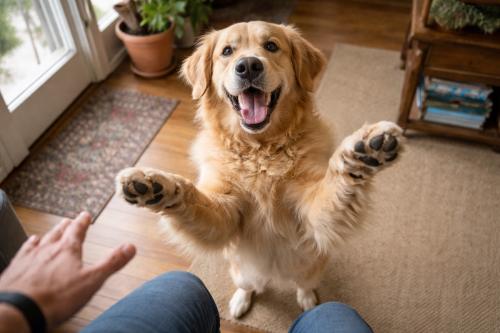
Many Golden Retriever owners find that they are not alone often. If they enter another room, walk to the kitchen, stand up for a moment, their dog immediately accompanies them.
This behavior often seems sweet and affectionate at first. Golden Retrievers are known to bond well with people so it seems natural to stick close.
But when following becomes constant – no pauses, no independent relaxation – owners often start to wonder if something deeper is going on.
Following behavior is not always about affection. Sometimes it reflects attention patterns, emotional dependence, or difficulty fully disengaging.
Understanding why your Golden Retriever follows you everywhere can reveal what is happening beneath the behavior itself.
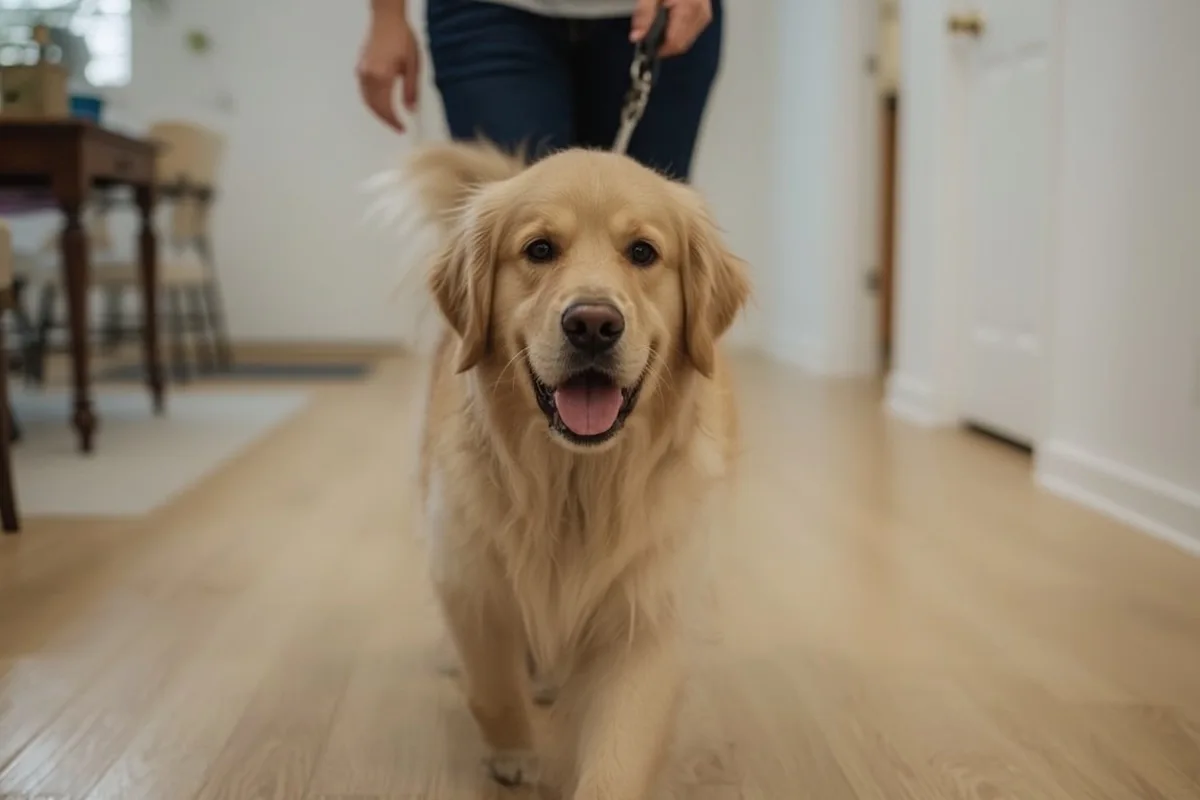
Golden Retrievers Naturally Stay Close to People
Golden Retrievers were originally developed to work alongside humans. Their role required paying close attention, staying nearby, and responding quickly.
This created a dog that naturally:
- Monitors human behavior closely
- Stays socially connected
- Notices movement and changes quickly
Because of this background, some following behavior is completely normal.
Many Golden Retrievers simply prefer being near their people.
Movement Automatically Captures Attention
Dogs are highly sensitive to movement. When you stand up, walk into another room, or change activities, your movement immediately becomes new information.
For some Golden Retrievers, movement acts like a signal:
- Something may be happening
- A new activity could begin
- Interaction might follow
Instead of staying relaxed, the dog becomes curious and re-engages.
This does not necessarily mean anxiety — sometimes movement simply interrupts rest.
For highly attentive dogs, your movement can feel more important than the environment itself.
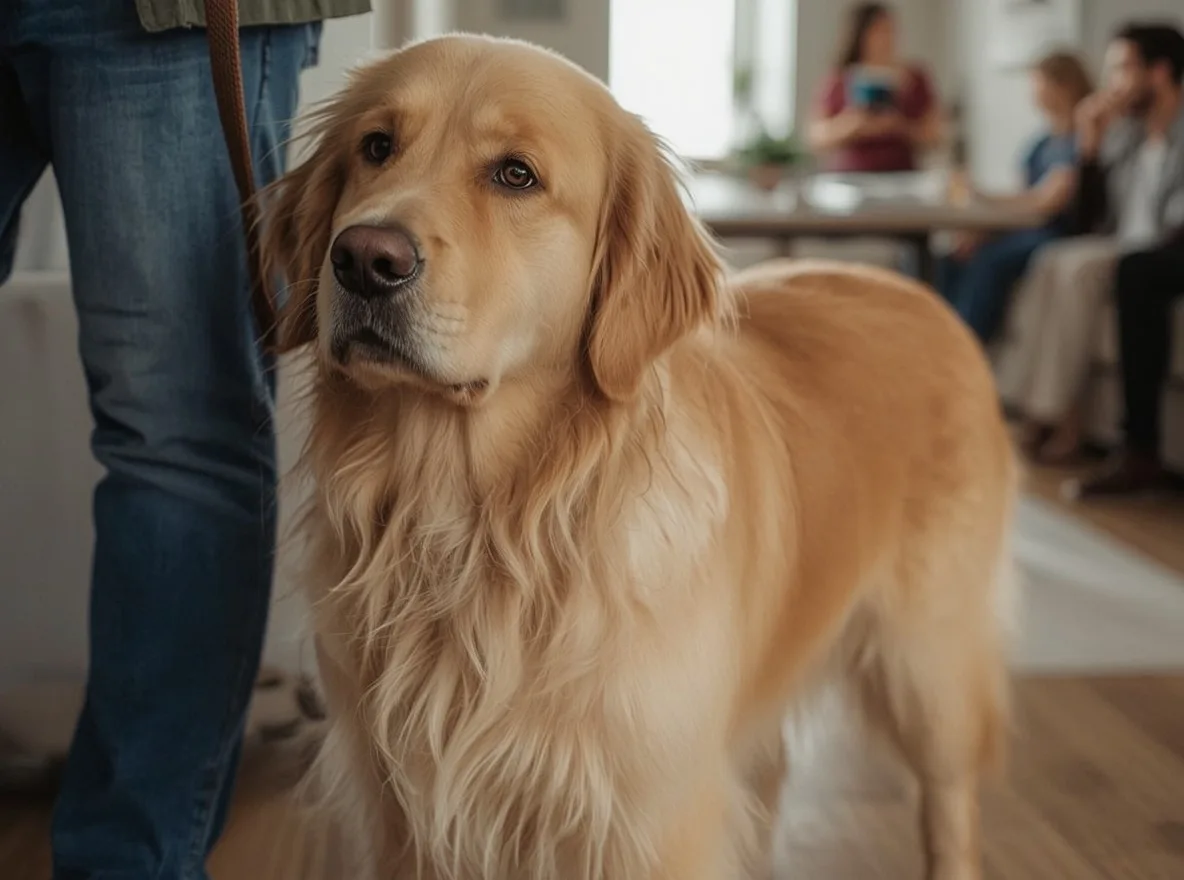
Emotional Dependence Can Strengthen the Pattern
Some Golden Retrievers rely heavily on their owner as a source of emotional stability.
In these cases, following becomes more than curiosity.
The dog may begin using your presence to regulate internal comfort:
- When you are nearby → the dog feels stable
- When you leave → uncertainty increases
- Following restores connection
This creates a pattern where staying close feels necessary rather than optional.
Over time, the dog begins monitoring your location constantly.
If your dog not only follows you but also constantly watches where you are, you may notice similar patterns described in Why My Golden Retriever Always Watches You. Many dogs that follow their owners remain mentally engaged even during rest.
Relaxation Becomes Linked to Your Presence
Some dogs learn that calmness only happens when they remain close to their owner.
Instead of settling independently, they stay partially engaged:
- Watching your movements
- Listening for activity
- Checking where you are
Even during quiet moments, attention remains directed toward you.
This makes full relaxation difficult.
For some dogs, this pattern also connects with difficulty settling indoors. If your Golden Retriever seems unable to truly relax at home, you may notice overlap with Why My Golden Retriever Struggles to Relax at Home.
A dog that constantly monitors its owner is often not fully resting — it is remaining socially engaged.
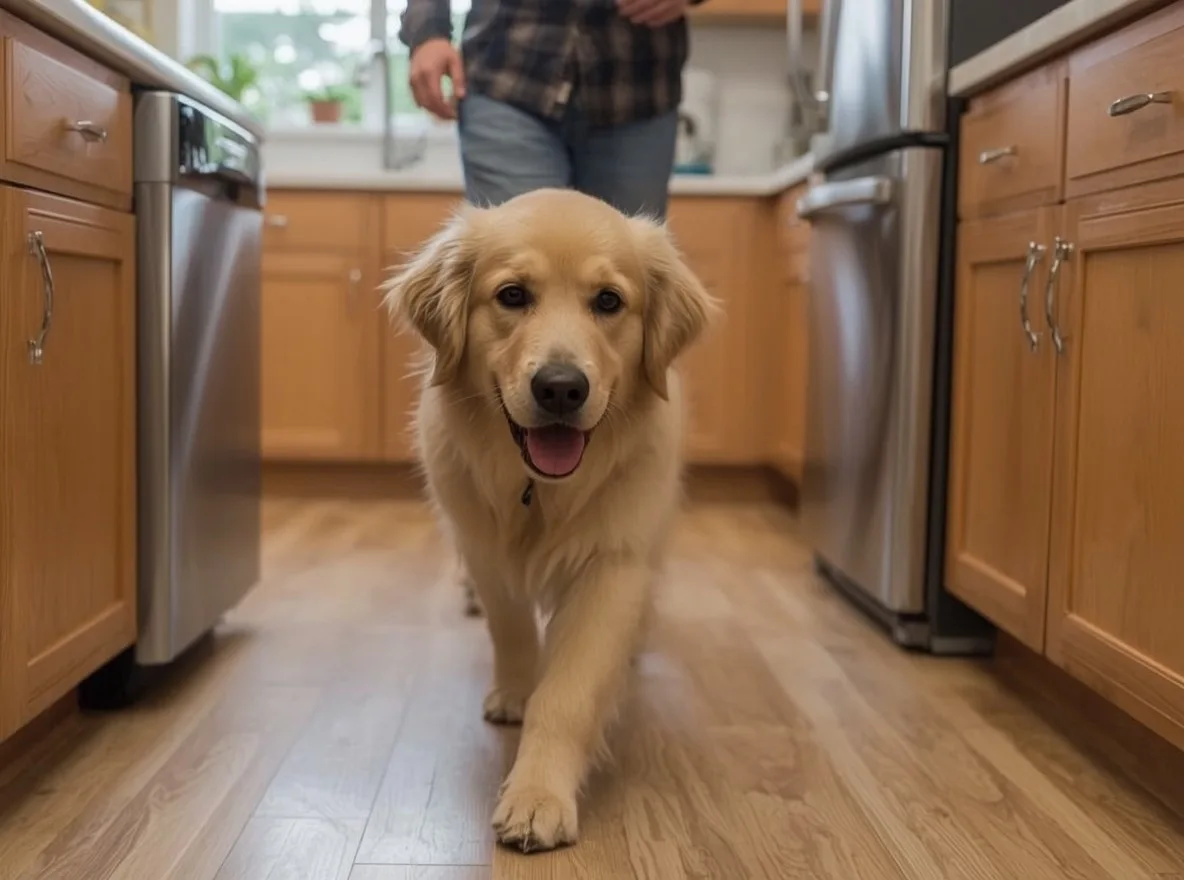
Following Can Become a Habit
Not all following behavior starts from emotional dependence.
Sometimes repetition creates the pattern.
If following frequently leads to:
- Attention
- Interaction
- Food
- Walks
- Play
The dog quickly learns that staying close predicts rewarding experiences.
Over time, the behavior becomes automatic.
Over time, following behavior may become part of a broader pattern where interaction itself becomes emotionally important. Dogs showing this pattern may also display behaviors discussed in Why My Golden Retriever Needs Constant Attention.
Why It Can Increase Over Time
This pattern often becomes stronger gradually rather than suddenly.
Small everyday experiences reinforce it:
- Responding every time the dog follows
- Rarely allowing independent quiet moments
- Frequent interaction throughout the day
The result is a dog that becomes increasingly focused on owner movement.
Eventually, even standing up from a chair can trigger immediate following.
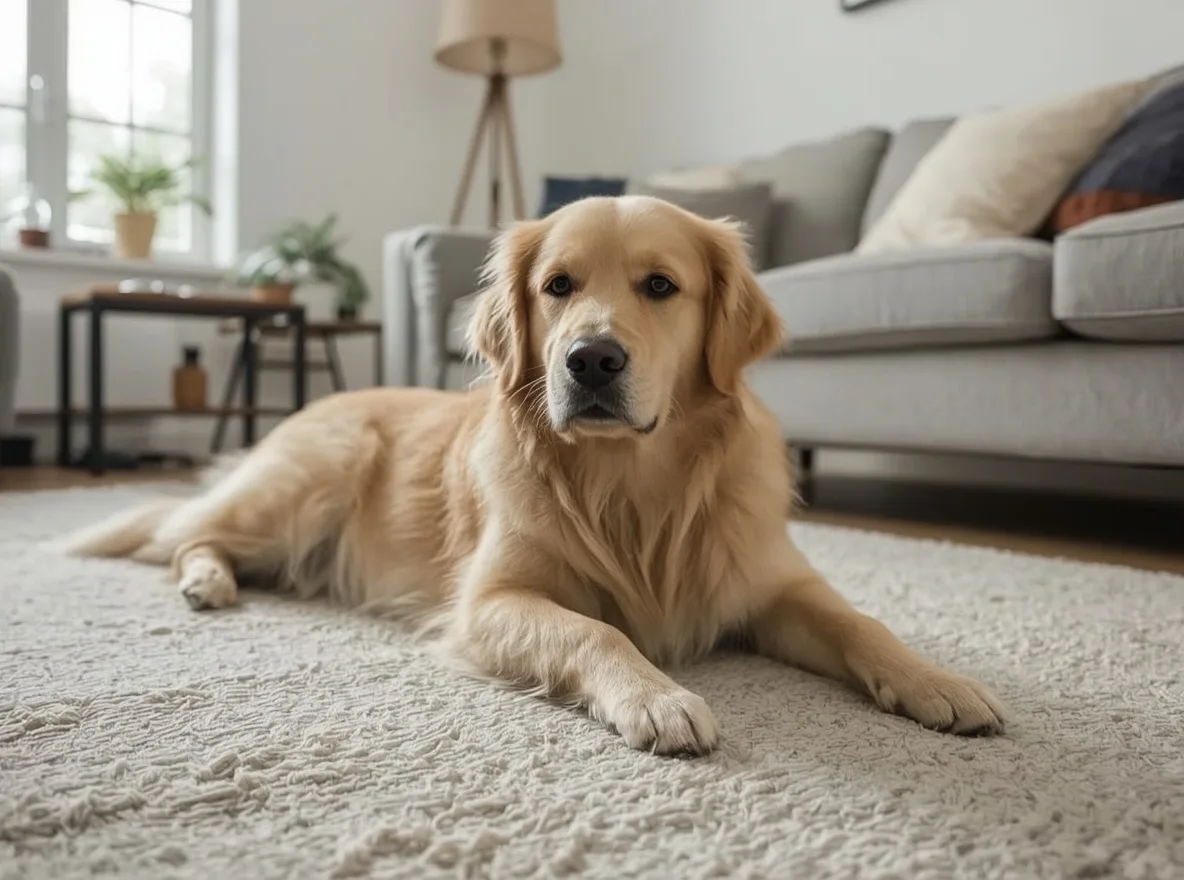
Signs the Behavior May Reflect More Than Affection
Following is usually normal, but some patterns suggest stronger emotional reliance:
- Following every movement without exception
- Difficulty settling in another room
- Watching constantly even while resting
- Becoming unsettled when visual contact is lost
These signs suggest that the behavior may involve regulation rather than simple attachment.
In stronger forms, constant following can overlap with emotional dependence and difficulty handling distance from the owner. Some Golden Retrievers naturally form very strong bonds, which may resemble patterns discussed in Do Golden Retrievers Get Separation Anxiety Easily.
Related Behavior Patterns
Following behavior rarely exists by itself. Golden Retrievers that constantly stay near their owners often show related patterns:
- constant monitoring behavior
- increased need for interaction
- difficulty relaxing at home
- appearing calm while remaining internally active
How to Support More Independent Calm
Allow Neutral Presence
Your presence does not always need to lead to interaction.
Encourage Independent Rest
Allow your dog to remain relaxed without needing to stay close.
Reduce Constant Feedback
Not every following moment needs attention.
Create Predictable Routines
Predictability reduces the need for constant monitoring.
A balanced dog enjoys closeness but does not depend on constant proximity to feel secure.
Final Thoughts
A Golden Retriever that follows you everywhere is not necessarily anxious or overly attached. Often, it reflects a combination of natural social tendencies, attention patterns, and emotional regulation.
By understanding why the behavior develops, you can support healthier independence while preserving the strong bond that makes Golden Retrievers so connected to their people.
Author: XPETSI Editorial Team