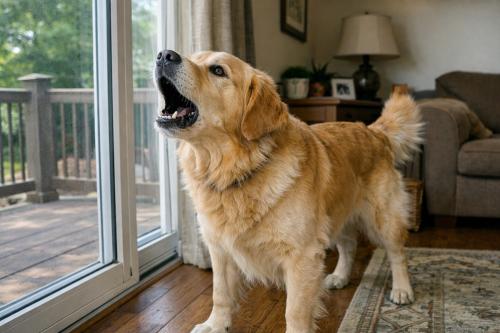
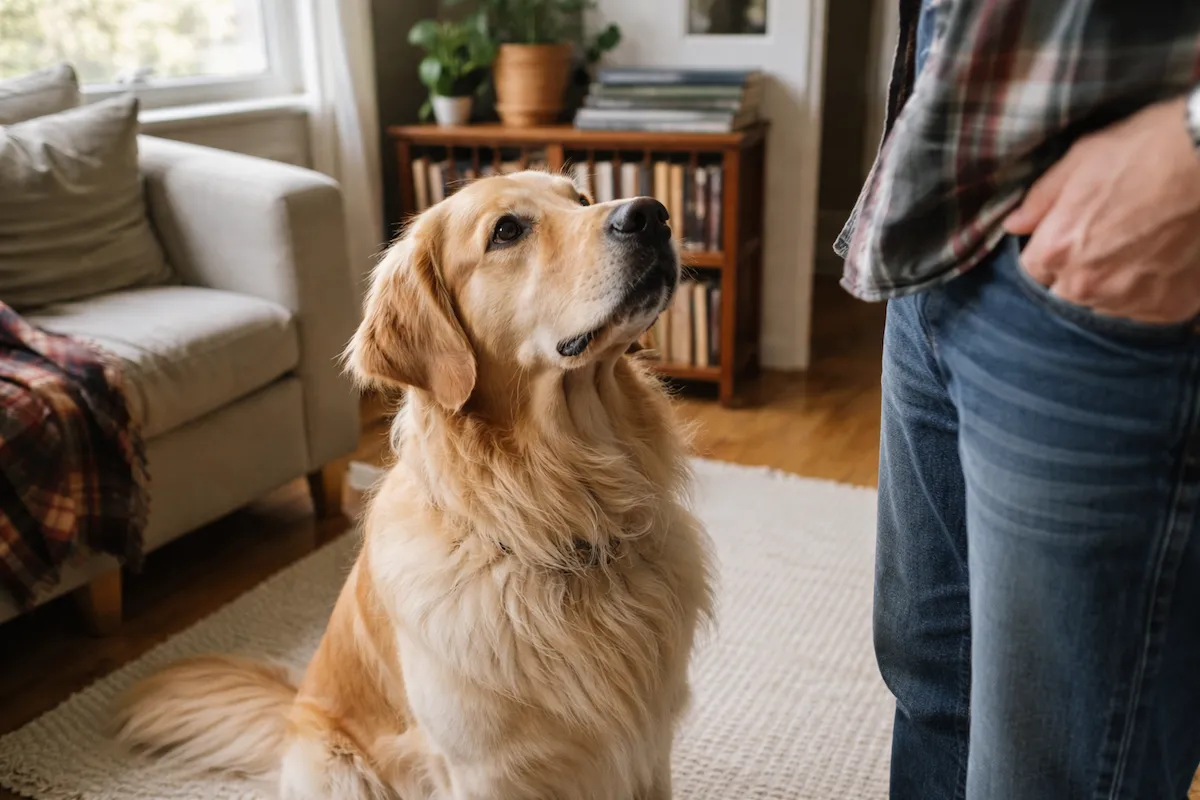
Many Golden Retriever owners notice a familiar pattern: wherever they go, their dog is watching. Whether you’re walking across the room, sitting on the couch, or even just shifting your posture, your Golden Retriever seems to be paying close attention.
At first glance, this behavior can feel comforting or even flattering. It may look like loyalty or affection. But in reality, constant observation can have several different meanings — not all of them the same.
When a dog watches you all the time, it is not just about attachment. It often reflects how your dog processes the environment and where it finds safety.
Understanding why your Golden Retriever watches you can help you better interpret their emotional state and create a more balanced daily routine.
Why Golden Retrievers Are Naturally Focused on People
Golden Retrievers were bred to work closely with humans. Their role required constant attention to subtle cues, movements, and changes in direction. This created a strong natural tendency to monitor human behavior.
Because of this, watching you is not unusual — it is part of their instinct.
- They are highly responsive to human signals
- They naturally look for guidance and direction
- They tend to stay socially connected
However, the intensity and consistency of this behavior can vary depending on the dog’s emotional state.
When Watching Is a Sign of Healthy Connection
In many cases, your Golden Retriever is simply staying connected to you in a calm and balanced way.
This type of attention is usually relaxed and flexible:
- The dog watches you but also disengages easily
- Body posture remains loose and comfortable
- The dog can rest without constant monitoring
- Attention shifts naturally between you and the environment
Healthy attention is flexible — the dog can connect with you without becoming dependent on constant observation.
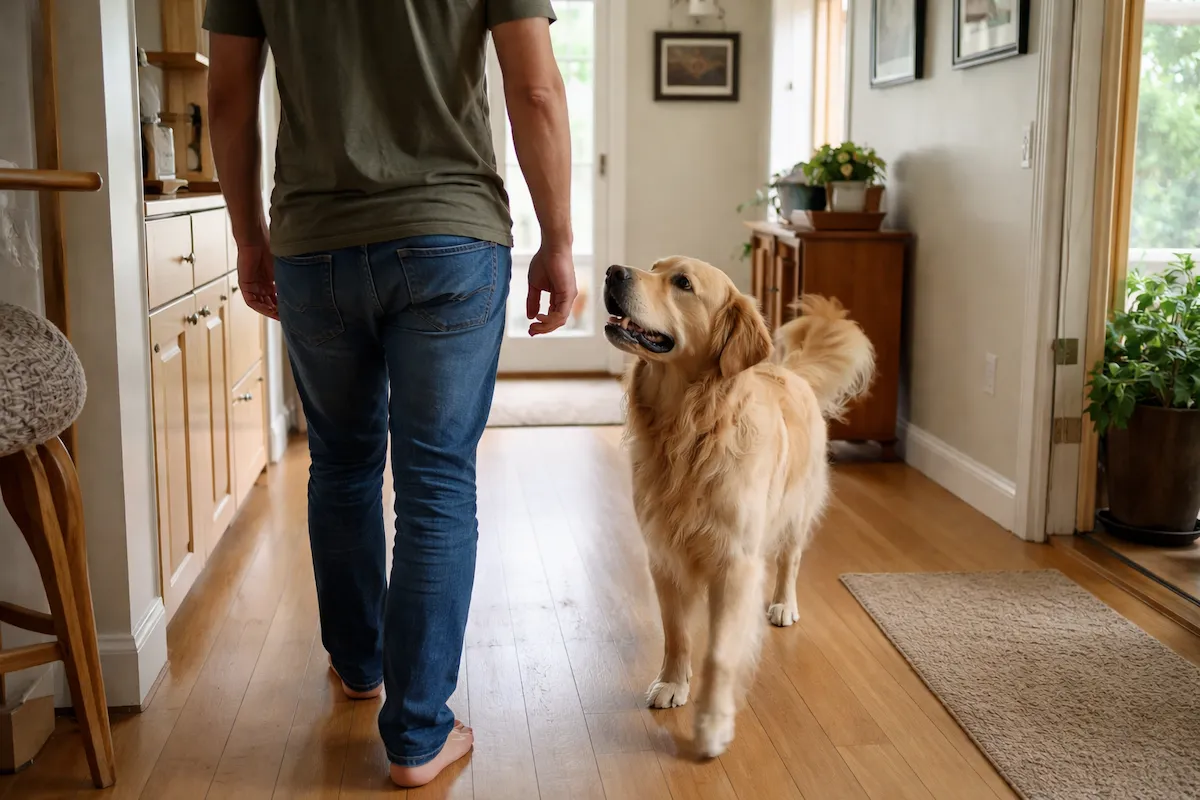
When Watching Becomes a Sign of Dependence
If your Golden Retriever watches you constantly and rarely disengages, it may indicate a stronger emotional reliance rather than simple curiosity or affection.
In this state, the dog is not just observing — it is using you as a point of orientation and stability in the environment.
In this state, the dog may:
- Track your every movement
Even small changes — standing up, turning your head, shifting position — immediately capture the dog’s attention. The dog remains highly tuned to your actions, often anticipating what you will do next. - Become unsettled when you leave the room
The moment visual contact is lost, the dog may show subtle signs of discomfort. This can include getting up, following, pacing, or waiting near the exit. The reaction is not always dramatic, but the internal state changes quickly. - Struggle to relax without visual contact
When you are out of sight, the dog may find it difficult to fully settle. It may lie down but remain alert, frequently checking for your return or reacting to small sounds. - Follow you closely even in calm situations
Instead of resting independently, the dog prefers to stay near you at all times — even when nothing is happening. This is not driven by activity, but by a need to maintain connection.
This pattern often develops gradually. It is not something dogs are born with at full intensity, but something that builds over time through daily interactions.
Common contributing factors include:
- Frequent interaction without periods of independent rest
- High emotional responsiveness from the owner
- Inconsistent routines that increase uncertainty
- Limited opportunities for the dog to self-regulate
From the dog’s perspective, staying focused on you becomes the most reliable way to understand what is happening and what to expect next.
Over time, this creates a feedback loop:
- The dog watches → receives interaction or information
- Watching becomes reinforced
- Independence decreases
- Reliance on the owner increases
Importantly, this does not mean the dog is “misbehaving.” In many cases, it reflects a dog that has not learned how to feel stable without constant reference to its owner.
Constant watching can sometimes reflect dependence rather than confidence — a sign that the dog feels safest when it can monitor you, rather than when it can relax on its own.
Watching as a Response to Uncertainty
Dogs often look to humans for information when they are unsure how to interpret the environment.
If your Golden Retriever feels uncertain, it may watch you to understand what is happening.
This is common in situations such as:
- New environments
- Unexpected sounds
- Interactions with unfamiliar people
- Changes in routine
Instead of reacting directly, the dog monitors your behavior to decide how to respond.
Hidden Stress and Hypervigilance
In some cases, constant watching is not about attachment or curiosity, but about vigilance.
A dog that feels slightly stressed may stay focused on you as a stable reference point.
Signs of this include:
- Intense or fixed gaze
- Difficulty disengaging
- Watching without relaxing
- Quick reactions to small movements
This type of attention is different from relaxed connection — it is more controlled and alert.
When a dog watches without ever fully relaxing, it may be using you as an anchor in an uncertain environment.
Why This Behavior Often Increases Over Time
Constant watching can become more frequent due to everyday patterns.
- The dog learns that watching leads to interaction
- Frequent engagement reinforces attention-seeking
- Lack of independent rest increases reliance on the owner
Over time, the dog may begin to monitor you more closely — not because it needs to, but because it has learned to do so.
How This Affects Daily Behavior
When a Golden Retriever is always watching you, it can influence other aspects of behavior:
- Difficulty settling alone
- Increased sensitivity to your movements
- Faster shifts between calm and excitement
- Reduced independence
What appears as attention can sometimes limit the dog’s ability to relax on its own.
How to Support More Balanced Behavior
Encourage Independent Rest
Allow your dog to relax in a space where it does not need to monitor you constantly. This helps reduce reliance on your presence.
Create Predictable Routines
Consistent daily patterns reduce uncertainty and help the dog feel secure without constant observation.
Limit Constant Engagement
Not every moment needs interaction. Allowing quiet time without stimulation helps the nervous system settle.
Support Calm Transitions
When moving between activities, keep your energy predictable. Sudden changes can increase monitoring behavior.
Independence is not the absence of connection — it is the ability to feel safe without constant reassurance.
Final Thoughts
A Golden Retriever that watches you is not just being attentive — it is showing how it relates to the world around it.
In many cases, this behavior reflects connection and trust. But when it becomes constant and intense, it may indicate a need for more balance, independence, and emotional stability.
By understanding the difference, you can help your dog feel not only connected — but also truly relaxed.
Author: XPETSI Editorial Team