Golden Retrievers are known for their strong attachment to people. They enjoy being close, participating in daily activities, and staying connected to their owners. Because of this, many people wonder whether the breed is naturally prone to separation anxiety — and why some dogs struggle when left alone.
Separation anxiety is not simply about being “too attached.” It often reflects how a dog has learned to cope with absence, routine changes, and emotional independence.
Understanding whether Golden Retrievers are more sensitive to being alone — and what influences that sensitivity — can help prevent problems before they become stressful for both dog and owner.
Do Golden Retrievers Get Separation Anxiety Easily?
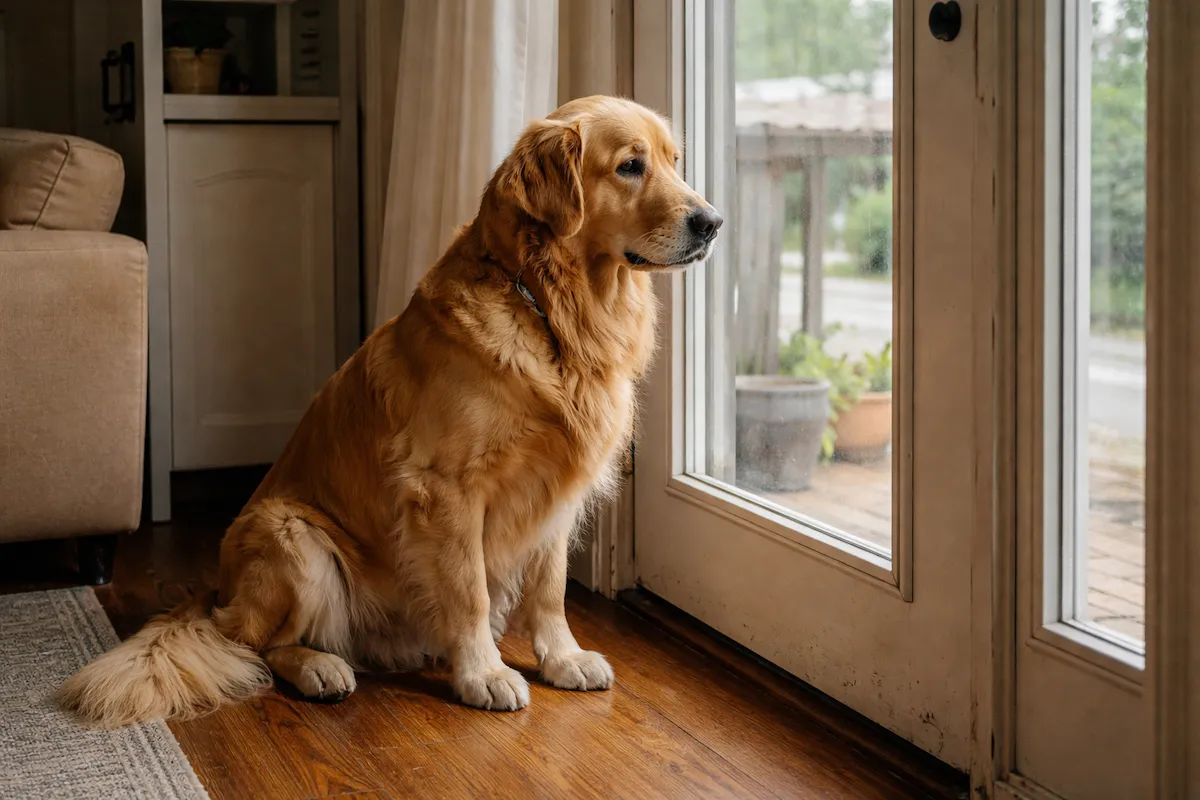
Golden Retrievers are not automatically anxious when left alone, but they are more prone to developing separation-related behaviors compared to more independent breeds. Their strong social nature means they often prefer constant proximity to people.
However, separation anxiety is not inevitable. Many Golden Retrievers learn to stay alone calmly when they develop independence gradually and experience predictable routines.
Attachment is natural. Anxiety develops when a dog does not feel secure during absence.
Why Golden Retrievers May Be More Sensitive to Being Alone
Strong Social Bonding
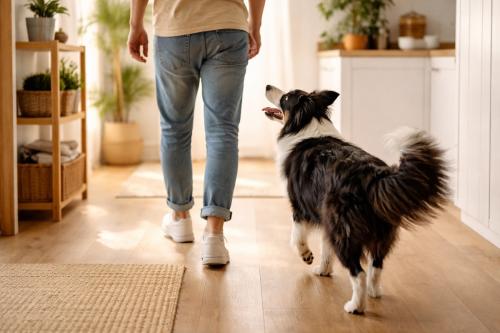
Golden Retrievers are highly people-oriented. They tend to follow their owners closely, observe daily routines, and participate in family life. This closeness can make sudden absence feel more noticeable.
Lack of Independent Rest Skills
Some dogs are rarely left alone or constantly engaged. Without opportunities to rest independently, they may not develop the ability to relax without human presence.
Unpredictable Schedules
Irregular departure times, inconsistent routines, or sudden changes in daily structure can increase anticipation and uncertainty.
Uncertainty often creates more stress than absence itself.
Over-Attention and Constant Interaction
Dogs that receive continuous attention may become dependent on interaction. When that interaction suddenly stops, the change can feel overwhelming.
Previous Stressful Experiences
Negative experiences while alone — such as loud noises, discomfort, or fear — can shape how the dog perceives future absences.
Signs of Separation Anxiety in Golden Retrievers
- Vocalizing when left alone (barking, whining)
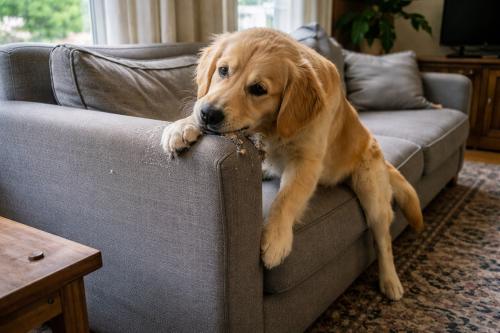
- Destructive behavior near doors or windows
- Pacing or restlessness before or after departures
- Difficulty settling when alone
- Excessive excitement when the owner returns
Separation anxiety often begins with subtle signs of tension before it becomes more obvious.
Normal Attachment vs Separation Anxiety
| Behavior | Healthy Attachment | Possible Anxiety |
|---|---|---|
| Alone time | Relaxes after departure | Remains stressed |
| Greeting | Happy but controlled | Intense, uncontrolled |
| Behavior at home | Calm | Destructive or restless |
| Response to absence | Adapts over time | Escalates |
Recognizing this difference helps determine whether support is needed.
How to Help a Golden Retriever Feel Comfortable Being Alone
Build Independence Gradually
Learning to stay alone is a process, not a single event. Start with very short separations — even a few minutes — and gradually increase the duration as your dog becomes more comfortable. The goal is to create repeated experiences where the dog remains calm and you return before stress builds.
Consistency matters more than speed. Progressing too quickly can create setbacks, while slow, predictable increases help the dog understand that absence is temporary and safe.
Create Predictable Departure Routines
Dogs pay close attention to patterns. Picking up keys, putting on shoes, or moving toward the door can all become signals that trigger anticipation. Keeping these routines consistent and calm helps reduce uncertainty.
Avoid emotional goodbyes or sudden exits. Neutral, low-intensity departures teach the dog that leaving is a normal part of daily life, not a significant event.
Encourage Independent Relaxation
Many Golden Retrievers struggle with being alone because they rarely practice being calm without interaction. Encouraging your dog to rest independently — even when you are at home — builds an important foundation.
This might include resting on a bed in another room, quietly observing without engagement, or choosing to relax without constant attention. These moments teach the dog that connection does not require continuous proximity.
Provide a Safe, Calm Environment
A comfortable and predictable space helps the dog feel secure during absence. This could be a quiet room, a familiar resting area, or a specific spot associated with relaxation.
Minimizing sudden noises, excessive visual stimulation, or unpredictable disturbances supports emotional stability. Some dogs benefit from soft background noise or consistent environmental conditions that make the space feel familiar.
Avoid Overstimulation Before Leaving
High-energy play or intense interaction right before departure can increase emotional arousal, making it harder for the dog to settle once you leave. Instead, allow a short period of calm activity before leaving the house.
This helps the nervous system transition smoothly rather than shifting abruptly from excitement to absence.
Use Clear Pre-Departure Transitions
Creating a predictable sequence before leaving — such as a short calm period, guiding the dog to a resting area, and then exiting — helps the dog understand what is happening. Clear transitions reduce confusion and make departures feel more structured.
Return Calmly
How you return is just as important as how you leave. Avoid reinforcing high excitement during greetings. Instead, wait for a moment of calm before engaging with your dog.
This helps prevent the emotional contrast between absence and return from becoming overwhelming.
Support Emotional Stability Throughout the Day
Separation-related behavior is influenced by the dog’s overall emotional state. Balanced daily routines — including mental engagement, physical activity, and adequate rest — improve the ability to handle time alone.
A dog that feels regulated throughout the day is more likely to remain calm during absence.
Watch for Early Signs of Stress
Subtle behaviors such as pacing, whining, or increased alertness before departure can indicate rising tension. Recognizing these early signs allows you to adjust your approach before anxiety escalates.
Shortening separation time or simplifying routines at the right moment helps maintain progress.
Dogs learn to stay alone not through force, but through repeated experiences of safe, predictable absence. Confidence develops gradually when independence is supported with clarity, structure, and emotional stability.
Common Mistakes Owners Make
- Leaving suddenly without preparation
- Creating emotional departures or greetings
- Providing constant attention when present
- Increasing stimulation instead of building independence
Helping a dog feel safe alone often requires reducing intensity, not increasing it.
When to Seek Professional Help
If anxiety is severe — including panic behaviors, self-injury, or inability to settle — consulting a trainer or veterinarian is recommended.
Final Thoughts
Golden Retrievers do not develop separation anxiety because they are “too loving.” They struggle when independence and emotional security have not been fully developed.
With gradual exposure, predictable routines, and support for calm independence, many dogs learn to stay alone comfortably. Instead of focusing only on absence, it can be helpful to ask: Does my dog feel secure even when I am not there?
Author: XPETSI Editorial Team