Golden Retrievers are naturally enthusiastic, social, and full of energy. Their joyful personality is part of what makes them such popular companions. But for some owners, that enthusiasm can feel overwhelming — constant excitement, jumping, inability to settle, and reacting intensely to everyday situations.
Being “always overexcited” is not just a personality trait. In many cases, it reflects how the dog’s nervous system processes stimulation, routines, and emotional input.
Understanding why your Golden Retriever seems constantly overexcited can help you move beyond simply trying to “tire them out” and instead create a more balanced daily rhythm.
Is It Normal for Golden Retrievers to Be Overexcited?
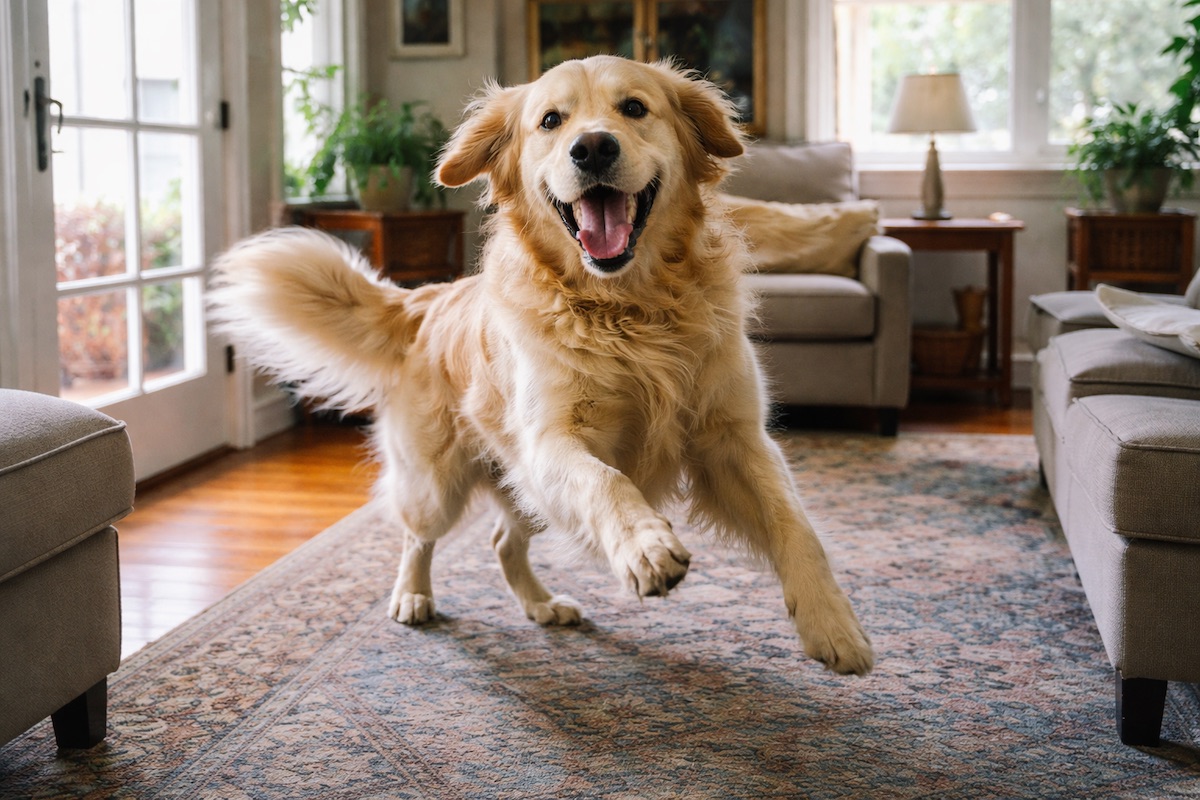
Some level of excitement is completely normal, especially in young dogs. Golden Retrievers are expressive and people-oriented, so they often show enthusiasm more visibly than other breeds.
However, when excitement becomes constant, difficult to interrupt, or appears in nearly every situation, it often indicates imbalance rather than personality.
Healthy excitement comes and goes. Constant overexcitement usually signals a nervous system that struggles to regulate.
Common Reasons Golden Retrievers Become Overexcited
Too Much Stimulation Without Recovery
Frequent play, training, social interaction, and environmental input can keep the dog in a continuous state of activation. Without enough downtime, the nervous system does not fully reset.
This often leads to “always on” behavior.
Lack of Clear Daily Structure
Unpredictable routines can increase anticipation. If the dog never knows when activity will happen, they may stay in a constant state of readiness.
Anticipation can look like excitement, but it often comes from uncertainty.
Reinforced Excited Behavior
Excitement often receives attention — talking, playing, or reacting. Over time, the dog learns that high-energy behavior leads to interaction, making it more frequent.
Difficulty Transitioning Between States
Some dogs struggle to move from active states into calmness. Without clear transitions, excitement continues even after the original trigger is gone.
Insufficient Mental Balance
Too little structured thinking or too much chaotic stimulation can both lead to unstable energy levels. Balanced mental engagement helps regulate behavior.
Emotional Sensitivity
Golden Retrievers are highly responsive to their environment and their owners. Emotional intensity — whether positive or negative — can amplify their reactions.
Signs Overexcitement Is Becoming a Problem
- Jumping or grabbing during greetings
- Difficulty settling after activity
- Reacting strongly to minor events
- Ignoring cues when excited
- Constant movement or restlessness
When excitement prevents relaxation, it is no longer just energy — it becomes a regulation issue.
Excitement vs Emotional Imbalance
| Behavior | Healthy Excitement | Overexcitement |
|---|---|---|
| Duration | Short bursts | Persistent |
| Recovery | Settles easily | Struggles to calm down |
| Focus | Responsive | Impulsive or distracted |
| Triggers | Clear events | Frequent or random |
Recognizing this difference helps guide a more effective response.
How to Help a Golden Retriever Become More Balanced
Create a Predictable Daily Routine
Dogs feel more secure when their day follows a consistent rhythm. Regular walk times, feeding schedules, play sessions, and rest periods help reduce uncertainty and constant anticipation. When a Golden Retriever knows when activity will happen, they are less likely to stay in a continuous state of excitement.
Even small routines — such as morning calm time, structured walks, and quiet evenings — create a sense of stability. Over time, this predictability helps the nervous system shift from constant readiness into a more balanced state.
Introduce Clear Transitions
Many overexcited dogs struggle because activities start and end without clear signals. One moment they are highly engaged, and the next they are expected to relax — without guidance.
Simple transition cues can help. Slowing down at the end of a walk, putting away toys after play, or guiding the dog to a resting area signals that the active phase is over. These consistent endings make it easier for the dog to switch from excitement into calmness.
Reward Calm Behavior
Excitement often gets the most attention — talking, playing, reacting — while calm behavior goes unnoticed. As a result, the dog learns that high energy leads to interaction, while relaxation does not.
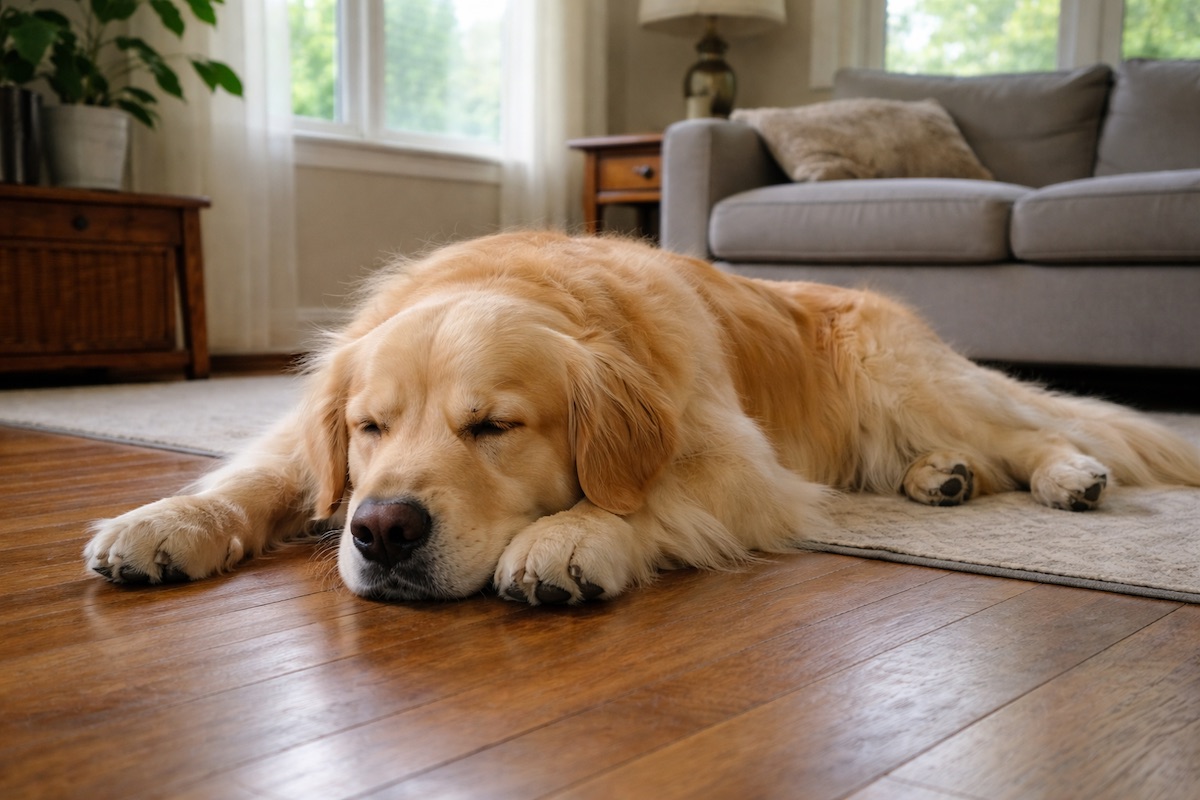
Begin to notice and reinforce quiet moments: when the dog lies down, relaxes, or calmly observes the environment. Soft praise, gentle interaction, or even just your calm presence can strengthen these behaviors. Over time, the dog starts to understand that calmness is valuable.
Reduce High-Intensity Stimulation
Constant high-energy activities can keep the nervous system in an activated state. While exercise is important, too much intensity — fast-paced games, chaotic play, or constant engagement — can increase overall reactivity.
Balancing energetic activities with slower, more regulated experiences such as sniffing walks, calm exploration, or quiet interaction helps stabilize emotional responses. The goal is not to eliminate activity, but to create variety and balance.
Support Independent Rest
Learning to relax without constant interaction is a key part of emotional regulation. Some Golden Retrievers become overexcited simply because they never practice being calm on their own.
Providing a comfortable resting space, limiting unnecessary interruptions, and allowing the dog to settle independently helps build this skill. Gradually, the dog becomes less dependent on constant stimulation and more capable of self-regulation.
Lower Overall Emotional Intensity
Dogs often mirror the emotional tone of their environment. Frequent excitement, loud interactions, or unpredictable energy from people can amplify overexcitement. Creating a calmer household atmosphere — especially during transitions and rest periods — supports better regulation.
Simple changes such as slower movement, softer voice, and more predictable interactions can have a noticeable effect over time.
Build Tolerance for Calm States
For some dogs, calmness initially feels unfamiliar. Short periods of quiet rest, followed by gentle engagement, help the dog gradually become comfortable with lower energy states.
Extending these calm periods over time builds tolerance and reduces the need for constant stimulation.
Calmness is not something dogs “have” — it is something they learn through consistent structure, clear transitions, and repeated experiences of safe, quiet states.
Common Mistakes Owners Make
- Trying to burn off excitement with more activity
- Giving attention only when the dog is excited
- Using inconsistent routines
- Ignoring the need for recovery
More stimulation often increases excitement instead of reducing it.
Final Thoughts
A Golden Retriever that seems constantly overexcited is not being difficult — they are often trying to cope with too much stimulation and not enough clarity.
By slowing down routines, creating predictable structure, and supporting calm behavior, many dogs begin to regulate more naturally.
Instead of asking how to reduce energy, it may be more helpful to ask: Does my dog know how to switch off?
Author: XPETSI Editorial Team