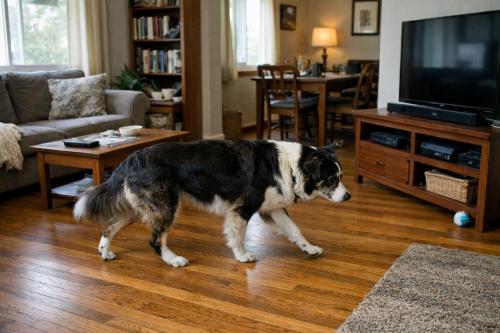
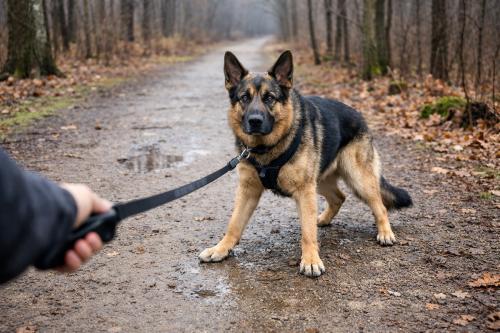
Border Collies are known for their speed, focus, and incredible work drive. That’s why many owners feel confused or worried when their dog suddenly stops during a walk or refuses to move forward. One moment everything seems normal — and the next, your Border Collie freezes, slows down, or hesitates as if something invisible has changed. These moments often connect to deeper processing patterns described in living with a Border Collie brain.
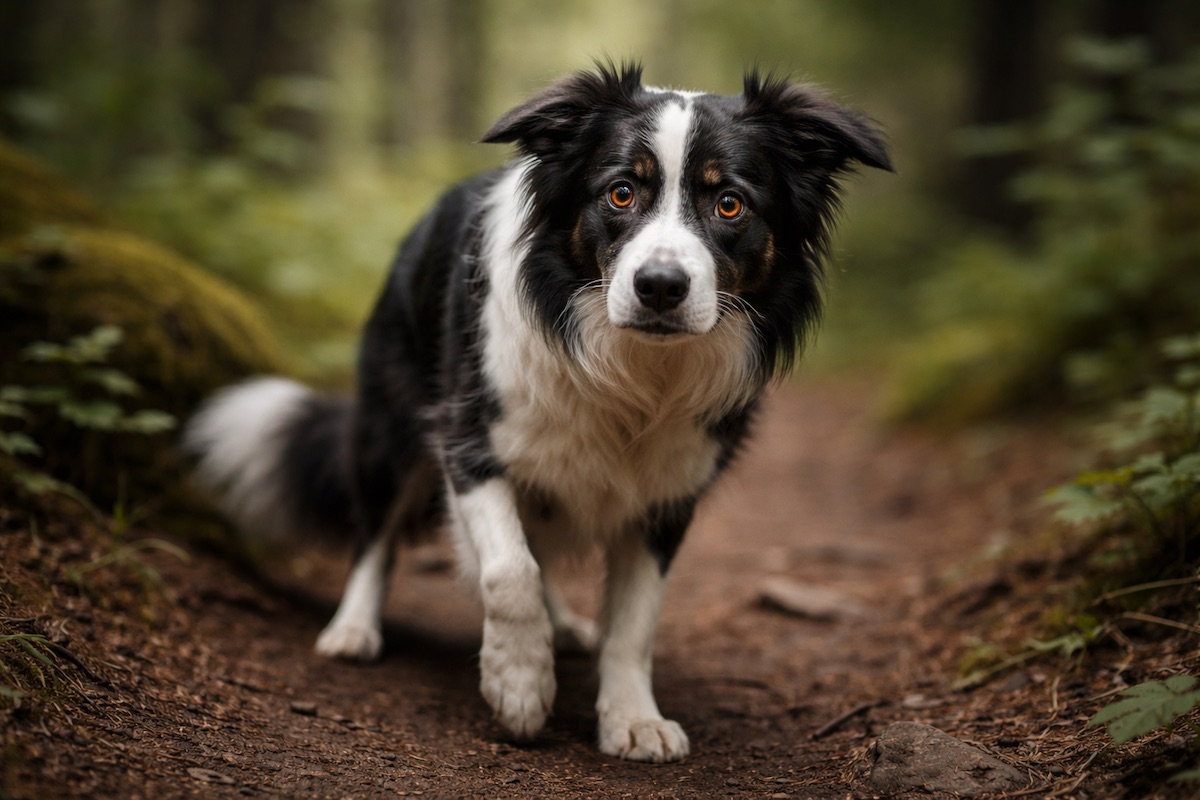
Hesitation is rarely stubbornness. In many Border Collies, a sudden stop is a signal that the dog is processing too much information or feeling unsure about what happens next.
This article explains why Border Collies sometimes hesitate during walks or daily routines, how to tell the difference between normal pauses and stress-driven refusal, and what helps rebuild confidence without adding pressure. For a broader overview of how these behavior patterns connect, see the Border Collie behavior guide.
What Does Hesitation Look Like in Border Collies?
Hesitation doesn’t always mean complete refusal to move. It can appear in subtle ways that owners might overlook at first:
- Stopping briefly before continuing forward
- Slowing down dramatically without clear reason
- Standing still and scanning the environment
- Sitting or lying down during a walk
- Looking at the owner but refusing to move
Border Collies often pause because they are thinking — not because they are refusing to cooperate.
Because this breed processes environments very deeply, hesitation is often connected to mental workload rather than lack of training. Dogs that frequently stop to observe may show patterns similar to over-scanning during walks.
Why Border Collies Suddenly Stop or Refuse to Move
1. Environmental Overload
Border Collies notice tiny details: movement in the distance, subtle sounds, or changes in routine. Busy environments can overload their nervous system, causing them to freeze or hesitate.
Unlike breeds that push forward through stimulation, Border Collies may pause to evaluate everything before continuing — especially when attention shifts between stimuli, as described in too focused or too distracted outside.
2. Cognitive Pressure or Overthinking
Highly intelligent dogs sometimes struggle when expectations feel unclear. If training sessions are intense or the dog feels constant pressure to perform, hesitation can become a coping strategy. In some cases, this overlaps with overtraining reducing focus.
A Border Collie that hesitates may be trying to understand the situation — not avoid it.
3. Emotional Sensitivity
Border Collies are extremely responsive to human emotion. Changes in tone, leash tension, or body language can influence how confident they feel during movement. Dogs with strong emotional awareness often display patterns similar to emotional sensitivity at home.
If the handler feels tense or frustrated, the dog may pause to reassess the situation.
4. Lack of Predictable Structure
When walk routines change frequently — different routes, inconsistent pace, or unclear cues — hesitation often increases. The dog may slow down simply because they are unsure what comes next.
5. Physical Fatigue or Discomfort
Although behavioral causes are common, sudden refusal to move can sometimes indicate physical issues such as sore muscles, joint discomfort, or paw sensitivity. If hesitation appears suddenly or worsens quickly, consider a veterinary check.
Normal Thinking Pause vs Stress-Driven Refusal
| Behavior | Healthy Hesitation | Possible Stress Response |
|---|---|---|
| Duration | Brief pause | Long refusal to move |
| Body posture | Soft and curious | Rigid or tense |
| Response to owner | Re-engages naturally | Ignores familiar cues |
| After movement resumes | Walk continues smoothly | Remains hyper-alert |
Short pauses are part of how Border Collies process the world. Persistent refusal usually signals emotional pressure rather than simple curiosity — sometimes appearing after early silent stress signals.
Why Pulling the Leash Often Makes Hesitation Worse
When a dog stops moving, many owners instinctively pull forward or repeat commands. Unfortunately, this can increase pressure on a sensitive breed.
Pressure during hesitation may teach the dog that the environment is stressful, making future stops more frequent.
Border Collies respond best when movement feels cooperative rather than forced — especially when mental recovery and calm rhythm are part of daily life, as discussed in building mental recovery into a Border Collie routine.
How to Help a Hesitant Border Collie Move Forward Confidently
Pause With Your Dog
Instead of pulling, stop and allow a moment for observation. Softening your posture often helps the dog reset.
Reduce Environmental Intensity
Choose quieter walking routes temporarily to rebuild confidence.
Reward Small Decisions
Reinforce even a single calm step forward. Confidence grows through small successes.
Slow Down Walk Pace
Fast, linear walking can create pressure. Allow sniffing and natural exploration — similar to the balance described in fast walks vs thinking walks.
Many Border Collies regain confidence when walks feel calmer and more predictable rather than faster or more demanding.
Create Clear Transitions
Use consistent cues that signal when a walk begins and ends. Predictability lowers uncertainty.
Common Mistakes Owners Make
- Assuming hesitation equals stubbornness
- Increasing exercise intensity immediately
- Repeating commands constantly
- Walking only in busy or overwhelming environments
Confidence grows from clarity and calmness — not from pressure or speed.
When to Seek Professional Help
Consider reaching out to a trainer or veterinary behaviorist if:
- Hesitation becomes frequent or severe
- Your dog shows signs of fear or avoidance
- Movement refusal appears suddenly
- Walks consistently feel stressful for both of you
Final Thoughts
A Border Collie that stops moving is often thinking, processing, or feeling unsure — not being difficult.
Understanding hesitation as communication rather than resistance changes how you respond. When walks become calmer, expectations clearer, and pressure lower, many Border Collies begin moving forward again with confidence.
Instead of asking how to make your dog move faster, try asking a different question: Does my dog feel safe enough to keep going?
Author: XPETSI Editorial Team