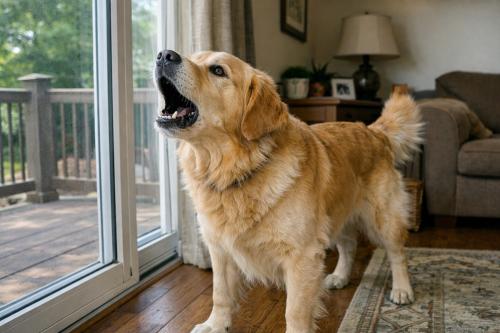
Golden Retrievers are often seen as emotionally stable, friendly, and easygoing companions. That’s why sudden anxiety can feel especially confusing for owners. A dog that once appeared relaxed may begin pacing, whining, reacting to small sounds, or struggling to settle at home. These changes can seem unexpected — but they rarely happen without underlying reasons.
Sudden anxiety in Golden Retrievers is often a signal that something in the dog’s environment, routine, or emotional balance has shifted — even if the change is subtle.
This article explains why Golden Retrievers may suddenly become anxious, how to recognize early warning signs, what common triggers owners often overlook, and how to help restore emotional stability in a calm and structured way.
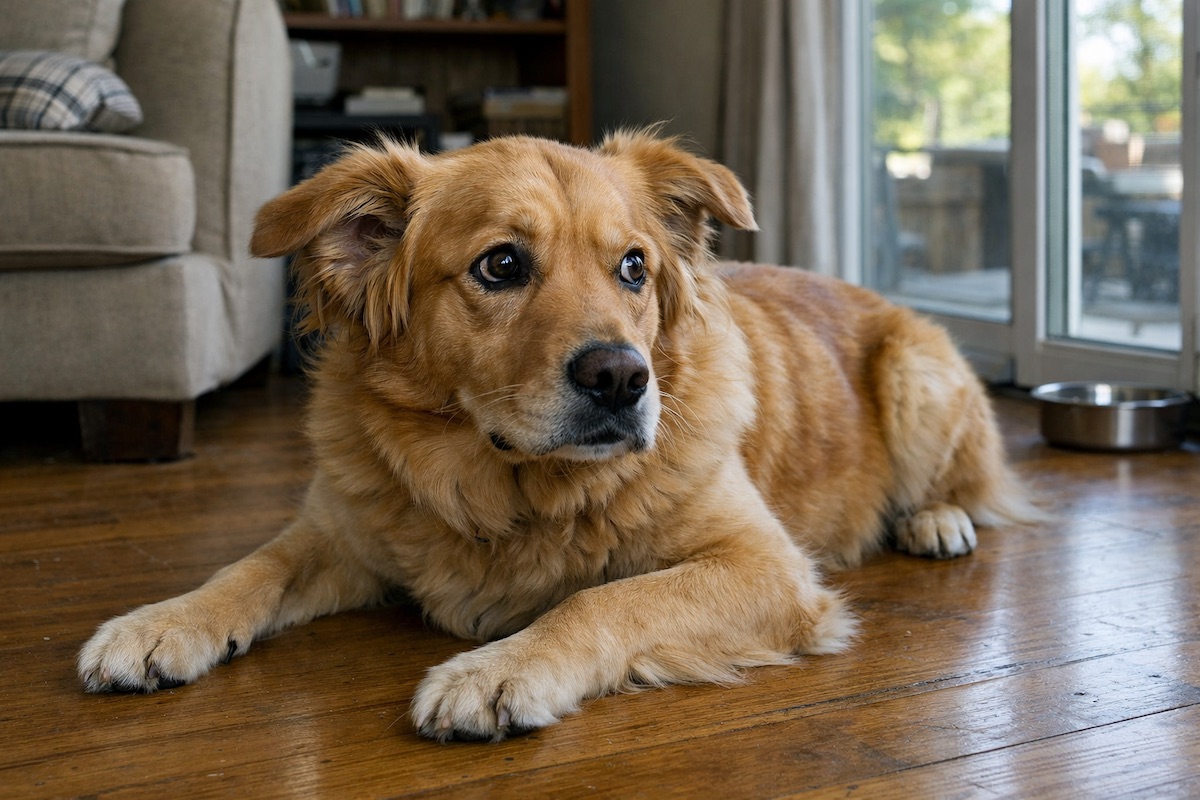
Can Anxiety Really Appear Suddenly?
In many cases, anxiety does not appear overnight. Instead, it builds gradually until behavior changes become noticeable. Owners often recognize the problem only when restlessness, vocalization, or sensitivity becomes difficult to ignore.
Golden Retrievers are emotionally perceptive dogs. They respond strongly to changes in their environment, routine, and social dynamics. Even small disruptions can accumulate over time and eventually lead to visible anxiety.
What feels sudden to the owner is often the result of long-term emotional pressure reaching a tipping point.
Common Reasons a Golden Retriever May Suddenly Become Anxious
Changes in Daily Routine
Golden Retrievers often feel safest when their day follows a predictable rhythm. Sudden shifts — new work schedules, irregular walk times, or reduced interaction — can increase uncertainty and emotional tension.
Dogs that rely on structure may respond to routine disruption with:
- Restlessness or pacing
- Following the owner constantly
- Difficulty settling during quiet periods
Environmental Stressors
New sounds, visitors, moving homes, or changes in the household can affect a sensitive dog’s emotional state. Even positive changes, such as increased social activity, may feel overwhelming if they occur too quickly.
Golden Retrievers often absorb emotional energy from their surroundings. Tension in the household can unintentionally transfer to the dog.
Mental Overload or Overstimulation
High-energy play, frequent training sessions, or busy walk environments can increase nervous system activation. If recovery time is insufficient, anxiety-like behaviors may develop.
A dog that appears energetic and engaged may actually be struggling with cognitive pressure rather than boredom.
Lack of Rest or Recovery
Some Golden Retrievers never fully learn how to switch off. Without structured downtime, the nervous system remains in anticipation mode.
This can lead to:
- Hyper-alertness indoors
- Frequent repositioning instead of deep sleep
- Overreaction to small noises
Negative Experiences
Frightening encounters with other dogs, loud noises, or sudden corrections during training can leave lasting emotional impressions. Even if the event seemed minor at the time, sensitive dogs may associate similar environments with discomfort.
Physical Discomfort or Health Changes
Sudden anxiety should always be evaluated in the context of physical wellbeing. Pain, digestive issues, hormonal changes, or aging-related cognitive shifts can influence emotional stability.
If anxiety appears alongside lethargy, appetite changes, or unusual behavior, veterinary guidance is important.
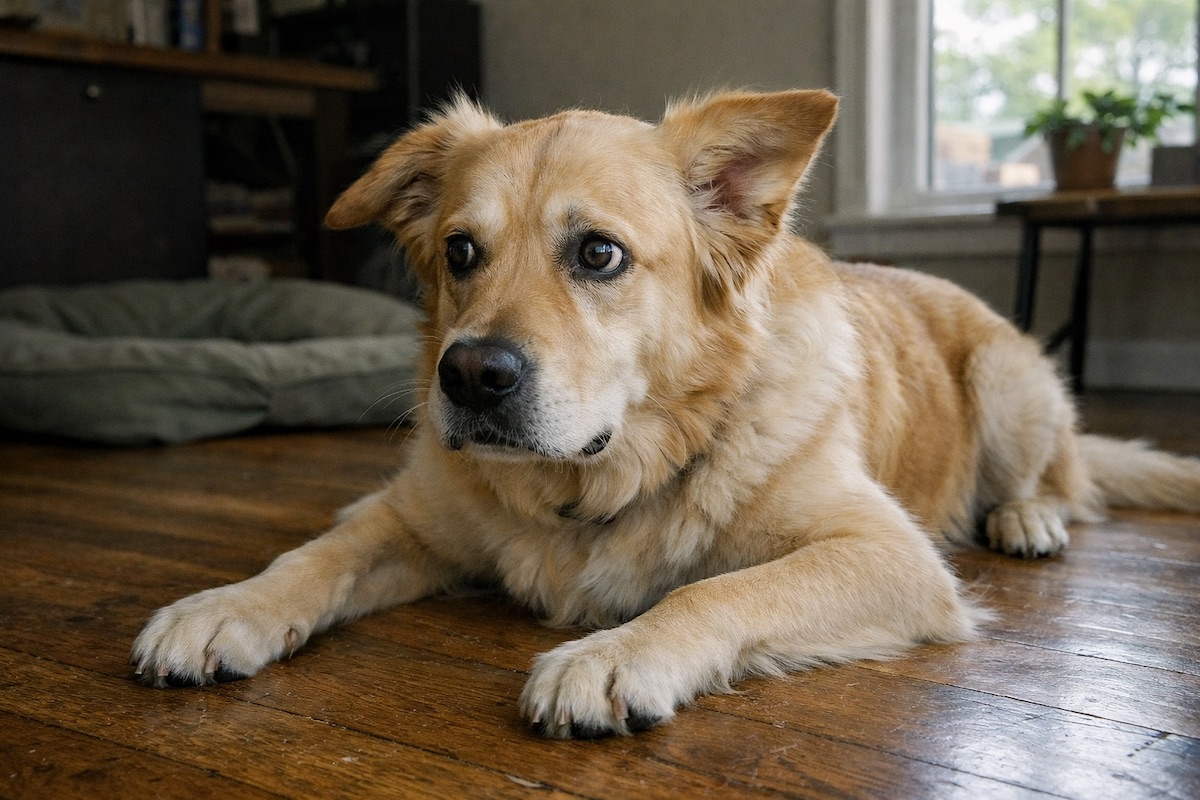
Signs Your Golden Retriever May Be Experiencing Anxiety
- Pacing or inability to settle
- Whining or vocalization without clear cause
- Clingy behavior or shadowing
- Startling easily at everyday sounds
- Loss of focus during walks or training
- Restlessness at night
Early recognition of anxiety allows owners to adjust routines before patterns become deeply ingrained.
How to Help a Golden Retriever That Has Become Anxious
Restore Predictable Structure
When anxiety appears suddenly, one of the most powerful stabilizing factors is routine. Golden Retrievers often feel more secure when daily life follows a clear and repeatable rhythm. Feeding at consistent times, walking along familiar routes, and maintaining predictable sleep and rest periods reduce the mental effort required to anticipate what will happen next.
Uncertainty forces the nervous system to stay alert. Predictability, on the other hand, allows emotional tension to decrease gradually. Even small adjustments — such as starting walks at the same time each day or ending activities with the same calming ritual — can help the dog regain a sense of safety and internal balance.
Lower Overall Stimulation
When a dog becomes anxious, the natural reaction of many owners is to increase activity in an attempt to “burn off” nervous energy. However, high-arousal games, intense training sessions, or overly stimulating environments can unintentionally maintain a heightened stress response.
Temporarily simplifying the dog’s lifestyle often leads to noticeable improvement. Calm exploratory walks, opportunities to sniff and observe the environment at a slower pace, and quiet shared time indoors can help regulate emotional arousal. The goal is not to eliminate engagement but to reduce intensity so that recovery becomes possible.
Encourage Independent Rest
An anxious Golden Retriever may struggle to relax without constant reassurance or interaction. Providing a comfortable, predictable resting area — such as a quiet corner with a familiar bed — helps create a physical and emotional signal that downtime is safe.
It is important to allow the dog to rest without frequent interruptions. Repeatedly calling the dog, initiating play, or reacting to every small movement can reinforce hypervigilance. Gradually learning to settle independently builds emotional resilience and reduces the need for constant monitoring of the environment or the owner.
Use Short, Positive Engagement Sessions
Structured engagement can support recovery when it is brief, clear, and emotionally safe. Simple thinking exercises, gentle obedience refreshers, or scent-based activities help the dog regain confidence in their ability to process information without becoming overwhelmed.
Ending these sessions before signs of mental fatigue appear is crucial. Success followed by calm rest strengthens learning and prevents engagement from turning into additional pressure. Over time, this pattern teaches the dog that activity and relaxation are both normal parts of daily life.
Observe Emotional Feedback
Dogs experiencing anxiety often respond more to emotional tone than to specific techniques. Calm, predictable handling — steady voice, slower movements, and reduced urgency — can help lower overall tension. In contrast, frequent corrections, rushed training, or inconsistent expectations may unintentionally increase stress.
Carefully observing how the dog reacts to different situations allows owners to adjust routines and interactions in a way that supports emotional recovery. Small improvements in relaxation, focus, or willingness to rest are meaningful indicators that anxiety is decreasing.
Anxiety rarely disappears through intensity or control. Many Golden Retrievers become calmer when life becomes slower, clearer, and more predictable.
When Professional Help May Be Needed
Consult a veterinarian or behavior professional if anxiety:
- Escalates into aggression or panic
- Persists despite routine adjustments
- Appears alongside physical symptoms
- Interferes with sleep or normal functioning
Early intervention can prevent long-term emotional stress patterns.
Final Thoughts
Sudden anxiety in a Golden Retriever is rarely random. It usually reflects a shift in routine, environment, emotional pressure, or physical comfort.
Helping an anxious dog is not about adding more activity — it is about restoring balance between engagement, recovery, and emotional safety.
When daily life becomes predictable and stimulation becomes more structured, many Golden Retrievers gradually return to their naturally calm and friendly temperament.
Author: XPETSI Editorial Team