Border Collies are known for their intense focus, fast learning, and incredible training drive. Many owners feel proud when their dog shows endless enthusiasm for learning — until that same energy follows them back into the house. Instead of relaxing after training, the dog remains restless, reactive, or frustrated, as if the session never truly ended.
High training energy is not always a sign of progress. When excitement stays elevated for too long, it can prevent a Border Collie from switching into recovery mode.
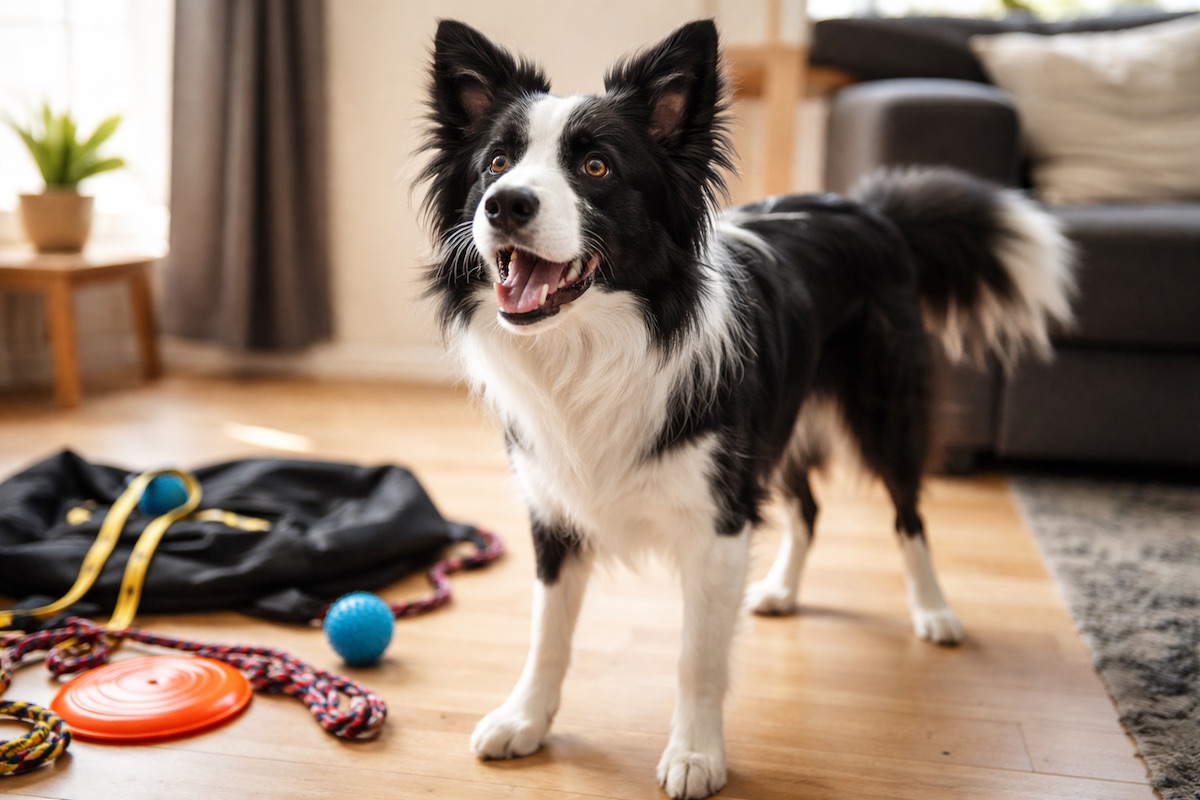
This article explores why some Border Collies struggle to calm down after training, how to recognize when focus turns into frustration, and what changes help transform intense engagement into balanced behavior at home.
Why Training Energy Doesn’t Always Turn Into Calmness
Border Collies are bred to sustain concentration for long periods. During training, their nervous system becomes highly activated — processing cues, anticipating rewards, and reacting quickly to feedback.
When the session ends abruptly or intensity remains too high, the brain may stay in “work mode.” Instead of relaxing, the dog continues searching for direction, which often appears as:
- Pacing around the house
- Watching the owner constantly
- Demanding interaction
- Difficulty lying down calmly
- Sudden bursts of frustration
A dog that looks hyper after training may not need more exercise — they may need a clearer transition into rest.
This pattern often overlaps with the same indoor restlessness described in why some Border Collies struggle to switch off inside the house, where mental activation continues long after activity ends.
Focus vs Frustration: Understanding the Difference
Healthy focus feels purposeful and controlled. Frustration, on the other hand, often looks similar on the surface but carries more tension underneath.
| Behavior | Healthy Focus | Training Frustration |
|---|---|---|
| Body language | Soft and responsive | Rigid or restless |
| After training | Gradually relaxes | Becomes more active |
| Attention | Engaged but calm | Demanding or intense |
| Recovery | Falls asleep easily | Struggles to settle |
Border Collies often move quickly from focus into frustration when expectations remain unclear or stimulation lasts too long without recovery — a dynamic closely connected to mental workload imbalance in high-drive dogs.
Common Reasons Training Energy Stays Too High Indoors
1. Sessions That End Too Abruptly
Jumping from high-intensity training directly into quiet home life can feel confusing for a dog whose brain is still highly activated.
2. Too Much Excitement During Learning
Fast rewards, rapid cue changes, or constant repetition may build arousal faster than the dog can regulate.
3. Lack of Predictable Cooldown Rituals
Without a consistent “end signal,” the dog may continue searching for the next task.
4. Emotional Feedback From the Owner
Border Collies are extremely sensitive to human energy. Enthusiastic training styles sometimes unintentionally extend stimulation beyond the session.
Even positive excitement can keep a Border Collie mentally engaged long after the learning has finished.
Dogs that remain in this activated state often begin showing early signs similar to subtle stress signals that appear before restlessness becomes obvious.
Signs Training Energy Is Turning Into Frustration
- Jumping or nipping after sessions
- Repeated attempts to initiate training
- Vocalizing when ignored
- Difficulty settling in familiar spaces
- Scanning the environment instead of resting
These signals often appear when the nervous system struggles to transition from high engagement into calm recovery. Some dogs also begin shadowing their owners constantly, a behavior explored further in why Border Collies follow owners everywhere.
How to Help a Border Collie Transition From Work to Rest
Create a Clear End-of-Training Signal
Use a consistent phrase or routine that tells your dog the session has finished. Predictability helps reduce anticipation.
Lower Intensity Gradually
End sessions with slower, simpler tasks rather than stopping immediately after high-energy exercises.
A gentle cooldown teaches the brain that focus is complete and relaxation is safe.
Introduce Calm Post-Training Activities
- Slow sniffing walks
- Quiet chew time
- Resting on a designated mat
Slower decompression routines — similar to the concept behind thinking walks that reduce mental pressure — often help bring arousal down naturally.
Reward Calm Behavior — Not Just Performance
Many Border Collies receive reinforcement only when working. Acknowledging calm choices helps balance their expectations.
Why More Training Isn’t Always the Solution
When a dog appears restless after learning sessions, owners sometimes add extra training to “use up energy.” While this can feel productive, it often increases internal pressure instead of reducing it.
Intensity without recovery teaches the nervous system to stay activated — not to relax.
This cycle is one of the reasons highly intelligent dogs may eventually experience cognitive fatigue, where learning becomes harder instead of easier — something explained in more detail in why training suddenly stops working in smart dogs.
Building a Healthier Training Rhythm at Home
Instead of thinking about training as isolated sessions, consider the entire daily rhythm:
- Short, structured engagement
- Clear cooldown periods
- Predictable quiet time
- Consistent expectations indoors
When Border Collies understand that learning has clear boundaries, frustration often decreases naturally. Many owners notice improvement after shifting from constant stimulation toward the balanced lifestyle described in understanding the Border Collie mindset at home.
When High Training Energy May Signal Deeper Stress
If restlessness escalates into anxiety, excessive vocalization, or reactivity, it may be helpful to evaluate the overall balance between stimulation and recovery.
Persistent tension after training can sometimes reflect cognitive fatigue rather than enthusiasm.
Final Thoughts
Border Collies don’t just need meaningful work — they need clear permission to stop working.
When training energy stays too high at home, it’s rarely about lack of discipline. More often, it means the nervous system hasn’t been guided back into calmness.
By slowing down transitions, reinforcing relaxation, and balancing intensity with recovery, many Border Collies learn to move from focus to rest smoothly — creating a home environment that feels calmer for both dog and owner.
Author: XPETSI Editorial Team