If you keep finding dog toys stuffed inside your shoes, you are not alone. Thousands of dog owners report the same mysterious habit, and while it can seem funny, confusing or even annoying when you are trying to rush out the door, this behavior actually tells you a lot about your dog’s emotions, instincts and bonding style. Dogs rarely do random things; almost every action has meaning, even if it seems strange from a human perspective. Understanding why your dog chooses your footwear as a perfect storage unit for toys helps you strengthen your connection, reduce stress-based behaviors and even support healthier play routines.
Dogs communicate through actions far more than words. When a dog brings something to a specific place—your pillow, your bag, your bed, or your shoes—it is sending a message. Shoes, in particular, are special objects for dogs because they smell strongly like the person they adore. Your scent is comforting, grounding and emotionally rewarding. So, when your dog drops a toy into that scent-rich zone, the act is packed with psychological significance.
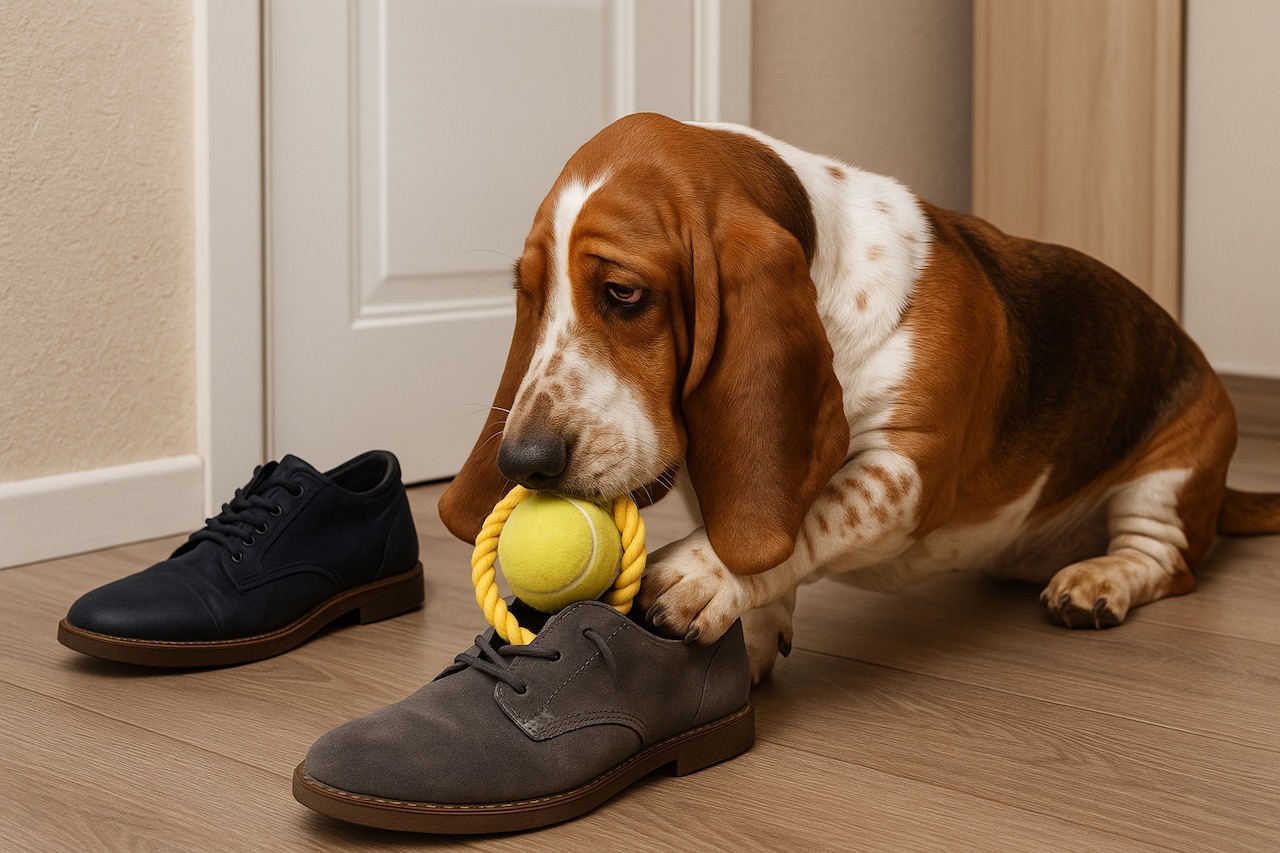
This article breaks down the most common reasons why dogs put toys in shoes, how to interpret which one applies to your pet, when you should intervene, and how to encourage healthier versions of this behavior. We will also explore the evolutionary roots behind shoe-related habits, how your dog’s age and breed influence this behavior, and practical steps to modify it if it becomes inconvenient.
The Main Reasons Dogs Put Toys in Shoes
There is no single universal explanation for this quirky habit, but there are several strongly documented possibilities. Your dog may fall under one, several or even all of these categories depending on their temperament and home environment.
Your Shoes Smell Like You
Scent is the primary way dogs experience the world. Humans rely mostly on vision, but dogs rely overwhelmingly on smell. To your dog, your shoes contain one of the strongest “personal scent signatures” you produce. Sweat, skin cells, outdoor smells, and even traces of places you visited all combine into a scent profile your dog finds deeply comforting.
When your dog places a toy inside your shoes, they may be trying to merge their favorite object with their favorite scent. It’s their way of connecting emotionally with you when you are not actively interacting with them. The toy becomes more valuable when paired with something that smells like you.
They Want to Play With You
Many dogs use object placement as a form of communication. Putting a toy in your shoe can be a clever strategy to get your attention. Your dog knows that you must interact with your shoes at some point, so dropping a toy in them almost guarantees you will notice.
Some breeds are especially gifted at using this technique—including retrievers, spaniels, poodles and herding breeds. These dogs are naturally inclined to bring items, offer gifts and initiate structured play.
It’s a Gift or an Offering
Dogs often share treasured items with people they trust. Offering a prized possession—like a favorite squeaky toy—is a sign of affection, respect and bonding. Your dog may be “giving” you the toy by placing it in your shoes, symbolizing that they want to share what they love most.
In dog social groups, sharing objects can be a form of cooperative behavior. Your dog may be treating you as a valued member of their “pack,” offering items just as wild canines share resources with family members.
Your Dog Is “Saving” the Toy
Some dogs hide toys instinctively. This behavior comes from wild ancestors, who buried or concealed food so others would not steal it. Shoes are a perfect hiding spot: enclosed, dark, and richly scented with an owner’s smell—making them feel like a safe vault.
If your dog repeatedly places the same toy in your shoes, the goal may be storage rather than communication. They may believe the toy is safest there, especially if other pets or children sometimes take it.
Your Dog Wants Comfort or Security
Dogs sometimes put toys in shoes when they feel anxious, overstimulated or lonely. Your scent provides emotional support. Combining toys and shoes creates a “comfort bundle,” reducing stress hormones and making your dog feel protected.
This is common in:
Puppies adjusting to a new home
Rescue dogs with previous trauma
Dogs with separation anxiety
Seniors seeking stability
If your dog does this mostly when you leave the house or during thunderstorms, it is likely a self-soothing behavior.
They Are Marking Their Territory
Dogs sometimes use toys as scent markers. When they put a toy in your shoe, they are mixing their scent with yours. This is a social bonding tool but can also be a mild form of territorial claiming.
Your dog may be saying: “This person is part of my family, and this space belongs to us.” It is rarely possessive in a negative way, but it does help the dog feel secure. This is especially true in multi-dog homes.
How to Tell Which Reason Applies to Your Dog
Understanding the motivation helps you respond correctly. These indicators can help decode the behavior:
| Behavior Pattern | Likely Motivation |
|---|---|
| Dog brings toys only when you prepare to leave | Separation anxiety or comfort-seeking |
| Dog places toy every morning or evening like a routine | Habit, bonding ritual, stored resource |
| Dog drops toy and waits near your shoes | Wants play or attention |
| Dog hides multiple objects inside shoes | Instinct to store or “bury” possessions |
| Dog uses only your shoes, not others | Strong personal attachment to your scent |
| Dog avoids shoes but uses slippers or socks | Comfort scent preference rather than hiding |
Is This Behavior Normal?
Yes—putting toys in shoes is entirely normal. It is neither harmful nor a sign of behavioral imbalance. Most veterinarians and animal behaviorists note that this is a harmless communication method unless accompanied by destructive chewing or guarding behaviors.
For many dogs, this habit peaks in puppyhood and early adulthood. As dogs mature, the frequency may decrease, but many continue the ritual throughout their lives because it brings comfort and joy.
Should You Stop This Behavior?
You only need to intervene if the behavior:
Damages your shoes
Causes tripping hazards
Is linked with anxiety that needs support
Becomes obsessive or compulsive
Most owners simply adapt by checking their shoes before wearing them—something many accept as part of dog parenthood. But if the behavior is inconvenient, it can be modified with simple training tools.
How to Gently Redirect the Behavior
Provide a “Toy Basket” Near the Entryway
Dogs often interact with items located nearest to the areas humans use frequently. Placing a toy basket next to the shoe rack helps redirect the instinct. Reward the dog for dropping toys inside it.
Strengthen Drop and Leave-It Commands
Obedience cues help you manage where your dog places objects. Use positive reinforcement only—never punish or scold for bringing toys. The goal is guidance, not correction.
Give Your Dog More Structured Play Sessions
If your dog places toys in shoes out of boredom or request for attention, increasing playtime often eliminates the habit entirely. A well-exercised dog is less likely to use shoes as a communication channel.
Offer Scented Comfort Alternatives
If the root cause is anxiety, give your dog:
a blanket that smells like you
a piece of worn clothing
a calming toy or heartbeat plush
This reduces dependency on your shoes as a comfort object.
Limit Access to Shoes
The simplest strategy—close the closet door or store shoes in a box. Over time, the behavior fades when the opportunity disappears.
When This Behavior Signals Anxiety
If your dog shows these signs, the shoe-toy behavior may be rooted in emotional stress:
Whining when you leave
Destroying shoes instead of simply placing toys in them
Pacing or panting
Shadowing you constantly
Following you from room to room with the toy
In these cases, your dog may need additional support, such as calming routines, increased exercise, puzzle toys, or training that reduces attachment-related anxiety. If symptoms worsen, consulting a professional trainer or veterinarian can help.
How Age Influences This Behavior
Puppies
Puppies explore the world through their mouths. They are attracted to strong scents, so shoes naturally become high-interest objects. Puppies may drop toys in shoes simply because they combine scent, texture and an easy hiding place.
Adult Dogs
For adult dogs, this behavior is usually purposeful—communicating need for attention, storing toys, or expressing affection. Adults are more strategic about object placement.
Senior Dogs
Older dogs may seek comfort and emotional stability. Shoes are familiar and carry a grounding scent. Seniors with cognitive decline may also develop repetitive behaviors, including placing items in specific locations.
Breed Tendencies
Certain breeds are more likely to place toys in shoes because of their natural instincts:
Retrievers — instinctively carry objects, offer gifts, and create “stashes”
Border Collies & Shepherds — use object placement as strategic communication
Terriers — have a strong instinct to hide, bury or guard objects
Poodles — highly intelligent and intentional with play behavior
Companion breeds (Shih Tzu, Maltese) — use scent-based comfort behaviors
Any breed can exhibit this habit, but object-oriented breeds do it more frequently and more deliberately.
How to Make This Behavior Beneficial
Instead of fighting the habit, you can turn it into a bonding opportunity:
Turn it into a “go find your toy” game
Reward your dog when it brings toys to an alternative spot
Use the behavior to initiate training exercises
Create a ritual such as “toy time before walks”
Many owners find this habit charming once they understand its meaning. Dogs show love in subtle ways, and this is often one of them.
Final Thoughts
Your dog putting toys in your shoes is rarely random—it’s a deeply emotional and instinct-driven gesture. Whether your dog is asking for play, seeking comfort, offering a gift, storing a prized object, or trying to be near your scent, the motivation reveals strong attachment and trust.
With a little observation, you can decode what your dog is trying to tell you. In most cases, the behavior is harmless and even heartwarming. But if it becomes inconvenient, redirection is simple with the right training and environmental cues.
Your shoes may not appreciate the habit, but your dog’s message is clear: You matter to them more than anything, even their favorite toy.
Author: XPETSI Editorial Team