If you live with a dog, you’ve probably noticed it many times: your dog sits quietly and looks straight at you. Not barking. Not moving. Just staring. Sometimes it feels sweet and loving. Other times it feels intense or even a little uncomfortable.
So why do dogs stare at their owners?
The short answer is that staring is one of the most important ways dogs communicate with humans. Unlike wolves, dogs have evolved to use eye contact as a tool for connection, learning, and emotional bonding. In this article, we’ll explore all the common reasons dogs stare at their owners, when it’s normal, when it may signal a problem, and how you should respond.
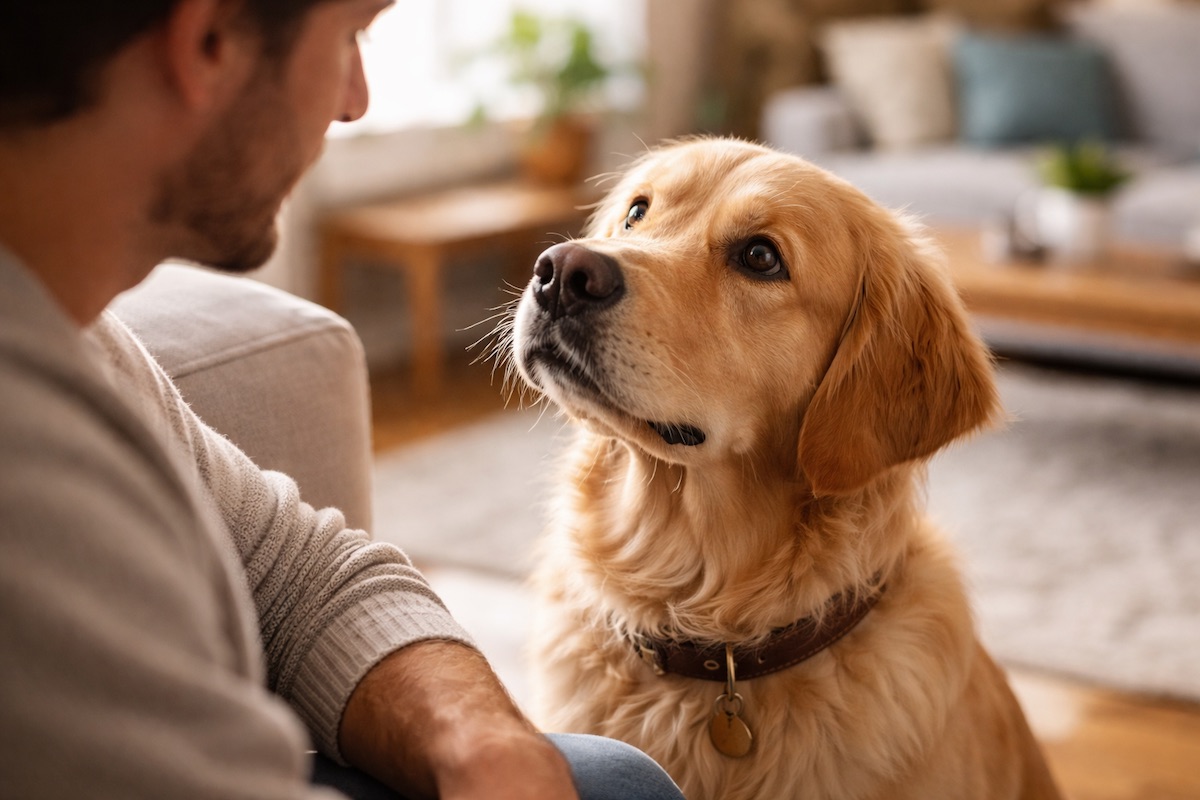
Staring Is a Form of Communication
Dogs don’t have words, so they rely heavily on body language, facial expressions, and eye contact. Staring is not random behavior — it almost always has a purpose.
When your dog looks at you, they may be:
- Trying to understand what you’re about to do
- Waiting for instructions or cues
- Seeking attention or interaction
- Expressing affection and trust
- Reacting to confusion or uncertainty
In most cases, a dog staring at their owner is a sign of engagement, not aggression.
Dogs Stare Because They Love You
One of the most heartwarming reasons dogs stare at their owners is affection.
Research has shown that when dogs and humans make gentle eye contact, both experience a rise in oxytocin, the hormone associated with bonding, trust, and love. This is the same hormone released between parents and children.
When your dog gazes at you calmly, especially with relaxed ears and soft eyes, it’s often the canine equivalent of a hug.
Signs of affectionate staring include:
- Relaxed body posture
- Soft or half-closed eyes
- Slow blinking
- Loose tail or gentle wag
This type of staring is healthy and strengthens the bond between you and your dog.
Your Dog Is Waiting for Something
Dogs are excellent observers. They quickly learn your routines, habits, and even subtle movements.
If your dog is staring at you, they may be waiting for:
- Food or treats
- A walk
- Playtime
- Attention or petting
- A cue or command
Many dogs learn that eye contact gets results. If staring at you has worked in the past, they’ll keep doing it.
This is especially common around mealtimes or before regular activities like walks.
Dogs Stare to Read Human Emotions
Dogs are extremely sensitive to human facial expressions and emotional cues. They often stare at their owners to “check in” emotionally.
Your dog may be trying to figure out:
- Are you happy or upset?
- Are you calm or stressed?
- Is something about to change?
Studies suggest that dogs can distinguish between positive and negative facial expressions in humans. Staring allows them to gather information and adjust their behavior accordingly.
This is one reason dogs often seem to know when you’re sad, anxious, or unwell.
Your Dog Wants Guidance or Reassurance
Dogs look to their owners as leaders and sources of safety. When faced with uncertainty, many dogs will stare at their owners for direction.
This commonly happens when:
- A new person enters the room
- A strange noise occurs
- Your dog encounters an unfamiliar situation
- Your dog is unsure how to behave
In these moments, staring is a sign of trust. Your dog is asking, “What should I do?”
Calm reassurance from you can help your dog feel safe and confident.
Staring Can Be Learned Behavior
Dogs are quick learners, especially when it comes to human behavior.
If your dog has learned that staring leads to:
- Attention
- Food
- Verbal interaction
- Physical affection
Then staring becomes a reinforced behavior.
For example, if you often give your dog a treat when they look at you during training, your dog may start staring more frequently in everyday situations.
This isn’t bad behavior — it just means your dog has learned what works.
Why Puppies Stare So Much
Puppies tend to stare more than adult dogs.
This happens because puppies are:
- Learning how humans behave
- Looking for guidance
- Highly curious about everything
- Emotionally dependent on their owners
Staring helps puppies understand the world and build social bonds. As dogs mature, staring may decrease or become more situational.
Is Dog Staring Ever a Sign of Aggression?
In dog-to-dog interactions, a hard stare can be a sign of dominance or aggression. However, context matters.
Signs that staring may be concerning include:
- Stiff body posture
- Frozen movement
- Raised hackles
- Growling or snarling
- Whale eye (showing whites of the eyes)
If your dog stares at you with tension or appears uncomfortable, it may indicate fear, stress, or guarding behavior rather than affection.
This is rare in healthy human-dog relationships but should not be ignored.
Dogs Stare When They Are Confused
If you give your dog a command they don’t understand, they may stare at you in confusion.
This type of staring often happens when:
- Commands are inconsistent
- Training cues change
- Multiple people use different words
Your dog may be waiting for clarification or a clearer signal.
In these cases, patience and consistency are key.
Senior Dogs and Staring
Older dogs may stare more often due to:
- Hearing loss
- Vision changes
- Cognitive decline
- Increased dependence
If your senior dog suddenly starts staring more than usual, especially combined with confusion or restlessness, it may be worth consulting a veterinarian.
However, many senior dogs simply stare because they feel safest when watching their owners.
What to Do When Your Dog Stares at You
How you respond depends on the context.
When staring is calm and relaxed
- Return gentle eye contact
- Speak calmly
- Offer affection if appropriate
When staring is demand-based
- Avoid reinforcing unwanted behavior
- Wait for calm behavior before responding
- Provide structure and routine
When staring seems anxious or tense
- Reduce stressors in the environment
- Offer reassurance without overreacting
- Consult a trainer or behaviorist if needed
Should You Stare Back at Your Dog?
Soft, relaxed eye contact is generally safe and bonding between dogs and humans.
However, prolonged, intense staring can make some dogs uncomfortable.
Good practices include:
- Slow blinking
- Looking away occasionally
- Keeping your body language relaxed
This mirrors polite canine communication and helps maintain trust.
Do All Dogs Stare at Their Owners?
Not all dogs stare the same way or as often.
Factors that influence staring behavior include:
- Breed tendencies
- Individual personality
- Training history
- Level of attachment
Some breeds are naturally more attentive and people-focused, while others are more independent.
Final Thoughts
When dogs stare at their owners, it’s rarely meaningless. In most cases, staring is a powerful form of communication rooted in trust, affection, learning, and emotional connection.
Whether your dog is expressing love, waiting for guidance, or simply trying to understand you, their gaze reflects the deep bond dogs have developed with humans over thousands of years.
Understanding why your dog stares allows you to respond with empathy, clarity, and confidence — strengthening the relationship you share every day.
Author: XPETSI Editorial Team