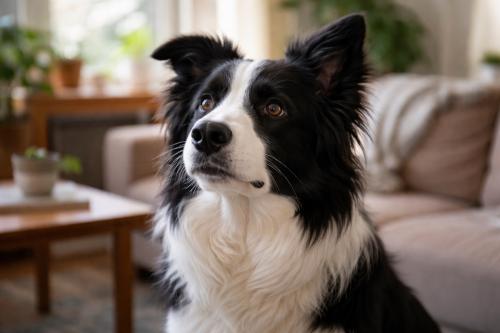
Seeing your dog suddenly grab and chew rocks during walks can be alarming. Many owners worry about health risks, strange instincts, or whether something is seriously wrong. While rock eating looks dangerous and irrational, it is actually a behavior with clear explanations rooted in instinct, environment, learning, and emotional state. Understanding the cause is the key to stopping it safely.
This article explains why dogs eat rocks specifically during walks, why it happens outside more than at home, what it may signal about your dog’s needs, and how to prevent the behavior without punishment or stress.
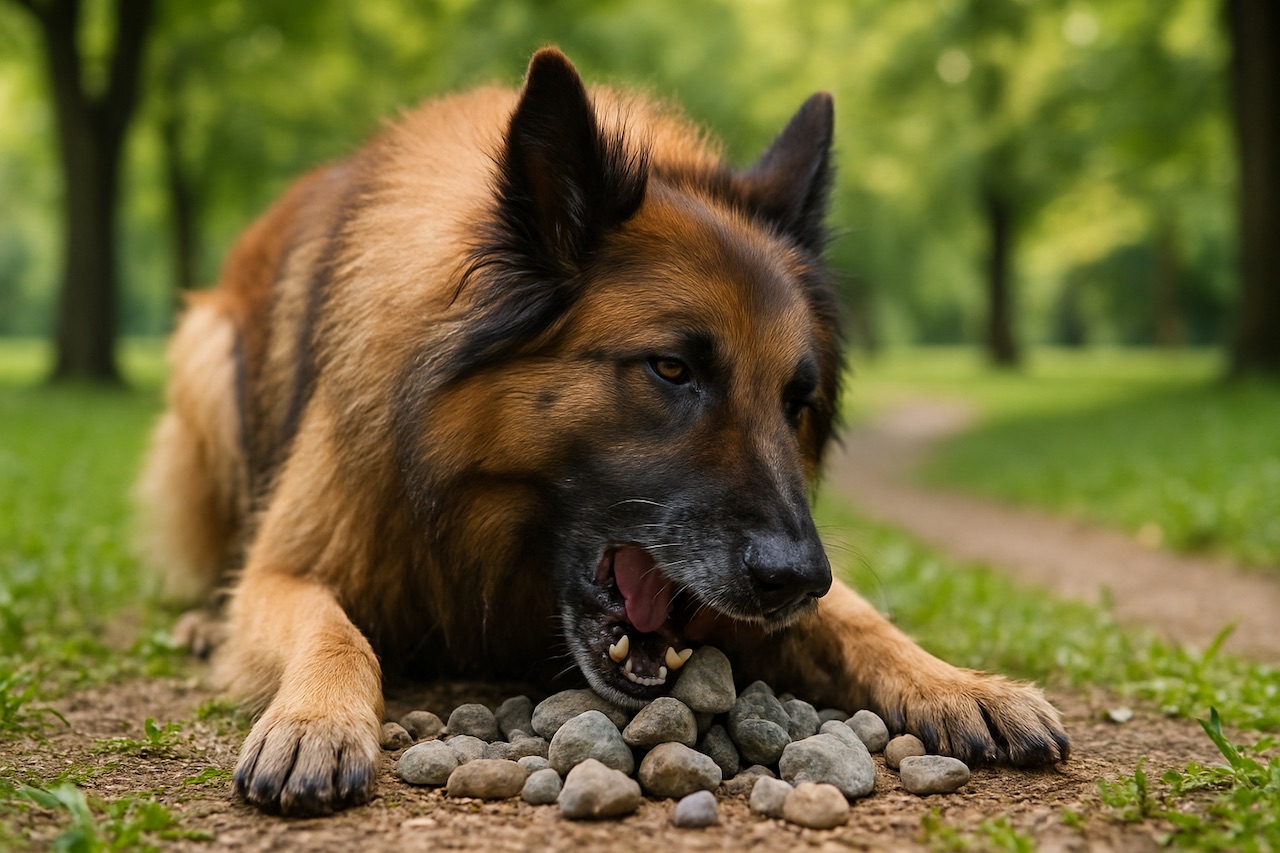
Rocks eating is one of several unusual eating behaviors dogs may display. If your dog also eats dirt, grass, or household objects, this may point to a broader behavioral or nutritional issue. Learn more in our guide: why dogs eat strange things.
Why Dogs Eat Rocks Only During Walks
Dogs that eat rocks only during walks are often responding to environmental stimulation rather than hunger. Outside, dogs are exposed to new smells, textures, and objects that trigger curiosity and exploratory behavior. Rocks can carry scents from other animals, food residue, or minerals, making them oddly attractive during walks even if the dog ignores them at home.
Another common reason is stress, excitement, or over-arousal. Walks can be mentally overwhelming, especially for young dogs or those that do not get enough daily stimulation. Picking up rocks may act as a coping behavior, similar to chewing, helping the dog release nervous energy or excitement caused by traffic, strangers, or other dogs.
In some cases, rock eating during walks is linked to learned behavior or attention-seeking. If a dog notices that grabbing rocks immediately gets a reaction from the owner, the behavior can quickly repeat. Puppies are especially prone to this, as they explore the world with their mouths and may not yet understand what is safe to chew.
Less commonly, dogs may eat rocks due to nutritional imbalances or pica, a condition where animals consume non-food items. While this is not always the cause, repeated rock eating should not be ignored, as swallowing stones can lead to serious health risks. Consistent training, redirection, and a veterinary check can help identify and stop the behavior early.
High Arousal and Overstimulation
Walks are exciting. Dogs experience a surge of sensory input: smells, sounds, movement, and unfamiliar surfaces. Some dogs struggle to regulate this excitement and redirect it into mouth-based behaviors like grabbing rocks.
This is especially common in:
young dogs and puppies
high-energy breeds
dogs with poor impulse control
Exploration Through the Mouth
Dogs explore the world with their mouths just as much as with their noses. Rocks offer unique textures: cold, hard, gritty, smooth, or rough. During walks, dogs encounter stones they never see indoors, making them novel and tempting.
Learned Attention-Seeking Behavior
If your dog once picked up a rock and you reacted strongly, the behavior may have been reinforced. Dogs do not distinguish between positive and negative attention. Yelling, chasing, or panicking can unintentionally teach the dog that rocks are a powerful way to get a reaction.
Common Behavioral Reasons Dogs Eat Rocks Outside
Boredom During Structured Walks
Not all walks are mentally engaging. A slow, repetitive route with limited sniffing opportunities may leave some dogs under-stimulated. Rock chewing becomes a form of self-created entertainment.
Stress or Anxiety Outdoors
Some dogs feel overwhelmed outside. Traffic, people, other dogs, or unfamiliar environments can cause stress. Chewing or holding rocks may act as a coping mechanism, similar to how humans fidget under stress.
Frustration From Leash Restriction
Dogs that want to run, chase, or explore freely may redirect frustration into grabbing objects within reach. Rocks are always available, making them an easy outlet.
Resource Interaction Instinct
In nature, canines interact with objects in their environment—digging, carrying, chewing, or manipulating them. Rocks may trigger this instinct, especially in working breeds or dogs with strong oral fixation.
Is Rock Eating a Sign of Pica
Rock eating can be associated with pica, a condition where dogs eat non-food items. However, occasional rock grabbing during walks does not automatically mean pica.
Pica is more likely if your dog:
eats rocks repeatedly in many environments
tries to swallow stones rather than just chew
eats other non-food items like dirt, fabric, or plastic
shows appetite loss or digestive issues
If rock eating is limited to walks and appears situational, it is usually behavioral rather than medical.
Why Puppies Eat Rocks During Walks
Puppies are far more likely to grab rocks than adult dogs. Their impulse control is undeveloped, and teething increases the urge to chew hard objects.
For puppies, rocks may:
relieve gum discomfort
feel interesting and new
trigger play instincts
Most puppies outgrow this behavior with consistent guidance, proper chew outlets, and training.
Why Some Dogs Eat Rocks Only on Certain Walks
Owners often notice that rock eating happens only in specific locations. This usually relates to environment and emotional state.
| Situation | Likely Cause | What It Means |
|---|---|---|
| Dog eats rocks near busy roads | Stress or overstimulation | Using chewing to self-soothe |
| Dog eats rocks in the yard | Boredom or habit | Needs enrichment |
| Dog eats rocks at the start of walks | Excitement spike | Poor impulse control |
| Dog eats rocks only when rushed | Frustration | Walk pace too fast or restrictive |
How Dangerous Is Rock Eating
Rock eating is risky because stones can cause broken teeth, choking, intestinal blockages, or internal injury. Even small pebbles can become dangerous if swallowed.
Chewing without swallowing is still problematic, as it reinforces the behavior and increases the chance of accidental ingestion.
How to Stop Your Dog From Eating Rocks During Walks
Increase Mental Engagement
Allow your dog to sniff. Sniffing is mentally tiring and reduces the urge to seek stimulation through chewing. Slow walks with sniff breaks are often more effective than long, rushed walks.
Train a Reliable “Leave It” Cue
A strong leave-it command helps interrupt the behavior before the dog grabs a rock. Training should be calm, reward-based, and practiced in low-distraction environments first.
Redirect With Approved Objects
Bring a safe chew or tug toy on walks. When your dog attempts to grab a rock, redirect to the approved item and reward engagement.
Avoid Big Reactions
Do not shout or panic. Stay calm, stop movement briefly, and redirect. Emotional reactions increase the value of the behavior.
Adjust Walk Structure
Change routes, pace, or timing. Some dogs do better with shorter, more frequent walks rather than long outings.
Improve Impulse Control at Home
Training exercises like sit, wait, and settle help dogs regulate impulses outdoors.
What Not to Do
Do not punish or scold harshly
Do not chase your dog
Do not yank items from the mouth aggressively
Do not ignore repeated attempts
Fear-based responses increase anxiety and can worsen the behavior.
When to Seek Professional Help
Consult a veterinarian or behavior specialist if:
your dog swallows rocks
rock eating escalates rapidly
digestive symptoms appear
the behavior occurs constantly in all environments
Early guidance prevents serious complications.
FAQ
Why does my dog eat rocks but not sticks
Rocks provide different sensory feedback. Some dogs prefer the hardness and temperature of stones.
Is rock eating linked to diet issues
Occasionally, but most walk-specific rock eating is behavioral, not nutritional.
Will my dog outgrow this behavior
Many puppies and young dogs do, especially with consistent training.
Should I use a muzzle
Only under professional guidance. Training and redirection are preferred first.
Final Thoughts
Dogs eat rocks during walks for understandable reasons: excitement, curiosity, stress, or learned behavior. While it looks alarming, it is often manageable with patience, structure, and calm training. By understanding why your dog does it and addressing the root cause, you can make walks safer and more enjoyable for both of you.
Author: XPETSI Editorial Team